
Review · SAMURAI SWORD & NINJA TRAINING
Ninja 2-hour Hands-on Lesson by Japanese master in Kyoto -Medium
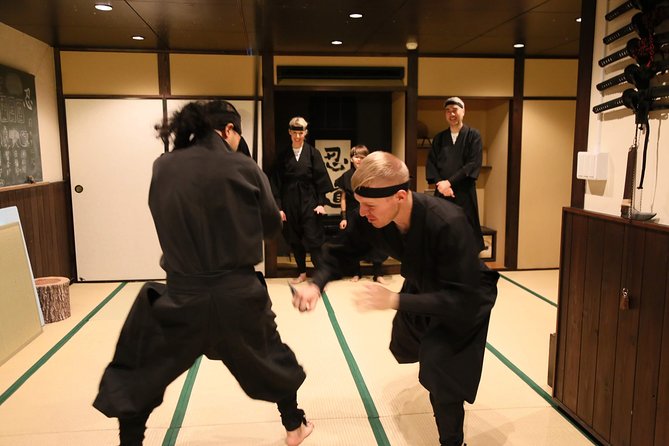
Ninja training feels real in Kyoto. This 2-hour, small-group lesson has you practicing ninja breathing and weapon techniques with an English-taught master, plus you wear full ninja clothing. One heads-up, the class is hands-on and includes physical drills and weapon handling, so if you have mobility issues, plan to go at a careful pace and listen to the instructor.
What makes it practical is the tight format: one set location, one clear start, and you’re back where you began. The lesson starts at 10:00 am at NINJA DOJO and STORE KYOTO, and the group stays intimate with a maximum of six people.
If you like action, this workshop is built around doing, not watching. You’ll move through skills like Kuji-In meditation, ninja walking, and a sequence of weapon practice that runs from kunai and shuriken to a sword-and-shuriken style, all within the same 2-hour session.
In This Review
- Key highlights at a glance
- What you are really buying in this 2-hour ninja dojo session
- Meeting at the Ninja Dojo and how the session starts
- Kuji-In meditation and ninja breathing: why this matters
- Ninja walking drills and the focus on controlled movement
- The ninja trick house gimmick and trap training
- Weapon training, from kunai to shuriken to blowgun
- Ninja sword training and the shuriken connection
- Small group size: how it improves your results
- Clothing rental and the photo bonus you might get
- Price and value: what $95.51 really covers
- Who should book this ninja lesson in Kyoto
- Practical tips to get the most from your 10:00 am class
- Should you book Ninja Dojo’s 2-hour lesson
- FAQ
- How long is the Ninja 2-hour hands-on lesson?
- What time does the class start in Kyoto?
- Where do we meet for the lesson?
- How big is the group?
- Is the instruction available in English?
- What is included in the ticket price?
- What is not included?
- Does it depend on weather?
- Are service animals allowed?
- Is this experience suitable for kids?
Key highlights at a glance
- Small group of six or fewer means you get more coaching, not just a crowd vibe
- Ninja clothing rental included so you look the part fast and stay comfortable for practice
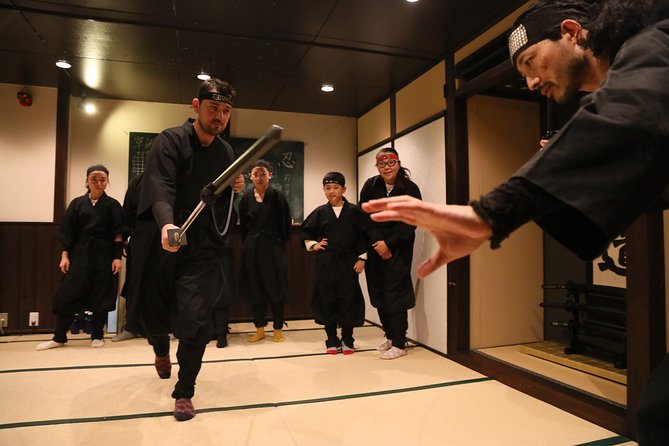
- Hands-on weapons training covers multiple tools, including kunai, kusarigama, shuriken, and blowgun techniques
- Kuji-In and ninja breathing bring the discipline side, not only tricks with gear
- Ninja trick house elements add a playful, scenario-based feel to the drills
- English instruction from a master keeps the movements understandable from the first minute
What you are really buying in this 2-hour ninja dojo session
For $95.51 per person, you are not paying for a costume and a photo stop. You are paying for instructor time in a structured workshop that mixes body skills (breathing, walking, meditation) with controlled weapon practice. The value here is that you get a full session of instruction plus included entry and ninja clothes rental.
At this price point, the difference between a good class and a great class is whether you can actually try things yourself. This one is designed for exactly that: short explanations, then repetition, then supervised practice. Even better, the group cap of six helps the sensei spot what needs fixing in your stance, grip, and timing.
More Samurai & Ninja Sessions in Kyoto
- Kyoto Samurai Experience
★ 5.0 · 1,294 reviews - Kyoto: Kendo and Samurai Experience with Uniform and Gear
★ 4.9 · 815 reviews - Kyoto: Samurai Sword Class by Experts in Traditional Arts
★ 4.9 · 657 reviews
Meeting at the Ninja Dojo and how the session starts
The class meets at NINJA DOJO and STORE KYOTO, in Shimogyo Ward at Hakurakutenchō, 528 (2F). It’s a walk-in style meeting, with the activity ending back at the same place, so there’s no complicated back-and-forth around Kyoto’s streets.
When you arrive, you can expect the dojo flow: you’ll be guided to get ready, including wearing the provided ninja outfit for the training. One review described shoes off at the door and switching to provided slippers, which is exactly the kind of cultural small step that makes the whole thing feel legitimate rather than theme-park casual.
Also note what is not part of the package: there is no hotel pickup or drop-off, and food and drink aren’t included. The good news is that you can build the rest of your day around this easily since it’s a fixed 2-hour block.
Kuji-In meditation and ninja breathing: why this matters
A lot of ninja-themed activities jump straight to weapons. This class gives you the discipline basics first, starting with Kuji-In meditation and moving into ninja breathing.
Here’s what that means in real terms for you: you’ll practice controlled breathing and hand-sign style focus, then connect it to how you move. In other words, it’s not only about performing a move, it’s about staying calm and precise while doing it.
If you’ve ever tried a choreography class and felt like you were just copying gestures, you’ll appreciate this approach. Breathing and meditation drills help you slow down, line up your body, and stop rushing. That carries over later when you start handling kunai, shuriken, rope techniques, and the sword drills.
Ninja walking drills and the focus on controlled movement
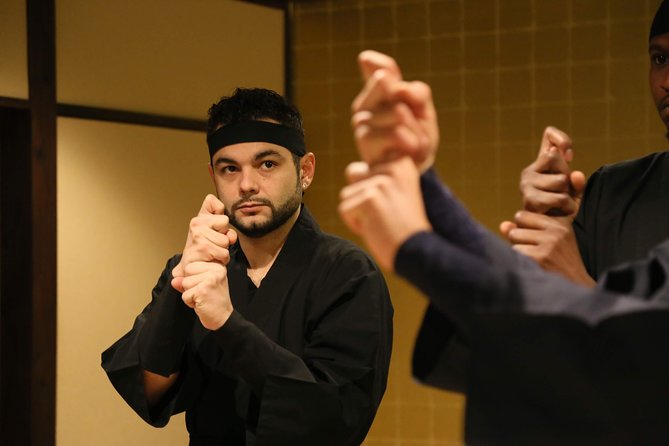
After meditation and breathing, you’ll work on ninja walking. This is the skill that usually separates realistic training from “look at me” cosplay.
What I like about starting here: walking changes everything. When your steps are stable and your posture is quiet, the weapon practice becomes safer and easier. It also makes it more fun, because you can see improvement right away, even as a first-timer.
If you’re bringing kids, this is a smart stage because it’s active but not overwhelming. Older kids and adults often enjoy it too because it creates a foundation you can feel.
More Samurai and Ninja sessions in Kyoto:
- Skip the lines Basic Ticket at SAMURAI NINJA MUSEUM KYOTO
★ 4.5 · 632 reviews - Ninja 1-hour Hands-on Lesson by Japanese master in Kyoto -Entry
★ 5.0 · 489 reviews - Kyoto: Ninja Weapon Forging Experience
★ 4.8 · 478 reviews - Kyoto: Samurai Kenbu Traditional Sword Dancing Show
★ 4.5 · 426 reviews
The ninja trick house gimmick and trap training
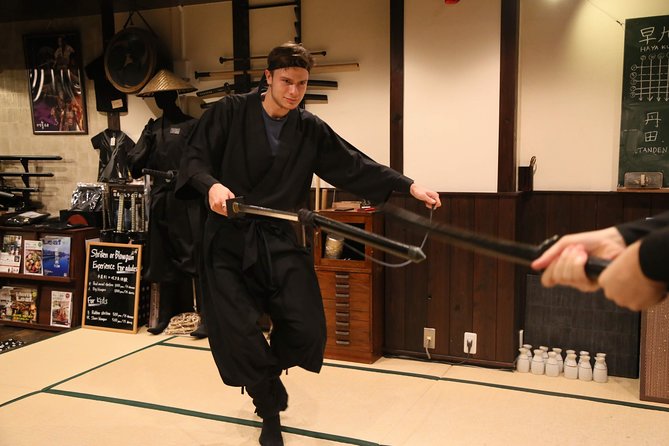
This lesson includes an introduction gimmick and trap at a ninja trick house. I’m glad they included it, because it turns the class from a list of techniques into a mini scenario.
In practical terms, scenario training helps you understand timing and reaction. It also breaks up the session so it doesn’t feel like nonstop repeating in one room. You still get supervised instruction, but the setting makes it more playful.
One thing to keep in mind: scenario elements can be exciting, which means the instructor’s role in keeping everyone focused matters even more. Go in with a good attitude, listen early, and you’ll get more out of it.
Weapon training, from kunai to shuriken to blowgun
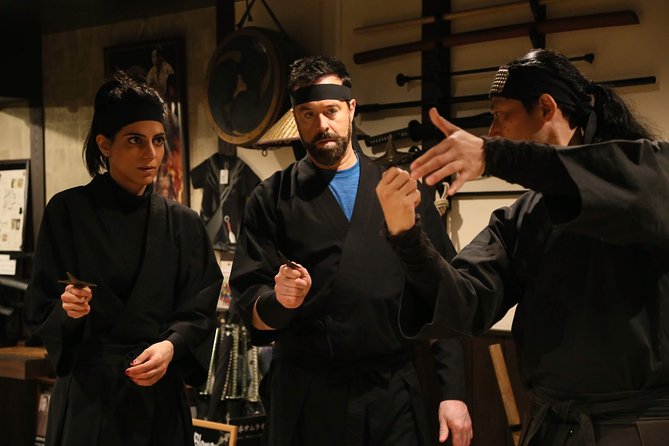
This is where the lesson earns its reputation. You’ll try a whole sequence of ninja tools, each one building on the last. The curriculum includes:
- Kunai (dagger)
- Kusarigama (sickle with chain)
- Rope technique and kunai with rope
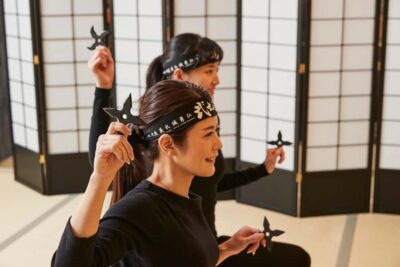
- Shuriken (ninja star), plus ninja sword with shuriken
- Stick type shuriken
- Ninja blowgun (blow darts)
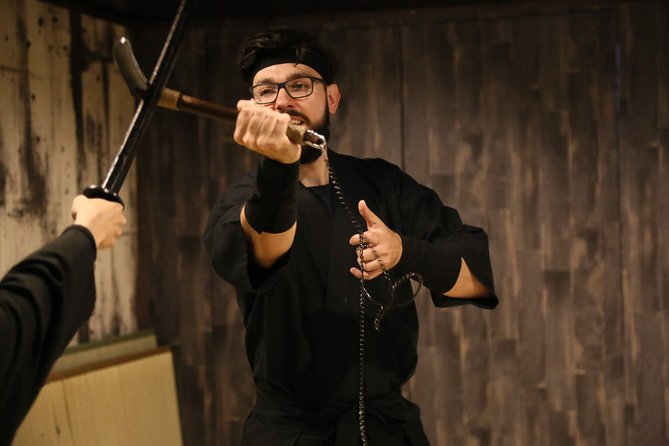
- And training for the ninja sword
If you’re thinking, that sounds like a lot for two hours, you’re right. The key is that the class is structured as an entry-level lesson with additional techniques, not a single-weapon deep course. You get variety, and you get coaching so you are not just swinging wildly.
Why this variety is good value: it gives you a sense of how ninja tools served different purposes. Kunai and shuriken are about quick control and range. Rope and kusarigama add a different kind of movement, more angles and timing. Blowgun-style drills are about steadiness and precision.
One especially praised aspect from reviews is that the hands-on parts feel controlled and legitimate. One reviewer even highlighted being allowed to try weapons on targets, which is the part that makes it feel like real training rather than a demo.
Ninja sword training and the shuriken connection
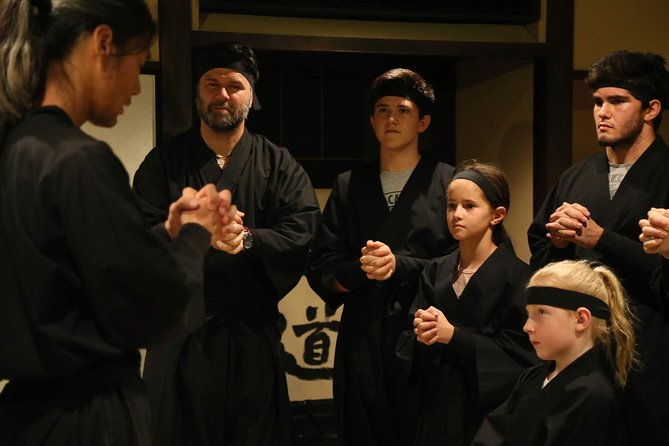
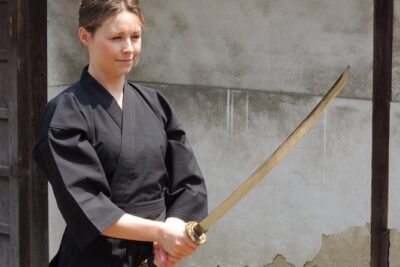
The sword segment, plus the ninja sword with shuriken pairing, is a great example of the class design. Instead of treating everything separately, the lesson connects tools so the movements feel like a coordinated system.
For you, that means you’ll likely leave with more than random muscle memory. You’ll walk away understanding how a weapon drill changes your stance and how your focus shifts when you move from one tool to the next.
It also helps you get better photos and better personal confidence, because your body is set up correctly. Reviews repeatedly mention the “fully ninja” look and the fun of handling authentic gear, and that makes sense once you experience the sequence.
Small group size: how it improves your results
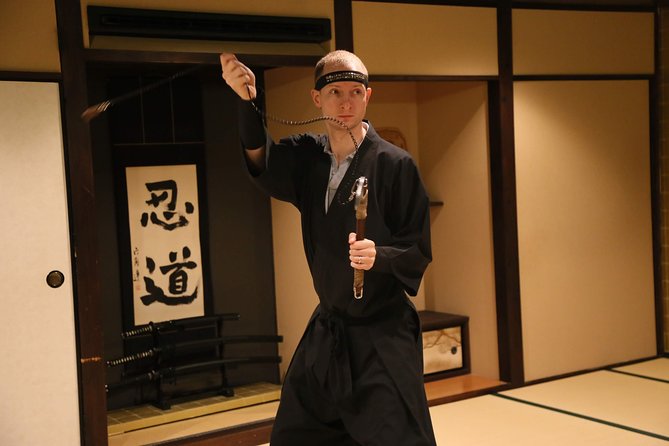
The group limit is no more than six. That might sound like a marketing detail, but in a workshop like this, it’s the difference between rushing and learning.
With a tiny group, instructors can correct your grip, posture, and timing without you feeling lost. It also helps for weapon practice. Even when you’re excited, you benefit from being watched closely and given clear cues.
This is also why the class seems to work across ages. Reviews describe the experience as fun for kids, teens, and adults, including families and even older couples who were not very limber. The shared thread is that the instructor adjusts the pace and keeps it accessible.
Clothing rental and the photo bonus you might get
You’ll receive ninja clothing rental during training. This is more than a costume perk. It also standardizes the look and feel of the session, so you are not stuck wearing clothes that restrict movement.
In reviews, a few people mention that staff take professional photos and send them after the class the same day, sometimes via email. That part is not listed in the core inclusions, so I’d treat it as a nice potential bonus, not something to plan around.
Still, the rental outfit alone is worth it. It turns the class into a real memory, not just a skill you forget once you leave.
Price and value: what $95.51 really covers
Let’s talk about money in plain terms. At $95.51 per person for about 2 hours, you are getting:
- Instruction from a Japanese sensei master trained in ninja arts, taught in English
- Included ninja clothing rental
- Admission fee included in the session
- A full entry-level skill program plus extra techniques
- A small-group experience with a maximum of six people
What you’re not getting is food, hotel pickup, or drop-off. And that’s fine. This is the kind of activity you slot into your day like a class, then grab a meal after.
Is it expensive compared to generic street entertainment? Yes. But it’s also a different category. You’re paying for structured practice time with a trained teacher, plus equipment handling, which you cannot replicate on your own safely or convincingly.
Who should book this ninja lesson in Kyoto
This is a great fit if you want one of those Kyoto experiences that feels hands-on and memorable, without needing advanced skills. You’ll probably enjoy it most if you:
- Want a fun family activity that includes real practice, not only watching
- Like interactive workshops where you learn by doing
- Prefer English instruction so the movements make sense quickly
- Enjoy getting dressed up, but you want it to lead to actual skill training
If you are mainly searching for deep historical lectures about ninja culture, this likely won’t fully satisfy that craving. From feedback in the room, the lesson is more technique-forward, with the focus on meditation, breathing, walking, and weapon skills. If you want the history too, pair it with other Kyoto sights and museums and treat this as your action session.
Practical tips to get the most from your 10:00 am class
A few choices can make your experience smoother:
- Arrive a little early so you’re not rushed during the outfit change and shoe-to-slipper moment
- Wear comfortable clothes underneath your ninja outfit, since you’ll move and handle gear
- Listen carefully during weapon sections, even if you feel confident at first
- If you have mobility limits, tell the instructor right away and slow down your form first
- Bring a positive, playful mindset for the trick house elements, then focus on precision once training begins
The group stays small, so you’ll get better results when you stay attentive and engaged. It’s not about “being tough,” it’s about doing the drills correctly.
Should you book Ninja Dojo’s 2-hour lesson
Yes, if you want a structured, small-group activity that blends Kuji-In meditation, ninja breathing, ninja walking, and real weapon technique practice, this is one of the most fun ways to spend a couple hours in Kyoto. The value is strong because clothing rental and the admission fee are included, and because you’re actually training, not just touring.
Skip it or go in with expectations adjusted if you’re hoping for a history-heavy, lecture-style experience or you dislike any physical activity at all. Also, because it requires good weather, you should book it on a day where you can flex if plans change.
If you want a genuine change of pace from temples and streets, this is a smart booking.
FAQ
How long is the Ninja 2-hour hands-on lesson?
The lesson is approximately 2 hours.
What time does the class start in Kyoto?
The start time is 10:00 am.
Where do we meet for the lesson?
You meet at NINJA DOJO and STORE KYOTO, 528 2F, Hakurakutenchō, Shimogyo Ward, Kyoto 600-8422, Japan. The activity ends back at the same meeting point.
How big is the group?
The maximum group size is 6 travelers.
Is the instruction available in English?
Yes. The Japanese sensei master who teaches ninja arts instructs in English.
What is included in the ticket price?
Included items are the sensei instruction, ninja clothes rental during training, and the admission fee.
What is not included?
Food and drink are not included, and there is no hotel pickup or drop-off.
Does it depend on weather?
Yes, it requires good weather. If canceled due to poor weather, you’ll be offered a different date or a full refund.
Are service animals allowed?
Yes, service animals are allowed.
Is this experience suitable for kids?
Most travelers can participate, and the provided information includes many family-focused reviews with children participating in the class. There is no specific minimum age stated in the details provided.
Newly listed around Kyoto
- Taste of Nishiki Market Walking Food Tour with Local guide★ 5.0 · 17 reviews
- Kyoto: Sushi Making Class with Sushi Chef★ 4.8 · 64 reviews
- Simple Plan with Maiko★ 4.4 · 10 reviews
- Shibori Furoshiki Course at Kyoto Shibori Museum★ 5.0 · 21 reviews
- Kyoto: City Secrets eBike Tour★ 4.9 · 196 reviews
- Sacred Pathways: Discover the Philosopher’s Path of Kyoto★ 4.9 · 20 reviews
- Private Tour to Monkey Park and Arashiyama Highlights★ 5.0 · 22 reviews
- Private Nara Tour from Osaka – Meet at Your Hotel★ 5.0 · 22 reviews
Samurai Sword & Ninja Training, compared.

Samurai Ninja Museum Guided tour and Experience
Read our review →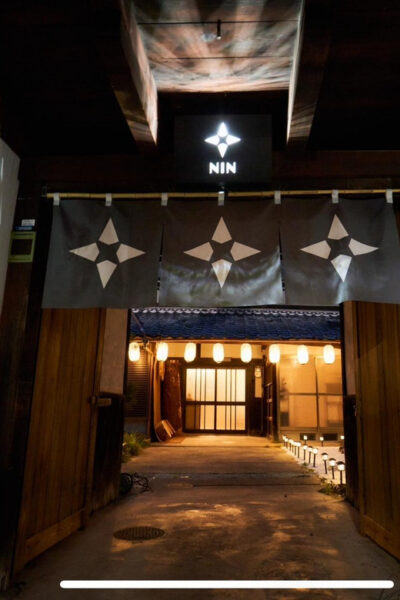
Kendo and Samurai Experience with Uniform and Gear
Read our review →
Samurai Sword Class by Experts in Traditional Arts
Read our review →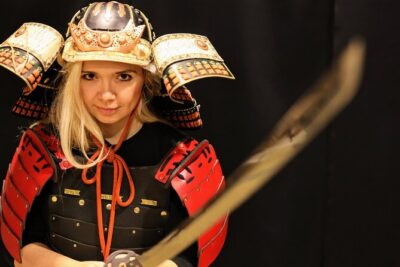
Skip the lines Basic Ticket at SAMURAI NINJA MUSEUM KYOTO
Read our review →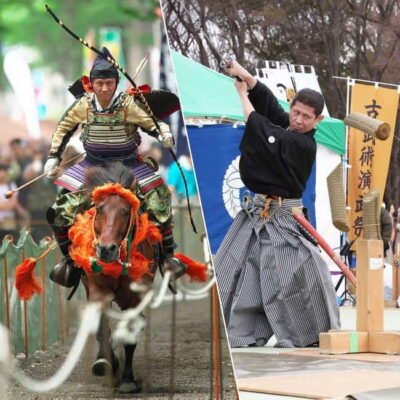
Samurai Sword & Archery Class from Samurai Descendant
Read our review →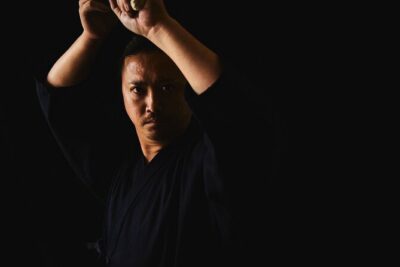
Browse the lists this tour appears in