
Review · CYCLING & E-BIKE RIDES
Private eBike Tour Exploring Fushimi with Torii Red Gate Ride
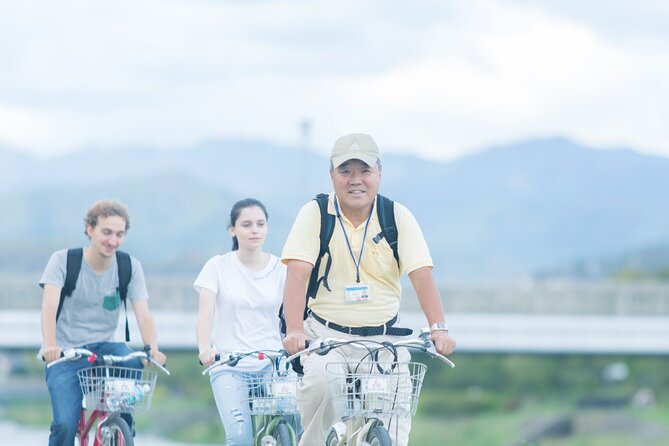
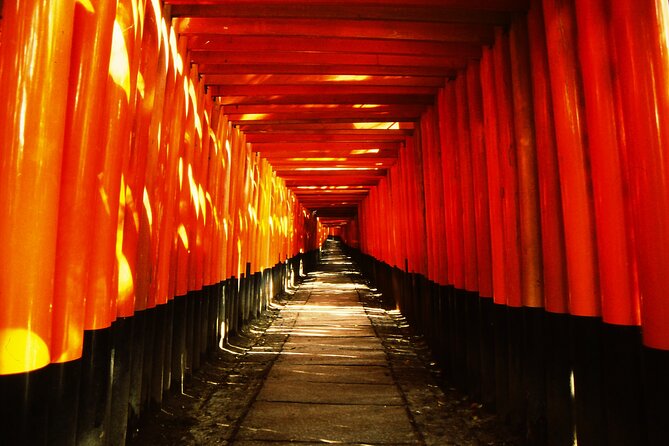
Red torii gates make Kyoto unforgettable. This private e-bike ride strings together Fushimi Inari torii red gates with calm cycling and key temple stops, led by an approved English-speaking guide. I also like that you get the city momentum without the full-on walking grind, thanks to the e-bike power.
You’ll love the mix of big-ticket Kyoto sights and small, practical moments. Sanjusangendo’s thousand Buddha statues gives you a focused, sit-still feeling, then you roll back out on the bike for Kamo River scenery.
One drawback to plan for: the tour runs in rain, so pack your own dry layer and be ready for damp hands and photo gear.
In This Review
- Key points before you ride
- Why this Kyoto e-bike route makes sense
- Meeting at Kyoto Station, getting geared up
- Stop 1: The Nintendo Original Building, a quick visual detour
- Stop 2: Sanjusangendo Temple and the hour inside
- Stop 3: Tofuku-ji Temple for quiet Zen photo time
- Stop 4: Fushimi Inari-taisha, torii red gate paths with a guide
- The ride back along the Kamo River, where Kyoto feels softer
- Price and what you’re really paying for
- Guides can make or break this tour, and here’s the proof
- How this fits different travelers
- Should you book this Fushimi e-bike tour?
- FAQ
- How long is the private e-bike tour exploring Fushimi?
- Where does the tour start?
- Is this a private tour?
- What’s the group size limit?
- Which stops are included in the itinerary?
- Is any temple admission included?
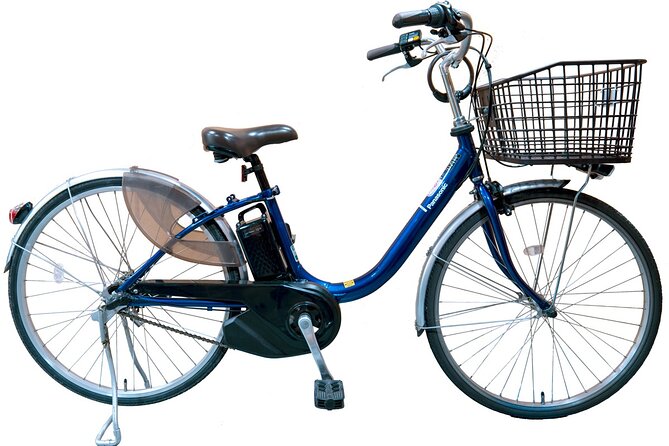
- Does the tour include an e-bike, helmet, or rain gear?
- What should I bring for snacks?
- Does the tour run in bad weather?
- What are the requirements for children?
- Is there a refund if I cancel?
Key points before you ride
- Private group pacing for a route built around Fushimi Inari, without feeling rushed.
- E-bike comfort that makes temple-hopping realistic in 3 hours 30 minutes.
- Sanjusangendo included so you can spend a full hour inside the temple.
- Photo support is a real theme, with guides like Yuichi helping you get great shots.
- Kamo River return ride for a calmer end to a shrine-heavy day.
Why this Kyoto e-bike route makes sense
Kyoto is a dream on two wheels, as long as you pick the right kind of route. This tour focuses on smaller streets and a smooth flow between sites, so you spend less time fighting traffic and more time actually enjoying the walkways, gates, and temple approach roads.
The e-bike part matters. You’re still doing real sightseeing, but the motor helps you keep a steady pace on small climbs and uneven surfaces. That means you can linger at viewpoints near Fushimi Inari instead of cutting everything short just to make it to the next stop.
And the schedule feels designed for adults and families who want meaning, not just checklists. You get guided context at the major stops, then you get breathing room to wander.
More Bike Rides in Kyoto
- Bike Tour Exploring North Kyoto plus Lunch
★ 5.0 · 1,087 reviews - Arashiyama Bamboo Forest & Hidden Gems Bike Tour (Early Bird)
★ 5.0 · 613 reviews - 5 Top Highlights of Kyoto Full Day Bike Tour (E-bike option)
★ 5.0 · 511 reviews
Meeting at Kyoto Station, getting geared up
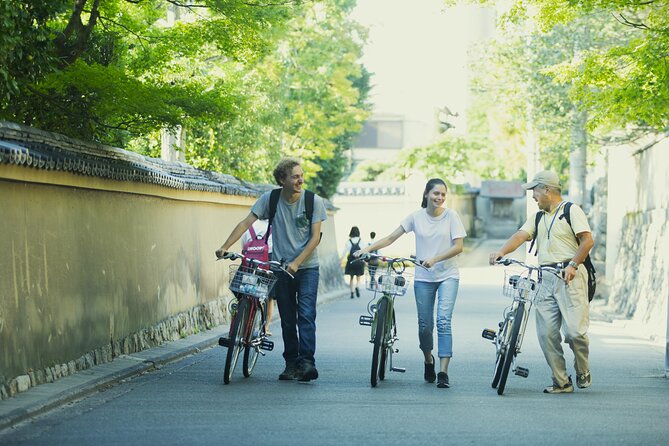
The tour starts at Kyoto Cycling Tour Project, Kyoto Station Cycle Terminal (address: 552-13 Higashiaburanokōjichō, Shimogyo Ward). It’s a good anchor point because Kyoto Station is a transit hub and easy to find on your first day.
Once you’re set, the included gear helps you move comfortably:
- helmet
- rain poncho
- original cycling map
Accident insurance is included too. That’s not the most exciting line on a brochure, but it makes the whole thing feel easier. You’re still riding on public roads, so helmet and common sense are the baseline.
Stop 1: The Nintendo Original Building, a quick visual detour
This is a short stop, about 10 minutes, with a free admission ticket. The idea is simple: see the former offices of one of Kyoto’s famous companies, then move on.
Why it works: it’s not another museum time-bomb. It’s a quick break that gives you a different Kyoto texture, from ancient shrines to the city’s modern identity.
A practical tip: since it’s brief, treat it like a photo opportunity and orientation moment. Don’t overcommit mentally. The real energy hits at Sanjusangendo and Fushimi Inari.
Stop 2: Sanjusangendo Temple and the hour inside
Sanjusangendo Temple is where this tour slows down. You get about one hour here, and admission is included. The guide stays with you and explains the history and significance, then you’re free to walk the corridors at your own pace.
What makes this stop memorable is the sheer concentration of detail. You’re walking through long, older-feeling corridors filled with the sight of a thousand Buddha statues. Even if you’re not into religious architecture, the visual repetition does something to your brain. It turns a big landmark into something you experience in layers.
The downside, if you’re worried about pacing: one hour can feel long if you prefer fast photo stops. Still, it’s a good length for looking, pausing, and letting your eyes adjust.
More Bike Tours in Kyoto
- Hidden Kyoto E-Biking tour
★ 5.0 · 1,843 reviews - Full Day Biking Tour Exploring the Best of Kyoto
★ 5.0 · 498 reviews - Kyoto: Memory Kyoto E-Bike Tour
★ 4.8 · 297 reviews - E-Bike Tours of the highlights of Kyoto!!!
★ 5.0 · 291 reviews
Stop 3: Tofuku-ji Temple for quiet Zen photo time
Next comes Tofuku-ji, a shorter stop around 15 minutes, with free admission. The focus here is quick photos at a quiet but imposing Zen temple.
This is a smart contrast after Sanjusangendo. Sanjusangendo pulls you into an intense visual field. Tofuku-ji gives you a calmer burst of atmosphere, often with fewer moving parts.
If you like compositions, look for framing moments between structures rather than just standing in front. With only 15 minutes, you want a few solid shots, not ten hurried ones.
Stop 4: Fushimi Inari-taisha, torii red gate paths with a guide
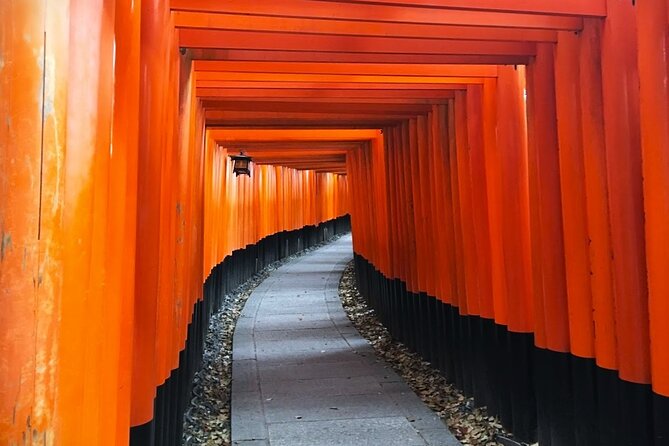
Fushimi Inari-taisha is the headline stop, about one hour total. Admission is free, and the guide takes you along the thousand-gate paths while explaining the shrine.
Here’s the big value of a guide on this section: the gates are iconic, but the meaning behind the layout, the way people move through the paths, and what you’re looking at can be confusing if you’re doing it alone. With an English-speaking guide, you spend less time guessing and more time noticing.
Also, you’re not just doing a photo sprint. The tour structure gives you enough time to walk through the torii areas and still stop when you hit a view that feels right. The pacing aims to help you avoid the heaviest crowd surges so you can actually enjoy the walk.
Practical note: these paths involve walking inside shrine grounds. Bring your best “good shoes” mindset, even though you’re on an e-bike for the long stretches.
The ride back along the Kamo River, where Kyoto feels softer
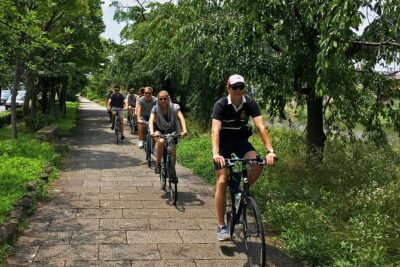
After the shrine stops, you remount the bikes and head back toward Kyoto Station. The route includes a peaceful embankment ride by the Kamo River, with wildlife you might spot along the way.
This part is underrated. You’ve just seen intense religious landmarks. The Kamo River segment gives you a reset, a calmer rhythm, and a chance to ride without constantly scanning for where to turn next.
If you’re traveling with kids, this is often the “everyone relaxes” moment, because the bike ride feels like the reward after the temples.
Price and what you’re really paying for
The price is $111.05 per person for about 3 hours 30 minutes. On paper, that’s not cheap. In practice, you’re paying for a bundle: e-bike use, helmet and rain poncho, a licensed or certified English-speaking guide, accident insurance, and a guided route that strings together multiple major sites.
Here’s how that adds up:
- You don’t have to coordinate transfers between far-flung stops.
- You get guidance at Sanjusangendo and Fushimi Inari, where explanations help you understand what you’re seeing.
- You get one included admission fee, Sanjusangendo.
- You get a bike and a route map, plus an itinerary that already accounts for cycling time between locations.
For $111.05, you’re buying time and smoothness. You’re also buying the kind of route flow that can be harder to recreate if you’re building everything yourself under a tight half-day window.
Guides can make or break this tour, and here’s the proof
This tour’s quality shows up in the guide experience. Multiple guides have strong, practical styles, and the details matter.
I like the consistency: guides bring energy, humor, and real patience. One guide, Kaz, is described as warm and welcoming, full of energy, and able to mix local history with humor. Another, Yuichi, is praised for keeping the tour chilled while still showing a lot of cool spots, plus helping with photos. Tibor is highlighted for being fun and patient with kids, and another guide, Kas, is praised for bringing temple and shrine history to life with detailed explanations.
The most serious example of guide character is support in a tough moment. JJ spent two hours of personal time helping with a small medical emergency, because navigating the next steps is harder when you’re stressed.
That’s not a “nice to have.” It’s part of why a private tour feels safer and smoother than solo planning, especially when you’re riding and moving between sites.
How this fits different travelers
This is a private tour, and your group rides with the guide only. That makes it a good match if you want to:
- avoid waiting around in a larger crowd format
- move at your own pace within the tour timing
- ask questions without cutting into someone else’s schedule
Group size is capped: minimum 2 and maximum 6 guests per guide. In groups of 7 to 12, an extra guide can be arranged with no extra fee, which is helpful if you’re traveling with friends or family.
Kids can join if they’re at least 10 years old, 145 cm or taller, and able to ride a bicycle safely on the road unassisted. If your child still needs training wheels or constant help, this is likely not the right setup.
Should you book this Fushimi e-bike tour?
Book it if you want a half-day that balances “wow sights” with comfortable pacing. The combination of torii paths at Fushimi Inari, a full hour at Sanjusangendo, a quieter Tofuku-ji stop, and a Kamo River ride back is a strong route for first-time Kyoto visitors and anyone who wants fewer transportation headaches.
Skip or rethink it if you hate riding in rain, or if you’d rather spend your time in one place instead of seeing several sites in a single window. Also, if your group is only one person, note that one-person participants are not accepted for this tour.
If you’re set on Kyoto by bike and you want guided context at the two big shrine stops, this one is an efficient, memorable plan.
FAQ
How long is the private e-bike tour exploring Fushimi?
It’s about 3 hours 30 minutes, and that duration includes the time cycling between locations.
Where does the tour start?
The tour starts at Kyoto Cycling Tour Project, Kyoto Station Cycle Terminal at 552-13 Higashiaburanokōjichō, Shimogyo Ward, Kyoto 600-8235, Japan.
Is this a private tour?
Yes. It’s private, so only your group participates.
What’s the group size limit?
The minimum is 2 guests and the maximum is 6 guests per guide. If your group is 7 to 12 people, an extra guide can be arranged with no extra fee.
Which stops are included in the itinerary?
The tour includes stops at the Nintendo Original Building, Sanjusangendo Temple, Tofuku-ji Temple, Fushimi Inari-taisha Shrine, and a ride along the Kamo River on the way back.
Is any temple admission included?
Yes. Admission to Sanjusangendo Temple is included. The other listed stops have free admission tickets.
Does the tour include an e-bike, helmet, or rain gear?
Yes. Included are the use of a bicycle, a helmet, and a rain poncho.
What should I bring for snacks?
Snacks are not included, so you may want to bring your own.
Does the tour run in bad weather?
The tour will operate in rain.
What are the requirements for children?
Children must be at least 10 years old, at least 145 cm tall, and able to ride a bicycle safely on the road unassisted.
Is there a refund if I cancel?
Cancellation is not refundable and cannot be changed for any reason.
More E-Bikes in Kyoto
- Early Bird E-biking through East Kyoto
★ 5.0 · 114 reviews - Best of Kyoto: Ginkakuji & Path of Philosophy E-Bike Tour
★ 4.9 · 79 reviews - Kyoto: Hidden Gems E-Bike Tour with Local Guide
★ 4.9 · 75 reviews - Kyoto: Fushimi Inari Shrine and Tofukuji Temple E-Bike Tour
★ 5.0 · 75 reviews
More Cycling Tours in Kyoto
- Afternoon Kyoto Bike Tour: Bamboo Forest, Monkeys & Hidden Spots
★ 5.0 · 283 reviews - South Kyoto in a Nutshell: Gentle Backstreet Bike Tour!
★ 5.0 · 225 reviews - Kyoto: City Secrets eBike Tour
★ 4.9 · 196 reviews - Historical Kyoto E-Bike Tour
★ 5.0 · 181 reviews
Newly listed around Kyoto
- Kyoto Full Course Tour: Explore 10 Must-See Sights & Hidden Gems★ 4.5 · 25 reviews
- Takashi’s local food adventure through Gion Kyoto tips of Ramen★ 4.5 · 8 reviews
- Kyoto night walk tour (Gion district)★ 5.0 · 91 reviews
- 2 Hour Night Walking Tour Throughout Gion with snack★ 4.0 · 13 reviews
- Guided Gion Tour: Explore Kyoto’s Historic Geisha District★ 4.5 · 16 reviews
- Kyoto Evening Gion Food Tour Including Kaiseki Dinner★ 5.0 · 62 reviews
- Gion and Fushimi Inari Shrine Kyoto Highlights with Government-Licensed Guide★ 4.5 · 21 reviews
- Treasures of Kyoto: Geishas & Traditions Private Tour★ 5.0 · 36 reviews
Cycling & E-Bike Rides, compared.
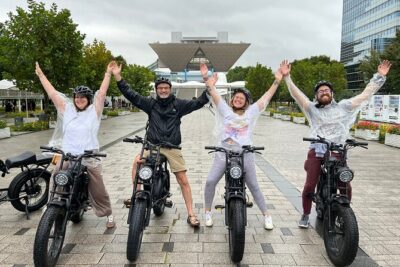

3h Tokyo E-Bike Tour: Hidden Gems, and Local Life with guide
Read our review →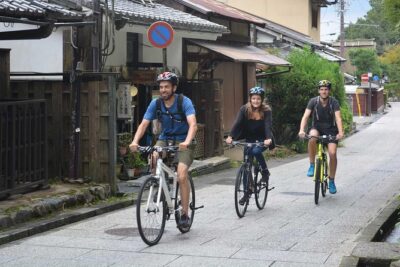
Arashiyama Bamboo Forest & Hidden Gems Bike Tour (Early Bird)
Read our review →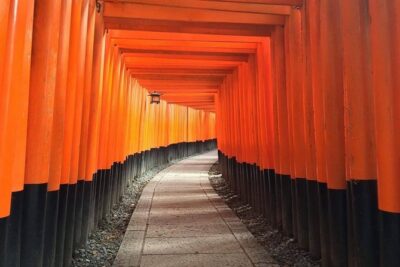
5 Top Highlights of Kyoto Full Day Bike Tour (E-bike option)
Read our review →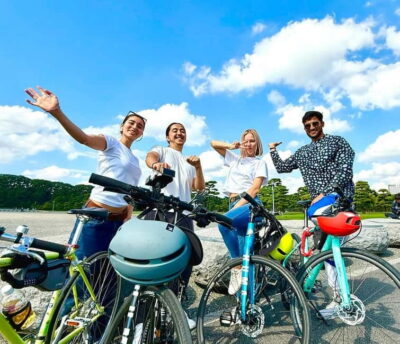

Hiroshima 2hr Peace Cycling Tour with Local Guide
Read our review →Browse the lists this tour appears in