Review · KYOTO TOURS
Private Japanese Sound Bath in Kyoto
Lie down, and Kyoto gets quieter. This private sound bath is built around a uniquely Japanese instrument, the Singing Ring, and a Zen style session you do not need to “figure out.” I especially like that it is fully private, so it stays calm and personal, not shared with strangers. One consideration, if you choose it, the Traditional Tatami Room is at a separate venue, so you will want to follow the directions you receive after booking.
I also appreciate the practical human touch from guide Junichiro, including meeting you near public transit and, in at least one case, at a nearby FamilyMart so you do not have to hunt down a small location. Expect a simple routine: you arrive, get set up on a heated mat with an eye mask and blanket, and then you just lie there while the sound and vibrations work.
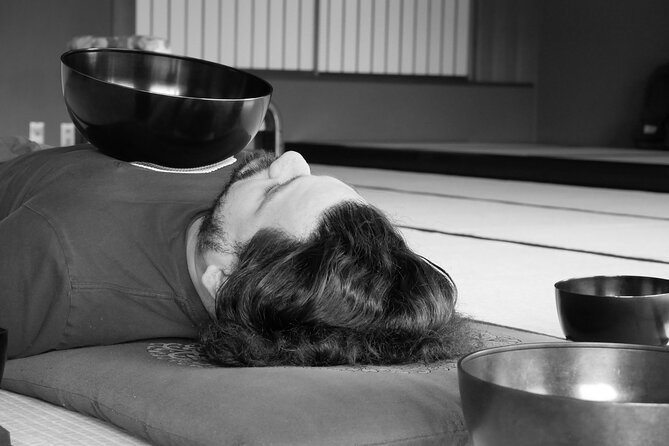
What you feel will be the main event. Beyond the Singing Ring, some sessions include instruments like copper bowls placed on or near your body, and people describe the vibrations as calming and grounding. If you are expecting a guided meditation with lots of movement, this is more like controlled quiet than an active class.
In This Review
- Key Things to Know Before You Book
- Kyoto Quiet Time, with a Fully Private Sound Bath Setup
- Meet Your Guide and Find Little Granmy Kyoto Without Stress
- What Happens During the 60-Minute Session
- The Singing Ring and the Vibrations You Can Actually Feel
- Why Private Beats Big Group Sound Baths in Kyoto
- Price and Value at About $97.73 Per Person
- Should You Bring a Friend, Partner, or Family Member?
- Traditional Tatami Room Option, and Why It Changes the Day
- Final Call: Should You Book This Private Sound Bath in Kyoto?
- FAQ
- How long is the private sound bath session?
- Is this experience private?
- Where does the tour start, and where does it end?
- Is the Traditional Tatami Room at the same location?
- What instrument is used during the session?
- Can I cancel, and when do I get a refund?
Key Things to Know Before You Book
- Private by design: your time slot is reserved so no other guests get added once confirmed
- Handcrafted Singing Ring: made one by one by Japanese artisans, central to the experience
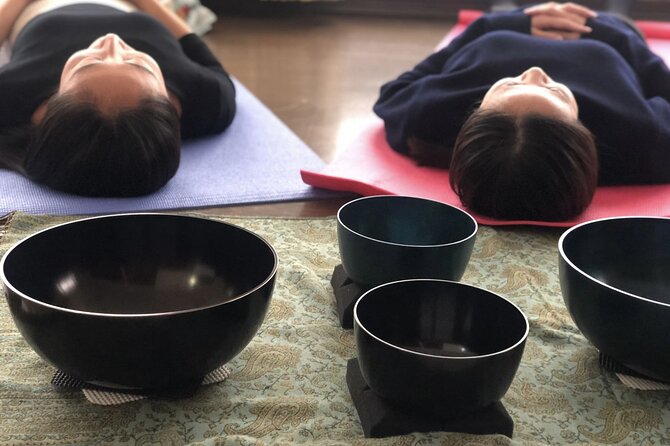
- Comfort setup: you lie on a heated mat with an eye mask and a blanket
- Junichiro can guide you to the door: meeting near public transportation, and sometimes at a nearby FamilyMart to prevent getting lost
- Sound you can feel: you may experience vibrations through instruments placed on your body
- Optional Traditional Tatami Room: different venue, and you can sometimes request space for up to 3 people
Kyoto Quiet Time, with a Fully Private Sound Bath Setup
This is not a “group hangout with ambient music.” It is a private sound bath session built for stillness. You lie down for about 60 minutes, in a calm space, with the whole focus on sound and vibration.
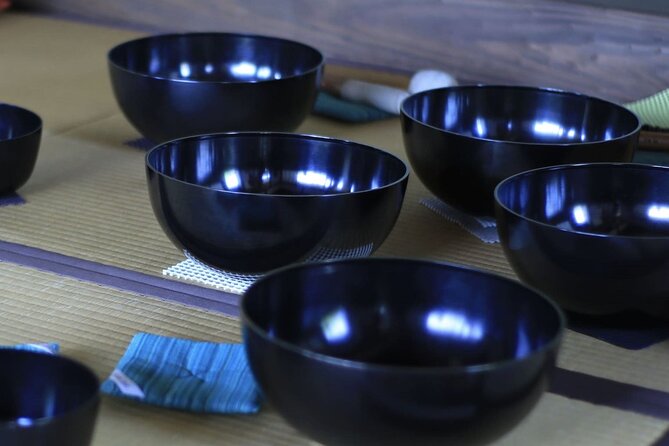
Two things make this format genuinely appealing. First, you get the quiet of being alone together, which matters for relaxation. Second, the main instrument is the Singing Ring, a Japanese harmonic instrument made by artisans by hand. The idea is simple: you do not talk your way into relaxation, you let the sound do the work.
The only watch-out is the optional room type. If you want the Traditional Tatami Room, you will go to a separate venue, and the exact location cannot be set in the usual map link. You will receive guidance after booking, so plan to check your message.
A few more Kyoto days to weigh up
- PERFECT KYOTO 1-Day Bus Tour
★ 5.0 · 13,518 reviews - Kyoto: Fushimi Inari, Kinkakuji, Bamboo Grove 1 Day Bus Tour
★ 4.8 · 4,316 reviews - Kyoto: Tea Ceremony in a Traditional Tea House in Kiyomizu
★ 4.9 · 3,519 reviews
Meet Your Guide and Find Little Granmy Kyoto Without Stress
Your session starts and ends at Little Granmy 京都Japan, located in Shimogyo Ward (Koinarichō, 85-10-203). The exact address is part of what you are given, and it is near public transportation, which helps if you are building this into a day of Kyoto walking.
Even so, Kyoto can be tricky with small buildings and narrow streets. This is where Junichiro’s approach helps. In one detailed account, the guide met the guest at a local FamilyMart to prevent getting lost, then led them to the correct spot. If you want a low-friction start, choose your meeting point timing carefully and be ready to message or call if you are stuck.
Because the activity ends back at the meeting point, this also fits neatly into a planned itinerary. You do not have to worry about a complicated transfer out of the area after the session.
What Happens During the 60-Minute Session
Think of this as a slow, structured reset rather than a performance. Here is the flow you can expect.
1) Check-in and setup
You arrive and meet your guide. You will be directed to the relaxation setup, usually including a heated mat, plus an eye mask and a blanket. The comfort part matters because the whole point is to stay still and let sound and vibrations do their job.
2) Getting oriented, then lying down
Junichiro is described as kind and professional, and in multiple accounts he explained what was going to happen clearly. That matters if you are trying sound therapy for the first time, because your brain stays calmer when you know what to expect.
3) The sound bath itself
You lie down while the Singing Ring is played. People describe the experience as meditative and calming, like a Zen moment while you are lying down. In some sessions, you may also feel bowls placed on your body for parts of the bath, which turns the vibration from a background sensation into something physical.
4) A quiet landing back into the day
The session finishes and the activity ends back at the meeting point. There is no big logistical scramble at the end, which is exactly what you want after a relaxing hour.
In terms of timing, the duration is listed as about 1 hour 20 minutes. That usually covers the session plus time for setup and getting you settled. If you have a tight dinner reservation right after, give yourself a buffer so you do not rush out of a calm state.
The Singing Ring and the Vibrations You Can Actually Feel
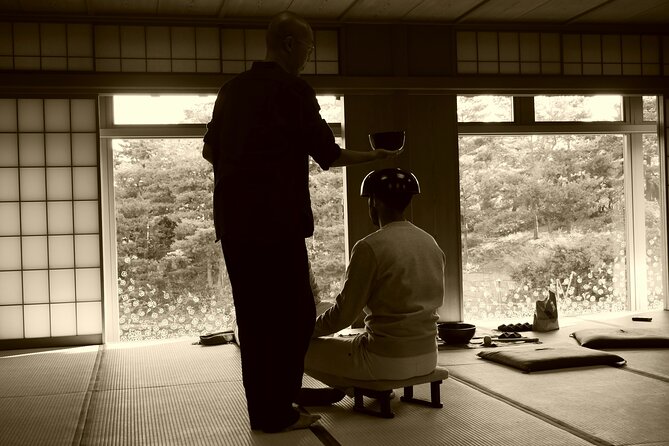
The star of this experience is the Singing Ring, a harmonic instrument crafted one by one by Japanese artisans. Instead of just playing sound in the room, the session aims to create a body-to-sound connection through resonance.
A helpful way to understand the experience is this: you are not supposed to “perform wellness.” You lie down, and your nervous system does the rest. Reviews mention eye masks and blankets, plus instruments placed on the body, so you may feel warmth and vibration directly. One review notes that copper bowls gave wonderful vibrations that were especially calming when placed on the body.
So what should you pay attention to during the session? Not your thoughts. Pay attention to physical signals: the warmth of the mat, the steady rhythm of the sound, and how vibrations travel through your body. Even if you are skeptical before starting, that physical feedback is what people seem to remember most.
And yes, the guide’s role matters. When Junichiro teaches with pride and shares what he is doing, it keeps you from second-guessing the experience. You are more likely to let go when you feel guided but not rushed.
A different sort of day in Japan:
- Kyoto Geisha Walking Tour: Gion District & Hidden Gems
★ 4.7 · 3,273 reviews - Kyoto: Tea Ceremony Ju-An at Jotokuji Temple
★ 4.9 · 3,207 reviews - Kyoto: 45-Minute Tea Ceremony Lesson Experience
★ 4.3 · 2,378 reviews - Kyoto: Gion Geisha District Walking Tour – Stories of Geisha
★ 4.7 · 2,187 reviews
Why Private Beats Big Group Sound Baths in Kyoto
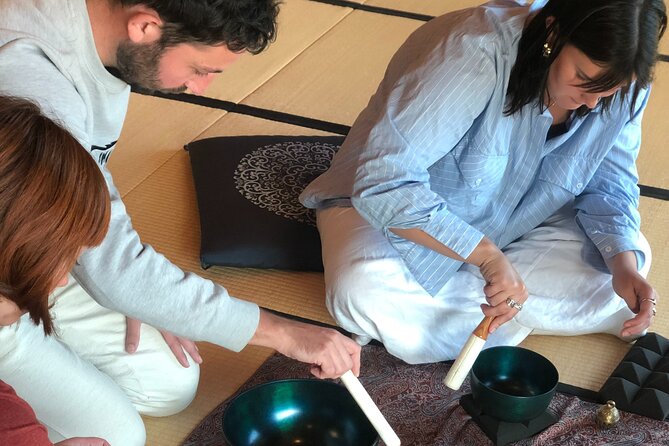
Kyoto is full of shrines, streets, and constant motion. This experience gives you the opposite of that, and the privacy is part of the value.
In a shared group, you can never fully relax. Someone might shift, talk, or check their phone. Here, the session is private for your group, and up to 2 guests can join. Once your booking is confirmed, no other guests are added to your time slot. That simple rule keeps the atmosphere consistent.
Privacy also helps if you bring someone who is new to sound baths. One account describes doing the session with a 16-year-old who was reluctant at first, and they both enjoyed it. A private setting can reduce the pressure of having to “act like you are into it.”
If you prefer quiet over conversation, this is your kind of experience. You do not need to know anything about Japanese instruments to appreciate what you feel.
Price and Value at About $97.73 Per Person
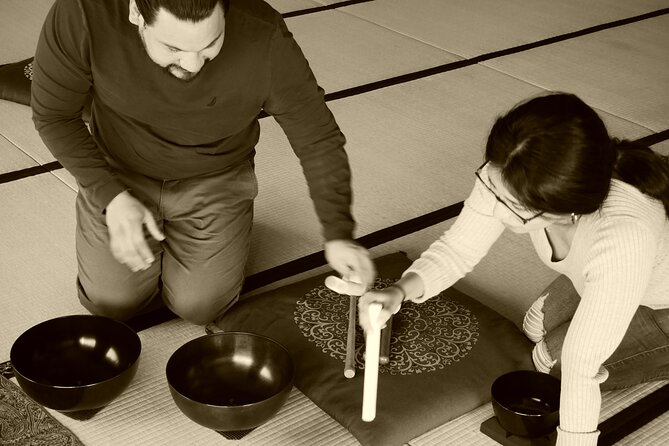
At $97.73 per person, this is not a budget activity. But you are paying for three things that are hard to replicate:
1) A private time slot
Most low-cost sound baths are group sessions. Here, you are effectively buying silence and personal attention.
2) A specialized instrument
The Singing Ring is described as handcrafted by Japanese artisans. That craft is a key part of why this is positioned as a globally unique experience you can only do in Japan.
3) Comfort and guided setup
A heated mat, eye mask, and blanket are included in what people report. That comfort is not always part of cheaper options.
Booking is also relatively forward-planned, with an average booking window of about 38 days in advance. If you are traveling in a busier season, or if you want a very specific time of day, you will likely want to book earlier rather than later.
Should You Bring a Friend, Partner, or Family Member?
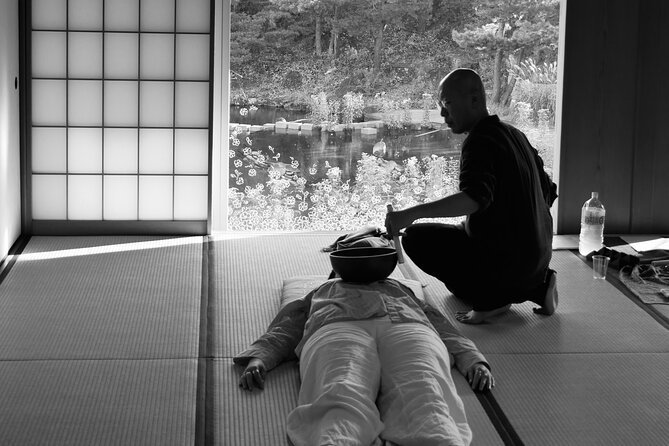
This experience can work for a wide range of people, as long as you are comfortable lying down.
- Best for: stress relief, first-time sound bath tryouts, couples, and anyone who wants a calm break from sightseeing.
- Also a good fit for: people who want guided support but still want a quiet experience. Junichiro is described as explaining things well without making the session feel like a lecture.
- Works well with teens too: at least one reviewer did it with a 16-year-old who ended up enjoying it, which suggests it is not “too spiritual” in a way that shuts people down.
What might not fit? If you are looking for a hands-on workshop, or if you want an active activity you can brag about while standing up, this will feel too still. The point is to lie down and let the sounds and vibrations change your state.
Also, if you want the Traditional Tatami Room, note that it is a separate venue. That does not make it worse, just different. If you are okay following directions carefully, it can be a nice choice.
Traditional Tatami Room Option, and Why It Changes the Day
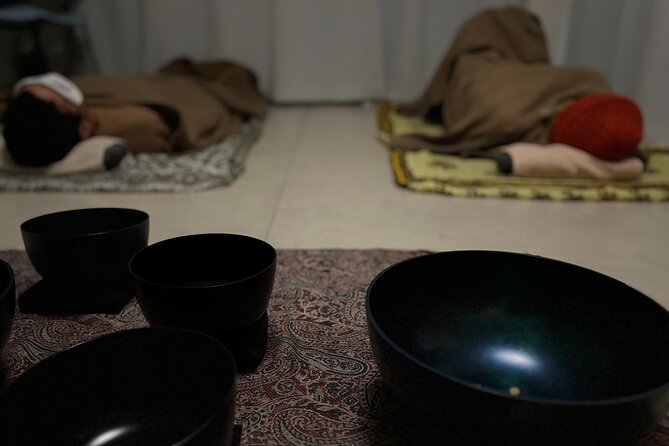
The Traditional Tatami Room is offered as a separate venue from the standard setup. The information you get after booking includes guidance, because the location cannot be set in the map link.
If you want that option, you should think of it like a small detour, not a quick swap. The upside is the feel of a tatami setting. The only “cost” is extra attention to location details so you arrive on time.
There is also a group-size nuance: they may accommodate up to 3 people in the optional Traditional Tatami Room, but you would need to contact them after booking if that is your situation.
Final Call: Should You Book This Private Sound Bath in Kyoto?
Book it if you want a genuine pause in your Kyoto day, and you like the idea of paying for privacy and a thoughtful guide. The combination of a Japanese handcrafted Singing Ring, comfort setup (heated mat, eye mask, blanket), and the chance to feel vibration through instruments placed on your body makes this more than background relaxation.
Skip or reconsider if you dislike stillness. Also think twice if you are the type who hates following location notes, since the Traditional Tatami Room can be at a separate venue.
If you are unsure, treat it like a reset appointment. Even if sound baths are new to you, the session is described as simple: lie down, listen, feel. That is exactly why it works in a city that constantly asks you to move.
FAQ
How long is the private sound bath session?
The sound bath lasts about 60 minutes, and the total activity time is listed at approximately 1 hour 20 minutes.
Is this experience private?
Yes. It is a fully private sound bath session. Up to 2 guests can participate, and once confirmed, no other guests are added to your time slot.
Where does the tour start, and where does it end?
It starts at Little Granmy 京都Japan (Shimogyo Ward, Koinarichō, 85-10-203) and ends back at the meeting point.
Is the Traditional Tatami Room at the same location?
No. The Traditional Tatami Room is at a separate venue. A Google Maps link may be provided but cannot be set on the map, so you should check the guidance message you receive after booking.
What instrument is used during the session?
The session uses the Singing Ring, a special harmonic instrument crafted by Japanese artisans.
Can I cancel, and when do I get a refund?
You can cancel for a full refund if you cancel at least 24 hours before the experience’s start time. If you cancel less than 24 hours before, the amount paid is not refunded.
Newly listed around Kyoto
- Zen Meditation for Life in Kyoto★ 5.0 · 10 reviews
- Kyoto: Zen Meditation at a Private Temple with a Monk★ 5.0 · 25 reviews
- Kyoto Private Customizable Day Tour with Guide and Vehicle★ 5.0 · 52 reviews
- Private Wagyu Beef Tour with a Local Guide★ 5.0 · 6 reviews
- Kyoto: Gion Geisha District & Sake-in-Hand Walking Tour★ 5.0 · 37 reviews
- Your Private Vacation Photography Session In Kyoto★ 5.0 · 110 reviews
- Private Guided Traditional Buddhist Cooking in Japan★ 5.0 · 16 reviews
- Private Pewter Sake Cup Experience with a Kyoto Artisan★ 5.0 · 31 reviews
Kyoto Tours, compared.

Fushimi Inari, Kinkakuji, Bamboo Grove 1 Day Bus Tour
Read our review →
Tea Ceremony in a Traditional Tea House in Kiyomizu
Read our review →
Kyoto Geisha Walking Tour: Gion District & Hidden Gems
Read our review →
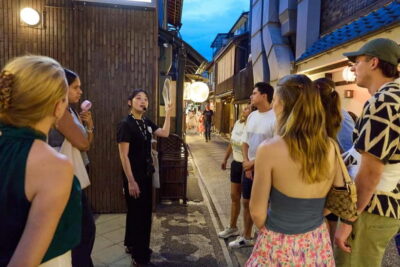
Gion Geisha District Walking Tour – Stories of Geisha
Read our review →