Review · KYOTO TOURS
Shamisen Experience in Kyoto 【Private】
Three strings, one unforgettable hour. This private Kyoto lesson gives you undivided instructor time and a Japanese tea break while learning the shamisen.
It’s a simple swap from sightseeing to hands-on music, and the setting is designed for first-timers who want real, practical technique.
I love the English-friendly lesson plan for absolute beginners, and I love that you’re guided through a jam session at the end.
That combo matters because you’re not just watching, you’re making sound, then building a little confidence fast.
The main drawback is the time frame, about 1 hour 30 minutes, so it’s best if you’re happy with a strong introduction rather than full mastery.
In This Review
- Key takeaways before you book
- Private shamisen lesson in Kyoto, what makes it feel different
- Inside the 90 minutes, from tuning to a mini jam
- 1) Get set up, then learn the fundamentals
- 2) Learn the technique and the song piece-by-piece
- 3) Japanese tea break and relaxed conversation
- 4) Jam session using traditional scales
- Jack-san teaching style, English clarity that actually helps
- What you learn beyond music, posture, tuning, and “how to listen”
- Value check, $99.10 for a private lesson that hits multiple goals
- Logistics that make it easy, mobile ticket and a clear meeting point
- Souvenir gift and the meaning of “leaving with something”
- Left-handed players: a rare comfort detail
- Who should book this shamisen dojo lesson
- Should you book? My practical recommendation
- FAQ
- How long is the shamisen experience in Kyoto?
- What is the price per person?
- Do I need prior shamisen or music experience?
- Is the lesson taught in English?
- Does the experience include Japanese tea?
- Is it a private lesson or a group activity?
- Will I play during the lesson?
- Is a souvenir included?
- Is there a left-handed option?
- Where is the meeting point?
- How does cancellation work?
Key takeaways before you book

- Private, one-to-one instruction means questions get answered right away, not after the class.
- English teaching makes the lesson feel comfortable even if your Japanese is basic.
- Tea break included keeps the pace relaxed, with easy conversation during the session.
- Tuning, posture, and technique are part of the basics, not just finger placement.
- Jam session using traditional scales helps you go from notes to melodies quickly.
- Lefty shamisen available so left-handed players don’t feel like an afterthought.
Private shamisen lesson in Kyoto, what makes it feel different
Kyoto has a lot of cultural experiences, but this one focuses on a skill you can actually take with you: how to play the shamisen. The big reason it works is the format. You get a private lesson, so the teacher can adjust to your pace and your questions, instead of rolling forward with a group.
Another win is that it’s built for non-musicians too. The teaching is beginner-friendly, and the language support is a real advantage: the lesson is done in English. That matters because shamisen technique has specifics, and you do not want to guess where your hands should go.
Finally, this isn’t just a lecture or a demonstration. The lesson includes a Japanese tea break, and then you shift into a guided music moment where you play along and jam. The whole session feels like learning a craft, not just consuming culture.
A few more Kyoto days to weigh up
- PERFECT KYOTO 1-Day Bus Tour
★ 5.0 · 13,518 reviews - Kyoto: Fushimi Inari, Kinkakuji, Bamboo Grove 1 Day Bus Tour
★ 4.8 · 4,316 reviews - Kyoto: Tea Ceremony in a Traditional Tea House in Kiyomizu
★ 4.9 · 3,519 reviews
Inside the 90 minutes, from tuning to a mini jam
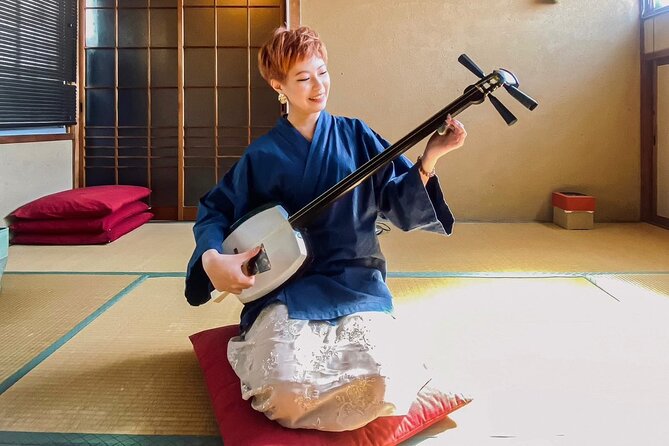
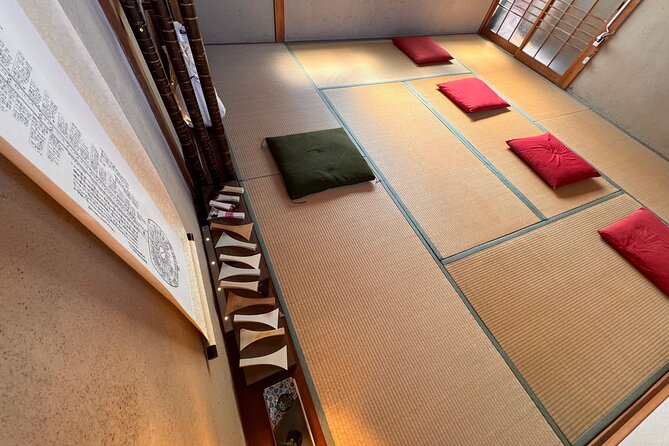
The activity runs about 1 hour 30 minutes, and it’s structured like a compact workshop. You’ll start at the lesson space in Kyoto’s Kita Ward area, and it ends back at the same meeting point.
Here’s how the flow typically feels, and why each part is useful for you:
1) Get set up, then learn the fundamentals
Even if you have never played an instrument, you’ll work through the essentials first. That includes how to handle the shamisen, plus basic guidance on seating and posture. These details may sound small, but good posture changes everything, especially for a string instrument where tension and angles affect sound.
You’ll also learn basic tuning. Tuning is one of those “not glamorous but totally important” skills. It also helps you feel more in control, because you understand why certain notes sound right or off.
2) Learn the technique and the song piece-by-piece
Next, you work on technique and then build toward playing a traditional Japanese song. The teaching is designed to be beginner-friendly, so you’re not thrown into complicated fingerwork without context. You’ll get tips from the instructor as you go, with guidance aimed at helping you play correctly from the start.
If you enjoy music and want structure, this part is great. It gives you steps you can practice later.
A different sort of day in Japan:
- Kyoto Geisha Walking Tour: Gion District & Hidden Gems
★ 4.7 · 3,273 reviews - Kyoto: Tea Ceremony Ju-An at Jotokuji Temple
★ 4.9 · 3,207 reviews - Kyoto: 45-Minute Tea Ceremony Lesson Experience
★ 4.3 · 2,378 reviews - Kyoto: Gion Geisha District Walking Tour – Stories of Geisha
★ 4.7 · 2,187 reviews
3) Japanese tea break and relaxed conversation
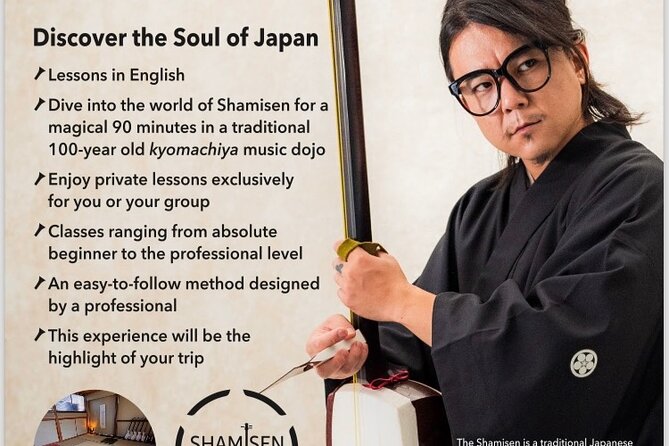
About halfway through, you get a Japanese tea break. This isn’t just a pause for snacks. The session also includes relaxed conversation, with the owner who is also a professional shamisen player. That combination makes the lesson feel human and local, instead of staged for tourists.
Tea breaks also help you absorb what you just learned. Music learning can be tiring because your hands are doing new movements. A calm reset keeps you from rushing.
4) Jam session using traditional scales
The highlight is the jam session, where you play alongside the teacher using traditional Japanese scales. This is the moment you shift from learning notes to expressing melodies. You’re encouraged to play freely and try different shapes of sound, while the instructor accompanies and corrects as needed.
If you want a lesson that ends with a memorable payoff, this is it. You’ll leave with the feeling that you can participate, not just follow.
Jack-san teaching style, English clarity that actually helps
The instructor you’ll work with is often described as Jack-san, and the teaching style shows up clearly in the results. People consistently praise how patient the instruction is and how well the teacher explains technique.
From your point of view, the practical benefit is that you can ask questions and get answers during the session. The lesson is private, so you’re not waiting for a break in the schedule.
Also, the instruction doesn’t stop at basics. Some people say the teacher goes further than you’d expect within the time limit, teaching advanced things he normally might not. Even if you only want a beginner experience, that extra skill from the teacher matters. It means the fundamentals are solid, not watered down.
One more smart detail: the lesson curriculum is designed for English-speaking participants, which is rare for hands-on traditional music classes. It reduces confusion and helps you focus on the physical side of learning.
What you learn beyond music, posture, tuning, and “how to listen”
A lot of music lessons focus only on where your fingers go. This one includes the supporting skills that make playing easier.
You’ll work on:
- Seating and posture, so your body supports the sound
- Tuning, so the instrument responds properly
- Technique basics, so your playing feels stable
- A traditional song, so you hear what the style is supposed to sound like
The listening part matters, too. During the jam session, the teacher uses traditional scales as a framework. Even if you cannot name the theory, you learn how the music moves and how a shamisen line fits into a melody. That’s the kind of musical understanding you can carry into later practice.
Value check, $99.10 for a private lesson that hits multiple goals
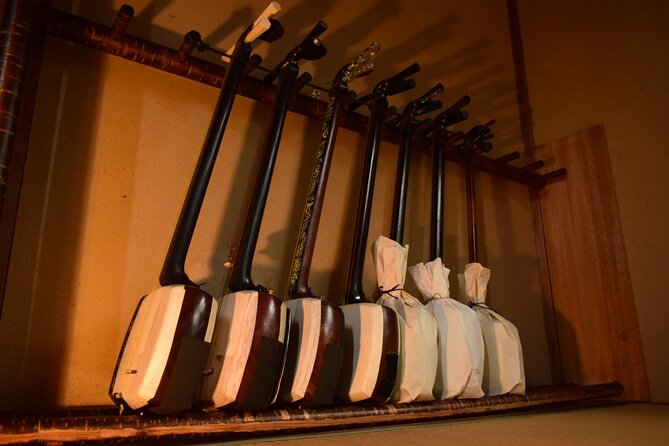
At $99.10 per person, this is not a bargain-basement activity. Still, it’s easy to understand the value when you look at what’s included: private instruction, a tea break, a guided jam session, and a special souvenir gift.
Here’s why that matters for value:
- You’re paying for one-to-one teaching time. For many instruments, that’s the difference between frustration and progress.
- The session includes the parts people remember: tuning, playing a song, then jamming with the teacher.
- You get more than a performance. You get a skill you can practice after the lesson.
Also, the booking pattern suggests it’s in demand, with an average booking time of about 35 days in advance. If you travel during peak seasons or have specific days, plan ahead.
Logistics that make it easy, mobile ticket and a clear meeting point
The tour uses a mobile ticket, and confirmation is provided at booking time. That’s useful because you can keep everything in your phone and not worry about printed paperwork.
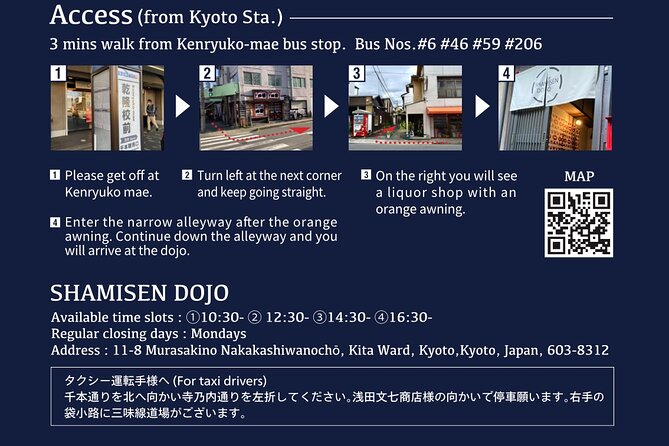
The meeting point is in Kita Ward: Murasakino Nakakashiwanocho, Kita Ward, Kyoto, 603-8312, Japan. It’s also described as near public transportation, so you should be able to reach it without complicated routing.
One more detail that helps: the experience ends back at the meeting point. That keeps the day simple. You can connect it to nearby plans without having to reposition for a return trip.
Souvenir gift and the meaning of “leaving with something”
The lesson includes a special gift, a souvenir you can take home. It’s a small touch, but it fits the bigger point: you’re not just getting an hour-long story about shamisen, you’re taking away a physical reminder that you learned the music.
If you like collecting practical travel memories, this kind of souvenir pairs well with the experience because it represents a specific skill and moment, not just a general purchase.
And if you’re the type who wants to keep practicing after vacation, even a basic introduction can be a spark. People describe wanting to continue shamisen practice after the session, and that reaction makes sense. When you leave able to play something, you’re more likely to follow through later.
Left-handed players: a rare comfort detail

This experience makes a specific accommodation: lefty shamisen available. That’s a big deal if you’re left-handed, because many lessons assume the standard setup. Having the right instrument helps your learning feel natural, and it reduces the temptation to force an awkward adaptation.
If you’re left-handed, this alone may be the reason to book.
Who should book this shamisen dojo lesson
I think this one is especially good for you if:
- You want a hands-on cultural activity instead of another walking tour.
- You prefer private instruction where you can ask questions freely.
- You want a structured beginner experience, with tuning and posture included.
- You’ll enjoy a mix of technique and a playful jam session at the end.
- You want English support while learning a traditional instrument.
- You’re left-handed and want an appropriate instrument setup.
You might consider skipping it if:
- You only want to watch and never touch instruments.
- You’re expecting a long multi-session training program. This is a short introduction.
Should you book? My practical recommendation
Book this if you want a memorable Kyoto moment with real skill practice. The session hits the right mix: private teaching, English instruction, a tea break, and an ending that gets you playing along. The private format and jam session combo are what turn this into more than a quick try.
Don’t book it expecting a full conservatory-style training. Think of it as an excellent first step. If you show up curious and willing to play, you’ll leave with something tangible, a song you can recognize, and a method you can repeat.
If your schedule is tight, aim to reserve early since demand runs ahead, and you’ll have a better chance of picking a time that fits your Kyoto days.
FAQ
How long is the shamisen experience in Kyoto?
It’s approximately 1 hour 30 minutes.
What is the price per person?
The price is $99.10 per person.
Do I need prior shamisen or music experience?
No. The lesson is beginner-friendly and no experience is required.
Is the lesson taught in English?
Yes. The instruction is in English.
Does the experience include Japanese tea?
Yes. The lesson includes a Japanese tea break.
Is it a private lesson or a group activity?
It’s a private tour/activity, so only your group participates.
Will I play during the lesson?
Yes. The session includes learning a traditional Japanese song and a jam session with the instructor using traditional Japanese scales.
Is a souvenir included?
Yes. You receive a special gift, a souvenir to remember the experience.
Is there a left-handed option?
Yes. Lefty shamisen are available.
Where is the meeting point?
The meeting point is Murasakino Nakakashiwanocho, Kita Ward, Kyoto, 603-8312, Japan.
How does cancellation work?
You can cancel for a full refund up to 24 hours in advance of the experience start time. If you cancel less than 24 hours before, the amount paid is not refunded.
Newly listed around Kyoto
- Zen Meditation for Life in Kyoto★ 5.0 · 10 reviews
- Kyoto: Zen Meditation at a Private Temple with a Monk★ 5.0 · 25 reviews
- Kyoto Private Customizable Day Tour with Guide and Vehicle★ 5.0 · 52 reviews
- Private Wagyu Beef Tour with a Local Guide★ 5.0 · 6 reviews
- Kyoto: Gion Geisha District & Sake-in-Hand Walking Tour★ 5.0 · 37 reviews
- Your Private Vacation Photography Session In Kyoto★ 5.0 · 110 reviews
- Private Guided Traditional Buddhist Cooking in Japan★ 5.0 · 16 reviews
- Private Pewter Sake Cup Experience with a Kyoto Artisan★ 5.0 · 31 reviews
Kyoto Tours, compared.


Fushimi Inari, Kinkakuji, Bamboo Grove 1 Day Bus Tour
Read our review →
Tea Ceremony in a Traditional Tea House in Kiyomizu
Read our review →
Kyoto Geisha Walking Tour: Gion District & Hidden Gems
Read our review →
Gion Geisha District Walking Tour – Stories of Geisha
Read our review →