
Review · GEISHA DISTRICT WALKS
Simple Plan with Maiko
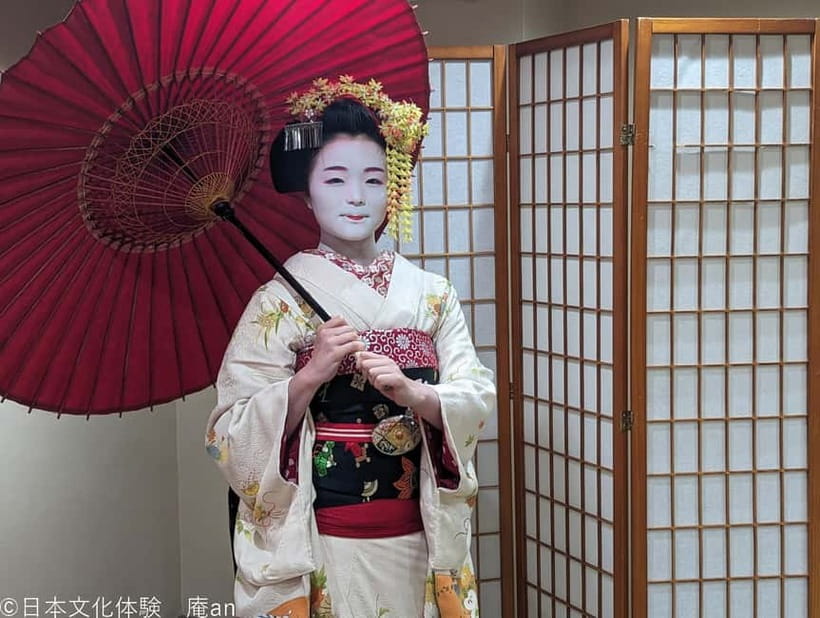
A Maiko, close enough to ask anything. In Kyoto, this 90-minute Simple Plan with Maiko mixes a tea ceremony demonstration, a real Q&A with the performer, and two seasonal dances, all at a very doable price for the access you get. I especially like the chance to ask direct questions, and I love the photo moment that comes with a lucky charm. The main thing to consider is sightlines, since the room setup and table arrangement can make it harder for people in the back to see every detail.
You should think of this as friendly, structured, and hands-on in the way Japanese hospitality can be, not as a scripted theater tour. The vibe is also relaxed even though the venue is in a regular building, not a traditional ochaya house. One more note: depending on the situation, you may meet a Geiko instead of a Maiko.
In This Review
- Key takeaways before you go
- Where you meet in Kyoto, and how not to waste time
- The full 90-minute rhythm, stop by stop
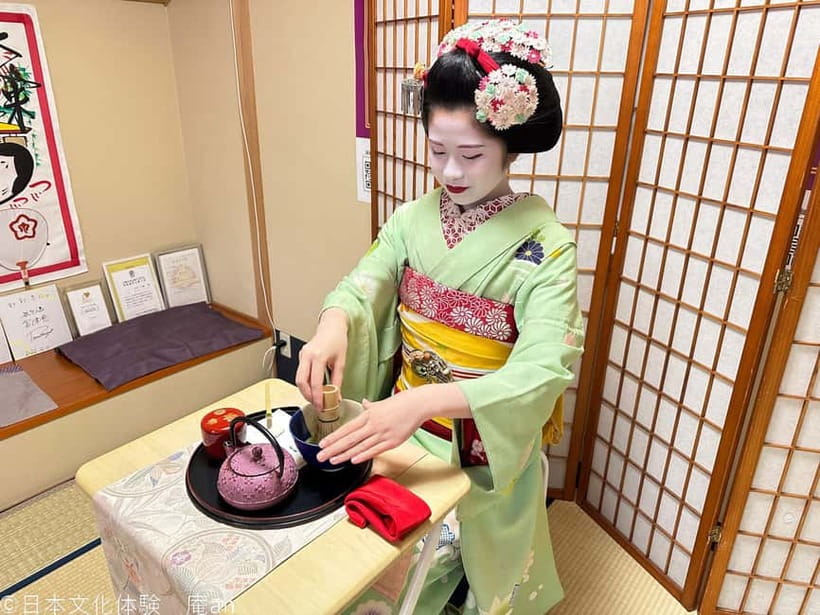
- Tea ceremony demonstration, without DIY matcha
- Q&A with Maiko: the reason this sells out
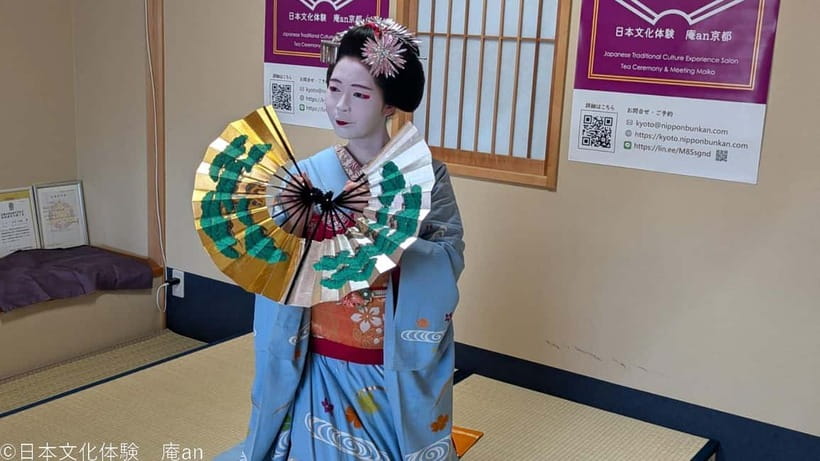
- Dance performance: two pieces, lots of nuance
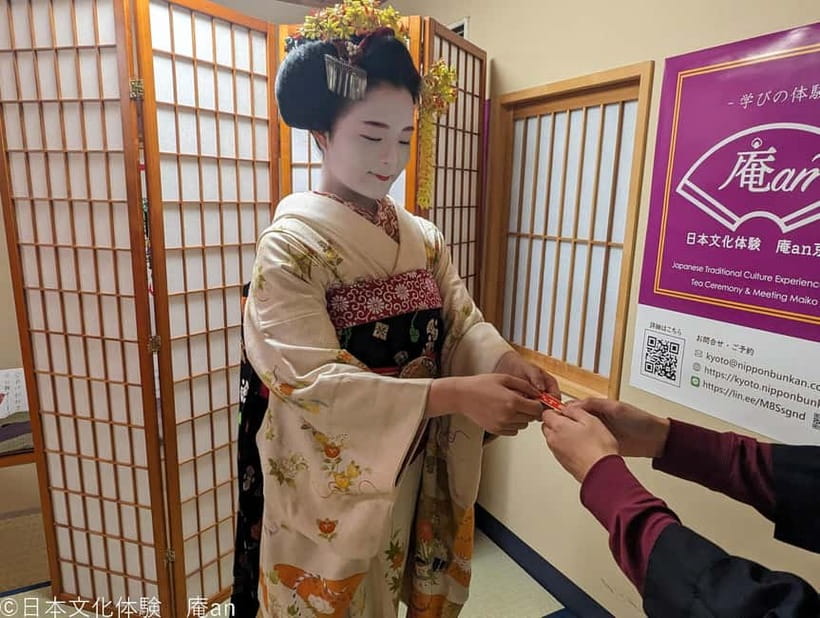
- Photo moment and the Senjyafuda lucky charm
- Interactive game with Maiko: participate or cheer
- Venue reality check: building setting, stairs, and sightlines
- Price value: what $38 buys, and what to manage expectations on
- Language and communication: how it works in the real world
- When it might be a Geiko instead of a Maiko
- Who should book Simple Plan with Maiko
- Should you book Simple Plan with Maiko?
- FAQ
- How long is Simple Plan with Maiko?
- What is included in the Simple Plan experience?
- Does this plan include making your own tea or matcha?
- Where is the meeting point?
- Is the venue a traditional ochaya house?
- Are there stairs or an elevator?
- What are the operating hours and cancellation timing?
Key takeaways before you go
- Direct Q&A lets you ask questions instead of only watching from afar
- Tea ceremony demonstration focuses on etiquette and grace, not DIY matcha
- Up-close photo + Senjyafuda makes it feel like a real keepsake moment
- Dance performance includes two dances tied to seasons, love stories, or everyday life
- Interactive game is optional to participate in, but fun to cheer for
Where you meet in Kyoto, and how not to waste time
You meet just one minute from Exit 1 of the Subway Karasuma Line, Gojo Station. The venue entrance faces Gojo-dori, so it is usually easy to spot if you keep your eyes up while walking.
Arrive a bit early. The program starts on time, and there is no hanging around inside if you are not part of the experience. If you are trying to fit it between other Kyoto plans, give yourself a small buffer for the walk in and settling down.
Compare these Geisha District walks in Kyoto:
- Kyoto Geisha Walking Tour: Gion District & Hidden Gems
★ 4.7 · 3,273 reviews - Kyoto: Gion Geisha District Walking Tour – Stories of Geisha
★ 4.7 · 2,187 reviews - Best of Kyoto: Gion, Geisha, Pagodas & Cobblestones
★ 4.9 · 2,058 reviews
The full 90-minute rhythm, stop by stop
This is a tight schedule, but it flows. Plan on about 90 minutes from greeting to departure, with a short chat period at the end.
Here is how it typically runs:
- Greeting from Maiko: a warm start that sets the tone for the rest of the program
- Tea ceremony demonstration: watching the choreography of etiquette
- Q&A session: questions are the big payoff here
- Photo with Maiko: close, commemorative, and personal
- Senjyafuda gift: a lucky charm presented as part of the moment
- Dance performance: two dances, each showing a different theme like seasons or stories
- Interactive game with Maiko: light, fun participation, more about cheering than competing
- Departure + short chatting time: you do not leave immediately after the show, so you get a little extra human time
The pacing matters. If you go in thinking this is a quiet cultural lecture, you might feel surprised by the interactive parts. If you go in knowing it is a short performance plus conversation, you will have a much better time.
Tea ceremony demonstration, without DIY matcha
You do get tea ceremony etiquette up close, but this Simple Plan is not the hands-on version. The experience includes observing a tea ceremony demonstration, with the focus on graceful movements and proper manners.
If you want to participate in making tea yourself, you need the premium option titled Tea Ceremony with Maiko Premium. For most people, the demo is a perfect first step because it shows the style and seriousness of the tradition without requiring you to perform it correctly.
One practical mindset shift: treat the tea ceremony part as a visual study. Watch how she moves, how stillness is part of the performance, and how every gesture communicates respect. That is where the value is.
Q&A with Maiko: the reason this sells out
If you are the type who likes real conversation, this is the heart of the program. You can ask questions directly, and the host provides English translation as much as possible.
This is not a big formal lecture. The Q&A is interactive, so you can steer toward what you truly want to understand, like:
- What daily routines look like in traditional arts training
- How kimono and hairstyles are managed and maintained
- What dance themes mean, especially seasonal ones
- What aspects of the culture stay the most important today
I like this format because it turns you from a passive viewer into a respectful learner. Even if your questions are simple, the fact that she answers at human speed is what makes it feel special.
One more detail to plan for: the room arrangement can affect how comfortable the Q&A feels and how easy it is to see during performances that follow. If you prefer a front-row perspective, seat choice matters, and it can change how much of the dance you catch.
A few more Kyoto days to weigh up
- PERFECT KYOTO 1-Day Bus Tour
★ 5.0 · 13,518 reviews - Kyoto: Fushimi Inari, Kinkakuji, Bamboo Grove 1 Day Bus Tour
★ 4.8 · 4,316 reviews - Kyoto: Tea Ceremony in a Traditional Tea House in Kiyomizu
★ 4.9 · 3,519 reviews - Kyoto: Tea Ceremony Ju-An at Jotokuji Temple
★ 4.9 · 3,207 reviews
Dance performance: two pieces, lots of nuance
The program includes two traditional dances, each expressing themes like Japan’s seasons, love stories, or everyday life. You will usually see different styles of movement, and the elegance comes through in how controlled everything is.
This part is where the value depends on your seat. The setup is in a building, not a private traditional room with open sightlines. If you end up farther back, tables and other structures can interfere with the view, and you may feel like you missed small details.
If dance is a priority for you, consider paying for a better seat. You can choose extra-cost tiers:
- SS seat (first row): 3,300 JPY
- S2 seat (second row): 2,200 JPY
- S3 seat (third row): 1,100 JPY
Not required, but it is the most direct upgrade. For a 90-minute experience, losing visibility for even 20 minutes is annoying.
Photo moment and the Senjyafuda lucky charm
The photo opportunity is one of the most memorable parts, mainly because it is close. You take a commemorative photo right beside Maiko, and she presents you with a lucky charm called Senjyafuda as a special gift.
This is not just a generic souvenir photo. The charm makes it feel like you received something personal from the interaction, and it is the kind of Kyoto keepsake you will actually remember.
If you do not love photo sessions, you can still enjoy it. The photo moment is short, and it is paired with the bigger cultural elements, not used as a replacement for them.
Interactive game with Maiko: participate or cheer
After the dances, you get a more playful segment. There is an interactive game where Maiko often plays simple, welcoming games with visitors as part of her hospitality.
Participation is not required in the data you were given, and some people may prefer to watch. Either way, it can be fun because the tone is encouraging, like you are part of a group moment.
One tip for the best experience: clap and cheer, even if you are not volunteering. That energy is part of how the host keeps the mood light and inclusive.
Venue reality check: building setting, stairs, and sightlines
This venue is not an ochaya or traditional Japanese house. It is located in a building with a relaxed atmosphere and friendly staff.
A big practical point: there is no elevator. You will need to take stairs to reach each venue area. The experience is listed as wheelchair accessible, but because there is no elevator, it is worth factoring in how much stair travel you can handle before booking.
Then there is the layout. People with back-row seats may have a harder time seeing the performance clearly, especially if tables block parts of the view. If you want the full visual impact of the dances, seat selection is your best lever.
Price value: what $38 buys, and what to manage expectations on
At $38 per person for 90 minutes, you are paying for access. You get multiple parts that would each be separate experiences in many other formats: tea ceremony demonstration, Q&A, two dances, a photo, and the Senjyafuda gift. That is a lot of content for the time.
What you should not assume is a fully hosted meal vibe. Snacks and drinks are not included in the base price, and there is an add-on snack and drink option for 500 JPY. If you are sensitive to hunger, plan to eat before or consider the add-on so you do not feel distracted during the program.
Also, this is not the DIY tea experience. If you want to make your own tea, that is a premium program. Simple Plan is built for observation plus conversation.
Language and communication: how it works in the real world
The program is in Japanese, but English translation is provided as much as possible. If you want extra help with translation, the information says you can contact the team to add it.
That means you do not need Japanese to appreciate the experience, especially because the Q&A format and host guidance can help you follow what is happening. Still, come with a couple short questions in mind so you are not scrambling during the moment.
When it might be a Geiko instead of a Maiko
Depending on the situation, you may be invited with Geiko instead of Maiko. This is a rare twist, but it is clearly part of the operating reality.
If your goal is specifically to meet a Maiko, it is smart to keep this in mind. That said, both are part of Kyoto’s performing arts culture, and the program structure still centers on the same kinds of experiences: tea ceremony demonstration, Q&A, dance, photo, and an interactive segment.
Who should book Simple Plan with Maiko
This works best if you:
- Want a short, focused Maiko-focused experience in Kyoto
- Like asking questions and getting human answers
- Are interested in traditional arts etiquette without doing hands-on tea prep
- Prefer a value-based experience over expensive private sessions
It might feel less ideal if you:
- Care most about perfect sightlines and cannot handle stairs
- Expect the experience to include food service or lots of downtime
- Want a full deep-dive class format rather than performance plus Q&A
If you are juggling a packed Kyoto itinerary, this is a solid way to add culture without spending half a day.
Should you book Simple Plan with Maiko?
Yes, I think it is a smart booking for many visitors, especially if you treat it as a conversation-first performance. The best part is the direct Q&A, and the photo plus Senjyafuda gift turns it into a real memory anchor.
Book it if you can handle stairs, and if you care about seeing every movement, upgrade to a better seat tier. Skip the extra seat costs only if you are flexible about views and you are going for the chance to talk and learn, not just watch.
If you want to make tea yourself, then you should choose the premium option instead, because this Simple Plan is designed around observation.
FAQ
How long is Simple Plan with Maiko?
The duration is 90 minutes.
What is included in the Simple Plan experience?
You’ll get a tea ceremony demonstration, a Q&A session with Maiko, a photo opportunity right beside Maiko, a Senjyafuda lucky charm gift, a dance performance, and an interactive game segment.
Does this plan include making your own tea or matcha?
No. This Simple Plan does not include making matcha. If you want to make tea yourself, you need the Tea Ceremony with Maiko Premium program.
Where is the meeting point?
It is a 1-minute walk from Exit 1 of Subway Karasuma Line Gojo Station. The store entrance faces Gojo-dori.
Is the venue a traditional ochaya house?
No. It is located in a building, with a relaxed atmosphere and friendly staff.
Are there stairs or an elevator?
There is no elevator in the building, and you will need to take stairs to reach each venue area.
What are the operating hours and cancellation timing?
Operation hours are from 10:00 to 17:00. You can cancel up to 8 days in advance for a full refund.
Newly listed around Kyoto
- Taste of Nishiki Market Walking Food Tour with Local guide★ 5.0 · 17 reviews
- Kyoto: Sushi Making Class with Sushi Chef★ 4.8 · 64 reviews
- Shibori Furoshiki Course at Kyoto Shibori Museum★ 5.0 · 21 reviews
- Kyoto: City Secrets eBike Tour★ 4.9 · 196 reviews
- Sacred Pathways: Discover the Philosopher’s Path of Kyoto★ 4.9 · 20 reviews
- Private Tour to Monkey Park and Arashiyama Highlights★ 5.0 · 22 reviews
- Private Sake Tasting in Central Kyoto — 1 Group Only★ 5.0 · 11 reviews
- Private Nara Tour from Osaka – Meet at Your Hotel★ 5.0 · 22 reviews
Geisha District Walks, compared.

Kyoto Geisha Walking Tour: Gion District & Hidden Gems
Read our review →
Gion Geisha District Walking Tour – Stories of Geisha
Read our review →
Best of Kyoto: Gion, Geisha, Pagodas & Cobblestones
Read our review →

Kyoto Night Foodie Tour in Gion (9+ dishes + 6 Sake tastings)
Read our review →
Kyoto Gion Geisha District Walking Tour – The Stories of Geisha
Read our review →
Gion Magical Night Walking Tour with Geisha Insights
Read our review →
Kyoto Gion Night Walk & Geisha District Guided Tour
Read our review →Browse the lists this tour appears in