
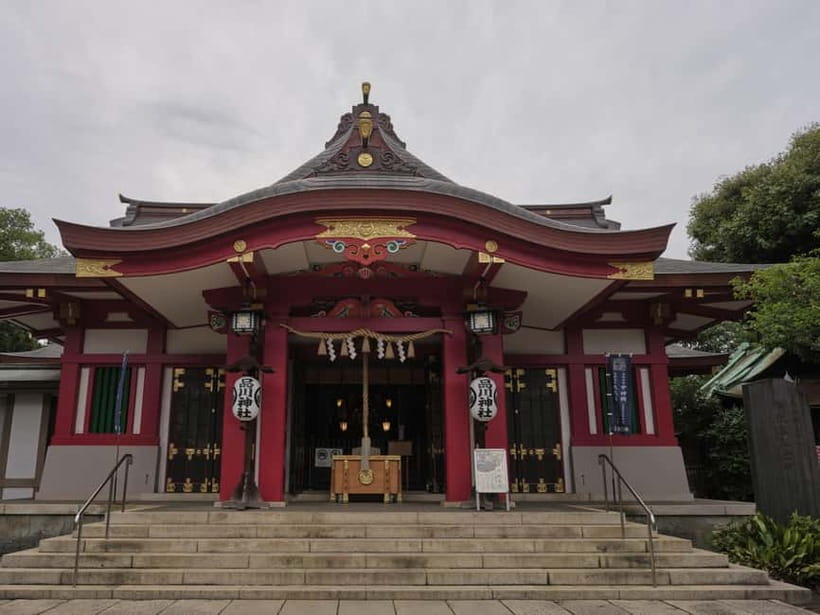
Review · KIMONO & YUKATA RENTALS
Tokyo: Calligraphy Experience with yukata or Samue
Brush strokes in Tokyo, no experience needed. In this 90-minute class, I like that you start by putting on a yukata or samue and then learn Japanese calligraphy step by step with professional instructors, with time to reset over Japanese tea.
I also love the hands-on brush practice that gets you writing your own kanji, not just watching. The main drawback is simple: the class is short, so you should expect to focus on a clean, limited final piece, and wear clothes that can get dirty.
In This Review
- Key Highlights You’ll Care About
- Tokyo Calligraphy With Yukata or Samue: A Short Class That Feels Like Culture
- Where to Meet Near a Nursery and Kaide-ji (海德寺)
- What You Wear: Yukata or Samue Sets the Pace
- Your Brush Starter Kit: Tools, Strokes, and That First Kanji
- Learning the Meaning Behind the Characters, Not Just the Shape
- Small Group Size and the Teaching Style That Makes It Click
- Japanese Tea Time: A Calm Reset After Your Final Piece
- Taking Home a Finished Work You’ll Actually Be Proud Of
- Price and Value: Why $64 Makes Sense for 90 Minutes
- Who This Tour Fits Best, and Who Should Skip It
- Practical Tips Before You Go: Concentration, Dirty Clothes, and Ask for Help
- Should You Book This Tokyo Calligraphy Experience?
- FAQ
- How long is the calligraphy experience?
- What does it cost per person?
- How big is the group?
- What languages are available?
- What should I bring to the class?
- Are calligraphy tools included?
- Can I take my calligraphy work home?
- Is Japanese tea included?
- Where is the meeting point?
- Is transportation included, and what about cancellation or pay later?
Key Highlights You’ll Care About
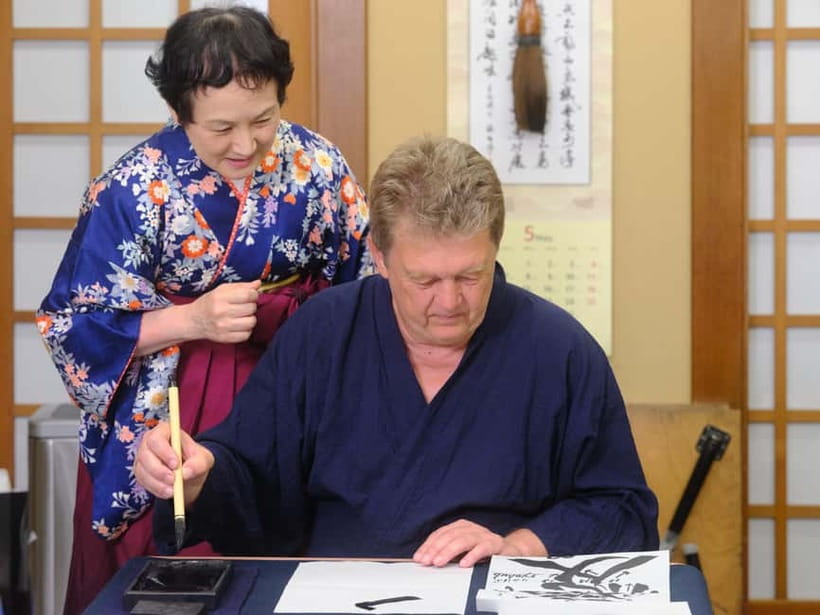
- Professional instruction from working calligraphers who guide your strokes step by step
- Real practice time with the brush, including line work and writing your chosen characters
- Wear-first experience with yukata or samue, plus a calm tea break
- Meaning behind the characters including spirituality and historical context
- Small group format capped at 10 people so you get help instead of waiting
- Take-home artwork so you leave with a finished souvenir, not just a lesson
Tokyo Calligraphy With Yukata or Samue: A Short Class That Feels Like Culture
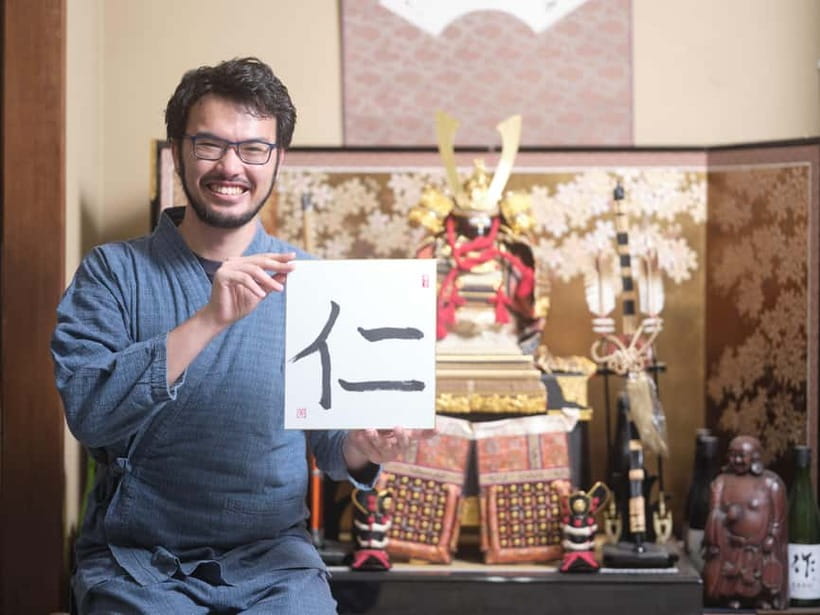
If you want one activity that feels genuinely Japanese, this calligraphy class is hard to beat. You get the full ritual feeling, from dressing in traditional clothing to sitting down with a brush and creating your own calligraphy work.
What makes it work well is that you are not thrown into complexity. You learn the basics first, then practice what you just learned, and finally you produce a finished piece you can keep. In the process, you also get explanations about the spirituality and history behind the characters, so it is not just pretty handwriting.
More Craft Workshops in Tokyo
- Chopstick Making Workshop in Ginza
★ 4.8 · 1,366 reviews - Tokyo: Samurai Sword & Archery Class from Samurai Descendant
★ 5.0 · 603 reviews - Tokyo: Shinjuku Chopstick Making Class
★ 4.9 · 440 reviews
Where to Meet Near a Nursery and Kaide-ji (海德寺)
Meeting point is not a vague “near the station” situation. You meet next to a nursery, and the next landmark is 海德寺 (Kaide-ji). That matters because when you are in a new area, finding the right small building is often the real challenge.
A practical tip: arrive a few minutes early and confirm the exact meeting point with your guide. Once you locate the right spot, the rest of the experience stays smooth.
What You Wear: Yukata or Samue Sets the Pace
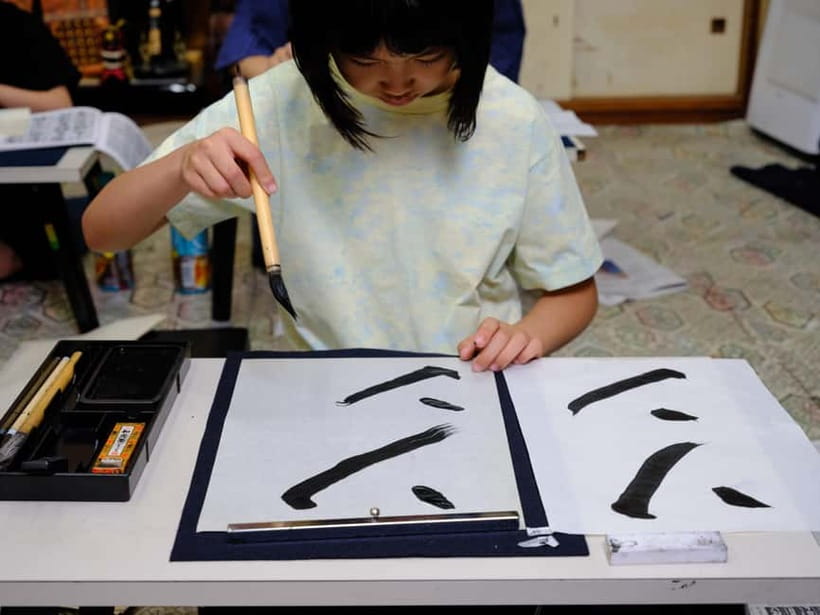
In this class, you dress in yukata or samue before you start writing. Reviews also mention kimono, so you may see variations depending on the session. Either way, the point is the same: traditional clothing helps you slow down and take the posture and focus seriously.
This is not about fashion photos. It is about getting you in the right mental mode for brush control. Calligraphy rewards calm hands and careful movement, and the clothing setup helps you settle quickly.
Your Brush Starter Kit: Tools, Strokes, and That First Kanji
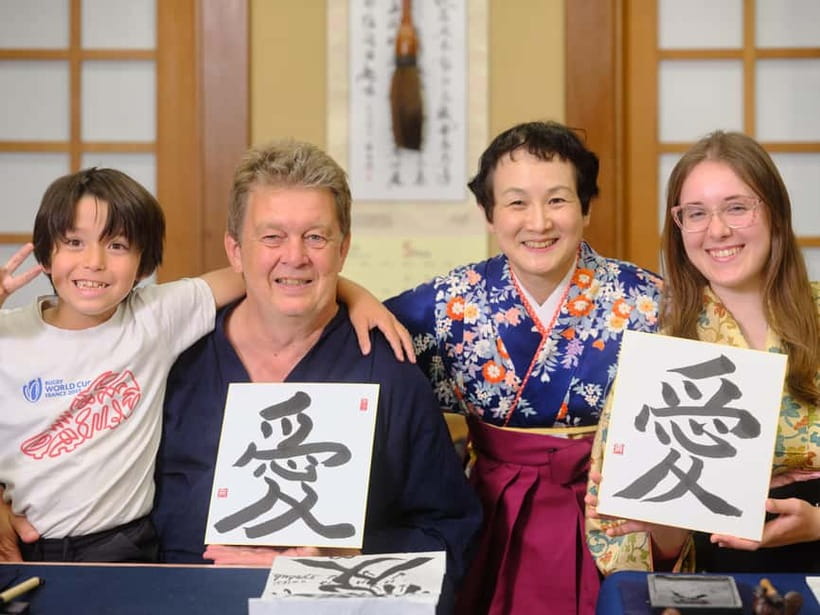
You do not need to bring anything except clothes that can handle a little mess. The class provides the tools, and you get professional guidance on how to hold and use the brush.
Expect the lesson to go in a logical order:
- First, you learn basic techniques like making proper lines and controlling the brush
- Then you practice the foundational strokes
- After that, you write a kanji as part of your main artwork
This is one of the best parts for beginners. Instead of trying to copy an entire finished character from the start, you build confidence in small steps. By the time you get to the final piece, your hand already knows what it is supposed to do.
More Kimono Rentals in Tokyo
- Kimono Tea Ceremony at Tokyo, Asakusa Maikoya
★ 5.0 · 638 reviews - Tokyo: Kimono Dressing, Walking, and Photography Session
★ 4.9 · 427 reviews - Let’s make kimono !(Kimono is a gift for you
★ 5.0 · 252 reviews - Tokyo: Matcha and Kimono Experience
★ 4.7 · 219 reviews
Learning the Meaning Behind the Characters, Not Just the Shape
Calligraphy in Japan is tied to more than aesthetics. This class includes insider explanation about the spirituality and history behind the characters.
You do not need to be a history student to benefit. What you get is enough cultural context to understand why someone would take time over a single character, why stroke order and attention matter, and why the practice can feel meditative. If you care about authentic meaning, this part is a big reason to book.
Small Group Size and the Teaching Style That Makes It Click
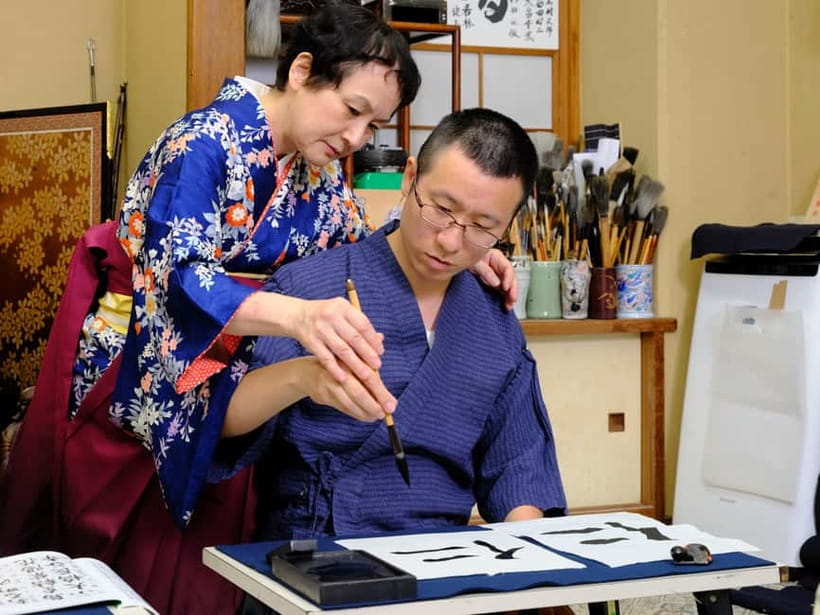
The group is capped at 10 participants, which is a sweet spot. You get personal attention, and you are not stuck waiting while someone else finishes.
Language support is also a real help. The experience includes an English speaking guide, and the instructor options include English and French. If you want guidance in French, that is available, and multiple sessions highlight how supportive the teaching feels when language is handled well.
Names you may hear include guides such as Hana, Koushi, and Tomo. The common theme is consistent: they guide you step by step, give you practice opportunities, and keep the atmosphere warm instead of stiff.
Japanese Tea Time: A Calm Reset After Your Final Piece
A lot of calligraphy classes focus only on the writing, but here you get a relaxing break. You start with tea service, and the schedule includes Japanese tea during the class flow.
It sounds small, but it changes how the whole session feels. After concentrating on brush control, sipping tea gives your brain a minute to breathe. It also makes the time feel more like a cultural sit-down than a quick workshop.
Taking Home a Finished Work You’ll Actually Be Proud Of
You do not leave empty-handed. Included in the experience is your finished calligraphy work, which functions as a unique souvenir from Tokyo.
One nice touch from instruction style is that teachers may personalize elements, like writing a participant’s name as part of the final outcome. That is the kind of detail that makes the piece feel like it belongs to you, not to a generic class template.
If you love keeping mementos that have meaning, this is the smart option. The whole format is designed around helping you end with a finished result.
Price and Value: Why $64 Makes Sense for 90 Minutes
At $64 per person for 90 minutes, the value comes from what you get packaged together:
- Professional instruction from calligraphy instructors
- All necessary calligraphy tools
- Your finished artwork to take home
- Japanese tea
- English speaking support, with English and French options from the instructor
In practice, you are paying for training time plus materials plus the coaching that helps you actually produce a work. If you tried to do this on your own, you would spend time figuring out tools, learning stroke basics, and getting feedback on what is correct. Here, that learning curve is handled for you.
Who This Tour Fits Best, and Who Should Skip It
This class is built for a wide range of skill levels, including complete beginners. You just need the patience to focus on careful movements.
That said, it is not suitable for children under 4, and it is also not recommended for people over 70. The brush work and posture can require steady concentration, and that is part of the experience. If you fall outside the recommended age range, you should look for a different cultural activity with less physical demand.
This is also a great choice if you want a family-friendly experience, since small group size helps kids and adults get attention. One more reason it works: the structure keeps you moving, which prevents the class from feeling too long.
Practical Tips Before You Go: Concentration, Dirty Clothes, and Ask for Help
Here are the real-world details that make your experience better:
- Wear clothes that can get dirty. Brush inks and handling can be messy.
- Expect to slow down. Calligraphy is about controlled motion, not speed.
- If you want a certain kanji or personal character, be ready to communicate clearly during instruction.
- Use the guide time. Ask questions about stroke control or how to correct your line. That is where the class becomes more than a souvenir grab.
After class, you might also find your guide willing to help with small follow-up needs, like where to buy a calligraphy set. That kind of extra support is not always guaranteed, but when it happens, it turns your one-session class into a longer hobby.
Should You Book This Tokyo Calligraphy Experience?
Yes, if you want a focused cultural activity that produces a real keepsake. I’d book it if you care about more than taking photos. The structure is designed to get you from basics to a finished piece in a short time, with professional coaching and cultural context.
Skip it if you want a long, open-ended workshop. This is 90 minutes, so you will learn a lot, but you will not become an advanced calligrapher by the end. Also, if the age guidance does not fit you, respect that.
If your plan includes a tight Tokyo schedule, this is a smart use of time. You get traditional clothing, hands-on brush work, explanations about meaning, tea, and something you can hang or store at home.
FAQ
How long is the calligraphy experience?
It lasts 90 minutes.
What does it cost per person?
The price is $64 per person.
How big is the group?
It is a small group limited to 10 participants.
What languages are available?
The instructor is available in English and French, and there is an English speaking guide.
What should I bring to the class?
Wear clothes that can get dirty.
Are calligraphy tools included?
Yes. All necessary calligraphy tools are included.
Can I take my calligraphy work home?
Yes. You take home your finished calligraphy work.
Is Japanese tea included?
Yes. Japanese tea is included.
Where is the meeting point?
You meet next to a nursery, and the next landmark is 海德寺 (Kaide-ji).
Is transportation included, and what about cancellation or pay later?
Personal transportation is not included. The experience offers free cancellation up to 24 hours in advance for a full refund, and you can reserve now and pay later (book now and pay nothing today).
Newly listed around Tokyo
- Tokyo private transfer for Yokohama Port★ 4.5 · 63 reviews
- Luxury Kimono Photoshoot at Ginza Tokyo★ 5.0 · 7 reviews
- Tokyo Allstar Food Tour★ 4.5 · 206 reviews
- Tokyo Art Aquarium Museum E-Ticket with optional Tokyo Metro Pass★ 5.0 · 17 reviews
- Tokyo: Best Ginza Food Tour at 3 Local Eateries★ 5.0 · 83 reviews
- Private One Day Nikko Tour with Bilingual driver★ 3.5 · 11 reviews
- Japanese Whisky Tasting Experience at Local Bar in Tokyo★ 5.0 · 59 reviews
- PRIVATE tour in 180SX to Daikoku+++++★ 5.0 · 6 reviews
Kimono & Yukata Rentals, compared.
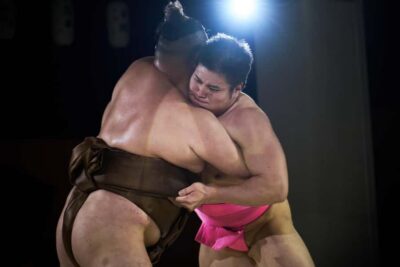
Sumo Show & Experience w/ Optional Kimono & Hot Pot
Read our review →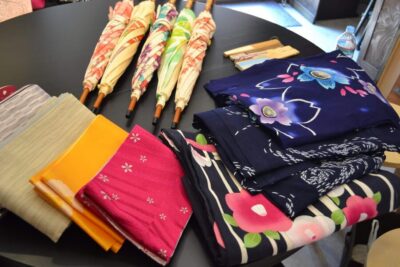
Kimono Dressing, Walking, and Photography Session
Read our review →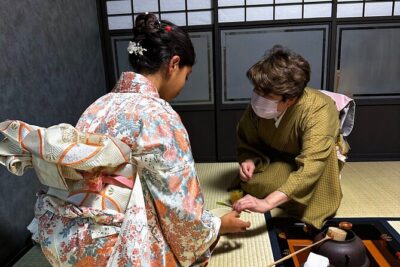
KYOTO Tea Ceremony with kimono near by Imamiya Jinjya Shrine
Read our review →
Kimono and Tea Ceremony Experience at Cultural Asset
Read our review →
Browse the lists this tour appears in