
Review · FISH MARKET WALKS
Tokyo’s Kitchen: Tsukiji Market Food & Culture Walk
Tokyo’s morning markets are a feast of senses.
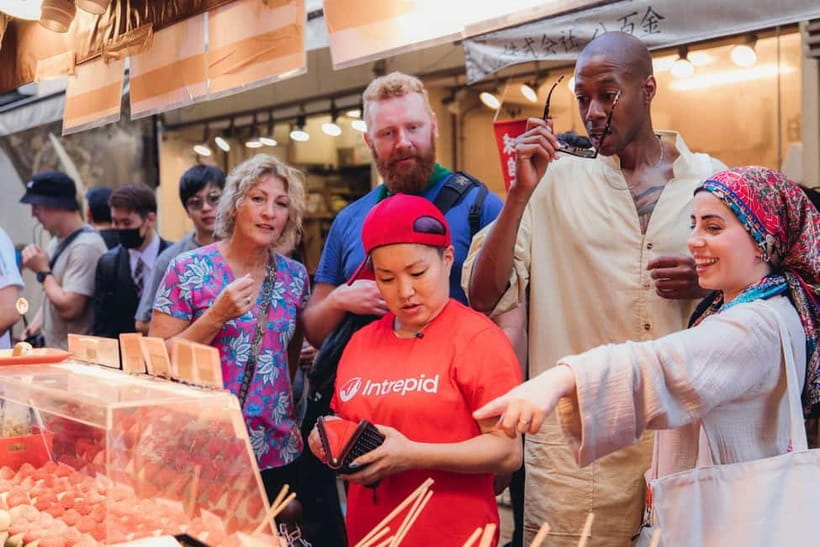
This walk turns Tsukiji Outer Market from a confusing crush of stalls into a guided route with tastings and context. I like the tight group size and the fact you’re not just wandering alone, you’re getting a translator to help you notice what matters. Two standout pieces: the sushi history and cultural links (Buddhist beliefs and Shinto shrine customs), and the warm vendor-to-guide connections that make stalls feel welcoming instead of intimidating. One consideration: Tsukiji is busy and the market floors can be wet, so you’ll want closed-toe shoes and patience.
I also like how the tour connects food to place, not just flavors. You’ll start near Higashi-ginza, meet up by the torii at the Kabukiza Theatre area, then work your way through shrine stops like Kabuki Inari Shrine and Namiyoke Inari Jinja before ending near the Tsukiji Fish Market. After the walk, you’re left with a better sense of what you’re looking at, and why Tokyo’s market culture has spiritual routines built into the day. The one potential drawback is that this is a 3-hour food-focused route, so if you want a long, heavy behind-the-scenes look at market operations, you might feel it is more about the Outer Market experience than the working depths.
In This Review
- Key things I think you’ll love
- Why a Tsukiji Outer Market food walk makes sense
- Meeting near Higashi-ginza and getting your bearings fast
- Kabuki Inari Shrine: the first lesson in respect
- Tsukiji Outer Market: tastings plus the right kind of guidance
- What you’ll taste
- Why the “small group” part matters here
- What to expect in the market mood
- Namiyoke Inari Jinja: how the spiritual thread shows up in food culture
- Sushi history and the market’s evolution you can actually use
- Ending at Tsukiji Fish Market: what to do with the momentum
- Guides you might meet, and why it feels personal
- Price and value: is $80 worth it?
- Who should book this Tsukiji walk, and who might skip it
- Should you book this Tsukiji Market food and culture walk?
- FAQ
- Where do I meet for the Tokyo’s Kitchen: Tsukiji Market Food & Culture Walk?
- How long is the tour?
- How big is the group?
- What’s included in the tastings?
- Are vegetarian or vegan options available?
- Do I need to bring anything or wear specific shoes?
- Is alcohol included, and are there age rules?
- Where does the tour end?
- Is it good for families?
Key things I think you’ll love
- Small group of 6: easier pacing, easier questions, less stress in a crowded market.
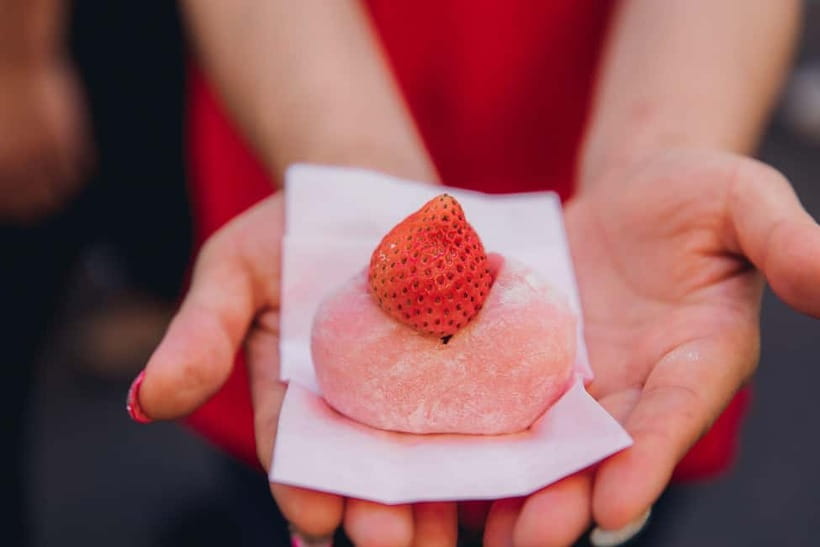
- Multiple tastings: fresh sushi, Japanese snacks, and seasonal wagashi, not just one bite.
- Shrine ritual education: you learn simple gestures and customs tied to daily life.
- Sushi history with context: how sushi storytelling fits into the market’s evolution.
- Guides with real vendor access: names you may meet include Mikki, Oku, Mihori, Shinto, Yumi, Kyou, Meg, and Kimi.
- Finish near Tsukiji Fish Market: you get a natural “where do I go next” landing point.
Why a Tsukiji Outer Market food walk makes sense
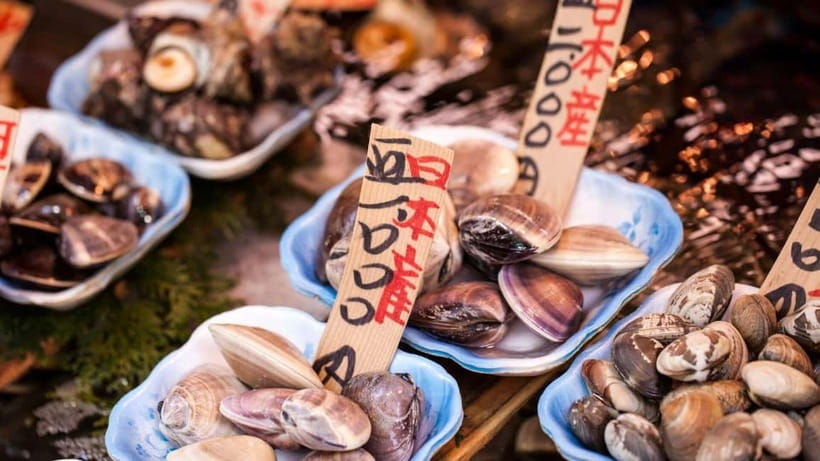
Tsukiji Outer Market is famous for a reason, but fame can be its problem. The place is packed, loud, and packed again, and you’ll quickly realize that most people are trying to do the same thing: buy a quick snack and figure out where to look next. This tour helps you slow down in the right way.
You’re guided through a planned route with a local English-speaking guide, and you get translation support while you sample. That combo matters because Tsukiji food is not random. Stalls sell seasonality, and the best bites often depend on what’s arriving that morning. When you can ask questions and understand what you’re eating, you get far more out of each stop than you would if you were just following your nose.
The other reason I like this style of tour is that it treats food as culture, not only calories. The walk connects Tsukiji to shrine customs and to the spiritual habits people use to show respect, before you ever reach the tastiest part. That’s how you end up with food memories that stick, not just a photo dump.
More Food Tours in Tokyo
- Tokyo: Shinjuku Food Tour (13 Dishes at 4 Local Eateries)
★ 5.0 · 6,603 reviews - Tokyo Tsukiji Fish Market Food and Culture Walking Tour
★ 5.0 · 3,184 reviews - Tokyo: Shinjuku Food Tour (15 Dishes and 4 Eateries)
★ 4.9 · 2,033 reviews
Meeting near Higashi-ginza and getting your bearings fast
Your morning starts at Higashi-ginza Station, Exit 3, on street level, at the top of the escalator area. You’ll meet in front of the Kabukiza Theatre on the side of Harumi Street, by a small shrine with a torii gate.
This is a smart starting point for two reasons. First, Higashi-ginza is easy to reach by public transit, so you’re not adding extra stress right at the beginning. Second, the tour begins with a cultural anchor right away. Instead of jumping straight into seafood, you start with the feeling that you are stepping into a neighborhood system, not a theme park.
When the group is only up to six people, it also becomes easier to stay together. One review-style theme in the feedback is that guides manage the flow well, keeping people from wandering off or getting lost in the crowds. That matters on a market morning, when you do not want to spend your limited time looking for your group.
Kabuki Inari Shrine: the first lesson in respect
Before you hit the densest part of the market, you visit Kabuki Inari Shrine for a guided stop. Even if you’ve seen torii gates before, a short shrine segment early in the day changes how you experience the surrounding streets.
You learn simple gestures locals use to show respect. The tour also gives you cultural explanations that frame why shrine behavior belongs in a daily routine. That’s useful because it tells you what you should watch for as you move through the area, even if you’re not sure what you’re seeing in the moment.
This shrine stop also acts like a “breather” that helps you recharge. Tsukiji can be sensory overload. Starting with quiet ritual makes the later food tasting feel like a reward rather than a rush.
Tsukiji Outer Market: tastings plus the right kind of guidance
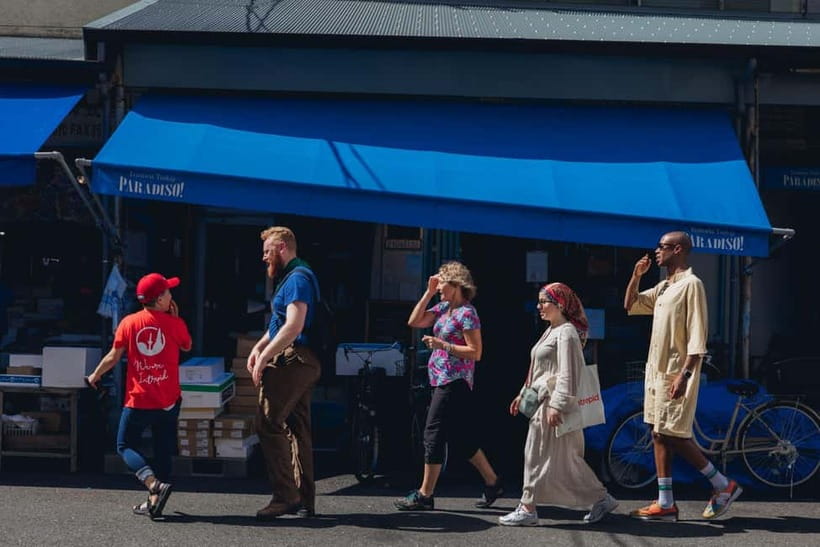
This is the core of the experience: a guided walking tour through Tsukiji Outer Market, the famous fish-market shopping zone with colorful stalls and constant motion. Your guide leads a tight group and helps you navigate what is worth trying.
More Market Tours in Tokyo
- Tokyo: Tsukiji Fish Market Food and Walking tour
★ 5.0 · 1,724 reviews - Tokyo: Tsukiji Fish Market Guided Walking Tour
★ 4.9 · 1,397 reviews - Tsukiji Fish Market Guided Tour and Sushi Making with Pro Chef
★ 5.0 · 775 reviews - Tokyo: Tsukiji Fish Market Food and Culture Walking Tour
★ 4.7 · 757 reviews
What you’ll taste
The included tastings focus on:
- Fresh sushi
- Japanese street snacks
- Seasonal wagashi sweets
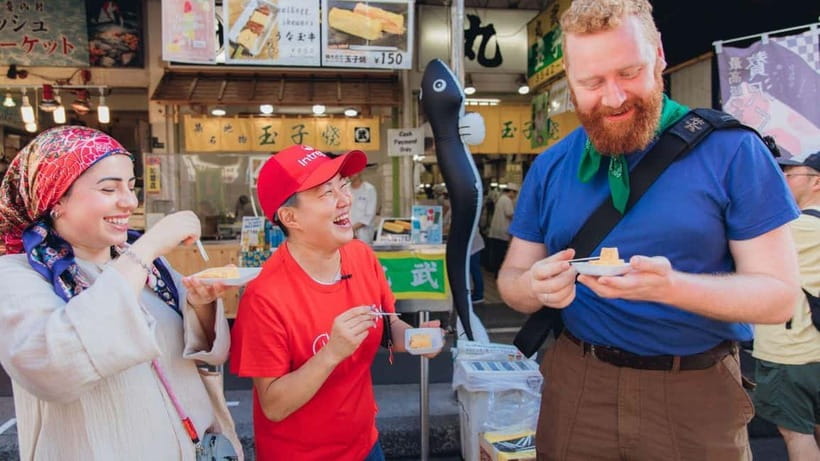
And you’ll get cultural explanation tied to the food you try. That’s a big deal. Tsukiji bites are not only about taste, they are about materials, seasonality, and craft. Guides also help you understand what each item is, so you don’t end up eating a mystery snack and hoping you can identify it later.
Some guides also include drink tastings in the mix, and you may be offered sake if you’re 20 or older, with non-alcoholic alternatives available for anyone under 20. Reviews mention sake and other drink samples, so the practical takeaway is simple: plan to taste, and consider whether you want alcohol or mocktail-style options.
Why the “small group” part matters here
Tsukiji lines can form quickly, and menu choices can be confusing if you’re staring at handwritten signs and a surge of customers. With a group of six, you get a better pace. Your guide can point out which stalls match the plan and how to approach vendors respectfully.
Also, vendor relationships are a hidden advantage. Multiple reviews highlight guides being greeted warmly by name, which makes the market feel like a community you’re visiting, not a place you’re storming through. That social ease changes your entire experience.
What to expect in the market mood
Expect constant activity. Even with pacing, you will be in the middle of the crowd. Floors can be wet, so bring closed-toe shoes. If you prefer a slower travel style, this tour still works because the tastings and explanations create a natural rhythm.
One practical tip that comes up in the feedback: come ready to eat, not stuffed. People repeatedly suggest not having breakfast first, because you’ll likely keep tasting for the full morning segment.
Namiyoke Inari Jinja: how the spiritual thread shows up in food culture
After the Outer Market segment, you head to Namiyoke Inari Jinja. This is another guided stop that reinforces the idea that food culture and spirituality are linked in everyday life.
In practical terms, this stop helps you understand what you are seeing around Tsukiji without needing a crash course in Japanese religion. You learn about basic customs, the kind that show respect and acknowledge the presence of the sacred in ordinary spaces.
You also get a quieter moment between tastings. Markets move fast. A shrine visit gives you a chance to reset your senses and carry the meaning forward, so that when you return your attention to food, it feels connected rather than random.
Sushi history and the market’s evolution you can actually use
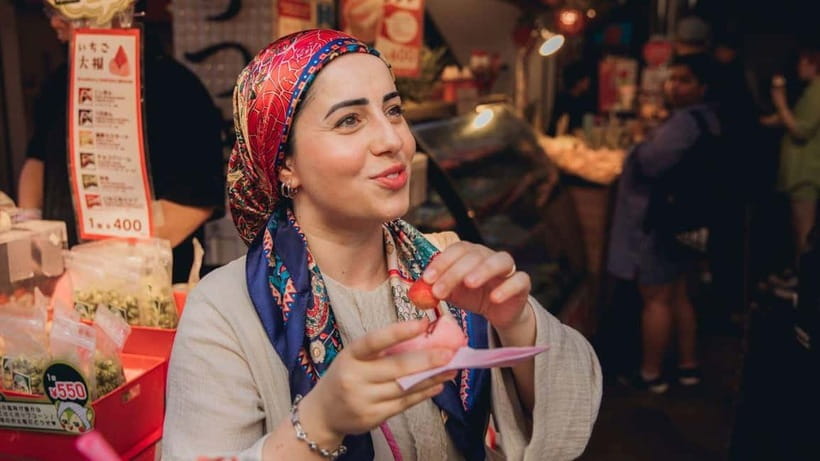
You don’t just taste sushi in this tour, you also get the story behind it. The guide explains sushi history and how the market changed over time, including the fact that the famous tuna auction moved from Tsukiji to Toyosu.
Why does that matter to you as a visitor? Because Tsukiji today is not only about the auction. It’s about the surrounding food ecosystem: stalls, specialized shops, craft traditions, and daily routines that shaped what sushi and seafood shopping look like in Tokyo.
You’ll hear how the market’s cultural roots connect with Buddhist beliefs and Shinto spirit, and how those influences show up in food rituals and market behavior. You might not walk away able to name every detail, but you will leave with a clearer sense of what the market’s rhythms mean.
Also, guides often share hands-on context about ingredients and food craft. Reviews mention examples like tamagoyaki-making information, wasabi preparation, and a broad spread of tastes ranging from matcha to dashi and soy-based items. The main value is that you get to connect words like dashi, tamago, and seasonal wagashi to what they taste like in real life.
Ending at Tsukiji Fish Market: what to do with the momentum
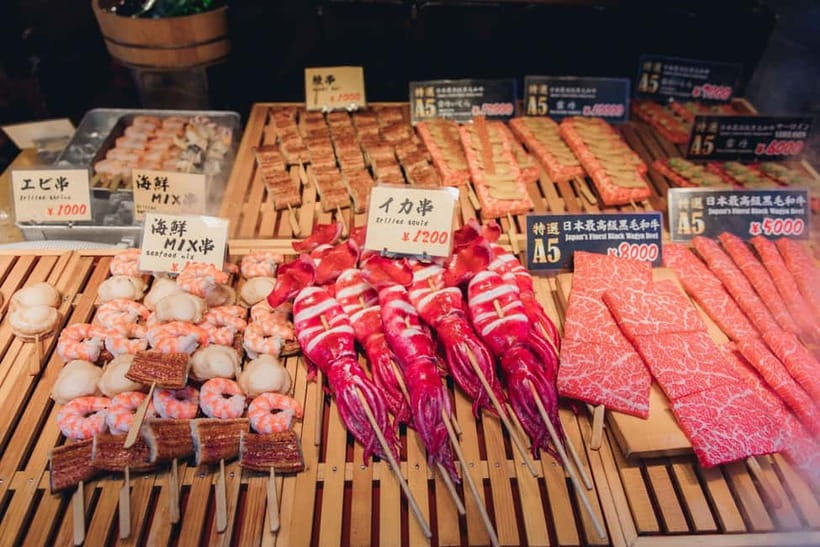
The tour finishes at TSUKIJI FISH MARKET. This ending point is helpful because it keeps you close to where the action continues, so you’re not suddenly dropped far away after your last bite.
By the time you finish, you’re usually in a better mindset to keep exploring. You understand what kind of stalls to look for, what to ask, and how to spot shops that feel craft-focused rather than only souvenir-oriented.
If you’re planning the rest of your day, think about this tour as your morning “orientation + tasting chapter.” After that, you can choose where to spend extra time. Some people return for another snack, others head off to gardens or neighborhoods nearby, but you’ll make better choices because you now know how Tsukiji works as a food district.
Guides you might meet, and why it feels personal
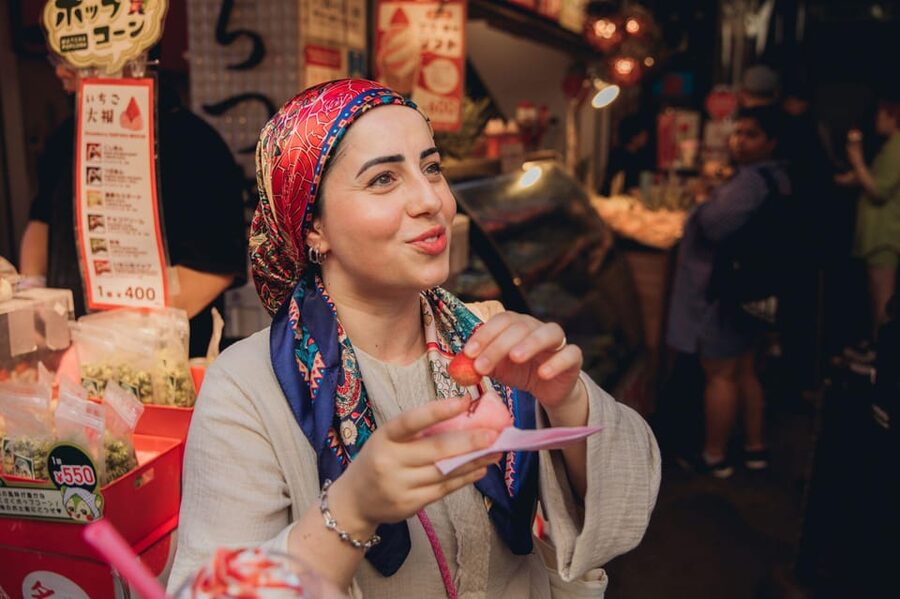
One of the most praised parts of this experience is the guides. People specifically call out guides as friendly and funny, and as careful about respecting vendors.
You might meet Mikki, Oku, Mihori, Shinto, Yumi, Kyou, Meg, or Kimi. The common thread in the comments is that guides:
- welcome you at the start with warmth,
- share photos, maps, and visual tools to explain what you’re seeing,
- keep the group together without rushing,
- answer questions without making you feel dumb,
- and help you taste broadly in small portions.
That last point matters. Tsukiji is a place where it is easy to overdo it. With planned tastings, you can try a lot without turning your stomach into a wrestling match.
Price and value: is $80 worth it?
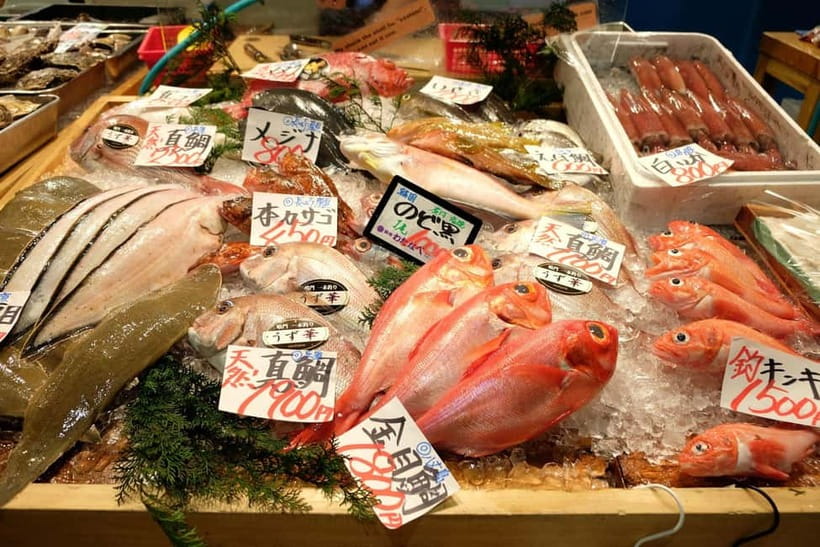
At $80 per person for about 3 hours, the question isn’t only cost. It’s what you get for that time.
You’re paying for:
- a guided walking route through a complex market area,
- English interpretation so you can understand stalls and tastings,
- multiple included tastings (sushi, snacks, wagashi),
- and cultural explanations tied to shrine stops and sushi history.
If you were to do Tsukiji on your own, you could spend less on food, but you’d also miss a lot of the “why.” You’d be guessing at what’s seasonal, what’s worth your time, and how to behave respectfully at shrines. You’d also spend time figuring out logistics instead of tasting with context.
The small group size is part of the value too. Six people means less crowding and more attention. For an area as busy as Tsukiji, that can be the difference between a stressful morning and a fun, guided route that leaves you satisfied.
One practical note: additional food and drinks aren’t included, so if you know you want extra items after the tastings, budget for that. The tour gives you a strong base of tastings, but it won’t prevent you from wanting more.
Who should book this Tsukiji walk, and who might skip it
This tour is a great fit if you:
- want a calmer way to experience a crowded food market,
- like learning as you eat,
- care about cultural context, especially shrine etiquette and sushi history,
- prefer a small group so you can ask questions.
It’s also ideal as a first activity in Tokyo. Several reviews describe it as a great start because it teaches you what to look for in markets going forward.
You might think twice if you:
- want only large quantities of food, the plan focuses on tastings in small portions,
- expect a long behind-the-scenes working market tour, the route centers on Outer Market exploration plus nearby shrine visits,
- or you’re highly sensitive to crowds, even with a guide, Tsukiji stays busy.
Should you book this Tsukiji Market food and culture walk?
Yes, if you want a smart first morning in Tokyo that blends Tsukiji Outer Market tastings with shrine customs and sushi history. For the price, you’re paying for attention, translation, and meaning, not just snacks. The most convincing reasons are the small group pacing and the way guides turn stalls and spiritual details into a story you can actually remember.
I would book it especially if you’re the kind of traveler who enjoys learning a little before eating, and if you want your market visit to feel friendly rather than frantic. Bring closed-toe shoes, don’t eat a heavy breakfast, and arrive ready to taste a range of flavors you might not pick on your own.
FAQ
Where do I meet for the Tokyo’s Kitchen: Tsukiji Market Food & Culture Walk?
You meet at Higashi-ginza Station, Exit 3 (Tokyo Metro Hibiya Line and Toei Asakusa Line), at street level, at the top of the escalator, in front of Kabukiza Theatre on the Harumi Street side, by the little shrine with a torii gate.
How long is the tour?
The tour lasts 3 hours.
How big is the group?
The group is limited to 6 guests.
What’s included in the tastings?
The tour includes multiple tastings: fresh sushi, Japanese snacks, and seasonal wagashi. It also includes a nearby historic shrine visit with cultural explanations.
Are vegetarian or vegan options available?
Vegetarian and vegan options are available, though choices may be limited due to the market. Let the provider know ahead of time so they can plan.
Do I need to bring anything or wear specific shoes?
Closed-toe shoes are recommended because Tsukiji market floors can be wet.
Is alcohol included, and are there age rules?
Alcohol can be enjoyed by guests 20 or older. Guests under 20 will be offered delicious non-alcoholic alternatives. The tour also includes tastings of food and may include drinks depending on the plan.
Where does the tour end?
The tour ends at TSUKIJI FISH MARKET.
Is it good for families?
Children aged 5 and under join free. If you’re bringing a child under 6, you should let the provider know when booking so they can plan for them.
More Shopping Tours in Tokyo
- Tokyo Food Tour Taste Fresh Delights at Tsukiji Market
★ 5.0 · 429 reviews - Tokyo Tsukiji Fish Market Tour and Sushi Making Lesson
★ 5.0 · 390 reviews - Tsukiji Fish Market: Street Food & Culture Walking Tour
★ 4.8 · 259 reviews - Tokyo Washoku 4-hour Cooking Class: From Market to Table
★ 5.0 · 253 reviews
More Market Walks in Tokyo
- Tokyo Sushi Making Class in Tsukiji with Professional Chef
★ 5.0 · 1,177 reviews - Tsukiji Fish Market: Street Food & Culture Walking Tour
★ 5.0 · 669 reviews - Tsukiji Fish Market Small-Group Food Walking Tour
★ 5.0 · 621 reviews - Tokyo: Tsukiji Fish Market Sushi Making Class with Pro Chef
★ 4.9 · 506 reviews
Newly listed around Tokyo
- Tokyo: Sumo Morning Practice Tour in Ryogoku and Photo Shoot★ 4.7 · 47 reviews
- Tokyo Sumo Morning Practice: Witness the Life of a Wrestler★ 4.8 · 56 reviews
- Tokyo Sumo Morning Practice: Viewing & Exclusive Interaction★ 4.9 · 74 reviews
- Tokyo: Sumo Morning Practice with journalists. Not fake show★ 4.9 · 121 reviews
- Tokyo: Morning Sumo Practice Viewing★ 4.8 · 136 reviews
- Tokyo: Sumo Morning Practice Viewing Tour at a Real Stable★ 4.9 · 32 reviews
- Tokyo:Stroll in Old traditional culture towns~Yanaka & Nezu★ 4.9 · 186 reviews
- Tokyo: Snow Monkey Park and Zenkoji Temple Private Day Tour★ 4.7 · 127 reviews
Fish Market Walks, compared.
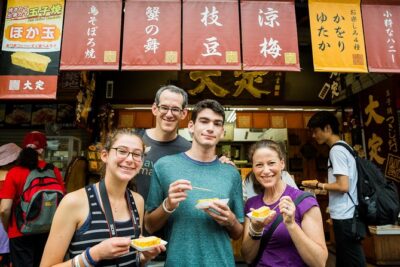
Tokyo Tsukiji Fish Market Food and Culture Walking Tour
Read our review →

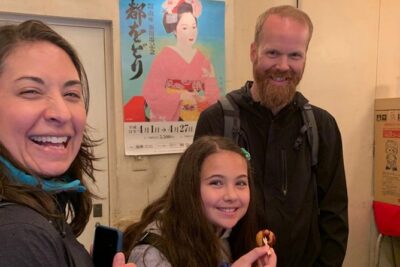
Nishiki Market Brunch Walking Tour (7 Tastings + Brunch)
Read our review →
Tokyo Sushi Making Class in Tsukiji with Professional Chef
Read our review →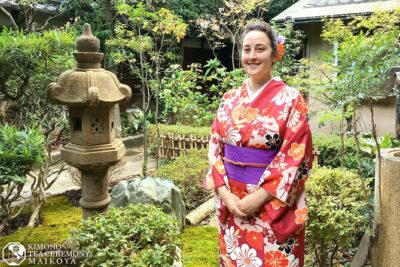
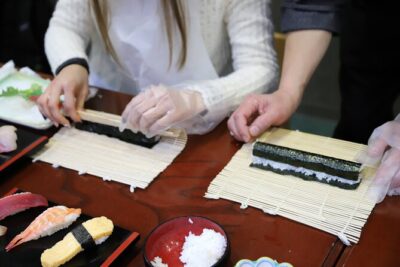
Tsukiji Fish Market Guided Tour and Sushi Making with Pro Chef
Read our review →