
Review · SAMURAI SWORD & NINJA TRAINING
Gifu Samurai Sword Town;Japanese Damascus Knife Making Experience
Seki’s knife town lets you make a real Damascus blade and use it fast. I like that the class is hands-on from assembly to sharpening, and I also love the no-drama moment where you test the edge on fresh vegetables. One thing to plan for: the final cost can change depending on which of the three knife styles you choose.
The experience is also built around place and people, not just a workshop. You start with the Knife Museum in a Canadian-style log house next to the G.SAKAI factory, and the hosts like Hiro, Sumi, and Yoshi make the technical parts feel doable and friendly.
Logistics are pretty straightforward, with a group size capped at 5 and about 2.5 hours total. The only real catch is that the location is not in the middle of a big tourist grid, so give yourself time to find the meeting spot at Sekitomioka Station.
In This Review
- Key things I’d circle before you book
- Why Seki, Gifu is the real knife-making stage
- Knife Museum and the G.SAKAI factory: craft you can see
- Choosing your blade: kitchen, folding hunting, or Chinese-style
- Your hands-on Damascus knife making session
- Sharpness test on fresh vegetables, not theory
- Learning sharpening, so the knife stays great
- Workshop pace, group size, and who this suits
- How the timing works for a Kyoto day trip
- Value for $250.38 and what you really pay for
- Practical tips before you go
- Should you book this Gifu Damascus knife experience?
- FAQ
- What is the duration of the Gifu Samurai Sword Town knife-making experience?
- Where does the tour start, and where does it end?
- What time does it start?
- Is pickup offered?
- Is mobile ticketing available?
- How big is the group?
- What do you do during the workshop?
- Do you test the knife you make?
- What knife types can you choose from?
- How far is it from Kyoto by train?
- What is the cancellation policy?
Key things I’d circle before you book
- Knife Museum in a log-house setting: see rare cutlery and world exhibits right by the factory
- Factory viewing while the craft is still modern: watch how Japanese knives are made now
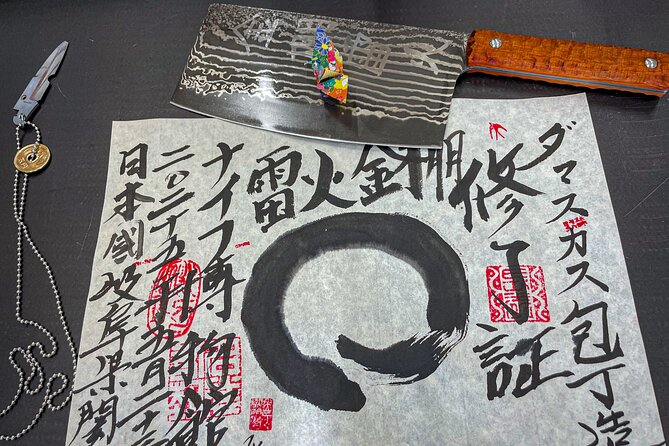
- Build-your-own Damascus knife: you assemble, polish, sharpen, and even write your name on it
- Vegetable sharpness test: you get a practical, satisfying moment of proof
- Sharpening lesson you can keep using: learn how to maintain the edge for years
- Small group energy (max 5): more time with the craftsmen, less waiting around
Why Seki, Gifu is the real knife-making stage
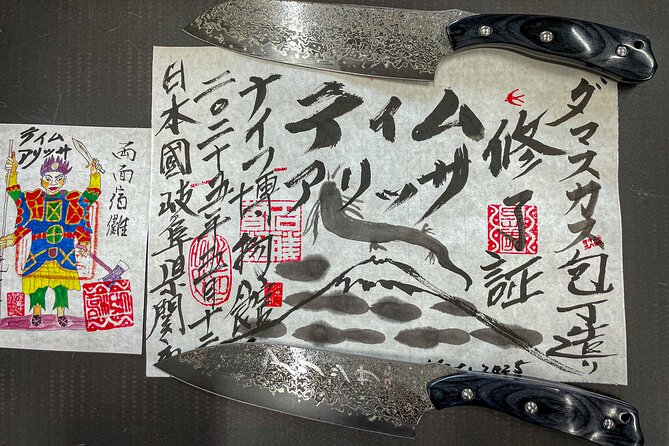
If you care about sharp tools, you end up caring about Seki. This part of Gifu Prefecture has been associated with sword making since at least the 13th century, fueled by iron sand from the Nagaragawa River. In the Edo period, blacksmiths in the area were producing Samurai swords and knives at scale, which helped turn cutlery into a local specialty.
Today, Seki is still considered one of the world’s top cutlery manufacturing hubs, alongside Sheffield in the UK and Solingen in Germany. You do not need to memorize any of those comparisons to get it. When you visit the workshop setting and factory area, you feel the industrial focus behind the artistry.
That context matters for your class because you are not making a souvenir blade. You are learning the mindset behind knives made for real use, where edge performance and durability are the point.
More Samurai & Ninja Sessions in Takayama
- Ninja Experience in Takayama – Basic Course
★ 5.0 · 62 reviews - Seki: Samurai Knife Making Experience at the Knife Museum
★ 5.0 · 61 reviews - Ninja Experience in Takayama – Basic Course
★ 4.6 · 59 reviews
Knife Museum and the G.SAKAI factory: craft you can see
Your day starts at Sekitomioka Station in Seki. The meeting point is near public transportation, and the whole experience loops back to the same location when you’re done, so it is easy to keep your day tidy.
First stop is the Knife Museum, housed in an attractive Canadian-style log house right next to the G.SAKAI factory. This is not just a hallway of knives. You get to see rare items and cutlery exhibits from around the world, which helps you understand how knife styles evolved and why Damascus patterns are more than decoration.
Then you step into the factory area to see how Japanese knives are made today. That shift is important. Museum displays can feel distant, like history behind glass. The factory visit brings it into the present, so your workshop later feels connected to real production standards.
In the small group format, you can actually ask practical questions without feeling rushed. That is one reason reviews keep calling out the hosts’ kindness and the smooth pace.
Choosing your blade: kitchen, folding hunting, or Chinese-style
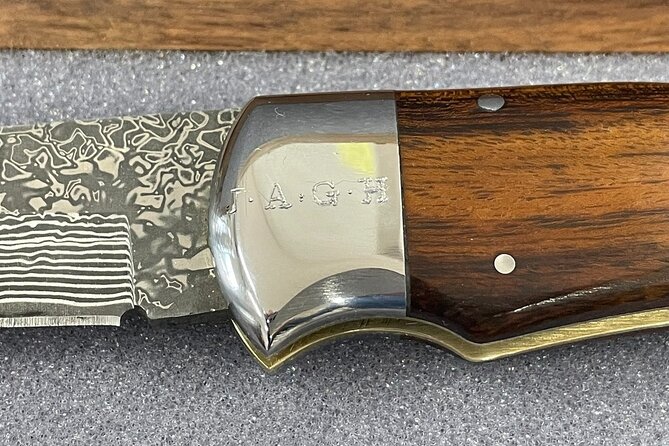
Before you build, you choose from three knife types:
- Japanese Damascus kitchen knife
- Folding Damascus hunting knife
- Chinese Damascus kitchen knife
This matters more than you might think, because your end product has a job. If you cook daily, the Japanese Damascus kitchen option is built for everyday kitchen prep. If you like outdoor gear and want something more portable, the folding hunting knife option makes sense. And if you cook in a more traditional Chinese style, the Chinese Damascus kitchen knife is the right match for that workflow.
The tour price you see is $250.38 per person, but the information you’re given also notes that prices vary by knife type. So treat the listed number as a baseline and confirm the exact total once you pick your blade style.
Your hands-on Damascus knife making session
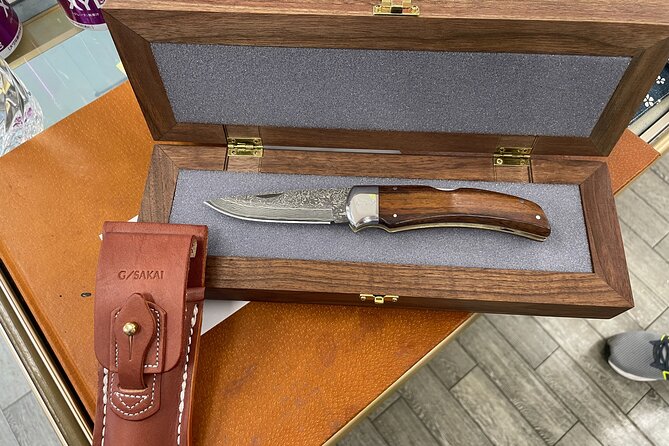
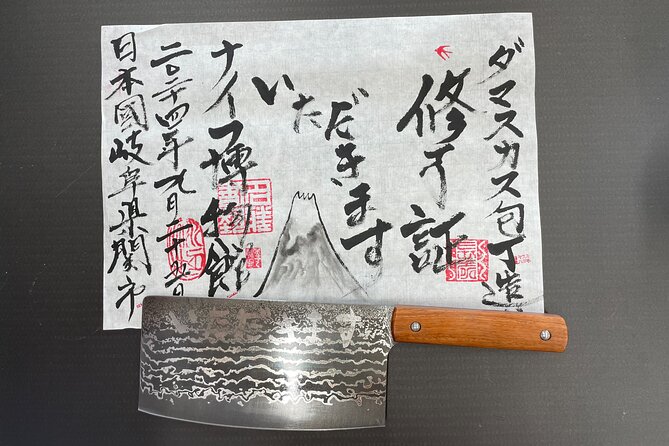
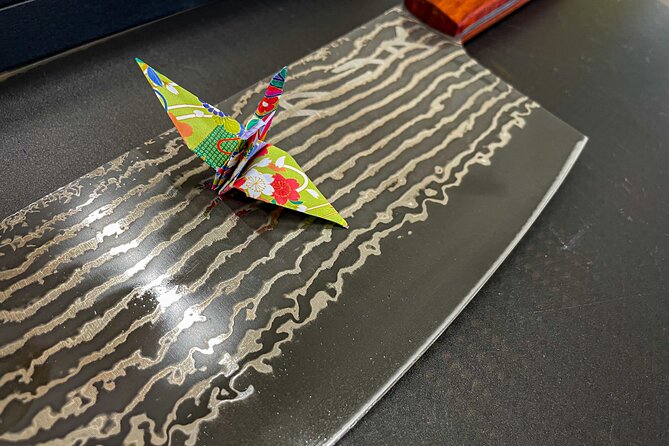
This is the heart of the experience, and it runs through a clear build process. In the atelier, you construct your own knife with a craftsman guiding you through steps like assembling, polishing, and sharpening. You also write your name on the knife, which turns it from a workshop object into something personal.
Damascus knives are often discussed for their striking patterns. In class, the pattern stops being an abstract selling point. You start working through the physical steps, so you understand why the final edge quality depends on what happens earlier in the process, especially during polishing and sharpening.
What I like most is that the workshop avoids mystery. You are not watching someone else do all the hard work while you hold a cloth. You are involved in the sequence that turns rough materials into a usable blade.
The hosts matter here too. Reviews highlighted that Hiro, Sumi, and Yoshi were gracious and made the session enjoyable, and you can feel that in how the instruction is delivered. When someone explains the why behind each step, you learn faster, and you finish feeling proud instead of confused.
More Samurai and Ninja sessions in Takayama:
- Knife Making Experience in Samurai Sword Town
★ 5.0 · 29 reviews - Ninja experience in Takayama – Special Course
★ 4.9 · 13 reviews - Ninja Experience in Takayama – Trial Course
★ 4.9 · 7 reviews - Tokyo: Samurai Restaurant Show Ticket with 2 Drinks
★ 4.5 · 1,307 reviews
Sharpness test on fresh vegetables, not theory
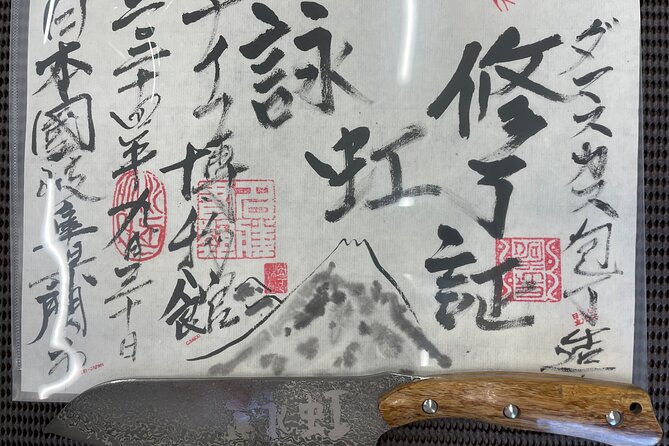
One of the best parts of the whole experience is the sharpness test on fresh vegetables. It is simple, but it is the kind of real-world check you cannot fake.
You build a knife, then you see the results immediately. With a good edge, cuts look clean and controlled. With a mediocre edge, you feel resistance and the cut quality drops fast. That instant feedback tells you whether your sharpening and final prep were on track.
Even if you already own knives, this is still valuable because you learn what exceptional sharpness feels like in your own hands. You are not just carrying home a blade with a pattern. You are bringing home the benchmark.
Learning sharpening, so the knife stays great
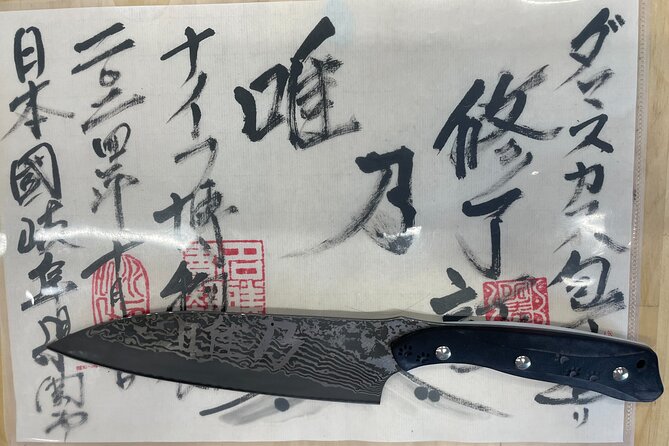
Making the knife is one step. Keeping it sharp is the skill that actually matters long after the class ends.
Throughout the session, you learn the essential art of sharpening. The goal is maintenance: how to keep the edge razor sharp and in prime condition for years. If you have ever had a knife go from great to disappointing, you know that the fix is not magic. It is regular care and the right technique.
What makes this part useful is that it is taught alongside the knife you just made. So the instructions feel practical, not generic. You leave with a mental checklist for how to think about edge care, which helps you avoid the common mistake of waiting too long and then trying to correct damage later.
Workshop pace, group size, and who this suits
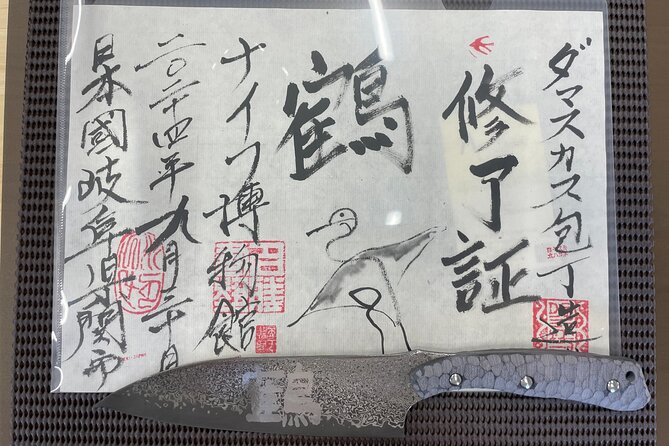
This experience caps at 5 travelers, and that small group size shows in the pacing. You get more direct attention, and you spend less time waiting your turn. In a hands-on craft class, that makes the difference between leaving with confidence and leaving with a question mark.
The experience is also designed for most people, so you do not need a special background. If you are coming with someone who likes food tools, outdoor gear, or Japanese craftsmanship, this is a good match.
It can also work well for a parent and child. One review specifically described doing the workshop together, and the vibe comes across as welcoming for hands-on learners. You should expect the focus to be on the process, not speed.
And yes, the location can feel off the beaten track. If you like clear, easy tourist circuits, you might find the approach less direct. Still, the effort is worth it because you get the factory-side context that you do not get in most craft experiences.
How the timing works for a Kyoto day trip
If you are basing yourself in Kyoto, you can treat this as a day trip. The info you’re given says it is about 1.5 to 2 hours by train from Kyoto. You start at 10:30 am, and the activity lasts about 2 hours 30 minutes.
That means you have time for a lunch stop or a second activity afterward without wrecking your whole day. Just plan for the first leg to the meeting point at Sekitomioka Station. Arrive a little early so you are not juggling directions while people are already moving.
The experience also offers pickup. If you are staying nearby in the area, pickup can save time and reduce stress. If you are farther out, you can still use public transportation since the meeting point is near transit.
Value for $250.38 and what you really pay for
$250.38 for a 2.5-hour workshop is not cheap, but it can be a fair value when you look at what you get.
You are paying for three things that are rare together:
- A visit to a knife museum with global exhibits, plus factory viewing
- A guided build process where you assemble, polish, sharpen, and personalize your knife by writing your name on it
- A sharpness test on fresh vegetables plus practical sharpening education you can use later
A basic souvenir experience gives you a photo and a product. This gives you a product you can test, plus the skill to keep it working. That is why people call it worth the money.
The one cost variable is your blade choice. Since pricing varies based on the knife type, your total may shift depending on whether you go kitchen or hunting, Japanese-style or Chinese-style. Check that before you confirm, so there are no surprises.
Practical tips before you go
Here are the small things that make the day smoother.
Wear comfortable clothes, because the workshop is about doing, not just watching. Bring a curious mindset. You will get a lot more out of the factory portion if you pay attention to the practical details behind knife making rather than just the end look.
Also, expect that the experience is structured and guided. You do not want to rush the process. The polishing and sharpening steps are where quality is formed.
Finally, if you want a more relaxed start, build in a buffer at Sekitomioka Station. This is not a place where you can assume everything is within a five-minute walk of major sightseeing stops.
Should you book this Gifu Damascus knife experience?
Book it if you want a hands-on craft day tied to a real knife-making region. The combination of Knife Museum, factory viewing, and a make-it-yourself Damascus blade with a sharpness test is exactly the kind of experience that turns a skill into a keepsake.
Skip it if you want a casual, purely sightseeing tour. This is work with guidance. You will enjoy it more if you like food tools, outdoors gear, or learning a practical technique you can keep using, especially sharpening.
If you are traveling from Kyoto, it also makes sense as a focused half-day plan. Just pick your knife style carefully, because that choice affects the price and what you end up taking home.
In short: this is a small-group craft workshop where the proof is not in the pattern, it is in the cut. If that appeals to you, you will likely feel very good about your purchase.
FAQ
What is the duration of the Gifu Samurai Sword Town knife-making experience?
It runs for about 2 hours 30 minutes (approx.).
Where does the tour start, and where does it end?
It starts at Sekitomioka Station, Hidase, Seki, Gifu 501-3911, Japan, and it ends back at the meeting point.
What time does it start?
The start time is 10:30 am.
Is pickup offered?
Yes, pickup is offered.
Is mobile ticketing available?
Yes, a mobile ticket is listed as part of the experience.
How big is the group?
The maximum group size is 5 travelers.
What do you do during the workshop?
You construct your own knife in the atelier by assembling, polishing, sharpening, and writing your name on it with the knife craftsman.
Do you test the knife you make?
Yes, you test its sharpness by cutting fresh vegetables.
What knife types can you choose from?
You can choose from three types: a Japanese Damascus kitchen knife, a folding Damascus hunting knife, or a Chinese Damascus kitchen knife.
How far is it from Kyoto by train?
It is roughly 1.5 to 2 hours by train from Kyoto.
What is the cancellation policy?
Free cancellation is available. You can cancel up to 24 hours in advance for a full refund, and cut-off times are based on the experience’s local time.
More Craft Workshops in Takayama
- Chopstick Making Workshop in Ginza
★ 4.8 · 1,366 reviews - Tokyo: Samurai Sword & Archery Class from Samurai Descendant
★ 5.0 · 603 reviews - Tokyo: Shinjuku Chopstick Making Class
★ 4.9 · 440 reviews - Japanesel Archery Experience HIROSHIMA CASTLE SHARAKU
★ 5.0 · 387 reviews
Newly listed around Takayama
- Private-group Morning Cycling Tour in Hida-Furukawa★ 5.0 · 105 reviews
- Short Morning Cycling Tour in Hida★ 5.0 · 17 reviews
- Private Afternoon Cycling Tour in Hida-Furukawa★ 5.0 · 109 reviews
- Shirakawago(UNESCO world heritage)/ Onsen / Hiking / 1day tour★ 5.0 · 6 reviews
- Shirakawa-go Half day tour (UNESCO World Heritage near Takayama)★ 5.0 · 9 reviews
- Magome & Tsumago Nakasendo Trail Day Hike with Government-Licensed Guide★ 5.0 · 38 reviews
- Magome & Tsumago Nakasendo Full-Day Private Trip with Government-Licensed Guide★ 5.0 · 20 reviews
- Frozen fall trekking★ 5.0 · 21 reviews
Samurai Sword & Ninja Training, compared.

Samurai Ninja Museum Guided tour and Experience
Read our review →
Kendo and Samurai Experience with Uniform and Gear
Read our review →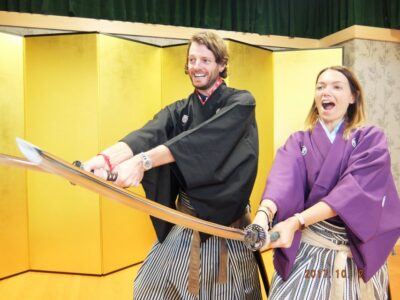
Samurai Sword Class by Experts in Traditional Arts
Read our review →
Skip the lines Basic Ticket at SAMURAI NINJA MUSEUM KYOTO
Read our review →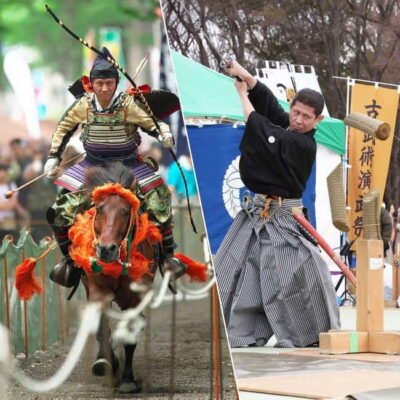
Samurai Sword & Archery Class from Samurai Descendant
Read our review →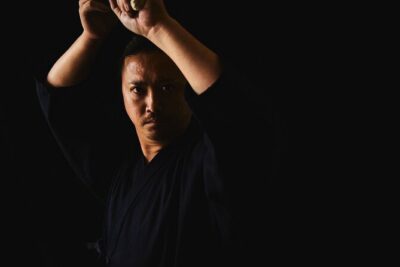
Browse the lists this tour appears in