
Review · SAMURAI SWORD & NINJA TRAINING
Seki: Samurai Knife Making Experience at the Knife Museum
Your name turns into a working knife. In Seki, you spend a small-group day with master makers shaping a Damascus-style kitchen knife, then polish, engrave, and sharpen it before trying it out on fresh vegetables. I love the hands-on pace and the real satisfaction of holding something you made with care, and I also love the fresh-vegetable sharpness test that turns theory into instant proof. One drawback to plan for: the workshop can run long, so the day may feel less “clockwork” than you’d expect.
This isn’t a drive-by photo stop. You meet at Sekitomioka Station around 10:06, ride to the G. Sakai Knife Museum area, and then move on to the Seki Swordsmith Museum for Samurai sword context. With an English-speaking guide (Hiro is a common name you’ll hear), and instructors such as Sumi and Yoshi, you get more attention than most half-day attractions.
In This Review
- Key Things I’d Mark on Your Mental Map
- Why Seki City Is The Place To Make A Knife
- Meeting at Sekitomioka Station and How the Day Flows
- G. Sakai Knife Museum Workshop: From Blank to Your Name
- The Name-Etching Moment and Why It’s More Than a Fun Add-On
- Testing Your Knife on Fresh Vegetables
- Lunch in Seki: Japanese Cuisine After You Finish Your Knife
- Knife Museum Browsing: Rare Blades, Shopping, and Real Factory Context
- Seki Swordsmith Museum: Samurai Sword History and Blacksmith Culture
- Price and Value: Is $322 Worth It?
- Who This Experience Fits Best (and Who Might Want Another Option)
- Practical Tips So You Get the Most Out of the Day
- Should You Book This Tour in Seki?
- FAQ
- How long is the Seki samurai knife making experience?
- Where do we meet for the tour?
- What will I make during the workshop?
- Do I get to test the knife after making it?
- Is lunch included, and what kind of food is it?
- Which museums are included?
- How big is the group?
- What language is the guide in?
- Is this experience suitable for children?
Key Things I’d Mark on Your Mental Map
- Small-group instruction with time to ask questions, not just watch
- Name engraving and sharpening lessons you can actually use later
- Knife performance test on fresh vegetables right after you finish
- Knife Museum + Swordsmith Museum pairing so the craft makes sense
- Japanese lunch with real craft energy after the hands-on work
Why Seki City Is The Place To Make A Knife
Seki City, in Gifu Prefecture, is famous for blades for a reason. Long ago, it became a center for cutlery and sword work because the region had the basics for traditional forging, including high-quality iron sand, charcoal, and water. Over time, Seki gained a reputation for knives made for daily use, not just display pieces.
That matters because this kind of experience works best when the location has credibility. Here, you’re not just learning a “cool hobby.” You’re learning a craft that grew into something practical, professional, and respected by chefs and home cooks. When you test your knife on vegetables later, it doesn’t feel like a gimmick. It feels like the local idea of sharpness, translated into your hands.
Also, Seki is a good change of pace from the big-name tourist hubs. You get Japanese industry and craftsmanship energy without the constant crowd pressure.
More Samurai & Ninja Sessions in Takayama
- Ninja Experience in Takayama – Basic Course
★ 5.0 · 62 reviews - Ninja Experience in Takayama – Basic Course
★ 4.6 · 59 reviews - Knife Making Experience in Samurai Sword Town
★ 5.0 · 29 reviews
Meeting at Sekitomioka Station and How the Day Flows
Your day starts at Sekitomioka Station, timed to a train arrival around 10:06 AM. A driver picks you up by car, and from there the itinerary stays focused: workshop, lunch, museum, back to the station.
The total time is listed as one day, and the activity includes a lot of “in-room” work, not just wandering. Expect the pacing to be guided and structured, with an emphasis on doing the steps yourself. That’s why the group stays small, up to 5 participants. In a bigger group, it’s hard to slow down for questions, and it’s hard to get the help you need while polishing, sharpening, and handling hot or delicate materials.
One practical note: because this is hands-on and skill-based, it can run over the published time blocks. Plan your travel day with some flexibility, especially if you’re connecting to something right after.
G. Sakai Knife Museum Workshop: From Blank to Your Name
The heart of the experience is at the G. Sakai Knife Museum and its nearby workshop space. You’ll get a guided visit and workshop time totaling about 2.5 hours.
Here’s what makes it feel meaningful instead of staged:
- You don’t just assemble a toy. You work through real steps such as polishing and sharpening, with instruction along the way.
- You engrave your name on the blade using a special technique. People often ask about how your name turns into Japanese characters, and guides like Hiro help with that translation into kanji or kana.
- You learn enough about sharpening technique to understand what’s happening, not just how to copy the motion.
Instructors you may work with include Sumi and Yoshi, and many participants mention their patience and sense of humor. That combination is important. Polishing and etching can feel intimidating if nobody explains what “good” looks like, but in this setting, you get coaching step by step.
You’ll also notice something: the process has stages. That’s why it can feel longer than you expect. The upside is that you see the knife slowly transform from a blank into something that’s unmistakably yours. And when the instructors are working with you, it stops being “watch the expert.” It becomes “watch yourself improve.”
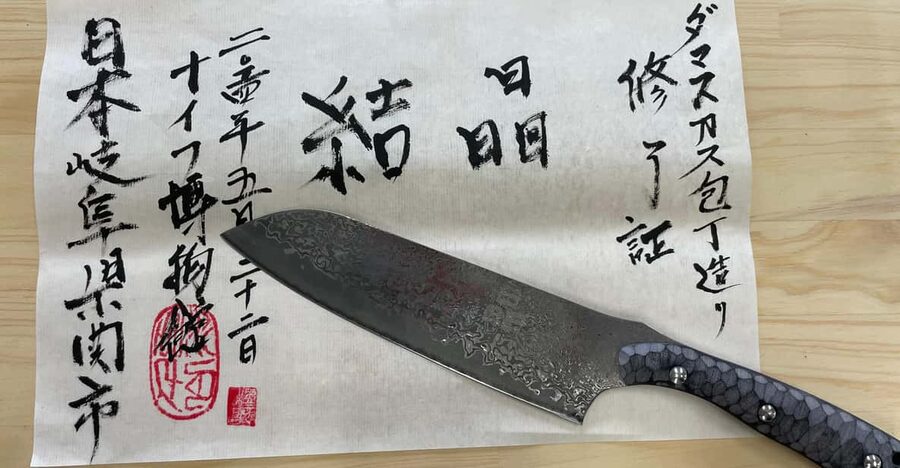
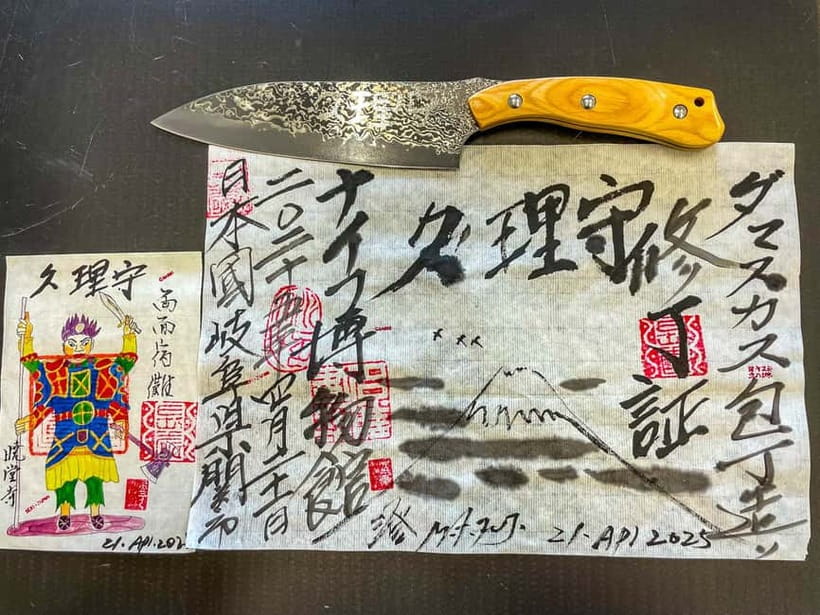
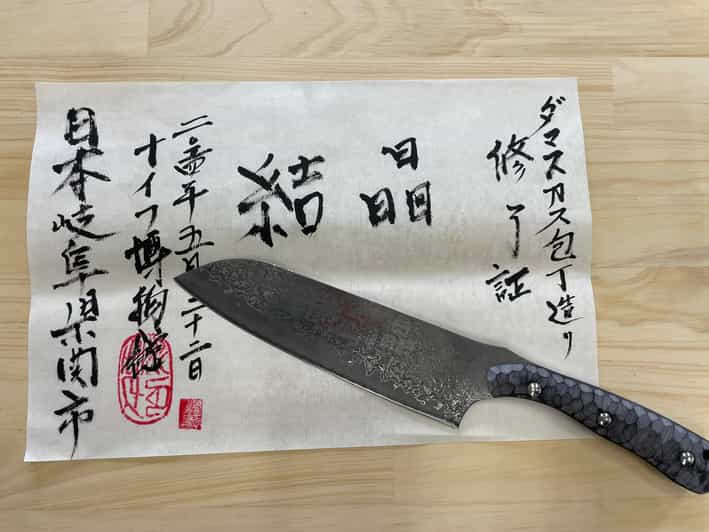
What you make is described as a personalized Damascus kitchen knife. In simple terms, you’re producing a practical style of blade designed for kitchen use, not a purely ceremonial item. You should still treat it like a craft object, but it’s made to live on your cutting board.
One more thing I liked in the way the day is designed: you can add it to your routine. Many experiences give you a souvenir. This one gives you something you can use, because sharpening instruction and the test cut are part of the same arc.
The Name-Etching Moment and Why It’s More Than a Fun Add-On
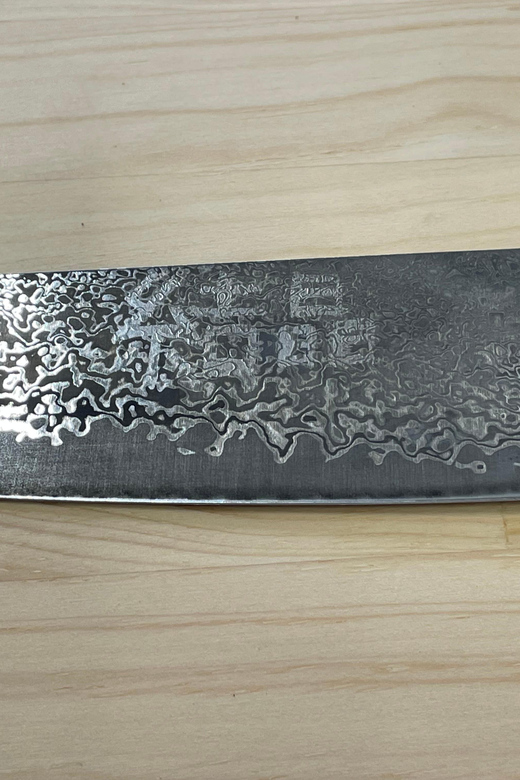
The engraving is one of those details that sounds small until you experience it. Putting your name on the blade is fun, yes, but it’s also a shortcut to cultural context. You’re learning how Japanese calligraphy characters and writing systems carry meaning, and you get help turning your own name into the right script.
People often focus only on the final look of their knife. I think the better payoff is understanding the care behind it. Japanese swords and knives traditionally carried identity, lineage, and intention. Even if your finished piece is a kitchen knife experience rather than a full traditional sword, your name engraving connects you to the idea that blades are made with personal purpose.
Practically, it also gives you a lasting memory. Years later, it’s not just “a knife I bought.” It’s “a knife I wrote on, polished, and sharpened.”
More Samurai and Ninja sessions in Takayama:
- Gifu Samurai Sword Town;Japanese Damascus Knife Making Experience
★ 5.0 · 27 reviews - Ninja experience in Takayama – Special Course
★ 4.9 · 13 reviews - Ninja Experience in Takayama – Trial Course
★ 4.9 · 7 reviews - Tokyo: Samurai Restaurant Show Ticket with 2 Drinks
★ 4.5 · 1,307 reviews
Testing Your Knife on Fresh Vegetables
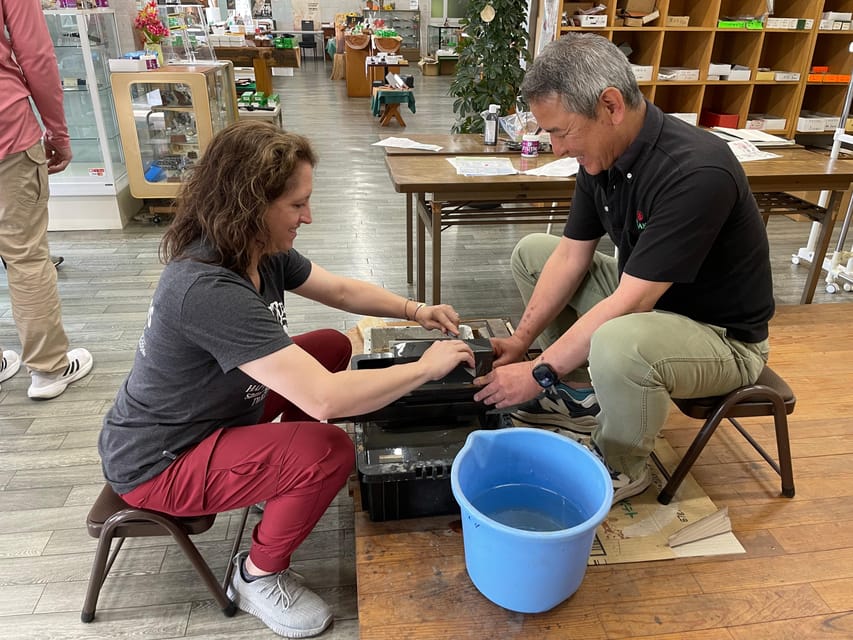
Then comes the moment you’ll remember: testing.
After you finish making, you get to check the performance and feeling of your knife by cutting fresh vegetables. This is the best kind of reality check because it tests sharpness in a way that’s immediately understandable. You don’t need a knife-nerd vocabulary. You feel it in the resistance, and you see the results in how cleanly it slices.
This part is also where you learn what to trust. You can be tempted to think a knife looks sharp because it’s shiny. The test tells you the difference between “looks sharp” and “cuts sharp.”
Even better, instructors provide sharpening technique guidance, so you learn what likely caused the improvement. That makes the testing feel like a lesson, not a final demo.
One caution: don’t schedule a rush right after this moment if you’re easily flustered. The experience is most satisfying when you have time to slow down and pay attention.
Lunch in Seki: Japanese Cuisine After You Finish Your Knife
About 1 hour after the workshop, you’ll head to a local restaurant for Japanese cuisine lunch.
This meal is more than fuel. It’s timed right after you finish the hardest part of the day, and it resets your energy before the museum stop. It also gives you a chance to talk with your guide and instructors while your knife is still fresh in your mind.
The lunch is described broadly as authentic Japanese cuisine, and real menu highlights in the experience include sushi. Some groups mention sushi prepared by a sushi master with years of experience. Others mention eel as a lunch choice. Since the exact dishes can vary by day and selection, the reliable takeaway is that it’s Japanese and craft-minded, not a generic set lunch.
If you’re a foodie, this is one of those “the timing is perfect” situations. You don’t eat when you’re bored and tired. You eat right after your brain is busy, when you’ll actually taste the meal.
Knife Museum Browsing: Rare Blades, Shopping, and Real Factory Context
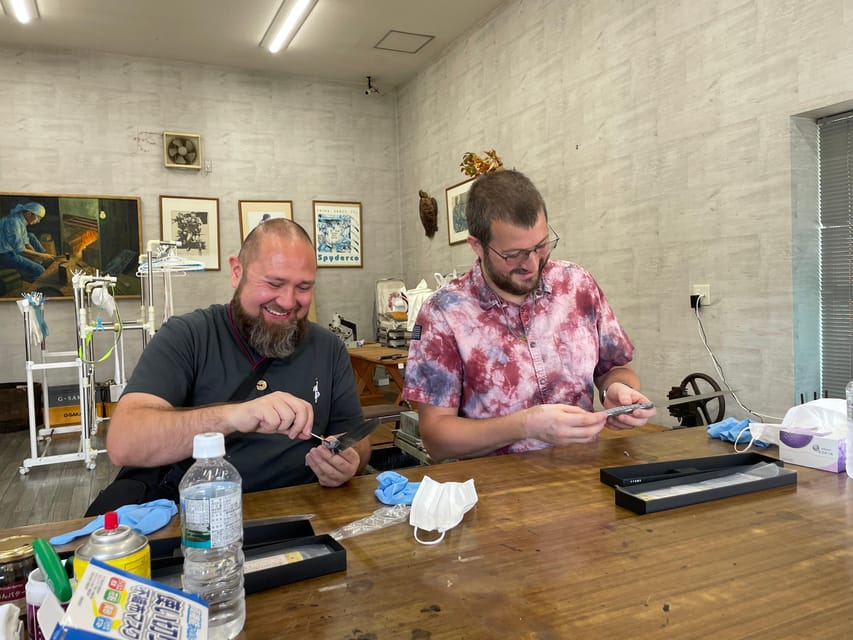
Between crafting and the sword museum, you also get museum time at the Knife Museum site.
The Knife Museum experience focuses on learning and browsing an impressive collection of knives. It’s especially interesting because it’s connected to actual knife making culture, with the Knife Museum located in part of the G. Sakai factory area. That factory proximity changes the feel. You’re not only reading labels. You’re seeing how craftsmanship lives in the same ecosystem as production.
There’s usually time to look around the shop, too. Expect knives ranging from small pocket styles to kitchen knives. This is where you can consider adding to your collection if your new handmade knife makes you curious. The shop also helps you contextualize what you made, because you can compare styles, finishes, and intended uses.
If you’re expecting a giant free-for-all museum with endless wings, keep your expectations grounded. The day is structured around making, then learning, then eating. The museum portion is meaningful, but it supports the main craft experience.
Seki Swordsmith Museum: Samurai Sword History and Blacksmith Culture
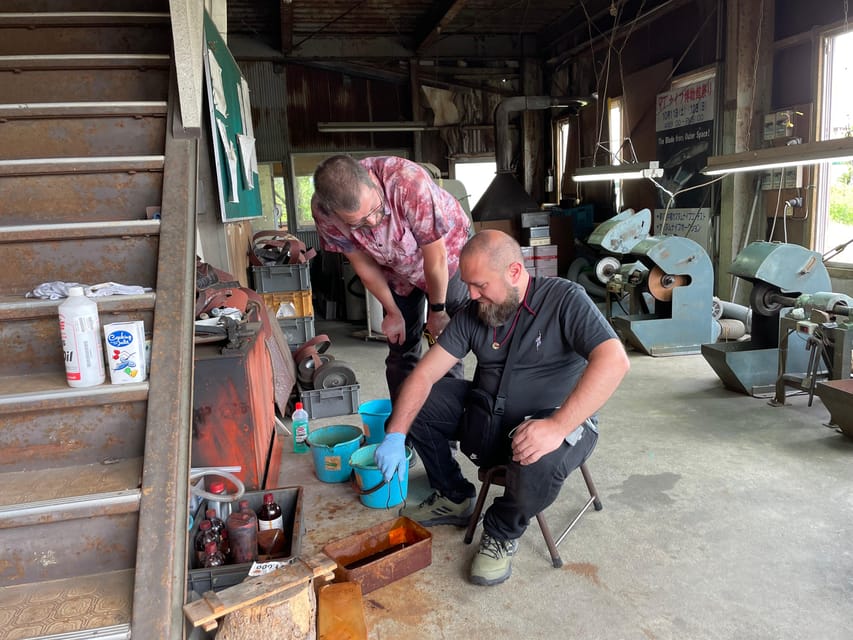
After lunch, you head to the Seki Swordsmith Museum (also described as learning Samurai and Japanese sword history at the Blacksmith Museum).
You’ll have about 1 hour here, and the goal is context. You learn how Seki connects to sword making traditions and why the region became a center for blades. You also get insight into the Japanese sword world, not just the kitchen-knife world.
One thing I found valuable in experiences like this is the bridge it creates. A lot of people start with interest in cutting tools, then quickly hit a knowledge wall: Who made these? Why do they look like that? Why is sharpness treated like an art?
Here, you get at least a starter map. The sword museum helps explain the traditions behind blades, so your knife-making experience stops being a standalone activity and becomes part of a bigger story.
Some participants also note seeing swords and global interest in repairs or calibration, which underlines why a local swordmaking area draws people from far away. Even if you only catch part of that story during the visit, it adds weight to the place.
Price and Value: Is $322 Worth It?
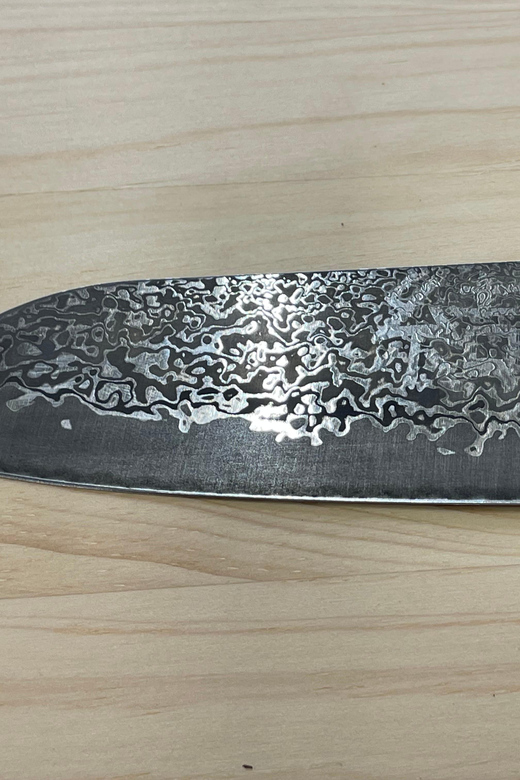
At $322 per person for a full day, you should treat this like an experience where the price buys instruction plus a take-home handmade tool.
Here’s what’s included that makes it easier to justify:
- Your samurai kitchen knife set (the knife-making set used during the workshop)
- Lunch
- Entry tickets to the Knife Museum and Swordsmith Museum
- Transportation
- An English guide
- An instructor for making the knife
Most “factory tours” charge for the feeling of access, but not for the skill-building. This one charges for both. You’re paying for time, expert teaching, and the fact that you go home with a personalized knife plus a certificate and a limited-edition mini knife gift (as described).
Where the value shines is in the small group size. Up to 5 participants means the day is not crowded. You’re not taking turns in a line. You’re getting hands-on help from people such as Hiro, Sumi, and Yoshi, who guide you through the steps and answer questions.
Potential value caveats:
- The workshop can take longer than the “at-a-glance” timeline, so you’ll want to plan your broader day accordingly.
- The variety of knife options may feel limited compared with the imagination you might have before you arrive.
Still, if you want one standout, story-rich day in Japan that includes food and real craft output, the math often works in your favor.
Who This Experience Fits Best (and Who Might Want Another Option)
This is a strong fit if:
- You want a hands-on craft experience, not just watching
- You care about Japanese culture and want a practical craft outcome
- You’re a foodie who enjoys eating well after a meaningful activity
- You like small-group days with guided attention
- You’re comfortable with a full day of making, polishing, sharpening, and museum time
It may be a less perfect fit if:
- You want a quick museum stop with lots of free wandering time
- You dislike anything that takes a while and requires careful steps
- You’re traveling with kids, since it’s not suitable for children under 18
If you’re in the Kyoto area, you can do it as a day trip. The journey to Seki is described as roughly 1.5 to 2 hours by train from Kyoto, which makes this a realistic “one big thing” day. And if you’re already in Central Japan, Seki can feel like the kind of stop that makes your trip more specific and personal.
Practical Tips So You Get the Most Out of the Day
- Wear comfortable clothes. Polishing and handling tools means you want freedom of movement.
- Bring questions. Guides like Hiro and instructors like Sumi and Yoshi tend to spend real time on explanations, especially around the name writing and sharpening steps.
- Expect the best photos after you’ve finished your knife. You’ll want to capture the finished blade and the name work while your memory is still fresh.
- Don’t schedule a tight connection right after. The workshop can run long, and the day moves as one unit.
Should You Book This Tour in Seki?
If you want a memorable Seki day that combines craft, culture, and lunch, I think this is a very easy yes. The reason is simple: you don’t just learn about knives. You make one, you sharpen it, and you test it right away on fresh vegetables. That makes the experience feel complete.
I’d book it if you like small groups, patient instruction, and the satisfaction of bringing home a personalized kitchen tool you can use. If you want a quick, casual sightseeing day, look elsewhere. This is a craft day, and it rewards your time and attention.
If Seki is on your route, this is one of the best ways to turn that route into a story you can hold.
FAQ
How long is the Seki samurai knife making experience?
It’s listed as a one-day experience with about 2.5 hours in the workshop, about 1 hour for lunch, and about 1 hour at the Seki Swordsmith Museum.
Where do we meet for the tour?
You meet at Sekitomioka Station. The meeting guidance says 10:06 AM when the train arrives, and a driver will pick you up by car.
What will I make during the workshop?
You make a personalized Damascus-style kitchen knife from start to finish, including sharpening and polishing steps.
Do I get to test the knife after making it?
Yes. After finishing, you test the knife’s sharpness and feel by cutting fresh vegetables.
Is lunch included, and what kind of food is it?
Lunch is included and described as authentic Japanese cuisine. The lunch experience is typically sushi or other Japanese dishes from a local restaurant in the city.
Which museums are included?
You visit the G. Sakai Knife Museum (workshop and guided tour) and the Seki Swordsmith Museum to learn about Samurai and Japanese sword history.
How big is the group?
The group is small, limited to 5 participants.
What language is the guide in?
The tour includes a live guide in English (and Japanese is also listed).
Is this experience suitable for children?
No. It is listed as not suitable for children under 18.
More Museums in Takayama
- Tokyo: teamLab Planets TOKYO Digital Art Museum Entry Ticket
★ 4.6 · 9,779 reviews - Osaka Castle: Museum and Tower Entry Ticket
★ 4.5 · 2,380 reviews - Tokyo: Samurai Ninja Museum Guided tour and Experience
★ 4.6 · 1,010 reviews - Kyoto: Tea Museum Tickets and Matcha Grinding Experience
★ 4.9 · 739 reviews
More Craft Workshops in Takayama
- Chopstick Making Workshop in Ginza
★ 4.8 · 1,366 reviews - Tokyo: Samurai Sword & Archery Class from Samurai Descendant
★ 5.0 · 603 reviews - Tokyo: Shinjuku Chopstick Making Class
★ 4.9 · 440 reviews - Japanesel Archery Experience HIROSHIMA CASTLE SHARAKU
★ 5.0 · 387 reviews
Newly listed around Takayama
- Private-group Morning Cycling Tour in Hida-Furukawa★ 5.0 · 105 reviews
- Short Morning Cycling Tour in Hida★ 5.0 · 17 reviews
- Private Afternoon Cycling Tour in Hida-Furukawa★ 5.0 · 109 reviews
- Gifu Samurai Sword Town;Japanese Damascus Knife Making Experience★ 5.0 · 27 reviews
- Shirakawago(UNESCO world heritage)/ Onsen / Hiking / 1day tour★ 5.0 · 6 reviews
- Shirakawa-go Half day tour (UNESCO World Heritage near Takayama)★ 5.0 · 9 reviews
- Magome & Tsumago Nakasendo Trail Day Hike with Government-Licensed Guide★ 5.0 · 38 reviews
- Magome & Tsumago Nakasendo Full-Day Private Trip with Government-Licensed Guide★ 5.0 · 20 reviews
Samurai Sword & Ninja Training, compared.

Samurai Ninja Museum Guided tour and Experience
Read our review →
Kendo and Samurai Experience with Uniform and Gear
Read our review →
Samurai Sword Class by Experts in Traditional Arts
Read our review →
Skip the lines Basic Ticket at SAMURAI NINJA MUSEUM KYOTO
Read our review →
Samurai Sword & Archery Class from Samurai Descendant
Read our review →
Browse the lists this tour appears in