
Review · SAMURAI SWORD & NINJA TRAINING
Knife Making Experience in Samurai Sword Town
Make a blade in Japan’s knife town. In Seki, Gifu, you turn from spectator into maker, creating a Damascus-style kitchen knife with guided polishing, sharpening, and engraving, then testing it on fresh vegetables.
I especially like the hands-on, small-group feel, where instruction stays personal, and you leave with real keepsakes like a signed certificate and a mini knife souvenir. The experience is also built around local craft culture, not just a quick demo.
One thing to consider is the time commitment. This is a full 5 hours focused on making and visiting nearby sites, so it is not a casual stroll-only day.
In This Review
- Key highlights you’ll care about
- Seki’s knife-makers day: what $316.27 really buys
- From rough work to a real kitchen knife: the 5-hour flow
- What you’ll actually do
- A practical mindset for the workshop
- Knife Museum stop: rare blades first, then hands-on making
- Why the museum time helps
- What might feel like a drawback
- Seki Swordsmith Museum: why this town became a blade center
- What you’ll get from this stop
- Gifu Cutlery Hall and the short contrast stop
- Why this matters
- Seki Zenko-ji Temple: a calmer finish after the workshop
- What to expect, practically
- Your finished knife: the sharpness test and the keepsakes
- The sharpness test is the moment that sticks
- What you get to take home
- Price, value, and who this tour is for
- Best fit
- Less ideal for
- Getting there and making your day feel smooth
- Who should book this, and who should skip it?
- FAQ
- How long is the knife-making experience in Seki?
- Where is the meeting point?
- What is included in the price?
- Is pickup available?
- Is this a private tour?
- What is the cancellation policy?
Key highlights you’ll care about
- Small private group, hands-on attention with instructors named Sumio, Yoshi, and Hiro
- Crafting a Damascus-style kitchen knife with polishing, sharpening, engraving, and assembly
- A real sharpness test on fresh vegetables after you finish
- Museum time that adds context, from rare blades to Seki’s sword-making roots
- Included extras with the price, including Japanese lunch, a signed certificate, and a mini knife souvenir (limited)
Seki’s knife-makers day: what $316.27 really buys
This tour costs $316.27 per person, but it is not just a ticket to watch someone else work. You are paying for a full, guided workshop day where you actively make your own knife, plus a structured route through Seki’s knife and sword culture.
Here is what is included that helps justify the price:
- Time with a master bladesmith (with 50+ years of experience)
- Hands-on work: polishing, sharpening, engraving, and assembly
- A sharpness test on fresh vegetables after your blade is finished
- A Japanese lunch
- A signed completion certificate
- A handcrafted mini knife souvenir (limited availability)
- Admission coverage for the main museum stops (with additional stops that are free)
If you want a souvenir that feels earned, this is the kind of day you can actually talk about for years. And if you are a knife person, you get the culture match too, with stops in Seki that explain why the area became so important for blades.
More Samurai & Ninja Sessions in Takayama
- Ninja Experience in Takayama – Basic Course
★ 5.0 · 62 reviews - Seki: Samurai Knife Making Experience at the Knife Museum
★ 5.0 · 61 reviews - Ninja Experience in Takayama – Basic Course
★ 4.6 · 59 reviews
From rough work to a real kitchen knife: the 5-hour flow
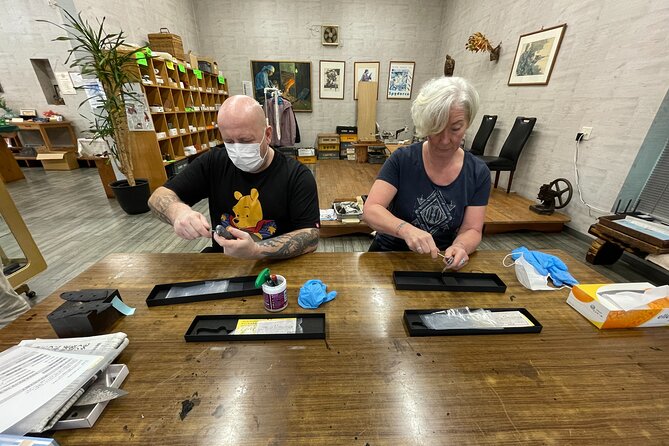
The timing here is tight in a good way. You start at 10:30 am and the tour runs about 5 hours total. That means you get enough time to do real steps, not just start and stop.
Also, this is a private tour, so your group stays together. People really value that personal attention, especially because the work involves fine movements, careful polishing, and shaping your final result.
What you’ll actually do
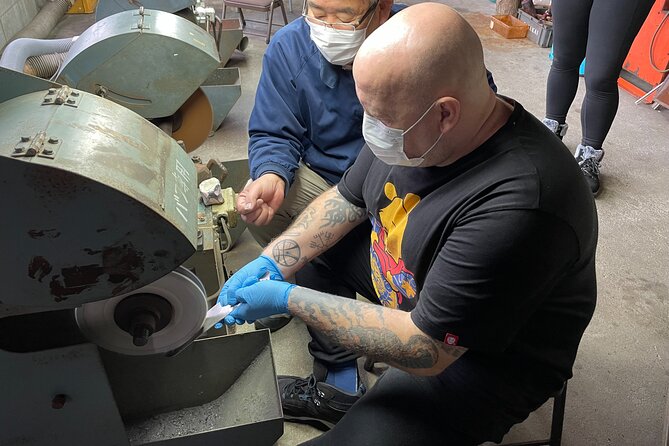
You will craft a professional Damascus kitchen knife, guided step by step by the bladesmith. The key phases are:
- You work through the physical finishing steps like polishing and sharpening
- You add your own marks through engraving
- You assemble the knife as part of the process
- You then test sharpness on fresh vegetables
That last part is the best reality check. Many “craft” tours end with a pretty object and no practical proof. Here, you get to see if the blade performs the way it should.
A practical mindset for the workshop
This is not a pottery class where you can relax and still be done on time. Knife work needs focus. The good news is the instruction is set up to keep things clear and manageable. The instructors also come with friendly energy, including humor, which helps if you are nervous about precision tools.
More Samurai and Ninja sessions in Takayama:
- Gifu Samurai Sword Town;Japanese Damascus Knife Making Experience
★ 5.0 · 27 reviews - Ninja experience in Takayama – Special Course
★ 4.9 · 13 reviews - Ninja Experience in Takayama – Trial Course
★ 4.9 · 7 reviews - Tokyo: Samurai Restaurant Show Ticket with 2 Drinks
★ 4.5 · 1,307 reviews
Knife Museum stop: rare blades first, then hands-on making
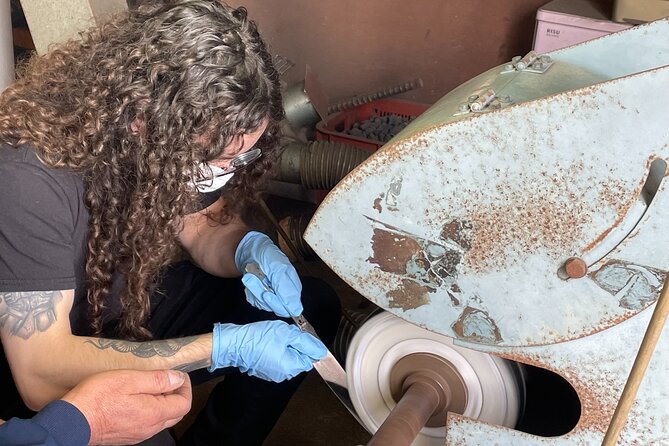
The day begins at the Knife Museum in Seki. This stop runs about 2 hours and mixes two useful parts: seeing knives up close and then creating your own.
Why the museum time helps
Even if you came just to make a knife, the museum portion matters. It gives you visual context for what you are building. You will see rare and unique knives from around the world, and that changes how you judge your own finished blade. Instead of thinking only about the workshop steps, you start noticing details like shape, finish, and what makes a blade feel “right.”
What might feel like a drawback
Because the workshop work starts quickly, you might feel a little rushed if you like slow museum browsing. Two hours sounds long until you factor in hands-on time. If you are the type who wants to read every placard, plan to treat this as a “learn by doing” museum stop, not a full museum day.
Seki Swordsmith Museum: why this town became a blade center
Next comes the Seki Swordsmith Museum, about 1 hour. This is where the tour gives you context for the craft. Seki City in Gifu became a major sword-making center as early as the 13th century, and the museum helps you connect that legacy to what you are doing today.
What you’ll get from this stop
This museum focuses on samurai and Japanese sword history, with a lens that helps you understand why sword traditions survived and evolved into later blade crafts. You are not just making a knife. You are learning the reason knife-making became serious business here.
It also helps that this stop is shorter. One hour is often the right length for museum context on a day that is already hands-on. You leave with a story, not museum fatigue.
Gifu Cutlery Hall and the short contrast stop
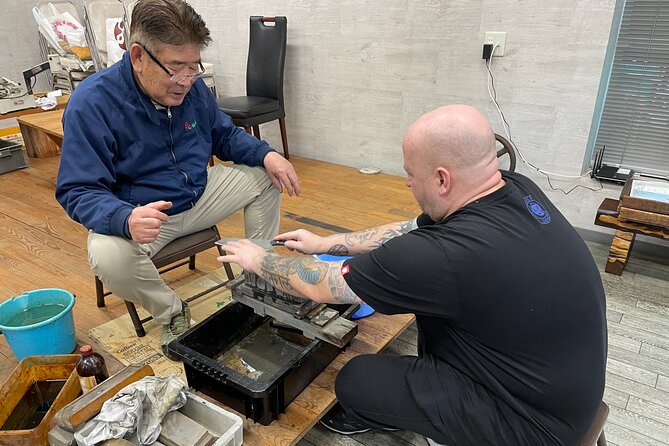
After the main sword-focused stops, you get a quick visit to Gifu Cutlery Hall. It runs about 30 minutes and is free.
Why this matters
Seki is not only about swords. The cutlery angle shows the industrial side of the region. The information highlights that Seki is one of the three cutlery-producing regions in the world and has the highest cutlery production volume in Japan.
Even in a short stop, this gives you a useful takeaway: blade culture is both tradition and daily utility. A kitchen knife is not a museum piece. It is a tool meant for real work, and Seki’s expertise shows up in that real-world focus.
Seki Zenko-ji Temple: a calmer finish after the workshop
The last stop is Seki Zenko-ji Temple, about 1 hour 30 minutes and free. The foundation is said to date back to the mid-eighteenth century, and it is known for features like The Great Bell and a Kaida(n)-related tour.
What to expect, practically
This part of the day shifts gears from craft to culture. It is a nice rhythm change after the workshop because you get a slower pace and more space to just look and absorb.
There is also mention that you can try ringing the bell, which is the kind of hands-on cultural moment that feels fun without taking over the schedule.
If you want a very active day, the temple might feel like a quiet interlude. But for most people, this is exactly the right kind of contrast.
Your finished knife: the sharpness test and the keepsakes
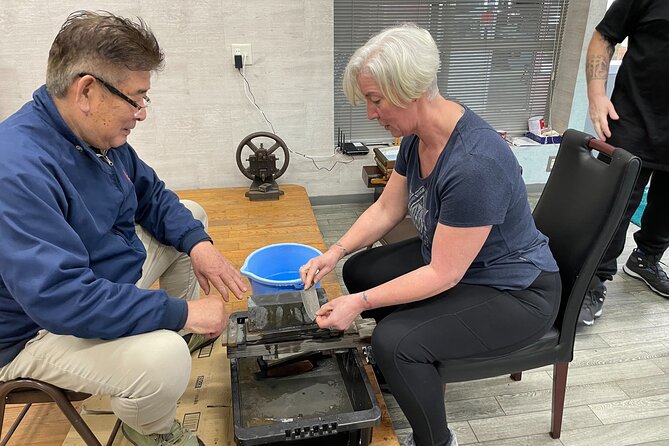
The “end product” here is the main reason people choose this tour. You do not just watch knife-making. You leave with a blade you helped create, plus documentation.
The sharpness test is the moment that sticks
After your sharpening and finishing steps, you test your knife on fresh vegetables. I like this because it turns the day into proof. A knife can look good and still be disappointing. A sharpness test tells you if your work hits the mark.
You should also think of this test as practice for future buying or using. If you take cooking seriously, this is an easy way to understand why sharpness matters so much for comfort and control.
What you get to take home
Included items are more than just souvenirs:
- A handcrafted mini knife souvenir (limited availability)
- A signed completion certificate
- Your completed Damascus kitchen knife
The certificate is small, but it turns the experience into something tangible you can keep with your kitchen gear. If you are giving the knife as a gift, this extra paperwork makes it feel special, not random.
Price, value, and who this tour is for
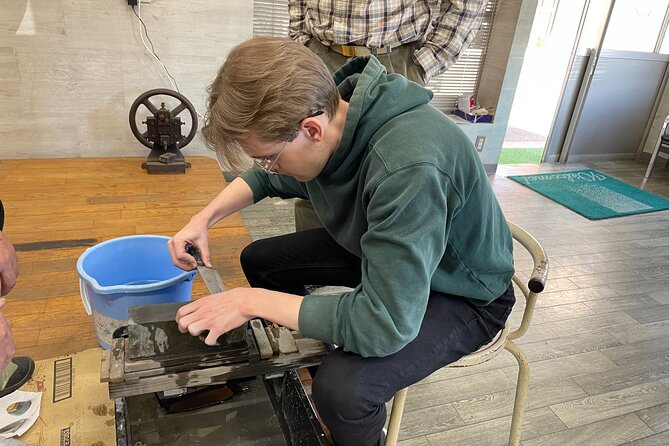
At $316.27, this is not the cheapest day trip from the Kyoto area. But it also is not a basic sightseeing add-on. You are paying for an entire workflow with a master bladesmith and the output is something you can use.
Best fit
This tour fits best if you:
- Want a hands-on craft you can actually use afterward
- Care about Japanese blades, even if you are not a hardcore collector
- Like learning by working, not just watching
- Enjoy meeting instructors and getting direct guidance
Less ideal for
You might feel mismatched if you:
- Want only museums and photos, with minimal tool time
- Prefer a super relaxed pace with lots of free time between stops
- Are expecting an English guide style focused only on storytelling (this is structured around making)
Getting there and making your day feel smooth
This experience is designed as a private activity with the start point at Sekitomioka Station in Seki. Pickup is offered, and the tour ends back at the meeting point, which keeps logistics simple.
If you are using public transportation, it is described as near public transit, and it can work well as a day trip. The tour is about 1.5 to 2 hours by train from Kyoto, so you can pair it with other Kyoto plans if you manage the timing.
Also, confirmation happens at booking and you get a mobile ticket, which is the modern kind of convenience.
Who should book this, and who should skip it?
I would book this if you want a Japanese craft day with a real result. The mix of knife-making work plus museum context is a strong combo, and the included sharpness test plus certificate gives you proof and a story, not just a purchased item.
I would think twice if you are sensitive to structured schedules. You are working for hours, then you fit in multiple sites. For a slower vacation style, you might prefer a lighter craft demo and more open time.
FAQ
How long is the knife-making experience in Seki?
The experience runs for about 5 hours (approx.).
Where is the meeting point?
The tour meets at Sekitomioka Station in Hidase, Seki, Gifu 501-3911, Japan, and it returns to the same meeting point.
What is included in the price?
The tour includes the knife-making instruction, hands-on work (polishing, sharpening, engraving, and assembly), a sharpness test on fresh vegetables, a Japanese lunch, a signed completion certificate, and a mini knife souvenir (limited availability). Admission is included for the Knife Museum and Seki Swordsmith Museum, while Gifu Cutlery Hall and Seki Zenko-ji Temple are free.
Is pickup available?
Yes, pickup is offered.
Is this a private tour?
Yes. Only your group participates.
What is the cancellation policy?
You can cancel for a full refund up to 24 hours in advance of the experience start time. If you cancel less than 24 hours before, the amount paid is not refunded.
More Craft Workshops in Takayama
- Chopstick Making Workshop in Ginza
★ 4.8 · 1,366 reviews - Tokyo: Samurai Sword & Archery Class from Samurai Descendant
★ 5.0 · 603 reviews - Tokyo: Shinjuku Chopstick Making Class
★ 4.9 · 440 reviews - Japanesel Archery Experience HIROSHIMA CASTLE SHARAKU
★ 5.0 · 387 reviews
Newly listed around Takayama
- Private-group Morning Cycling Tour in Hida-Furukawa★ 5.0 · 105 reviews
- Short Morning Cycling Tour in Hida★ 5.0 · 17 reviews
- Private Afternoon Cycling Tour in Hida-Furukawa★ 5.0 · 109 reviews
- Gifu Samurai Sword Town;Japanese Damascus Knife Making Experience★ 5.0 · 27 reviews
- Shirakawago(UNESCO world heritage)/ Onsen / Hiking / 1day tour★ 5.0 · 6 reviews
- Shirakawa-go Half day tour (UNESCO World Heritage near Takayama)★ 5.0 · 9 reviews
- Magome & Tsumago Nakasendo Trail Day Hike with Government-Licensed Guide★ 5.0 · 38 reviews
- Magome & Tsumago Nakasendo Full-Day Private Trip with Government-Licensed Guide★ 5.0 · 20 reviews
Samurai Sword & Ninja Training, compared.

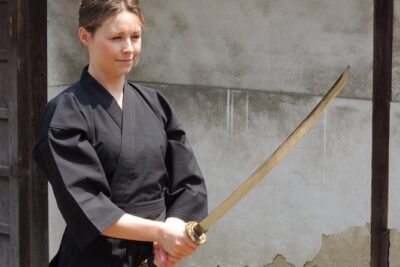
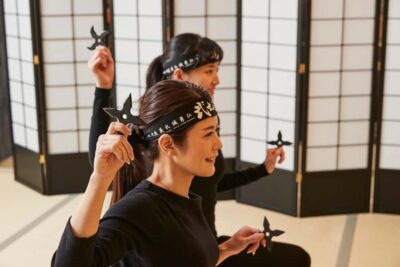
Samurai Ninja Museum Guided tour and Experience
Read our review →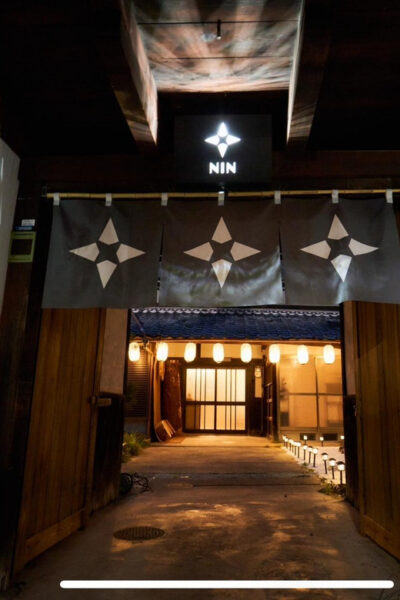
Kendo and Samurai Experience with Uniform and Gear
Read our review →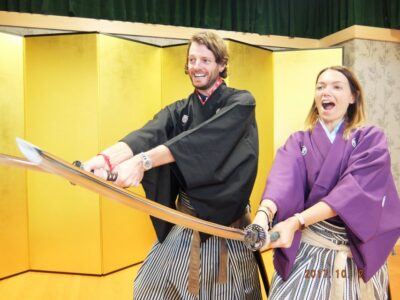
Samurai Sword Class by Experts in Traditional Arts
Read our review →
Skip the lines Basic Ticket at SAMURAI NINJA MUSEUM KYOTO
Read our review →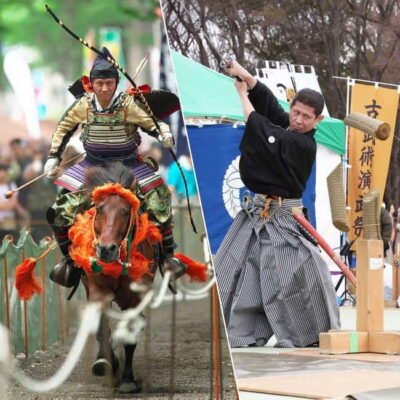
Samurai Sword & Archery Class from Samurai Descendant
Read our review →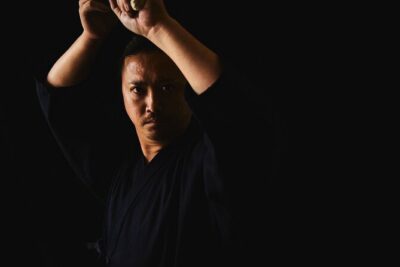
Browse the lists this tour appears in