Review · GUIDED
Kyoto Highlights 7-Hour Private Guided Tour
Kyoto can feel like a maze. This 7-hour private guided tour is built to move you between Kyoto’s top sights without wasting time, and it finishes near Gion so your evening plans are easy. You choose one route when booking, and your guide shapes the day around classic temples, shrines, and one big star attraction.
What I like most is the private format. It means you get real conversation, not just a checklist, and that cultural context helps everything click while you’re standing there.
One thing to consider: you pick either the northwest or southeast itinerary for the 7 hours. If you want both temple-heavy areas plus the market and castle on the north side and the shrine slopes and sake stop on the south side, you will likely want the option to do both tours at a relaxed pace.
In This Review
- Key highlights you will feel on the ground
- A 7-hour private Kyoto day that starts at Kyoto Station and ends near Gion
- Northwest route: bamboo grove, Ryoanji rock garden, Golden Pavilion, and Nijo Castle or Nishiki Market
- Bamboo Grove, for that Kyoto photo feeling (without rushing)
- Ryoanji’s rock garden, where one viewpoint matters
- Golden Pavilion, the icon you can finally place
- Nijo Castle or Nishiki Market, your choice inside the northwest plan
- Southeast route: sake brewery, Fushimi Inari Taisha, Sanjusangendo, Kiyomizudera, and Ninenzaka/Sannenzaka
- Sake brewery stop, a practical culture lesson
- Fushimi Inari Taisha, where the shrine world turns into a walk
- Sanjusangendo, long-hall scale and stillness
- Kiyomizudera and the hilltop viewpoint energy
- Ninenzaka and Sannenzaka slopes, for the Kyoto street-scape vibe
- Why a private guide changes the whole Kyoto experience
- Entrance fees, transport, and the real meaning of value at $215 per person
- Timing and pacing tips: how to get the most from a 09:00 to 16:00 day
- So, should you book Kyoto Highlights 7-Hour Private Guided Tour?
- FAQ
- How long is the Kyoto Highlights private tour?
- What time does the tour start and where?
- Where does the tour end?
- How many attractions will we visit?
- What are the two route options?
- What is included in the tour price?
- Are food and drinks included?
- Is hotel pick-up and drop-off included?
Key highlights you will feel on the ground
- Two distinct routes let you tailor the day to what you care about most
- Private licensed English guide means questions get answered on the spot
- Temple entrance fees and transport included, so the budget stays calmer
- Iconic Kyoto stops on each route, from the Golden Pavilion to Fushimi Inari
- You end near Gion at 16:00, with a natural lead-in to an evening walk
A 7-hour private Kyoto day that starts at Kyoto Station and ends near Gion
This is a focused half-day style tour, timed for big sights and good flow. It runs for 7 hours, starting at 09:00 from the Hotel Granvia Kyoto in the JR Kyoto Station building. Your guide handles the planning and movement, and you do not have to stitch together trains, buses, and schedules while you’re still learning the city.
The finish is a big deal: you end around 16:00 near the Gion area. That timing is perfect if you want to keep your Kyoto day going without hauling yourself across town again later. The experience also includes a 1-day bus pass you can use after the tour, which is handy if you want to hop around Gion, nearby neighborhoods, or just take the stress out of getting around.
It helps that the tour is private and licensed. Recent guides named Mie, Choco (and a closely spelled Choca), and Mei show up in customer notes, and the common thread is the same: they stay friendly, explain what you’re seeing, and help you navigate the city more smoothly afterward.
A few more Kyoto days to weigh up
- PERFECT KYOTO 1-Day Bus Tour
★ 5.0 · 13,518 reviews - Kyoto: Fushimi Inari, Kinkakuji, Bamboo Grove 1 Day Bus Tour
★ 4.8 · 4,316 reviews - Kyoto: Tea Ceremony in a Traditional Tea House in Kiyomizu
★ 4.9 · 3,519 reviews
Northwest route: bamboo grove, Ryoanji rock garden, Golden Pavilion, and Nijo Castle or Nishiki Market
If you want Kyoto with a classic mix of gardens, stone, and a castle-like centerpiece, the northwest-bound itinerary fits well. You still get big icons, but the order leans into slower, more visual moments, which feels right for a private day when you can linger.
Bamboo Grove, for that Kyoto photo feeling (without rushing)
The day starts with the Bamboo Grove stop on the northwest route. Expect it to be a sight where you instinctively slow down. Bamboo is one of those places that looks different depending on light and angle, so it’s the kind of stop where a guide can help you notice details instead of just telling you where to stand.
A practical note: bamboo areas can be crowded depending on the season and time of day. Because your tour is private, you are more likely to pause, move, and regroup on your own rhythm rather than getting swept along in a large group.
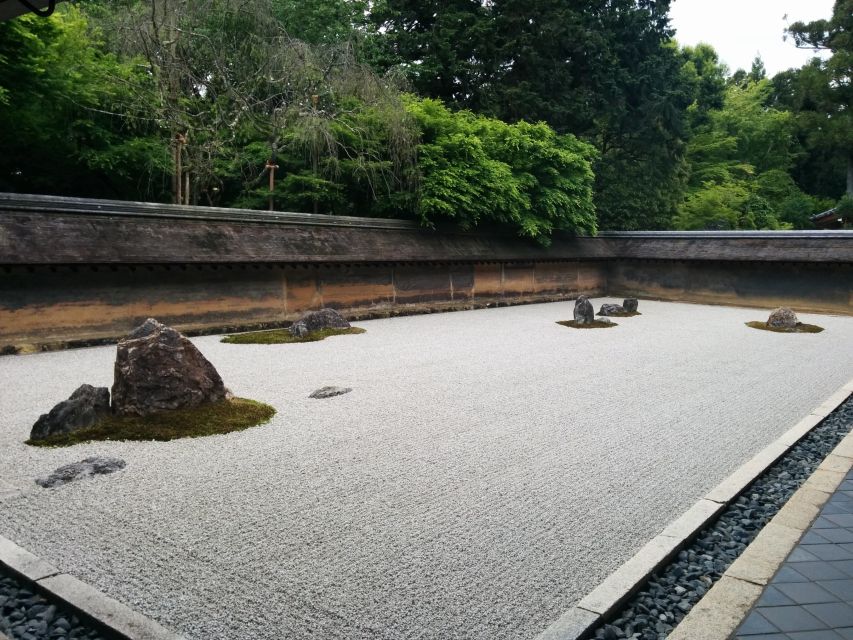
Ryoanji’s rock garden, where one viewpoint matters
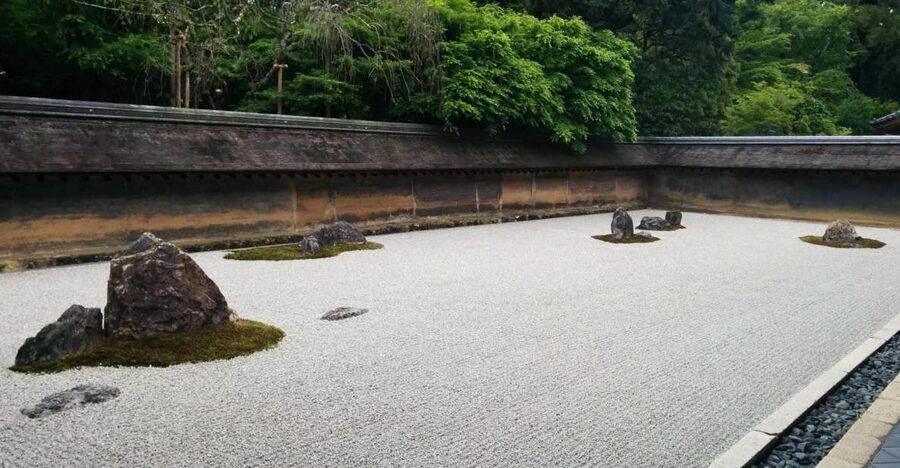
Next comes the Rock Garden at Ryoanji Temple. This is Kyoto’s quiet brain teaser. From a distance, it looks simple, then you realize the composition is designed for careful looking, including how stones and islands relate to each other from specific views.
What makes the stop work on a private tour is context. Guides often explain how the garden is meant to be read, so you’re not just counting rocks. You’re understanding why the scene feels calm and intentional.
A different sort of day in Japan:
- Kyoto Geisha Walking Tour: Gion District & Hidden Gems
★ 4.7 · 3,273 reviews - Kyoto: Tea Ceremony Ju-An at Jotokuji Temple
★ 4.9 · 3,207 reviews - Kyoto: 45-Minute Tea Ceremony Lesson Experience
★ 4.3 · 2,378 reviews - Kyoto: Gion Geisha District Walking Tour – Stories of Geisha
★ 4.7 · 2,187 reviews
Golden Pavilion, the icon you can finally place
Then you reach the Golden Pavilion, one of Kyoto’s most recognizable landmarks. Seeing it in person is one thing, but having a guide connect it to how it functions in the larger temple complex and the city’s story is another. It turns a quick photo stop into a moment that feels grounded.
If you’re prone to rushing at big monuments, this route helps because it balances a high-profile icon with more reflective stops before and after.
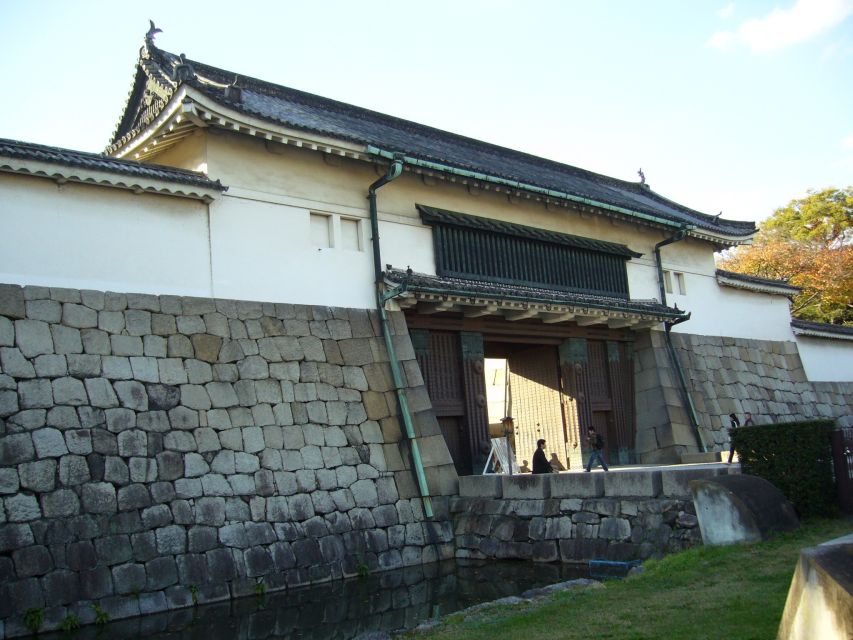
Nijo Castle or Nishiki Market, your choice inside the northwest plan
The final northwest stop is either Nijo Castle or Nishiki Market. This is where your personal preference matters.
- If you choose Nijo Castle, you get the castle-side payoff. It’s a strong contrast to the garden focus, and it helps round out the day with a more “power and period” feel.
- If you choose Nishiki Market, you trade castle grandeur for a food-and-stalls atmosphere. Even if you do not eat during the tour, it’s a useful Kyoto snapshot. You can also use it to decide what you want to try later on your own, now that you have orientation.
Either option keeps the route from feeling one-note. Bamboo, rock garden calm, golden icon power, then either castle or market energy.
Southeast route: sake brewery, Fushimi Inari Taisha, Sanjusangendo, Kiyomizudera, and Ninenzaka/Sannenzaka
The southeast-bound itinerary is for Kyoto lovers who want shrines, temples, and the classic walking streets in the same half-day. It also includes food-adjacent culture through a sake brewery stop, then pivots into some of the city’s most famous religious landmarks.
Sake brewery stop, a practical culture lesson
You begin with a sake brewery visit on this route. This is not just a break from walking. It gives you a different kind of cultural lens, one tied to Kyoto’s traditions and local production. Even if you are not a hardcore sake fan, it helps you understand why Kyoto’s heritage shows up in everyday things.
Because the tour includes transportation and stays timed, you can fit this into your day without scrambling to plan a separate detour.
Fushimi Inari Taisha, where the shrine world turns into a walk
Then it’s Fushimi Inari Taisha, with its famous shrine gates. This stop can be visually overwhelming at first, because it’s not just a single view. It’s a whole path and rhythm, so pacing matters.
On a private tour, you can match your walking comfort and attention span. Your guide can point out what to watch for as you move through the area, so you get more than the one postcard view.
Sanjusangendo, long-hall scale and stillness
Next is Sanjusangendo Temple. This is one of those places where the scale hits you. The interior experience can feel different from outdoor shrine sights, and it rewards visitors who slow down.
The private format helps again, since you’re more likely to get the reason something feels the way it does, instead of standing in the same place guessing.
Kiyomizudera and the hilltop viewpoint energy
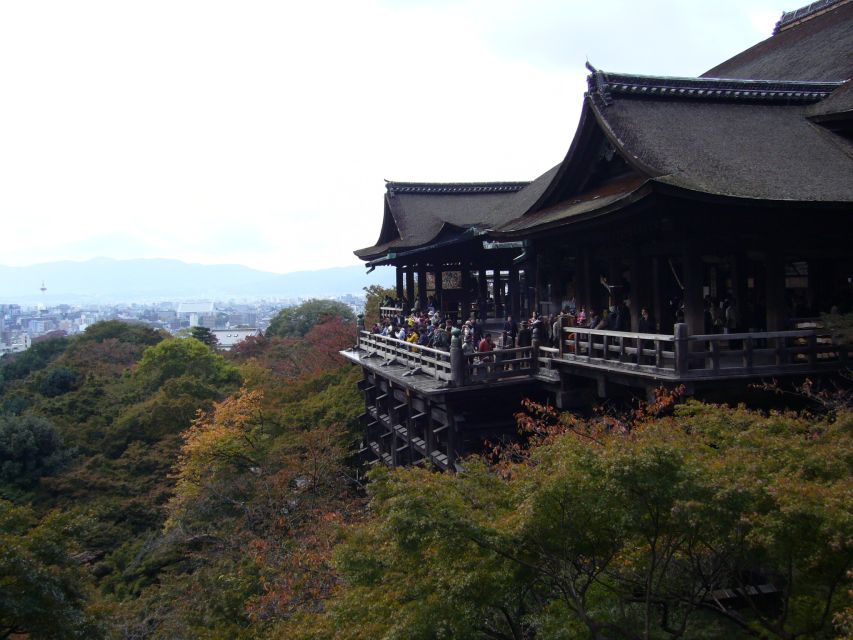
After that, you head to Kiyomizudera Temple. It’s famous for its dramatic viewpoint feel, and the whole area encourages you to look outward and then back at the details around you.
What’s worth knowing: this stop can involve more walking and shifting viewpoints than a flat-sight monument. If you are the type who likes to pause for photos and take your time reading signage, this route works well because it builds in a steady sequence rather than sprinting.
Ninenzaka and Sannenzaka slopes, for the Kyoto street-scape vibe
Finally, you finish with Ninenzaka or Sannenzaka slopes. This is your transition into the neighborhood mood of Kyoto, with streets that feel designed for a slow wander. Since you end near Gion later in the day, this makes for a smooth mental handoff from temple wonder to evening street life.
If you want that “Kyoto walking” feeling but do not want to plan it yourself, this is the part of the day that does the heavy lifting.
Why a private guide changes the whole Kyoto experience
Kyoto is full of beauty, but it is also full of decisions. You have to choose where to start, what matters most, and how to move efficiently between areas. With a private guide, those decisions get handled for you, and you get to focus on looking.
One of the top takeaways from guide notes is how much the conversation adds. Guides like Mie are singled out for giving historic context that helps visitors appreciate why places feel the way they do, including connections to Edo period themes. Another guide name, Mei, is praised for making the day fun and memorable, and Choco/Choca is mentioned for friendliness and practical help with local transport.
That practical part matters more than people think. When you understand what line you need next and what timing makes sense, you make fewer mistakes later in your trip. You feel less like a tourist guessing, and more like a visitor who understands the rhythm of the city.
Also, private means you can adjust. If something pulls your attention, you can linger. If you get temple fatigue, your guide can keep the day feeling smooth rather than dragging you through the same pace as everyone else.
Entrance fees, transport, and the real meaning of value at $215 per person
At $215 per person, this tour is not a bargain-basement option. But you should compare it to what you would spend if you booked everything separately and still tried to get a coherent day.
Here’s what’s included:
- Pick-up at a centrally located meeting point
- A private licensed guide (English)
- Entrance fees for temples
- Transportation
- A 1-day bus pass for use after the tour
What is not included:
- Food and drinks
- Hotel pick-up and drop-off
For value, the key is that your guide time plus transport plus temple entry is bundled. Kyoto’s top sights are not one-price, one-stop situations. Entrance fees and transit add up quickly when you’re moving across areas, and the tour reduces that “spread-sheet fatigue.”
The $215 price also makes sense if you are traveling as a couple or with friends who want the convenience. Private tours become more economical the moment you compare them to multiple people paying for separate tickets, separate transit, and separate planning time.
One extra budgeting tip: since food and drinks are not included, plan for lunch and snacks. The good news is your guide may offer suggestions for where to eat. In one example, a guide steered a group to a local ramen place, which is exactly the kind of shortcut that saves time and helps you eat well.
Timing and pacing tips: how to get the most from a 09:00 to 16:00 day
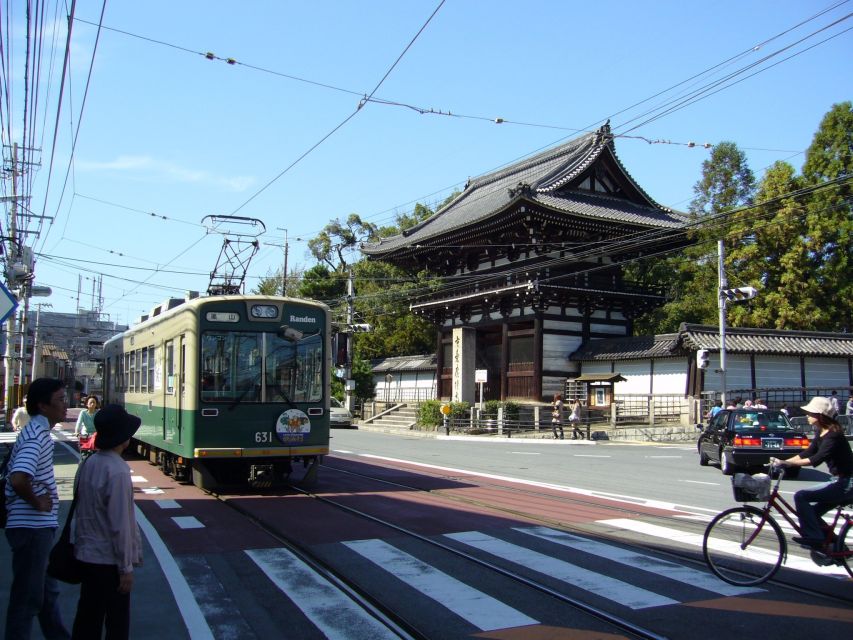
A 7-hour private tour is built to fit inside a real travel day. Starting at 09:00 helps you hit major sights before the late-day crush. By 16:00, you’re positioned for evening walking and dining near Gion.
To make the pacing work, think about your energy style:
- If you like stopping for photos, bring a plan for where you will pause, then let your guide steer the order.
- If you prefer explanations over pictures, lean into the conversation. That’s where you get the “why this matters” details that turn monuments into stories.
Also, remember that the northwest and southeast routes are different flavors. Choose based on how you want the day to feel:
- Northwest: gardens, stone composition, a major icon, and either a castle or market.
- Southeast: sake and shrine culture, a major gate-walk experience, an indoor hall temple, then a hilltop viewpoint and old-street slopes.
That route choice is the main “make or break” decision for this tour.
So, should you book Kyoto Highlights 7-Hour Private Guided Tour?
If you are short on time and want Kyoto’s most iconic landmarks handled in one smooth plan, I think this is a strong pick. The private guide format is the real selling point, especially if you want explanations and practical navigation help, not just photos.
I’d book it if:
- You want major Kyoto highlights without spending your morning planning routes
- You value conversation and context while you’re at the sights
- You like the idea of ending near Gion ready for an evening walk
I might skip or reconsider if:
- You are set on seeing both the northwest and southeast areas in one single day, because the tour runs one route per 7 hours
- You don’t want to plan around a timed itinerary, since it is designed to follow a specific flow between 4 major attractions
If you want a fuller Kyoto “north plus south” hit, the option to take both routes at a relaxing pace is a smart way to do it without turning your day into a sprint.
FAQ
How long is the Kyoto Highlights private tour?
The tour is 7 hours long.
What time does the tour start and where?
It starts at 09:00 from the Hotel Granvia Kyoto in the JR Kyoto Station building.
Where does the tour end?
The tour ends around 16:00 near the Gion area.
How many attractions will we visit?
Each route includes visits to 4 major must-see attractions. If you take both routes, you can visit 8 different locations at a relaxing pace.
What are the two route options?
You can choose either the northwest-bound route or the southeast-bound route when booking.
What is included in the tour price?
Included items are pick-up at a centrally located meeting point, a private licensed guide, entrance fees for temples, transportation, and a 1-day bus pass for use after the tour.
Are food and drinks included?
No. Food and drinks are not included.
Is hotel pick-up and drop-off included?
Hotel pick-up and drop-off are not included. You will have pick-up at a centrally located meeting point.
Newly listed around Kyoto
- Taste of Nishiki Market Walking Food Tour with Local guide★ 5.0 · 17 reviews
- Kyoto: Sushi Making Class with Sushi Chef★ 4.8 · 64 reviews
- Simple Plan with Maiko★ 4.4 · 10 reviews
- Shibori Furoshiki Course at Kyoto Shibori Museum★ 5.0 · 21 reviews
- Kyoto: City Secrets eBike Tour★ 4.9 · 196 reviews
- Sacred Pathways: Discover the Philosopher’s Path of Kyoto★ 4.9 · 20 reviews
- Private Tour to Monkey Park and Arashiyama Highlights★ 5.0 · 22 reviews
- Private Nara Tour from Osaka – Meet at Your Hotel★ 5.0 · 22 reviews
Guided, compared.
Tokyo 6hr Private Tour with Government-Licensed Guide
Read our review →
Shinjuku Local Bar and Izakaya Guided Walking Tour
Read our review →
Private City Highlights Tour with Local Guide
Read our review →
Kyoto Early Morning Tour with English-Speaking Guide
Read our review →
Tokyo 4hr Private Tour with Government-Licensed Guide
Read our review →
Kyoto 6hr Private Tour with Government-Licensed Guide
Read our review →