
Review · GEISHA DISTRICT WALKS
Kyoto: Tea Ceremony with Maiko
Tea, matcha, and a maiko in 45 minutes. If you only have a slice of time in Kyoto, this is a high-impact way to taste the culture, make your own matcha, and talk directly with a young performer.
One thing I really like is how hands-on it is: you get a real demonstration, then you make the tea yourself. Another standout is the access, you get close photo time with the maiko (or sometimes a geiko), plus a small lucky charm called Senjafuda. The main drawback to consider is that the venue is not a traditional tatami ochaya house, it’s in a regular building, so the vibe is more casual than ceremonial inside a historic tea room.
In This Review
- Key points before you go
- A 45-Minute Kyoto Tea Moment Near Gojo Station
- Finding the Venue Fast, and Knowing It Is Not an Ochaya
- How the 45 Minutes Unfold, From Greeting to Departure
- Maiko-Led Matcha Making, With You Holding the Whisk
- Q&A Time With a Maiko (and How to Ask Better Questions)
- Photos Up Close, Plus the Senjafuda Lucky Charm
- Price and Value: What $28 Buys You in Kyoto
- Who This Experience Suits Best (and Who Should Adjust Expectations)
- Small Practical Tips That Improve Your Tea Ceremony
- Should You Book This Kyoto Tea Ceremony With Maiko?
- FAQ
- How long is the Kyoto tea ceremony experience with a maiko?
- Where do I meet, and how far is it from Gojo Station?
- What is included in the $28 price?
- Will I always meet a maiko?
- Is English translation available?
- Do I need special preparation or a special outfit?
- What about children and seating?
Key points before you go
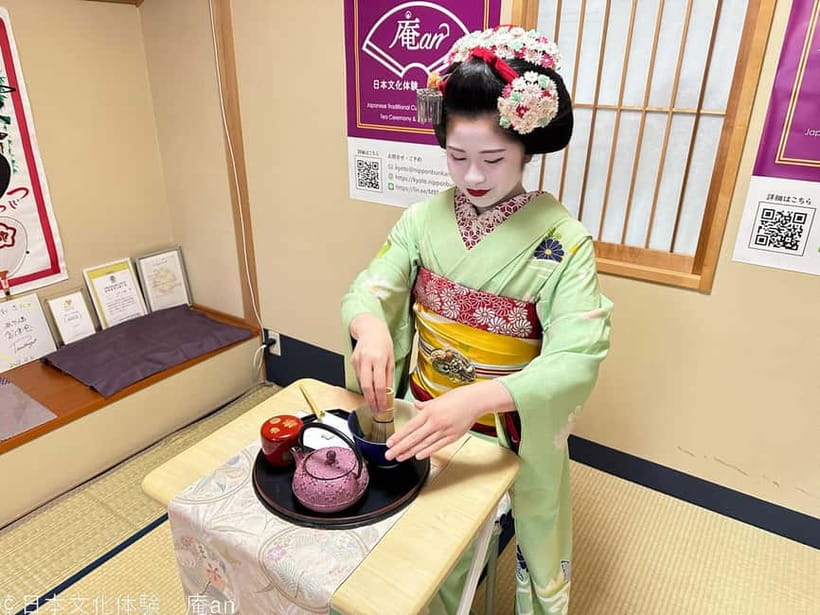
- Matcha making is hands-on, you do it, not just watch it
- Q&A is a real highlight, you can ask about daily life and training
- Close-up photos happen right in the experience, not as a distant meet-and-greet
- Senjafuda lucky charm is included as your takeaway
- It may be a geiko instead of a maiko, depending on the date and situation
- You’re in a building, not an ochaya, with stairs but a relaxed atmosphere
A 45-Minute Kyoto Tea Moment Near Gojo Station
Kyoto can eat your time fast, between trains, lines, and the sheer number of temples you suddenly feel obligated to visit. This experience is designed for people who want Kyoto in one pocket-sized stop. It runs about 45 minutes, and the meeting point is just a 1-minute walk from Gojo Station (Subway Karasuma Line, Exit 1).
Price-wise, $28 per person is very reasonable when you look at what’s included. You’re not only getting the tea ceremony itself. You’re also getting matcha you make, two dried-type Japanese sweets, a Q&A session, a photo opportunity up close, and a Senjafuda charm. That bundle matters if you’re trying to keep Kyoto costs under control while still doing something meaningful.
You’ll also like the timing. The core experience takes about 30 to 40 minutes, so if your day is packed, this doesn’t require you to redesign your whole itinerary. It’s the kind of stop that lets you keep moving without skipping the culture.
More Tea Ceremonies in Kyoto
- Kyoto: Tea Ceremony in a Traditional Tea House in Kiyomizu
★ 4.9 · 3,519 reviews - Kyoto: Tea Ceremony Ju-An at Jotokuji Temple
★ 4.9 · 3,207 reviews - Kyoto: 45-Minute Tea Ceremony Lesson Experience
★ 4.3 · 2,378 reviews
Finding the Venue Fast, and Knowing It Is Not an Ochaya
The meeting point is straightforward once you know what to look for: the store entrance faces the main street, Gojo-dori. You’ll come from the subway exit, walk straight for about a minute, and you should spot the entrance on the main road.
Two practical notes can save you stress:
- There’s no elevator, and you’ll need to use stairs to reach the venue.
- The experience takes place in a building, not in a traditional house setting.
That second detail is important for expectations. If you’re imagining a full cinematic, old-world tea house, this isn’t that. Instead, you get a calmer, more modern setup with friendly staff. From my perspective, that actually helps, because it keeps the focus on what you came for: learning matcha and meeting the maiko in a respectful, comfortable way.
Also, no special preparation is required. You do not need to dress up or worry about bringing props. Just show up ready to learn and taste.
How the 45 Minutes Unfold, From Greeting to Departure
This is a tightly paced experience, and that’s part of its appeal. Here’s the flow you can expect, in plain terms:
- You start with a greeting from the host maiko.
- Then you move into the tea portion, where you’ll learn the steps and enjoy matcha plus two dried-type Japanese sweets.
- After that comes the Q&A session, which is the part that turns a ceremony into a conversation.
- Around the 30-minute mark, the program shifts into the souvenir and photo moment.
- You take a commemorative photo right beside the performer.
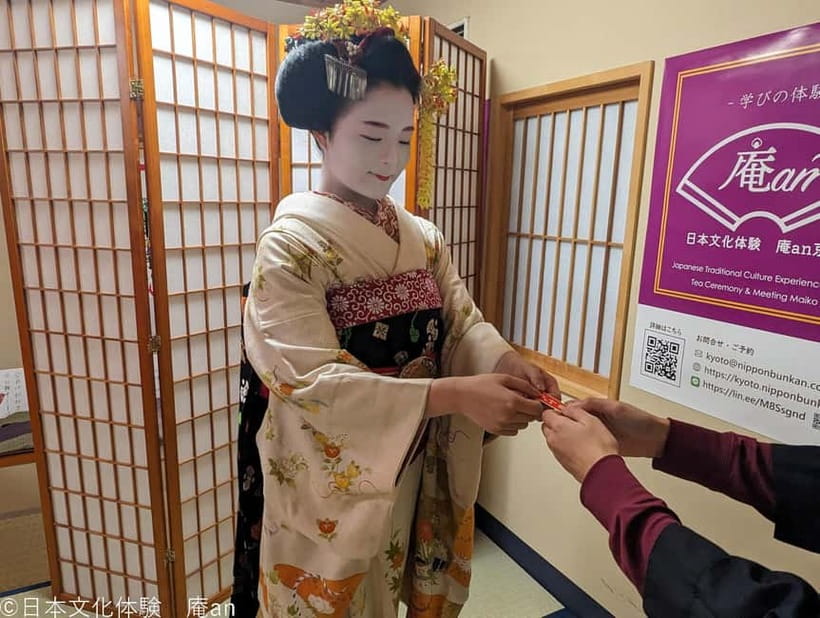
- The maiko then presents a lucky charm called Senjafuda.
- Finally, you head out, and the whole experience ends around 45 minutes.
Depending on the situation, you may be welcomed by a geiko instead of a maiko. The key point is that you still get the same style of interaction, tea, questions, and the same kind of close photo moment.
If you’re wondering where this fits into your day, it works well as a mid-afternoon reset. It’s also a good option if you want something Kyoto-related without committing to a long evening program.
Maiko-Led Matcha Making, With You Holding the Whisk
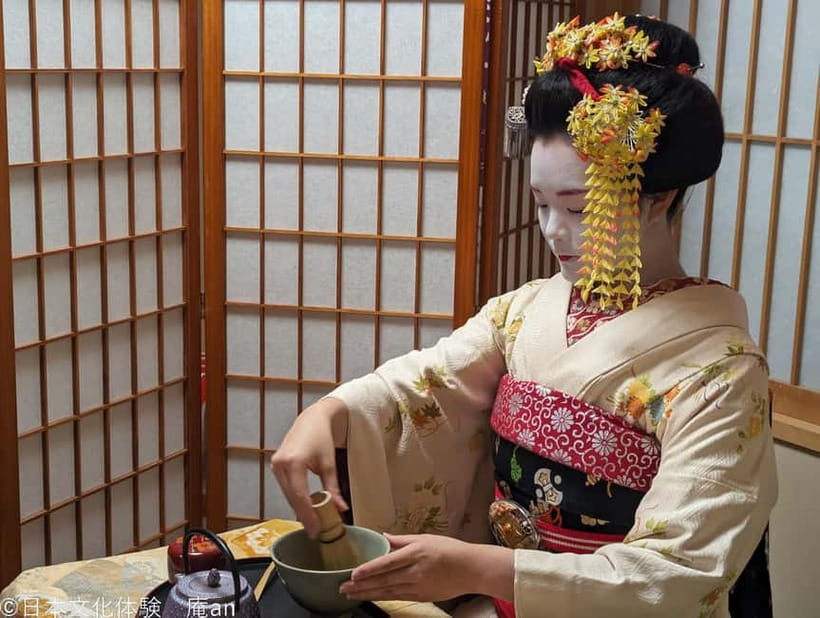
The best tea ceremonies are the ones where you feel involved. Here, you’re not just watching someone perform. You learn the method, then you make your own cup of matcha.
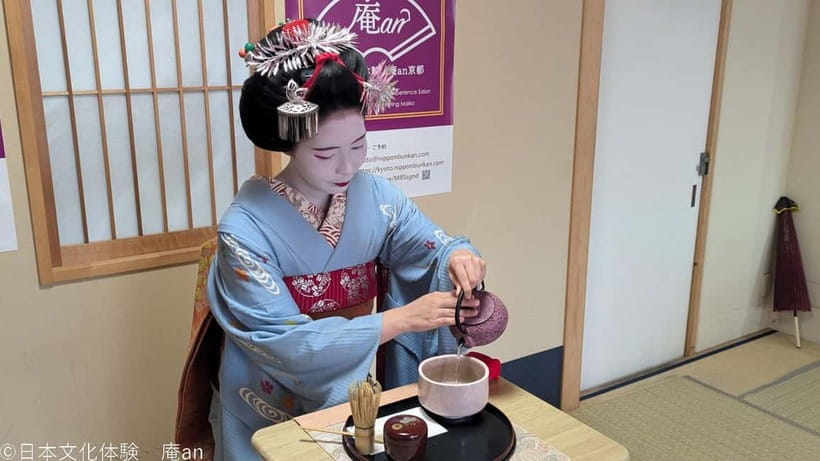
The host will demonstrate how to prepare matcha correctly, then you follow along and make the tea yourself. That hands-on part is where you build a real appreciation for what you’re tasting. Matcha is not just green tea. It has a specific texture, and the preparation process affects the final feel in your cup.
You’ll also be served two small dried-type Japanese sweets along with the tea. Think of them as the sweet companion that helps you experience the contrast: the mellow bitterness of matcha, balanced by a simple snack-style sweet. For a short, focused experience, that pairing hits the right notes without overloading you.
One detail that I appreciated is that the ceremony is structured enough to feel authentic, but not so complicated that you’ll get lost. Even if Japanese is not your strength, the activity is visual and step-by-step, which makes it easier to follow along.
A different sort of day in Japan:
- PERFECT KYOTO 1-Day Bus Tour
★ 5.0 · 13,518 reviews - Kyoto: Fushimi Inari, Kinkakuji, Bamboo Grove 1 Day Bus Tour
★ 4.8 · 4,316 reviews - Kyoto Geisha Walking Tour: Gion District & Hidden Gems
★ 4.7 · 3,273 reviews - Kyoto: Gion Geisha District Walking Tour – Stories of Geisha
★ 4.7 · 2,187 reviews
Q&A Time With a Maiko (and How to Ask Better Questions)
The Q&A session is one of the most praised parts of this experience, because it turns the visit into something personal. Instead of being locked into “sit, watch, clap,” you get time to ask questions directly.
A few themes that make sense to ask about include:
- what daily life looks like during training
- how someone becomes a maiko or geiko
- etiquette topics tied to the tea ceremony
- what they enjoy about the arts and practice
If you’re nervous about asking questions, you can keep it simple. A good starting point is asking how they describe their routine, since it opens the door for deeper answers. I also like the approach of asking for a small bit of advice, like what to pay attention to when you drink matcha for the first time.
Some sessions also include an interpreter or translation support so you can understand and keep your questions meaningful. If you want added English support, the information says you can request it by contacting the provider.
In one session example, the matcha portion and Q&A were led by Masaya-san. That kind of name recognition is a nice reminder that you’re not just getting a generic performance. You’re spending time with a real person in real training.
Photos Up Close, Plus the Senjafuda Lucky Charm
This is where the experience becomes memorable in a very practical way. You get a commemorative photo right beside the performer. The key is that it happens as part of the program, so it doesn’t feel like you’re trying to hunt someone down in a crowd.
Right after the photo, the maiko presents you with a lucky charm called Senjafuda. It’s a small item, but it’s also a symbolic takeaway. For me, that’s what makes the experience feel complete. You end with something physical that reminds you of the interaction, not just a photo you’ll scroll past later.
The photo and charm moments are also a nice pacing reset. After learning matcha and asking questions, you’re not mentally spent when you move into the end of the session. It feels like a natural wrap-up.
Price and Value: What $28 Buys You in Kyoto
Let’s talk value without pretending everything is free.
For $28 per person, you’re paying for more than a brief show. You’re paying for:
- a maiko-led tea ceremony
- the chance to make matcha yourself
- two dried-type Japanese sweets
- an interactive Q&A session
- a close photo opportunity
- a Senjafuda lucky charm gift
Also, the location helps the value. Being near Gojo Station means you’re not spending big time or money getting there. In Kyoto, time is money, and convenience is part of the price you pay indirectly.
If you’ve done other cultural activities that feel heavy on “watching” and light on participation, this one is better balanced. It’s also short enough that it doesn’t require a half-day commitment. That makes it easier to stack into a busy Kyoto schedule.
Who This Experience Suits Best (and Who Should Adjust Expectations)
This tea ceremony fits best if you want a Kyoto experience that is:
- hands-on, especially if you like the idea of making matcha yourself
- conversation-friendly, because the Q&A is a real component
- time-efficient, since the duration is under an hour
- close and personal, because the photo is right there in the program
It’s also a good choice for people who are curious about how maiko and geiko culture works, but who do not want a long, complicated outing. You still get the core elements: tea, sweets, questions, and personal interaction.
Now, if you’re expecting a traditional ochaya-style room or a fully old-house theatrical setting, you might feel slightly mismatched. The venue is not described as an ochaya or traditional Japanese house, it’s in a building with a relaxed atmosphere. For many visitors, that’s a non-issue. For others, it might matter.
Another consideration: sometimes you may be hosted by a geiko instead of a maiko, depending on the date and situation. If meeting a maiko specifically is your top priority, understand that the experience can shift. Still, you’re not losing the core program because the experience format is built around the tea ceremony and questions.
Small Practical Tips That Improve Your Tea Ceremony
These are the little things that make the experience smoother:
- Arrive a few minutes early. The program does not accommodate delays, and latecomers may not be entitled to a refund.
- Plan for stairs. There’s no elevator, so wear shoes you’re comfortable walking in.
- Bring a mindset for questions. The Q&A is where you get the most from the experience, so come prepared with a couple of topics.
- If you care about understanding every word, ask about English support ahead of time. Translation is provided as much as possible, and you can request it by contacting the provider.
And if you’re visiting Kyoto with kids: children who require their own seat pay the same fee as one person. Children on a parent’s lap are free of charge if they are under 2 years old.
Should You Book This Kyoto Tea Ceremony With Maiko?
Yes, I’d book it if you want a Kyoto cultural experience that is short, interactive, and focused on the essentials. You get matcha you make, not just matcha you taste. You also get meaningful conversation time through the Q&A session, and you walk away with a Senjafuda charm plus an up-close photo.
I’d skip or reconsider if your dream Kyoto day is all about elaborate traditional settings, like a long evening in a classic ochaya atmosphere. This is more modern and relaxed than that. It’s still respectful and elegant, but it’s not aiming to recreate a centuries-style tea house experience.
One more reason to lean in: the location near Gojo Station makes it easy to fit into a real schedule. If you’re trying to get Kyoto without sacrificing the rest of your day, this is one of the cleanest ways to do it.
FAQ
How long is the Kyoto tea ceremony experience with a maiko?
The experience takes about 45 minutes.
Where do I meet, and how far is it from Gojo Station?
Meet at the location that is a 1-minute walk from Exit 1 of Subway Karasuma Line Gojo Station. The entrance faces the main street, Gojo-dori.
What is included in the $28 price?
The price includes the tea ceremony with a maiko, matcha plus two dried-type Japanese sweets, a photo opportunity, and a Senjafuda lucky charm.
Will I always meet a maiko?
Not always. Depending on the date and situation, the experience may be hosted by a maiko or a geiko.
Is English translation available?
English translation is provided as much as possible. If you would like to add it, you can contact the provider.
Do I need special preparation or a special outfit?
No special preparation is required.
What about children and seating?
Children who require their own seat pay the same fee as one person. Children who sit on their parent’s lap are free of charge if they are under 2 years old.
Popular Geisha District Walks in Kyoto
- Best of Kyoto: Gion, Geisha, Pagodas & Cobblestones
★ 4.9 · 2,058 reviews - Night Walk in Gion: Kyoto’s Geisha District
★ 4.5 · 2,003 reviews - Kyoto Night Foodie Tour in Gion (9+ dishes + 6 Sake tastings)
★ 5.0 · 1,762 reviews - Kyoto Gion Geisha District Walking Tour – The Stories of Geisha
★ 5.0 · 1,441 reviews
Newly listed around Kyoto
- Taste of Nishiki Market Walking Food Tour with Local guide★ 5.0 · 17 reviews
- Kyoto: Sushi Making Class with Sushi Chef★ 4.8 · 64 reviews
- Simple Plan with Maiko★ 4.4 · 10 reviews
- Shibori Furoshiki Course at Kyoto Shibori Museum★ 5.0 · 21 reviews
- Kyoto: City Secrets eBike Tour★ 4.9 · 196 reviews
- Sacred Pathways: Discover the Philosopher’s Path of Kyoto★ 4.9 · 20 reviews
- Private Tour to Monkey Park and Arashiyama Highlights★ 5.0 · 22 reviews
- Private Nara Tour from Osaka – Meet at Your Hotel★ 5.0 · 22 reviews
Geisha District Walks, compared.
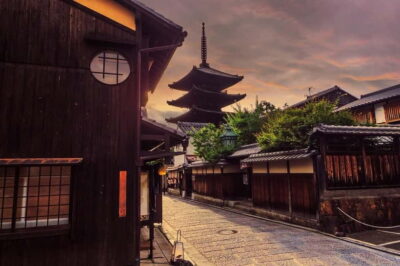
Kyoto Geisha Walking Tour: Gion District & Hidden Gems
Read our review →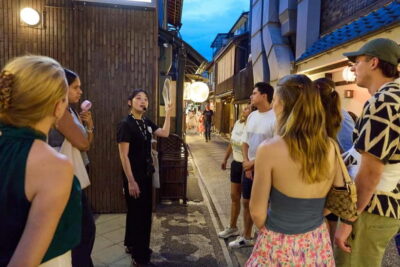
Gion Geisha District Walking Tour – Stories of Geisha
Read our review →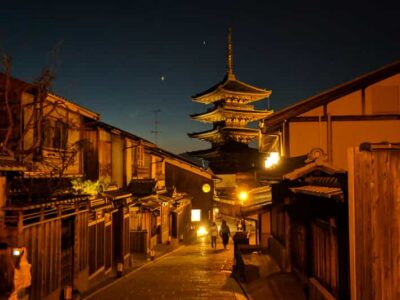
Best of Kyoto: Gion, Geisha, Pagodas & Cobblestones
Read our review →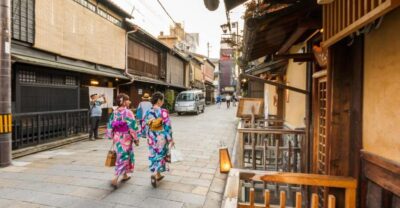

Kyoto Night Foodie Tour in Gion (9+ dishes + 6 Sake tastings)
Read our review →
Kyoto Gion Geisha District Walking Tour – The Stories of Geisha
Read our review →
Gion Magical Night Walking Tour with Geisha Insights
Read our review →
Kyoto Gion Night Walk & Geisha District Guided Tour
Read our review →Browse the lists this tour appears in