
Review · MATCHA & TEA CEREMONY SESSIONS
Matcha Experience with of Japanese Tea Tasting in Tokyo
Tokyo tea can feel mysterious. This class makes it practical fast, with Chisei and Rina walking you through cultivation, processing, and how to taste differences that most people miss. I especially like the format, you get multiple tea styles plus matcha making in a small group of 5, not a crowd shuffle. One thing to consider, it is a tasting class, so if you only want Instagram matcha and no real learning, you may find it a bit too hands-on.
I also love that the instruction is built around choices you can repeat at home, seeing leaf shapes, smelling brewed tea, and then whisking your own usucha with a bamboo whisk. The homemade sweets matter too, because they help you understand flavor pairing, not just caffeine delivery. Still, it is best suited to people who can sit for 1 hour 30 minutes and pay attention, since the pace is more workshop than sightseeing.
You’ll meet in central Tokyo, then move through a clear sequence of teas that go from steamed green teas to roasted styles, then to Japanese black tea and finally matcha lattes. By the end, you’ll have a better sense of how shade, steaming, roasting, and even brewing choices change what ends up in your cup.
In This Review
- Key Points That Make This Matcha Session Worth Your Time
- Meeting Chisei and Rina Near Henn Na Hotel, Then Settling In
- The Seasonal Welcome Drink, and Why It Sets the Whole Tone
- Comparing Sencha, Kabuse-cha, Gyokuro, and Deep Steamed Sencha Like a Taster
- Hojicha and Genmaicha: When Roasting and Rice Change the Game
- Japanese Black Tea Plus Homemade Sweets, a Pairing Lesson You’ll Actually Use
- Matcha Making: Whisking Usucha With a Bamboo Chasen
- Matcha Latte and Hojicha Latte: Turning Tea Skills Into Everyday Orders
- Price and Value: $57.98 for 1 Hour 30 Minutes of Real Tea Education
- Who Should Book This Matcha Trip, and Who Might Want Something Else
- A Few Practical Tips Before You Go
- Should You Book This Matcha Ceremony and Tea Tasting?
- FAQ
- What is the duration of the matcha and tea tasting?
- How many people are in the group?
- What teas and matcha styles will I taste?
- Do I make matcha myself?
- Are snacks included?
- Where does the experience start and end?
- What is the cancellation policy?
Key Points That Make This Matcha Session Worth Your Time
- Former tea farmer background: Chisei grew tea for 6 years in Kyoto, plus he brings a pharmacist’s curiosity about how things work.
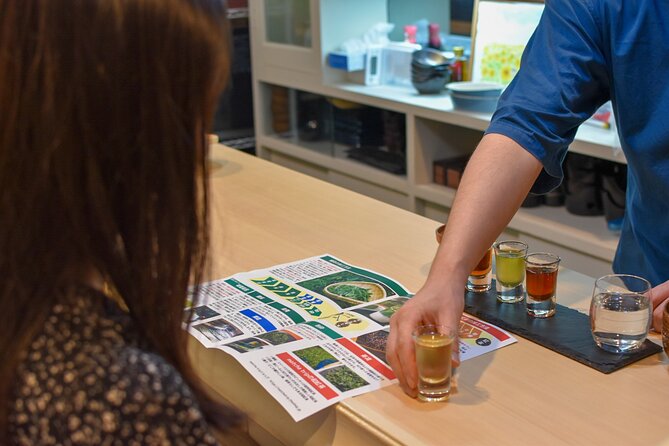
- Leaf spotting before brewing: you look at color and leaf shape, then brew in the recommended way so aromas make sense.
- Seven tea varieties to compare: multiple green teas, plus hojicha, genmaicha, and Japanese black tea, along with matcha styles.
- Hands-on matcha making: you make usucha using a bamboo whisk and learn how to do it again at home.
- Tea, sweets, and even tea leaves: Rina’s homemade sweets pair with the tastings, and you may be shown how to eat tea leaves with ponzu.
- Real small-group vibe: max 5 people means plenty of questions, and the hosts use diagrams and photos to explain production clearly.
Meeting Chisei and Rina Near Henn Na Hotel, Then Settling In
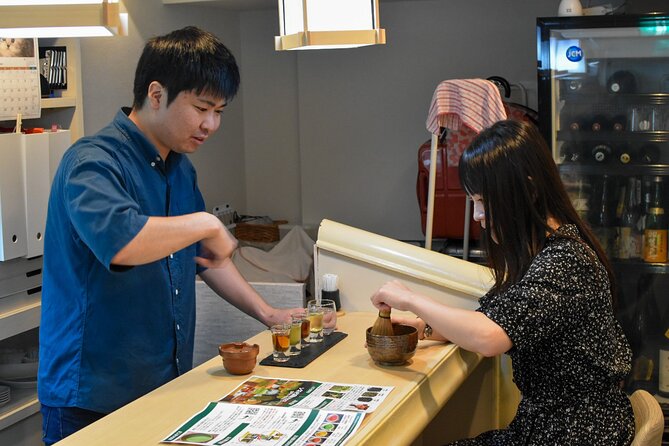
The experience starts at matcha tripJapan at Henn Na Hotel in Taito City, on the 2nd floor Sports Bar Leaf. It’s a very “arrive and start sipping” setup, not a long wait while a van fills up.
One of my favorite parts of small tours is how fast you get into the topic. Here, you begin with a welcome drink, then you move right into what you’re about to taste and why it matters.
Because the group is capped at five, you should feel comfortable asking questions. From what I’ve seen in participant feedback, Chisei and Rina explain in clear English, and they don’t rush past the science and the farm details.
More Food Tours in Tokyo
- Tokyo: Shinjuku Food Tour (13 Dishes at 4 Local Eateries)
★ 5.0 · 6,603 reviews - Tokyo Tsukiji Fish Market Food and Culture Walking Tour
★ 5.0 · 3,184 reviews - Tokyo: Shinjuku Food Tour (15 Dishes and 4 Eateries)
★ 4.9 · 2,033 reviews
The Seasonal Welcome Drink, and Why It Sets the Whole Tone
You begin with a seasonal welcome drink, served while you get your intro to Japanese tea styles you’ll experience that day. This matters because it warms up your palate and your attention, so the later comparisons land faster.
If you’re visiting in warmer weather, this welcome drink can be a relief, not just a formality. It also gives you a gentle starting point if you don’t yet have a “matcha baseline” in your head.
Comparing Sencha, Kabuse-cha, Gyokuro, and Deep Steamed Sencha Like a Taster
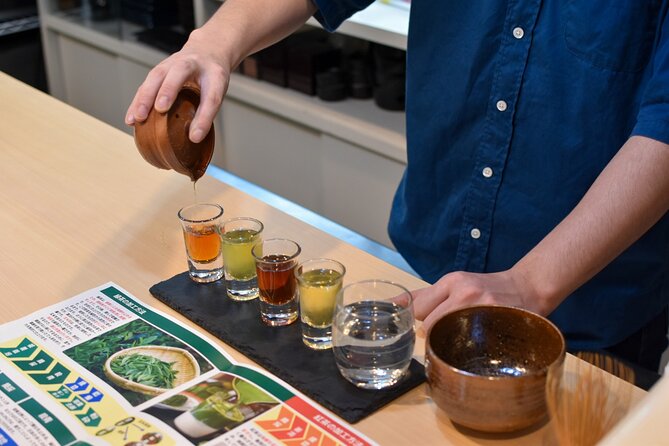
The heart of the class is the comparison section, where you taste multiple green teas prepared in the best way for their character. Before any serious sipping, you look closely at the color and shape of the tea leaves, which is a simple trick that makes your senses smarter.
Then you brew and sample a set that includes sencha, kabuse-cha, gyokuro, and deep steamed sencha. The big idea is that these teas come from the same broad world of tea leaves, yet you taste different levels of sweetness, bitterness, umami depth, and aromatic presence.
Here’s how to get the most from this part. Slow down, smell first, then sip a small amount, and ask yourself what changed: is it the fragrance, the body, the aftertaste, or the balance? This is where the workshop format pays off, because you’re not guessing alone in a cafe.
Hojicha and Genmaicha: When Roasting and Rice Change the Game
After the steamed green teas, you move into the roasted and rice-adjacent flavors, including hoji-cha (roasted green tea) and brown rice tea (genmaicha). These are great teaching teas because they show you how processing changes bitterness and aroma.
Hojicha tends to feel calmer and warmer on the tongue, while genmaicha adds a toasty grain note that can soften the edges of green tea. Even if matcha is your main reason for booking, this section can surprise you in a good way, because it broadens your idea of what “Japanese tea” means.
If you usually think of green tea as one flavor, treat this as your reset. You’ll come away knowing which style fits when you want something light, something comforting, or something with a roasted, almost baked aroma.
More Tea Ceremonies in Tokyo
- Matcha Making Class in Tokyo with Authentic Japanese Sweets Set
★ 5.0 · 744 reviews - Kimono Tea Ceremony at Tokyo, Asakusa Maikoya
★ 5.0 · 638 reviews - Tokyo: Traditional Tea Ceremony with a Tea Master
★ 5.0 · 528 reviews - Tokyo: Matcha Making Experience with Mochi Sweets in Asakusa
★ 4.9 · 388 reviews
Japanese Black Tea Plus Homemade Sweets, a Pairing Lesson You’ll Actually Use
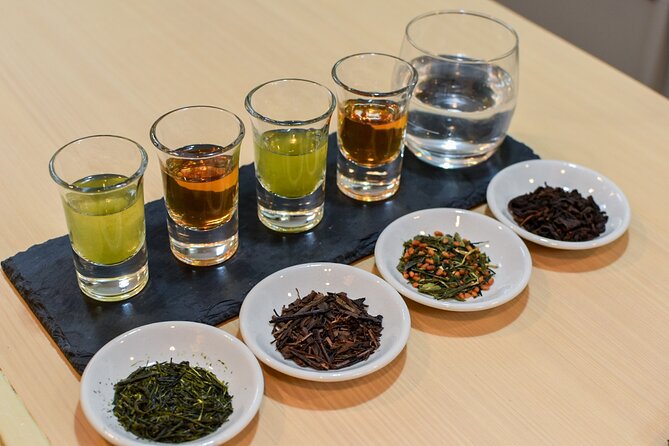
Next up is Japanese black tea, served with homemade sweets selected to go well with it. This is not a random dessert add-on. It’s a flavor exercise, showing how sweetness and tea bitterness interact.
The black tea portion matters because it’s another processing path from the green teas you tried earlier, so your tasting brain stays engaged. You get to compare how aroma and tannins behave with dessert, which is useful when you later choose tea at a restaurant.
This is also where you’ll appreciate Rina’s homemade sweets. Feedback highlights that these were some of the best snacks during the trip, and they genuinely help the tea feel more dimensional rather than separate.
Matcha Making: Whisking Usucha With a Bamboo Chasen
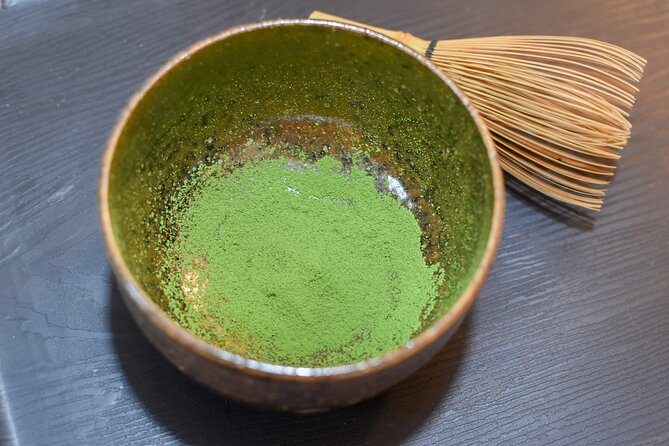
Finally, you get hands-on with matcha making. You’ll make ousucha (usucha) using a bamboo tea whisk, so you can feel how matcha texture changes as you whisk.
This is the moment where the workshop stops being “just tasting” and becomes “you can do this at home.” You’ll still be able to make matcha at home afterward, and you’ll know what to watch for beyond just following a recipe.
Tip for getting great results at home, whisk slowly at first, then speed up to bring out that smoother foam. Also, don’t chase thickness. In usucha, balance matters, and your goal is a creamy cup, not a cement cup.
If you’re the type who wants to understand what you’re doing, you’ll probably enjoy how Chisei explains cultivation and processing links to what you taste in matcha. It’s practical learning, not just a lecture.
Matcha Latte and Hojicha Latte: Turning Tea Skills Into Everyday Orders
To round things out, you can enjoy both matcha latte and hojicha latte. This part is smart for two reasons: it translates your tasting knowledge into something you can order anywhere, and it helps you compare how milk changes bitterness and aroma.
Matcha latte usually softens the edges and makes the tea feel sweeter and smoother, while hojicha latte leans into roasted warmth. Even if you don’t make lattes at home, you’ll understand what to choose when you want a cozy cup instead of a sharp one.
It’s a nice payoff after the tasting sequence. You go from farm and processing details to a drink you can use immediately as a memory.
Price and Value: $57.98 for 1 Hour 30 Minutes of Real Tea Education
At $57.98 per person for about 1 hour 30 minutes, this class isn’t the cheapest thing in Tokyo. It also isn’t priced like a generic cafe activity.
For your money, you’re getting:
- a small group experience with time for questions
- multiple tea tastings across steamed, roasted, and black tea styles
- matcha making with a bamboo whisk
- homemade sweets paired to the drinks
- matcha latte and hojicha latte as part of the wrap-up
The best value angle is that you leave with technique, not just souvenirs. Tasting seven different varieties is fun, but the real win is learning how to notice differences and how to make matcha the way the instructor recommends.
Who Should Book This Matcha Trip, and Who Might Want Something Else
This workshop is a strong fit if you:
- want a hands-on matcha experience, not just a drink
- enjoy learning how food is made, from cultivation to processing
- like structured tastings where you can compare aroma, color, and flavor
- care about flavor pairing, because sweets are included and intentional
You might hesitate if you only want quick sightseeing stops and don’t like classes. The pace is teaching-forward, so you’ll need to sit, taste, and pay attention for 1 hour 30 minutes.
It also helps if you are curious enough to ask questions. Chisei and Rina respond patiently, and feedback mentions proactively checking allergy conditions, so it’s a thoughtful environment.
A Few Practical Tips Before You Go
If you want this to feel smooth, arrive ready to taste and talk. That means taking a breath before the first sip and letting your senses adjust as you move through each tea.
Also, plan for questions. This type of tasting works best when you ask what you’re noticing, like why one tea tastes sweeter or why a roasted style feels calmer.
If you have dietary needs, let them know in advance. Participant feedback specifically notes that Chisei is friendly and proactively asks about allergy conditions.
And yes, there may be products for sale. If you fall hard for a particular matcha or tea style, you might be able to continue the experience after the class.
Should You Book This Matcha Ceremony and Tea Tasting?
Book it if you want a small-group Tokyo experience that turns matcha from trendy into understandable. You’ll get expert-led comparisons, homemade sweets, and a real usucha matcha-making moment with tools you can use again at home.
Skip it if you’re mainly chasing photos and don’t want a workshop pace. This is a class built around tasting differences and learning how Japanese tea is processed and prepared.
For most people who like food, drink, and small-group learning, this is an easy yes. The structure is clear, the tasting range is broad, and the matcha making gives you a skill, not just a memory.
FAQ
What is the duration of the matcha and tea tasting?
The experience lasts about 1 hour 30 minutes.
How many people are in the group?
The class has a maximum of five travelers.
What teas and matcha styles will I taste?
You’ll taste multiple Japanese tea types including matcha, sencha, kabuse-cha, gyokuro, deep steamed sencha, hoji-cha, brown rice tea (genmaicha), and Japanese black tea. The session also includes 2 types of matcha and matcha latte options, plus hojicha latte.
Do I make matcha myself?
Yes. You’ll make ousucha (matcha) using a bamboo tea whisk.
Are snacks included?
Yes. You’ll get homemade sweets that pair with the teas.
Where does the experience start and end?
It starts at matcha tripJapan at Henn Na Hotel, 2F Sports Bar Leaf, in Taito City. It ends back at the meeting point.
What is the cancellation policy?
Free cancellation is available up to 24 hours in advance for a full refund. If you cancel less than 24 hours before the start time, the amount paid is not refunded.
More Food & Drink in Tokyo
- Tokyo: Tsukiji Fish Market Food and Walking tour
★ 5.0 · 1,724 reviews - Shinjuku Izakaya Food Tour
★ 5.0 · 1,041 reviews - Eat and Drink Like a Local: Tokyo Ueno Food Tour-Taverns&Ramen
★ 5.0 · 957 reviews - Tokyo: Shibuya Food Tour (13 dishes and 4 Eateries)
★ 5.0 · 770 reviews
Newly listed around Tokyo
- From Tokyo: Mount Fuji Sightseeing One Day Trip★ 4.5 · 42 reviews
- Customizable Private Tour in Mt Fuji from Tokyo by Car or Van★ 5.0 · 107 reviews
- Mount Fuji Full Day Private Tour with English Speaking Driver★ 5.0 · 23 reviews
- Mount Fuji Full Day Tour form Tokyo Lake Kawaguchi & Yamanaka★ 5.0 · 9 reviews
- Tokyo: Mount Fuji Must-see Attractions One Day Sightseeing Tour★ 4.5 · 13 reviews
- Full Guided Mt. Fuji & Shiba-Sakura Festival One Day Pvt.Tour★ 5.0 · 6 reviews
- Mount Fuji Day Tour:Lake Kawaguchi, HealingVillage,Oshino Hakkai★ 4.5 · 8 reviews
- Mt.Fuji day trip with English Speaking Chauffer★ 5.0 · 39 reviews
Matcha & Tea Ceremony Sessions, compared.
Tea Ceremony in a Traditional Tea House in Kiyomizu
Read our review →
World Heritage Kyoto & Nara Uji Authentic Matcha Experience
Read our review →
Browse the lists this tour appears in