
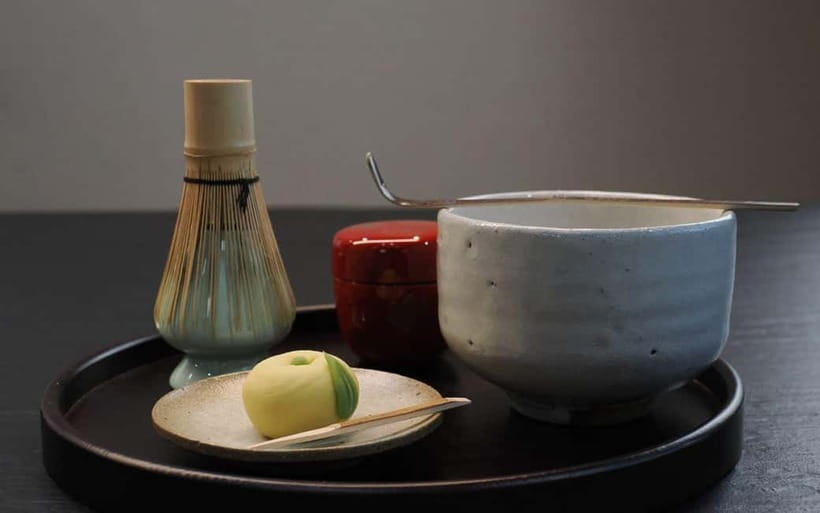
Review · MATCHA & TEA CEREMONY SESSIONS
Tokyo: Traditional Tea Ceremony with a Tea Master
A Tokyo tea ceremony that feels calm, not stiff. I love the hands-on matcha making and the guided tasting of rare teas like Gyokuro. One thing to consider, some guides have accents, and you might need to focus to catch every detail in English.
This is a one-hour cultural session at the Ocharu Tea Ceremony room right across from Tokyo University, so it fits neatly into almost any day. You’ll start with a welcome cup of wakocha and cake, move through a sencha tasting with seasonal wagashi from Ougiya, then whisk your own matcha, and finish with genmaicha.
In This Review
- Key moments worth planning for
- Entering the Ocharu Tea Ceremony room by Tokyo University
- Your welcome cup of wakocha and tea-cake pairing
- Gyokuro sencha tasting, plus why the leaves matter
- Ougiya seasonal wagashi, not just a random snack
- Hands-on matcha whisking with the tea master
- Genmaicha finale, the cozy ending to a tea journey
- The certificate and group photo keepsake
- Finding the place: practical tips for first-timers
- What you can do after the ceremony downstairs
- Price and value check for $38 per person
- Language and comfort: what to expect in English
- Who this tea ceremony suits best, and who should skip
- Should you book this Tokyo tea ceremony?
- FAQ
- How long is the tea ceremony with the tea master?
- Where is this tea ceremony located?
- What teas are included in the session?
- Do you get to make matcha yourself?
- Are wagashi sweets included?
- Do I receive a certificate and a photo?
- What language is the instruction?
- Is this activity wheelchair accessible?
- What is the price per person?
- What is the best way to find the meeting point?
- Is there free cancellation?
- Can I reserve now and pay later?
Key moments worth planning for
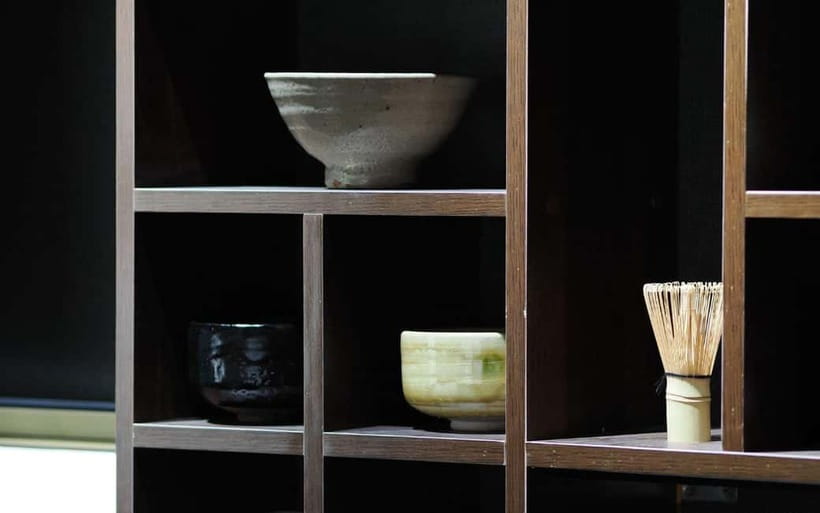
- Across from Tokyo University: easy to anchor your day and meet up fast
- Wakocha welcome: a black tea starter with a sweet cake pairing
- Gyokuro sencha tasting: you taste and learn how high-grade green tea works
- Seasonal wagashi from Ougiya: sweets designed to match the tea
- Hands-on matcha: you whisk, not just watch
- Certificate and group photo: a keepsake you can bring home
Entering the Ocharu Tea Ceremony room by Tokyo University
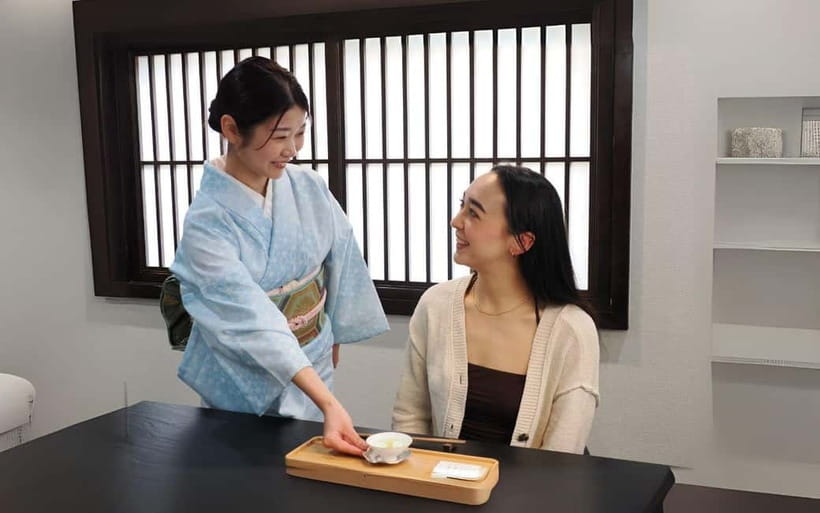
The best part of this experience is how simple it is to get to and how focused it stays. The ceremony happens in the Ocharu Tea Ceremony room across from Tokyo University, so you can build your day around it without mystery directions.
When you arrive, look for the building with the green OCHARU logo on the wall. Plan to show up about 5 minutes early to check in and get seated so the session starts on time.
More Tea Ceremonies in Tokyo
- Matcha Making Class in Tokyo with Authentic Japanese Sweets Set
★ 5.0 · 744 reviews - Kimono Tea Ceremony at Tokyo, Asakusa Maikoya
★ 5.0 · 638 reviews - Tokyo: Matcha Making Experience with Mochi Sweets in Asakusa
★ 4.9 · 388 reviews
Your welcome cup of wakocha and tea-cake pairing
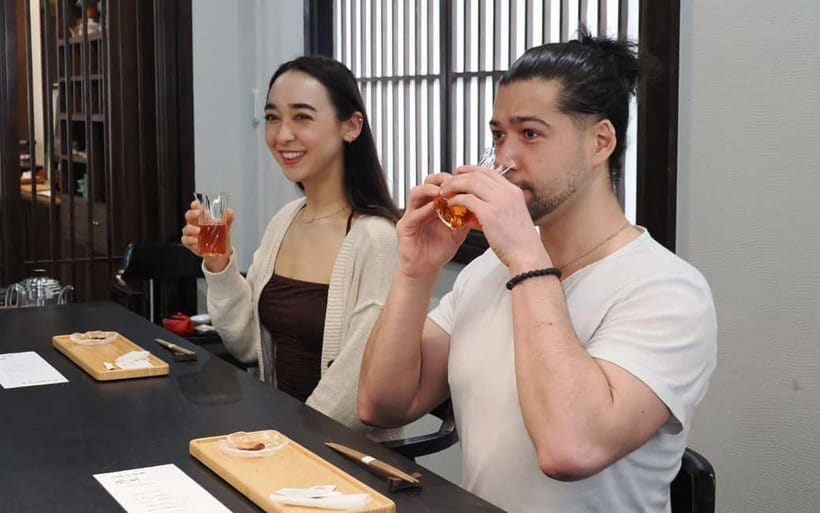
You start with a welcome drink of wakocha, a Japanese black tea from Shizuoka, served with a traditional tea cake. This is a smart warm-up because it gets your taste buds ready before you move into green tea.
Wakocha tends to come across fruity and floral, and the cake helps you notice how tea flavors shift between sweet, aromatic, and bitter notes. If you are new to Japanese teas, this first step is friendly, not technical.
Gyokuro sencha tasting, plus why the leaves matter
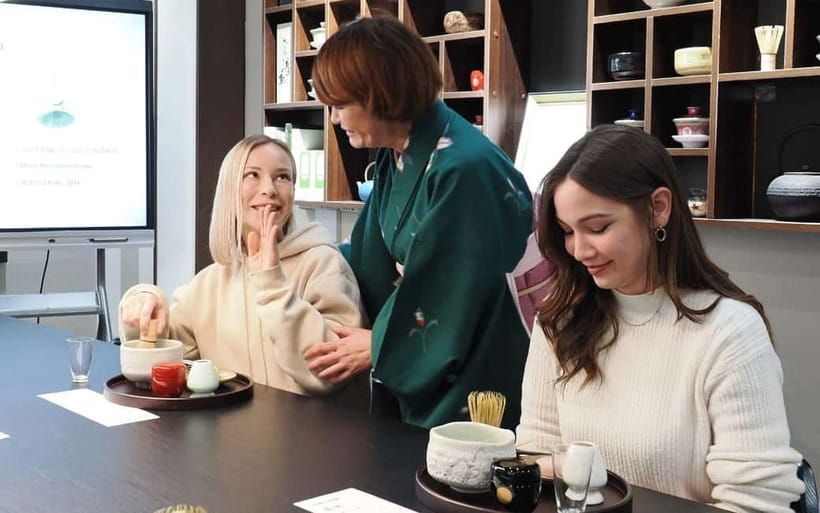
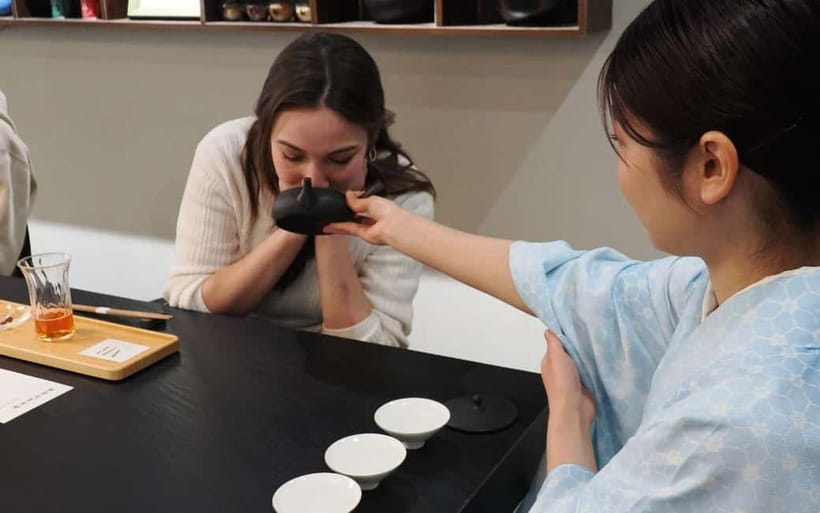
Next comes the main green tea moment: Gyokuro sencha, described as top grade. You don’t just drink it. You also taste and get a chance to experience the leaves and the brewing approach used for this style of tea.
Gyokuro is prized because it tastes smooth and deep when brewed correctly. The tea master walks you through what to pay attention to, like the feel of the tea, the aroma, and how the flavor changes as you sip.
One practical note: the water temperature and proper brewing cues come up in the explanation, so pay attention in that section. It’s the kind of detail that makes matcha and sencha make sense once you try them yourself.
Ougiya seasonal wagashi, not just a random snack

The seasonal wagashi you try are from Ougiya, a well-known confectioner with generations of craft. This matters because wagashi is not filler. It’s meant to harmonize with each tea you drink.
You’ll get sweets that match the moment of the ceremony, so you taste tea and snack as a pair. If you usually skip desserts in Tokyo, this is worth your attention. It shows you how Japanese sweets are designed for balance, texture, and restraint.
A different sort of day in Japan:
- Mt Fuji and Hakone 1-Day Bus Tour Return by Bullet Train
★ 5.0 · 26,383 reviews - 1-Day Tokyo Bus Tour
★ 5.0 · 14,250 reviews - Tokyo: TOKYO SKYTREE® Admission ticket
★ 4.5 · 11,192 reviews - Tokyo: teamLab Planets TOKYO Digital Art Museum Entry Ticket
★ 4.6 · 9,779 reviews
Hands-on matcha whisking with the tea master
Now for the part most people remember: you make your own matcha. Under guidance, you whisk it using traditional tools, and you get to try the motions yourself rather than watching from the sidelines.
This is where the experience turns from tasting to doing, and you’ll likely feel how matcha is different from regular green tea. It changes everything about mouthfeel and intensity because you’re drinking ground tea, not steeped leaves.
The tea master style can vary by session. In past groups, instructors like Ekiko or Shinichi-san were described as calm and clear while still making it lively enough to feel relaxed. If you’re traveling with kids or a non-tea drinker, this hands-on segment is often the easiest way to get everyone involved.
Genmaicha finale, the cozy ending to a tea journey
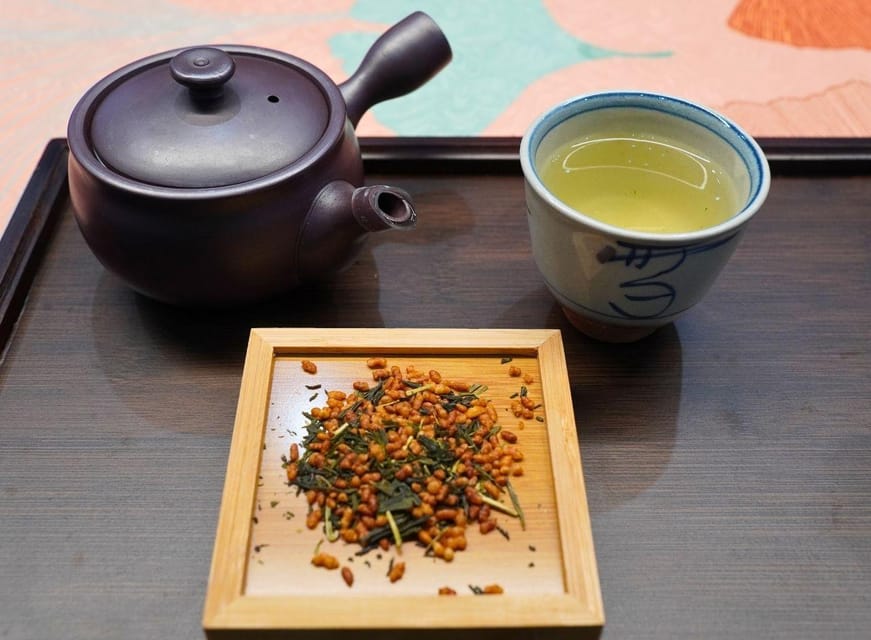
To close, you’ll have a cup of genmaicha, a blend of sencha and roasted rice from Niigata Prefecture. This final drink is comforting because the roasted rice softens the sharpness you might feel from straight green tea.
It’s also a helpful reset. After matcha and sencha, genmaicha gives your palate a gentler landing, so you finish without tea overload.
You’ll feel the ceremony ending the right way, like the session has a point, not just a schedule. It’s a nice example of how Japanese tea culture often works as a sequence, not a single sip.
The certificate and group photo keepsake
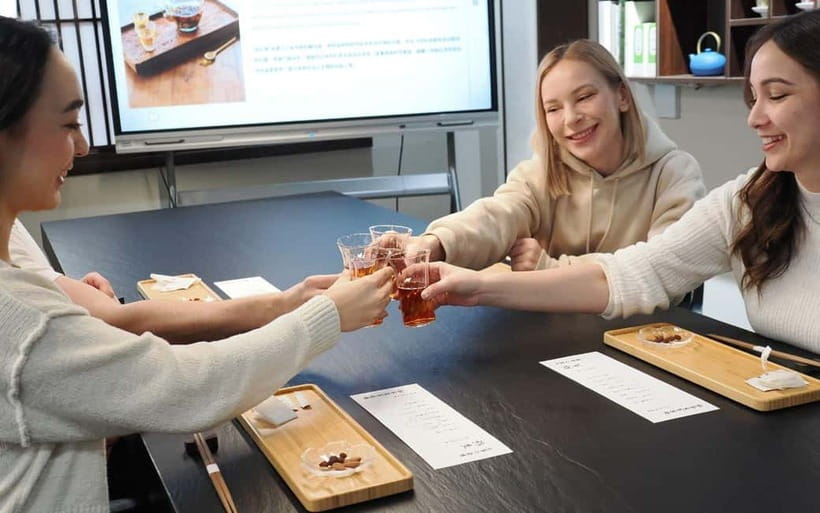
At the end, you get a certificate of completion plus a group photo. It’s a small thing, but it helps you remember what you learned, especially if you are doing multiple activities in Tokyo.
Some sessions even personalize the certificate with your name written in Japanese, which is a fun detail if you like taking home something that feels specific to you. If you want a souvenir that isn’t just a shop purchase, this one is worth it.
Finding the place: practical tips for first-timers
The meeting point is straightforward once you know what to look for. Find the building with the green OCHARU logo and plan to be there about 5 minutes early.
If you are using public transit, one route that works well from central Tokyo is to head from Shibuya toward Meiji-Jingumae, then continue to Nezu Station, and walk roughly 15 minutes. That walk is normal in Tokyo neighborhoods, and it also gives you a chance to orient yourself before the ceremony starts.
What you can do after the ceremony downstairs
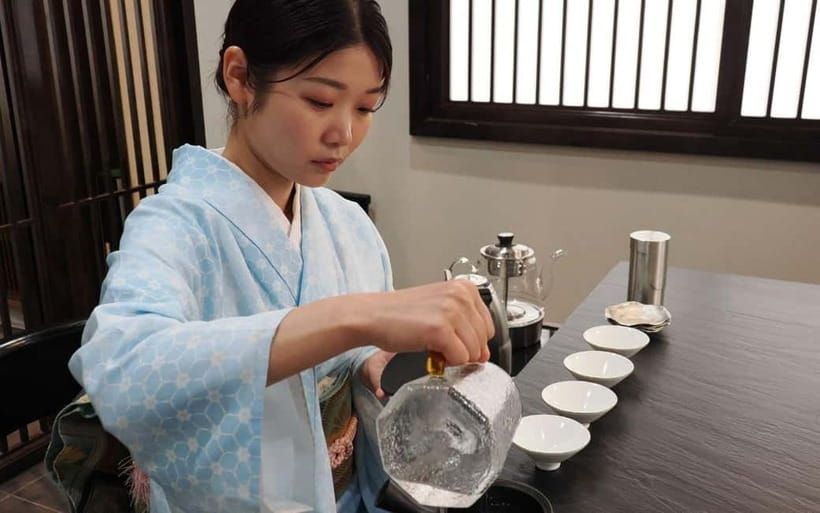
One reason this experience can feel like good value is what’s available right there. Downstairs, there is a small café where you can drink matcha and also buy tea to take home.
You might also find extra tea-related items, including matcha options and other tea products sold on-site. Some people have mentioned seeing things like green tea beer available in the shop area, which can be a fun bonus if you want to keep the tea theme going after your session.
If you’re the type who likes to buy a small tea kit for later, don’t rush away right after the certificate. One extra stop in the café can turn the memory into something you actually use.
Price and value check for $38 per person
At $38, this is priced like a cultural workshop, not just a tasting. You’re getting multiple drinks, a sweet pairing, and the most important part, actual participation in making matcha.
For me, the value comes from three things that usually cost more separately in Tokyo. First, you get structured tasting of several tea styles (wakocha, Gyokuro sencha, matcha, genmaicha). Second, you get seasonal wagashi from Ougiya, which is a real brand, not generic sweets. Third, you leave with a certificate and photo, plus you can often buy tea downstairs if you want.
So if you like experiences that teach you how to appreciate something, $38 can be a fair deal. If you only want one drink and no teaching, you might question the price. But with matcha included and made by you, it tends to feel like more than a simple stop.
Language and comfort: what to expect in English
The instruction is in English, and the tea master explains the steps clearly. That said, a couple of notes from real-world sessions are worth keeping in mind.
Some guides can have accents that may feel challenging if you usually rely on fast English. The solution is simple: slow down, ask questions if you can, and focus when the brewing and whisking steps are being explained.
The atmosphere is generally relaxed and friendly, not stiff. You will likely feel comfortable enough to ask what you are tasting and why each tea changes from cup to cup.
Who this tea ceremony suits best, and who should skip
This works especially well for:
- First-timers who want a gentle introduction to Tokyo tea ceremony culture
- People who enjoy hands-on workshops like whisking matcha
- Travelers who like learning in a calm setting, with time to ask questions
It may not be for you if:
- You want something fast-paced or full of sightseeing walking time
- You need wheelchair access, because it is listed as not suitable for wheelchair users
- You strongly prefer self-guided experiences and don’t like being led through steps
Also, if you are sensitive to strong flavors, start by paying attention to the order of drinks. The session is designed to move from a black tea welcome to green tea depth, then to a roasted rice finale that softens everything.
Should you book this Tokyo tea ceremony?
If you want a meaningful, hands-on cultural activity that you can fit into a day near Tokyo University, I’d say book it. The combination of matcha making, a proper Gyokuro sencha tasting, and seasonal wagashi from Ougiya gives you variety without rushing.
If you are short on time, one hour is a gift. You’ll leave with a new appreciation for how tea is brewed and how sweets are chosen to match it, and you get a tangible keepsake in the certificate plus photo.
If wheelchair access is a must for your group, or you dislike guided activities, then you should look for another option. Otherwise, this is the kind of Tokyo experience that feels quietly special, practical, and easy to recommend.
FAQ
How long is the tea ceremony with the tea master?
The experience is listed at 1 hour.
Where is this tea ceremony located?
It takes place in the Ocharu Tea Ceremony room opposite Tokyo University.
What teas are included in the session?
You’ll have a welcome cup of wakocha, a Gyokuro sencha tasting, the matcha you make yourself, and a final cup of genmaicha.
Do you get to make matcha yourself?
Yes. You’ll do a hands-on matcha making session with expert guidance using traditional tools.
Are wagashi sweets included?
Yes. You’ll taste seasonal wagashi from Ougiya.
Do I receive a certificate and a photo?
Yes. You get a certificate of completion and a group photo as keepsakes.
What language is the instruction?
The instructor is listed as English.
Is this activity wheelchair accessible?
No. It is not suitable for wheelchair users.
What is the price per person?
The price is listed at $38 per person.
What is the best way to find the meeting point?
Look for the building with the green logo on the wall that says OCHARU, and arrive about 5 minutes early for check-in.
Is there free cancellation?
Yes. Free cancellation is available up to 24 hours in advance for a full refund.
Can I reserve now and pay later?
Yes. The listing offers reserve now and pay later, with pay nothing today.
Newly listed around Tokyo
- Tokyo private transfer for Yokohama Port★ 4.5 · 63 reviews
- Luxury Kimono Photoshoot at Ginza Tokyo★ 5.0 · 7 reviews
- Tokyo Allstar Food Tour★ 4.5 · 206 reviews
- Tokyo Art Aquarium Museum E-Ticket with optional Tokyo Metro Pass★ 5.0 · 17 reviews
- Tokyo: Best Ginza Food Tour at 3 Local Eateries★ 5.0 · 83 reviews
- Private One Day Nikko Tour with Bilingual driver★ 3.5 · 11 reviews
- PRIVATE tour in 180SX to Daikoku+++++★ 5.0 · 6 reviews
- Kabuki Talk★ 5.0 · 10 reviews
Matcha & Tea Ceremony Sessions, compared.
Tea Ceremony in a Traditional Tea House in Kiyomizu
Read our review →
World Heritage Kyoto & Nara Uji Authentic Matcha Experience
Read our review →
Browse the lists this tour appears in