
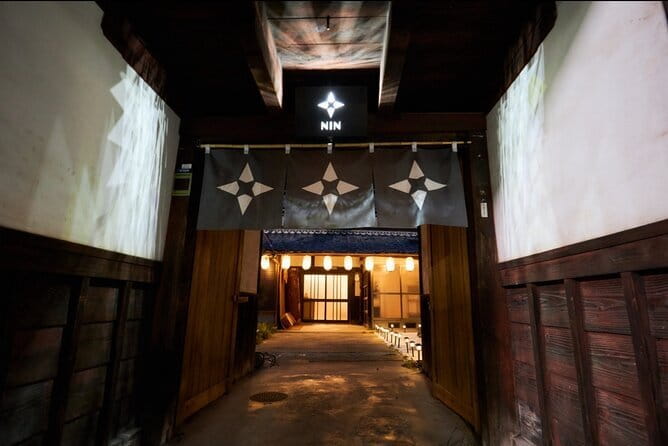
Review · JAPANESE CRAFT WORKSHOPS
Authentic Knife Making Experience at a Blacksmith in Kyoto
A metal shop day in Kyoto beats watching from the sidelines. This is a hands-on Japanese knife making class where you forge, then grind, polish, and finish your own blade in a small group setting at Atelier NIN. I really like the fact that they build the day around doing the work yourself, not just standing nearby, and you also get a traditional-style goldsmith outfit so the whole thing feels period-true, not staged. The one thing to keep in mind is that hammering and finishing take real effort, so you should be ready for an active 3-hour session.
You start with tool basics and safety, then move into shaping hot steel through the traditional process used for Japanese kitchen knives. A helpful English guide stays with you, and the limit of up to 6 people means you get answers fast when something feels off.
Possible drawback: the work is physically strenuous, and finishing work can be fussy if you do not get comfortable quickly with the sanding and grinding steps.
In This Review
- Key highlights that matter before you go
- Finding Studio NIN and the Rurikoin workshop area
- Dressing like a goldsmith, and what you do not have to bring
- The knife you’ll make: 13 to 15 cm, iron handle, and what that means
- Step-by-step: how the 3 hours flow from tools to a finished edge
- 1) Dressing up and getting oriented
- 2) Learn the tools before you hit metal
- 3) Forging hot steel, shaping the blade
- 4) Sharpening: turning your blade into a usable edge
- 5) Polishing: making it look like real craftsmanship
- Why the small group size is a big deal (and not just marketing)
- Price and value: is $158.52 worth it?
- Physical effort and logistics: what to plan for on the day
- Who should book this Kyoto knife workshop?
- Should you book Atelier NIN in Kyoto?
- FAQ
- How long is the Kyoto knife-making experience?
- How many people are in each class?
- What is included in the price?
- Do I need to bring protective clothes?
- What knife size will I make?
- What steps are included in the class?
- Is transportation included?
- Are snacks included?
Key highlights that matter before you go
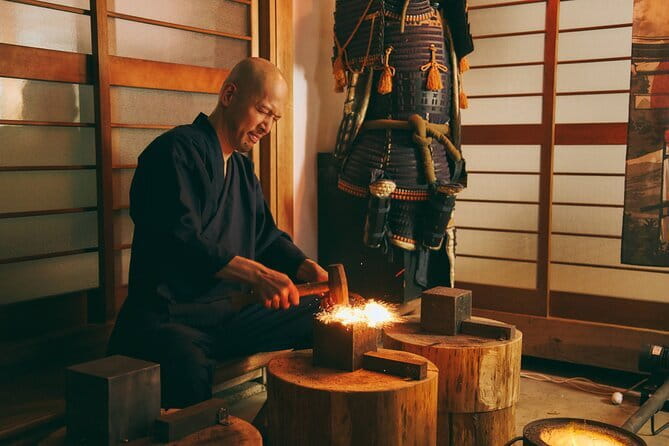
Create a true take-home souvenir: a handmade Japanese knife, about 13 to 15 cm long
Learn real skills: forging, sharpening, and polishing, not just one demo step
Small-group attention: maximum 6 people, with hands-on help throughout
Uniform provided: you dress up in a traditional goldsmith-style outfit
No special materials to source: tools are included, and the studio handles the setup
You leave with a working blade: your finished knife is meant to be usable, not a decoration
Finding Studio NIN and the Rurikoin workshop area
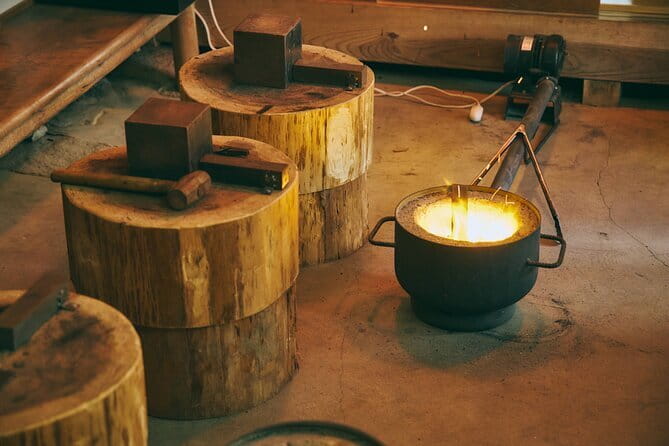
Your day starts at studio NIN in Sakyo Ward, Kyoto, at 八瀬168-1 Yasenosechō, 601-1254. The class runs about 3 hours, and it ends back at the meeting point. It is also listed as near public transportation, which matters in Kyoto, where traffic and parking can turn a simple plan into a headache.
One practical note from the vibe of this kind of workshop: locations can be quieter and more residential than central sightseeing spots. Give yourself a little buffer time, and double-check your directions before you head out. If you rely on spotty data, consider saving a map pin ahead of time.
More Craft Workshops in Kyoto
- Authentic knife making experience at a blacksmith in Kyoto
★ 4.8 · 350 reviews - 1-Hour Japanese Archery Experience in Kyoto
★ 5.0 · 176 reviews - Kyoto: Calligraphy class at Buddhist temple in city center
★ 5.0 · 167 reviews
Dressing like a goldsmith, and what you do not have to bring
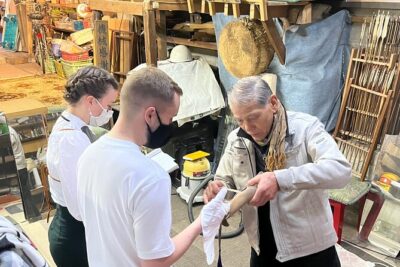
You will change into traditional costumes for the workshop. That part is more than cosplay. It helps set the mindset: you are not just making a souvenir, you are stepping into a craft process where tools, posture, and safety all matter.
Good news for packing: you do not need to chase down protective clothes. A uniform is provided, and you get a set of tools used to make knives as part of the class. You also have an English guide, which is a big deal when you are learning hand positions, hammer control, and grinding safety on the spot.
If you have questions about footwear or safety gear, ask on arrival. This kind of work involves hot metal, sparks, and contact tools. Some people prefer closed-toe footwear for finishing stages, so it is smart to consider that even if the studio provides what it uses for the class.
The knife you’ll make: 13 to 15 cm, iron handle, and what that means
The knife size is approximately 13 to 15 centimeters. Because it is handmade, the exact size can vary depending on what you’re making and how your shaping goes.
The standard setup described for this class uses a traditional and simple method. It also notes that there are no wooden handles, and that the handle is made of iron. That gives the knife a very classic look, and it matches the idea of “traditional process” more than a fancy, modern build.
One more detail you might hear from other participants: some mention an option to add a wooden handle for extra cost. Even if that is not the default, it is worth asking during the class or at check-in so you know what choices are available for your specific knife.
Step-by-step: how the 3 hours flow from tools to a finished edge

This workshop is built around five core phases. You do not just watch one part. You go through the chain of skills that turns rough steel into a sharpened, polished blade.
A different sort of day in Japan:
- PERFECT KYOTO 1-Day Bus Tour
★ 5.0 · 13,518 reviews - Kyoto: Fushimi Inari, Kinkakuji, Bamboo Grove 1 Day Bus Tour
★ 4.8 · 4,316 reviews - Kyoto: Tea Ceremony in a Traditional Tea House in Kiyomizu
★ 4.9 · 3,519 reviews - Kyoto Geisha Walking Tour: Gion District & Hidden Gems
★ 4.7 · 3,273 reviews
1) Dressing up and getting oriented
You start with the traditional costume change. Then the guide covers the basics: how the tools work, what to watch for, and how to hold and move safely. This is where you get your “read the room” moment, because forging is physical and you need to understand the sequence before you’re in the heat of it.
2) Learn the tools before you hit metal
Before you fully commit to forging, you learn to use the tools properly. This is one of the most valuable parts of the day. Many first-timers assume the hardest part is strength. In reality, control matters more than raw force.
Once you understand the tool handling, you are ready for the real forging work.
3) Forging hot steel, shaping the blade
Forging is the key focus. This is where you hammer the hot steel billet and shape it into a knife form using the traditional process used for Japanese kitchen knives. It is hands-on, and it is physical, but it is also guided, so you are not left to guess.
A practical way to think about this step: your goal is not perfection on the first pass. Your goal is getting the shape into the right direction, then letting the later steps refine the edge and finish.
One thing I like about how this class is structured is that it keeps forging time meaningful while still fitting into a two and a half hour forging style experience (with total class time around 3 hours). Traditional knife making for a fully sized cooking knife can take well over 5 hours and cost more than $400, so this shorter session gives you a realistic taste of the craft without blowing the whole day or your budget.
4) Sharpening: turning your blade into a usable edge
After forging and shaping, you move into sharpening. This step matters because forging alone does not automatically create a fine edge. Japanese knives are known for their cutting feel, and sharpening is what helps you get from “shaped metal” to “kitchen-ready tool.”
Even if you think you are not technical, the sharpening portion is where you can see improvement quickly. That feedback loop is satisfying because you can feel the difference in the result.
5) Polishing: making it look like real craftsmanship
Polishing is the final craft touch. It is also where your knife stops looking like workshop steel and starts looking like a clean tool you might actually want to use. The guide helps make sure you are finishing in the right way.
A tip in general: do not rush the final polish. If you try to “power through” at the end, you can end up with uneven work you would rather correct earlier.
Why the small group size is a big deal (and not just marketing)
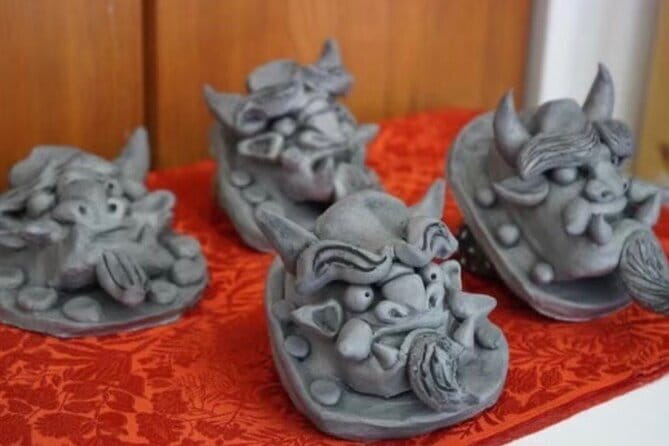
This is capped at maximum 6 people, and that shapes everything. When you have space and attention, the instructor can correct your hammer strikes and guide your grinding movements faster. It also means you can ask questions without feeling rushed.
In a craft class, small problems compound. If you miss an angle early, you might struggle later. If the guide can spot the issue early, your final knife looks and feels better.
The English guide element is also important. Even when you have basic gestures, the difference between “slightly more” and “quite a bit more” is hard to guess. Having clear instruction keeps the day smooth.
Price and value: is $158.52 worth it?
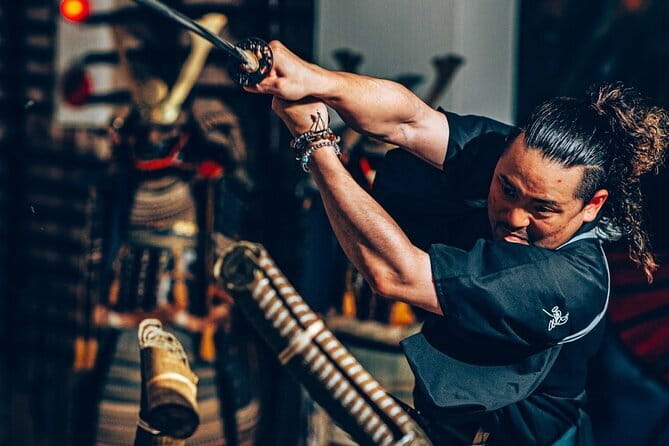
At $158.52 per person for an experience around 3 hours, the value comes from two things: the labor you personally do and the fact that you leave with a real knife.
If you just bought a knife in Kyoto, you might pay a similar amount or more and get a product made by professionals, sure. But you would not learn the sequence, the tools, and the hand feel behind the work.
The class also positions itself against traditional costs. The info you get makes a useful point: a typical regular cooking knife can take more than 5 hours and cost more than $400 if you were to do it the full way. This workshop compresses the experience into a shorter timeframe while still teaching forging, sharpening, and polishing, and it includes the uniform and tools.
So for many people, this is less about “cheap knife” and more about “worth it craft lesson with a keepsake.” If that matches your mindset, the price makes sense.
Physical effort and logistics: what to plan for on the day
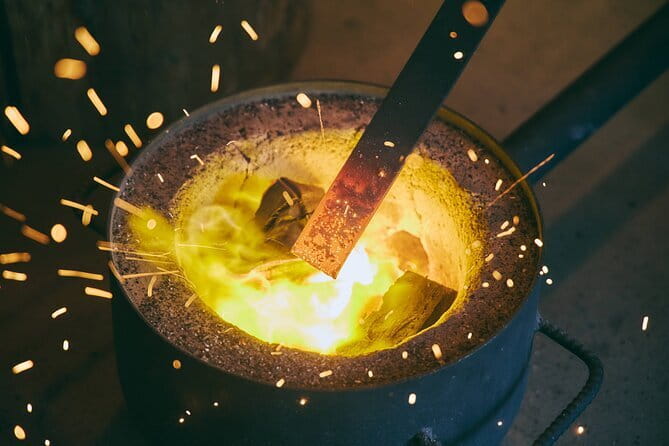
This workshop asks for moderate physical fitness. Hammering hot steel and working during forging is strenuous work. It also involves focused hand movements and safe tool handling.
Plan your day around energy. Avoid stacking a long museum run right beforehand. You want your legs and shoulders ready for the hammering part, and you want your concentration when you move into sharpening and polishing.
For logistics, remember:
Snacks are not included, so eat beforehand.
Private transportation is not included, so plan your own route to studio NIN.
You will end back at the meeting point, so your return plan is easy.
If you are traveling by air, think about the knife as you pack. Since the blade is 13 to 15 cm long, it may not behave well with carry-on rules. It is smart to plan for checked luggage.
Who should book this Kyoto knife workshop?
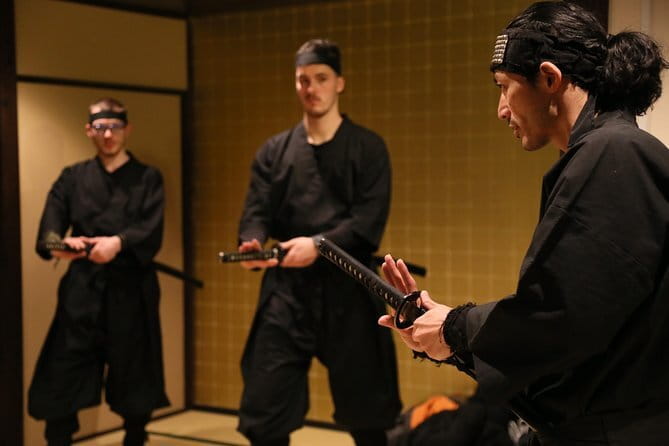
This is a strong fit if you want a hands-on Kyoto experience that feels authentic and practical. You do not need any prior metalworking background. The core steps teach you the craft in a way that still ends with a usable result.
It is especially good for:
Adults who like working with their hands and learning process, not just history talk
Couples who want a shared project and a take-home keepsake
Food-focused travelers who care about kitchen tools and want to understand what goes into them
- Anyone who enjoys traditional crafts and wants to try forging, sharpening, and polishing in one day
It may be a tougher fit if you have limited mobility or you dislike physically demanding workshops. Also, if you get frustrated easily with fine motor tasks, be patient with sanding and grinding. The best results come when you slow down enough to do it right.
Should you book Atelier NIN in Kyoto?
Yes, if you want a real craft experience with a take-home knife and you are okay with the physical work. The combination of forging plus sharpening and polishing means you learn the full arc of how a Japanese kitchen knife gets made, not just one flashy step.
I would book it even if you are a complete beginner, because the class is designed around helping you get through each stage. Just come ready for a workout, bring a calm mindset for the finishing steps, and plan on doing the whole day in workshop mode.
If that sounds like your kind of Kyoto, studio NIN is a solid use of your time.
FAQ
How long is the Kyoto knife-making experience?
It lasts about 3 hours.
How many people are in each class?
The experience is limited to a maximum of 6 travelers.
What is included in the price?
The price includes a uniform, an English guide, and a set of tools used to make knives.
Do I need to bring protective clothes?
No. A uniform is provided, so you do not need to source protective clothing yourself.
What knife size will I make?
The knife is approximately 13 to 15 centimeters, and it may vary since it is handmade.
What steps are included in the class?
You will dress in traditional costumes, learn tool use, forge, sharpen, and polish the knives.
Is transportation included?
No. Private transportation is not included.
Are snacks included?
No. Snacks are not included.
Newly listed around Kyoto
- Zen Meditation for Life in Kyoto★ 5.0 · 10 reviews
- Kyoto: Zen Meditation at a Private Temple with a Monk★ 5.0 · 25 reviews
- Kyoto Private Customizable Day Tour with Guide and Vehicle★ 5.0 · 52 reviews
- Private Wagyu Beef Tour with a Local Guide★ 5.0 · 6 reviews
- Kyoto: Gion Geisha District & Sake-in-Hand Walking Tour★ 5.0 · 37 reviews
- Your Private Vacation Photography Session In Kyoto★ 5.0 · 110 reviews
- Private Guided Traditional Buddhist Cooking in Japan★ 5.0 · 16 reviews
- Private Pewter Sake Cup Experience with a Kyoto Artisan★ 5.0 · 31 reviews
Japanese Craft Workshops, compared.
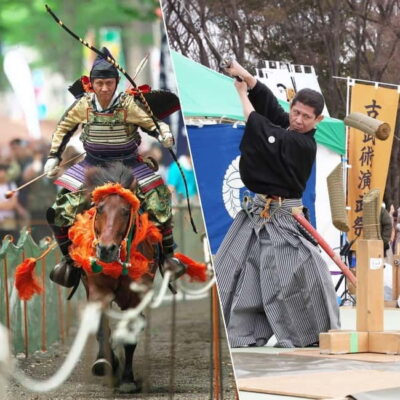
Samurai Sword & Archery Class from Samurai Descendant
Read our review →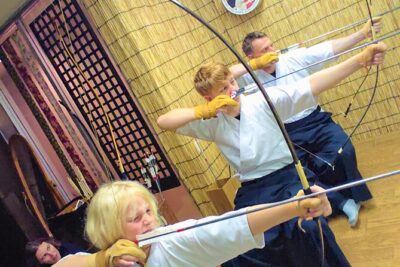
Japanesel Archery Experience HIROSHIMA CASTLE SHARAKU
Read our review →
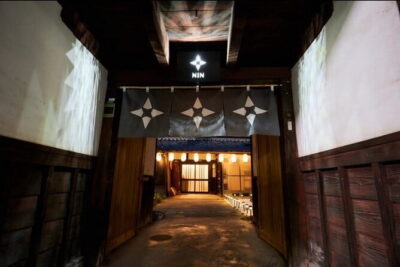
Authentic knife making experience at a blacksmith in Kyoto
Read our review →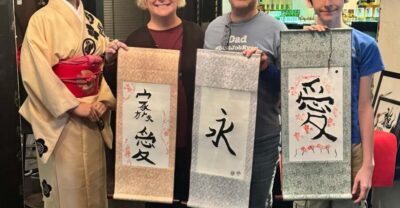
Browse the lists this tour appears in