
Review · JAPANESE CRAFT WORKSHOPS
Kyoto: Japanese Calligraphy Workshop
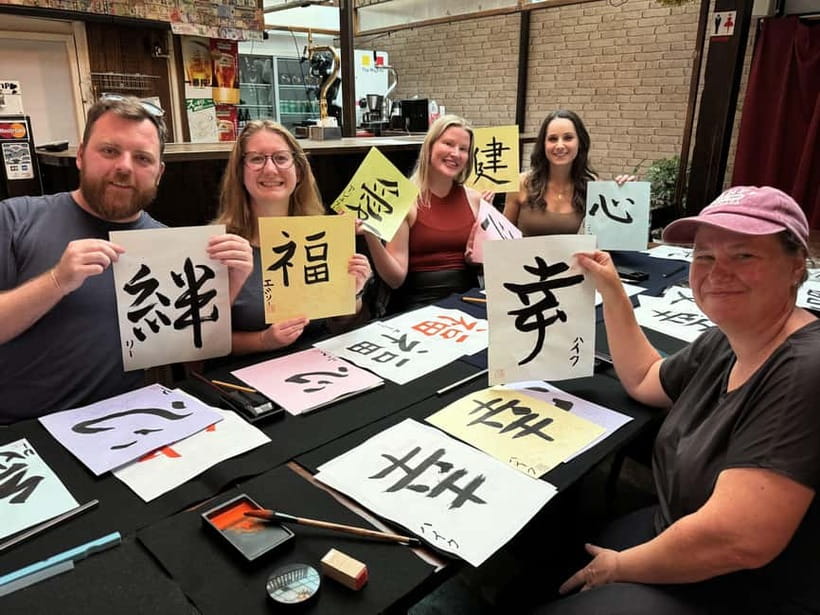
Kyoto gives you a new kind of souvenir. This hands-on Shodo workshop teaches you the basics of Japanese calligraphy in central Kyoto, at Gojo Paradiso by the Takase River. You walk in as a beginner and walk out with kanji you actually made yourself.
What I like most is the calm, step-by-step coaching, with a small group limited to 10 people. I also like that you get real guidance on stroke control and leave with a finished piece to keep. One drawback: it is not a fast one-off entertainment stop, it is a focused class, so if you want zero effort and pure sightseeing, this may feel like work.
In This Review
- Key things that make this Kyoto calligraphy class worth your time
- Shodo in central Kyoto, Gojo Paradiso by the Takase River
- Who this workshop fits best, and who should skip it
- 1 to 2 hours of step-by-step calligraphy practice
- 1) A quick intro to what you are actually learning
- 2) Brush technique, stroke control, and first practice
- 3) Writing kanji characters, then your name
- 4) Photos, gallery browsing, and special orders
- Your take-home calligraphy, supplies, and the “I made this” feeling
- Price and value: how $32 makes sense for Kyoto
- Language support: English and Japanese instruction that actually helps
- Small-group logistics in real Kyoto terms, where to meet and how to get there
- Tips to get better strokes fast without stressing out
- Should you book this Kyoto calligraphy workshop?
- FAQ
- How long is the Kyoto Japanese Calligraphy Workshop?
- What does the workshop cost?
- Where do I meet for the class?
- Is the instruction available in English?
- Do I need to reserve in advance?
- How many people are in the group?
- Is it suitable for children?
- Is wheelchair access available?
Key things that make this Kyoto calligraphy class worth your time
- Small group instruction limited to 10 participants, so you do not get lost in the crowd
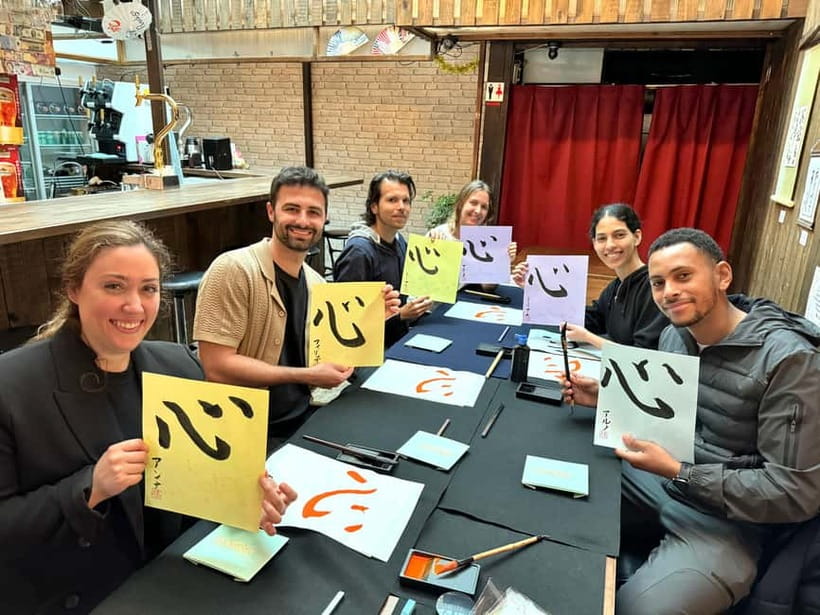
- Beginner-friendly pacing with basic brush strokes before you tackle characters
- Hands-on supplies included, so you can just show up and start moving the brush
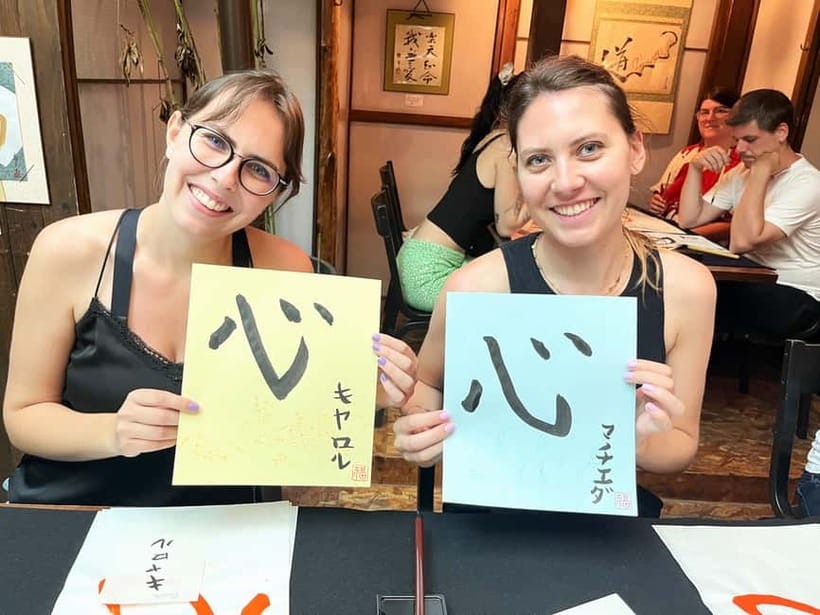
- Take-home masterpiece on rice paper, plus your name written in kanji (and often a teacher stamp)
- Quiet, teacher-led practice with patient help, including assistants in the room
- Central Kyoto location near Kiyomizu Gojo and Shichijo Stations, easy to fit into a day
Shodo in central Kyoto, Gojo Paradiso by the Takase River
This is one of those Kyoto activities that changes how you see the city, even if you never become a calligraphy person at home. Shodo is art, yes, but it is also a skill. When you practice with a brush, you feel how control, pressure, and timing create the look of kanji.
Gojo Paradiso is an easy-to-find meeting spot along the Takase River on Kiyamachi Street. If you are already in the Kiyomizu Gojo area or moving between central sights, this workshop is designed to be a simple stop, not a long commute. The studio setting also matters. Several people describe the class as quiet and well organized, which is exactly what you want when you are trying to copy strokes carefully.
More Craft Workshops in Kyoto
- Authentic knife making experience at a blacksmith in Kyoto
★ 4.8 · 350 reviews - 1-Hour Japanese Archery Experience in Kyoto
★ 5.0 · 176 reviews - Kyoto: Calligraphy class at Buddhist temple in city center
★ 5.0 · 167 reviews
Who this workshop fits best, and who should skip it
This workshop is for beginners. The class walks you through basic brush strokes first, then moves into writing characters, so you are not staring at a blank page wishing you had learned Japanese handwriting in school.
It also fits a lot of trip styles:
- Couples who want a shared, low-stress activity
- Solo travelers who like skill-based experiences
- People who want a break from temples and crowds
One important limit: it is not suitable for children under 10. If you are traveling with younger kids, you will need to find another activity for that age group.
1 to 2 hours of step-by-step calligraphy practice
Plan on a lesson that runs about 1 to 2 hours, depending on the session time you book. The structure stays focused, so you are not bouncing around from station to station. Instead, you build.
Here is what you can expect during the class:
1) A quick intro to what you are actually learning
You start with a short foundation on the history and meaning of Japanese calligraphy. This matters more than it sounds. When you know the basic idea behind a stroke, you tend to practice with purpose rather than just copying shapes.
A different sort of day in Japan:
- PERFECT KYOTO 1-Day Bus Tour
★ 5.0 · 13,518 reviews - Kyoto: Fushimi Inari, Kinkakuji, Bamboo Grove 1 Day Bus Tour
★ 4.8 · 4,316 reviews - Kyoto: Tea Ceremony in a Traditional Tea House in Kiyomizu
★ 4.9 · 3,519 reviews - Kyoto Geisha Walking Tour: Gion District & Hidden Gems
★ 4.7 · 3,273 reviews
2) Brush technique, stroke control, and first practice
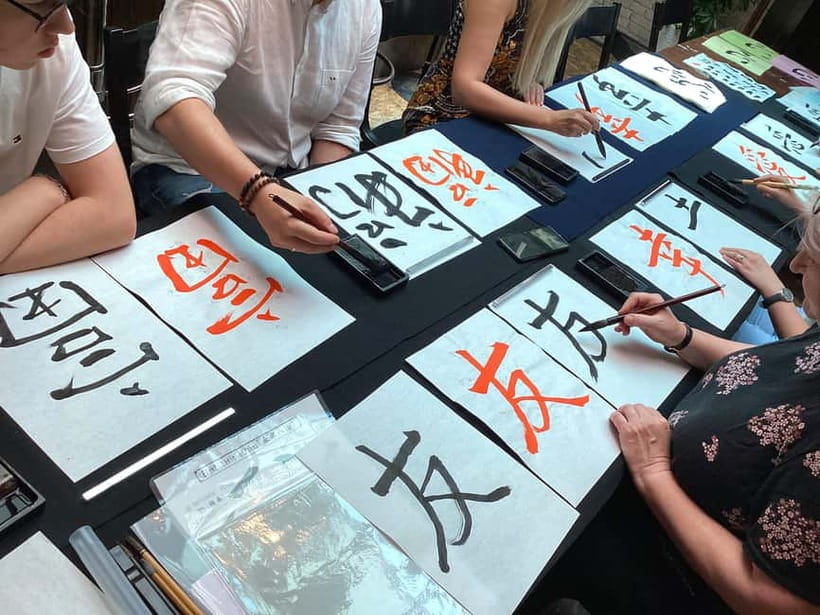
Next comes the hands-on part. You practice basic brush strokes first, learning how the brush moves and how ink behaves on rice paper. This is where beginners improve the fastest, because you are training muscle memory for the building blocks of kanji.
You also get instructor help in real time. The class is described as organized, with patience and encouragement, and instructors take time with each person’s exercises. In at least one class described, the teacher is Takako, described as a calligraphy master with formal training and awards, and supported by helpers in the room. Even if your teacher is different, the teaching style you want is consistent: clear directions, and help when your stroke is not flowing the way you expected.
3) Writing kanji characters, then your name
After stroke practice, you move to writing kanji characters. This is the moment where it starts to feel magical. A kanji is not just a symbol, it is a set of strokes with a rhythm, and the workshop helps you get that rhythm without prior knowledge.
Many participants also write their names in kanji, guided by the instructor. You may also find the class includes signing and teacher stamping on your finished rice paper. That last step is the sort of finishing touch that makes your take-home piece feel official, not like a rough practice sheet.
4) Photos, gallery browsing, and special orders
In the final part, you can take photos, explore a gallery, and place special orders. This is a nice add-on because it turns your workshop from purely hands-on practice into a mini cultural visit at the end. You are not rushed out the door after finishing your character.
Your take-home calligraphy, supplies, and the “I made this” feeling
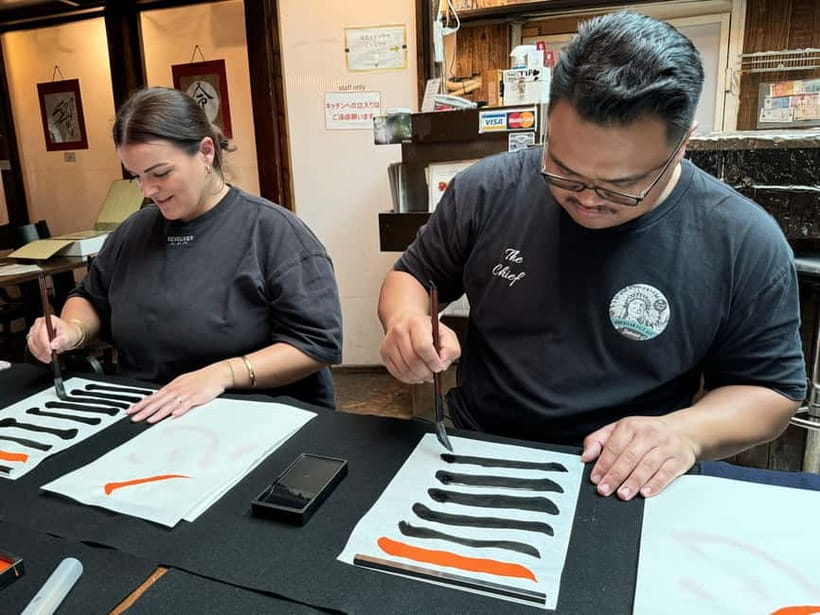
The workshop includes everything you need: an expert instructor, supplies, and the structure to create a finished work. That is a big deal in Japan, because half the barrier for cultural activities is simply figuring out what to buy and how to use it.
You leave with your own calligraphy on rice paper. People describe the materials as high quality, and the teacher stamps the piece and signs names in kanji in at least some sessions. Even if your first attempt is not perfect, you still end up with a real, crafted souvenir.
There is also often an extra human touch. Some classes include a small take-away gift from the teacher, such as a teacher-made piece accented in gold. Not every workshop may do the exact same thing, but the overall pattern is clear: the teacher is invested in your final product and in making you feel proud of it.
And yes, you should bring your best tourist brain for this part. Take a few photos during the practice and again at the end. Calligraphy is subtle, and your finished piece looks better later when you remember what each stroke was supposed to do.
Price and value: how $32 makes sense for Kyoto
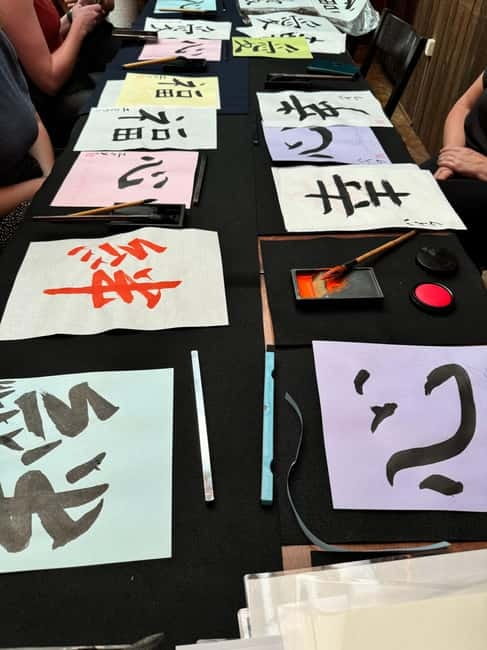
At $32 per person for a small-group, instructor-led art class, the value is pretty straightforward. You are paying for three things that are hard to DIY:
1) A real teacher who shows you how to hold and move the brush
2) Supplies included (so you are not hunting for the right paper and ink)
3) Structured time that results in a finished piece you can take home
If you compare this to a typical guided experience, this class gives you a lasting artifact. You are not just observing. You leave with something you can frame or keep in a folder.
Also, the small group limit matters. With up to 10 participants, you are more likely to get direct feedback and individual attention, which is exactly what you need when you are learning brush control. That extra time with the instructor is what turns a beginner session into a rewarding one.
Language support: English and Japanese instruction that actually helps
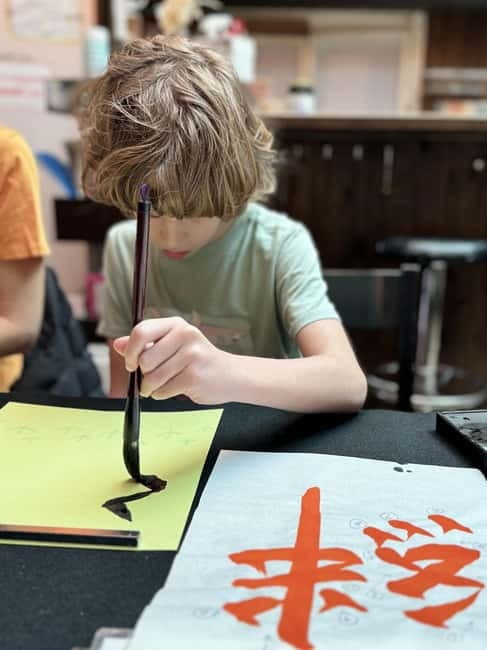
The instructor works in English and Japanese. This is one of those details that can make or break a class. When instruction is clear, you do not waste time guessing. You just practice and improve.
Several people highlight that the teacher spoke good English and gave clear instructions, with patience when you needed help. You can take that as reassurance that you will not be abandoned in silence while you try to copy strokes.
If you are nervous about your Japanese skills, do not be. This workshop is built for beginners and focuses on visuals and hands-on technique. Your main job is to copy the motion and apply what the instructor tells you.
Small-group logistics in real Kyoto terms, where to meet and how to get there
Meeting point is Gojo Paradiso, along the Takase River on Kiyamachi Street. It is listed as a 5-minute walk from Keihan Kiyomizu Gojo Station and a 10-minute walk from Keihan Shichijo Station. It is also noted as 386 meters from Kiyomizu Gojo Station, so you can confidently navigate using map apps or street signs.
Duration is 1 to 2 hours, and you should check starting times for your day. That matters because Kyoto days can run long, and this class needs you to show up ready to focus.
For timing, I recommend scheduling it earlier rather than later. Your brain works better when you are not already exhausted from temple-hopping. If you do it mid-day, plan a light food stop before you go, so you are not trying to concentrate with a snack emergency.
Tips to get better strokes fast without stressing out
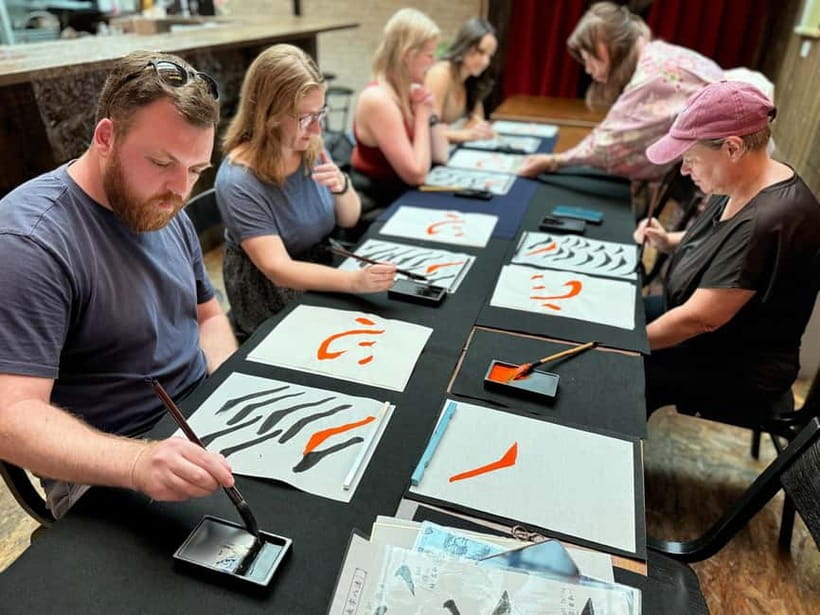
Calligraphy has a learning curve, but you do not need to be tense about it. You do not need artistic talent, you need a few practical habits.
Here is what helps most:
- Go with the instructor’s grip and brush angle. Small changes make a big difference in stroke shape.
- Slow down for the hard part. The first few attempts might look uneven, that is normal.
- Treat your session like practice, not a test. You are there to learn brush control, not to produce a museum piece.
- Use the name-writing moment intentionally. Writing your own name in kanji is usually the most satisfying part because it makes the art personal.
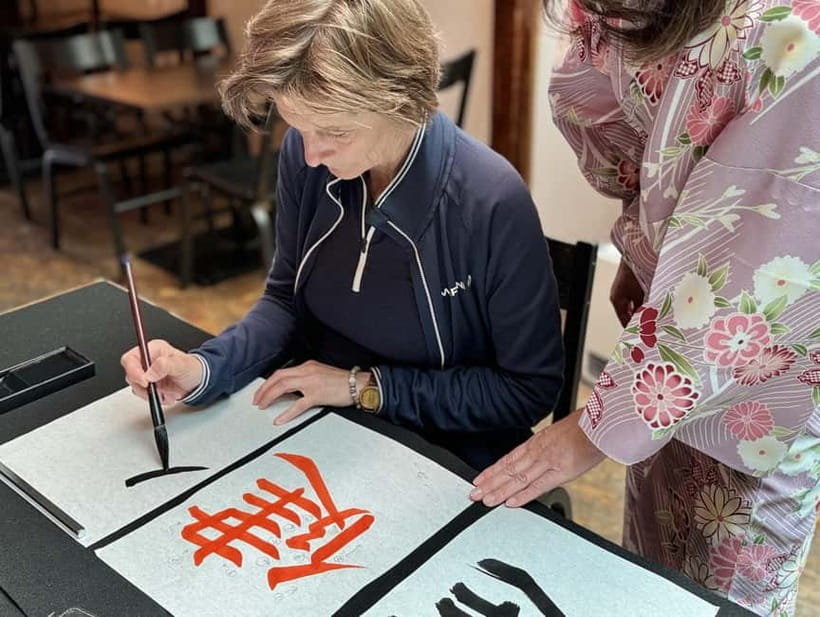
You will also likely notice the teacher and helpers working with each person directly. In one description, the instructor spent time individually with each participant during exercises. That kind of guidance is exactly why a guided class beats self-guided arts and crafts.
Should you book this Kyoto calligraphy workshop?
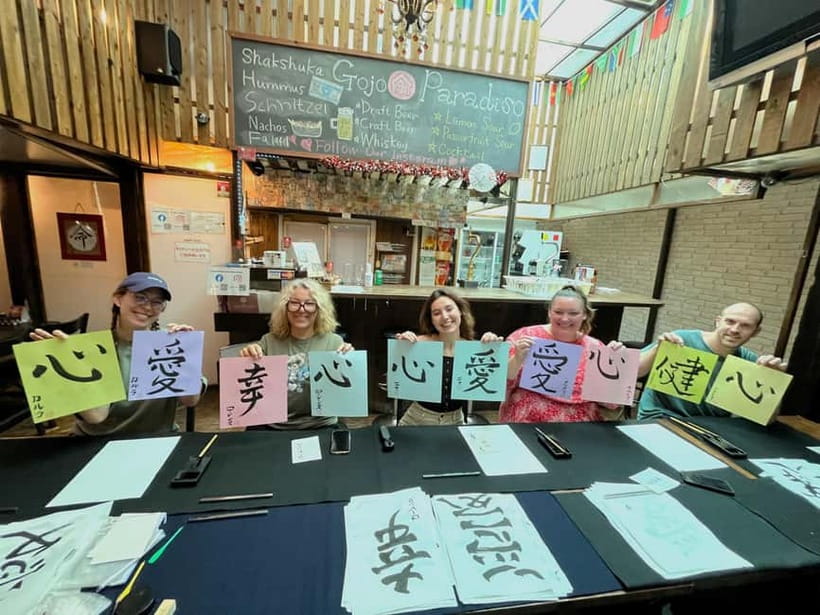
If you want a hands-on cultural activity in Kyoto that produces an actual keepsake, book it. This is a good fit for beginners, for couples, and for anyone who appreciates learning a skill rather than only sightseeing. The small group size and the step-by-step stroke practice are the reasons it works.
Skip it only if you are looking for something passive and fast. This workshop is structured, and you will be using your hands and paying attention for the full session.
FAQ
How long is the Kyoto Japanese Calligraphy Workshop?
The workshop runs 1 to 2 hours, depending on the session time available.
What does the workshop cost?
The price is $32 per person.
Where do I meet for the class?
Meet at Gojo Paradiso on Kiyamachi Street along the Takase River. It is about a 5-minute walk from Keihan Kiyomizu Gojo Station and about a 10-minute walk from Keihan Shichijo Station.
Is the instruction available in English?
Yes. The instructor provides instruction in English and Japanese.
Do I need to reserve in advance?
Yes. You need to reserve at least 1 day in advance.
How many people are in the group?
It is a small group, limited to up to 10 participants.
Is it suitable for children?
It is not suitable for children under 10 years.
Is wheelchair access available?
Yes. The workshop is wheelchair accessible.
Newly listed around Kyoto
- Taste of Nishiki Market Walking Food Tour with Local guide★ 5.0 · 17 reviews
- Kyoto: Sushi Making Class with Sushi Chef★ 4.8 · 64 reviews
- Simple Plan with Maiko★ 4.4 · 10 reviews
- Shibori Furoshiki Course at Kyoto Shibori Museum★ 5.0 · 21 reviews
- Kyoto: City Secrets eBike Tour★ 4.9 · 196 reviews
- Sacred Pathways: Discover the Philosopher’s Path of Kyoto★ 4.9 · 20 reviews
- Private Tour to Monkey Park and Arashiyama Highlights★ 5.0 · 22 reviews
- Private Nara Tour from Osaka – Meet at Your Hotel★ 5.0 · 22 reviews
Japanese Craft Workshops, compared.
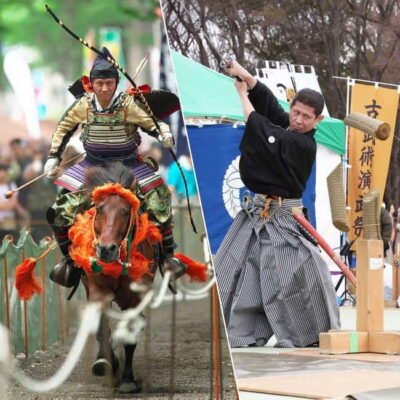
Samurai Sword & Archery Class from Samurai Descendant
Read our review →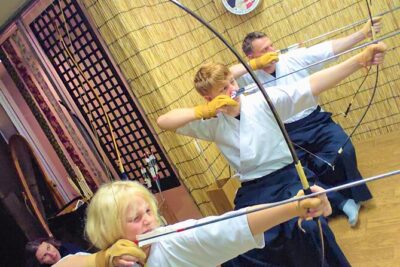
Japanesel Archery Experience HIROSHIMA CASTLE SHARAKU
Read our review →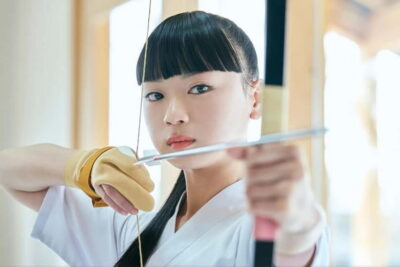
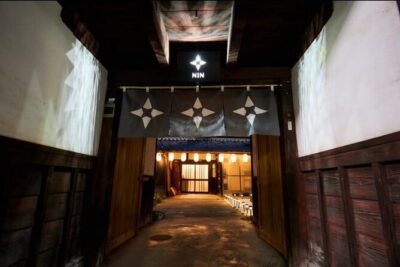
Authentic knife making experience at a blacksmith in Kyoto
Read our review →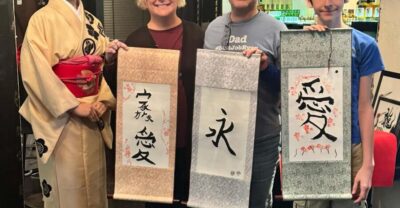
Browse the lists this tour appears in