
Review · JAPANESE CRAFT WORKSHOPS
Kyoto Ninenzaka : Japanese Calligraphy Class in Townhouse
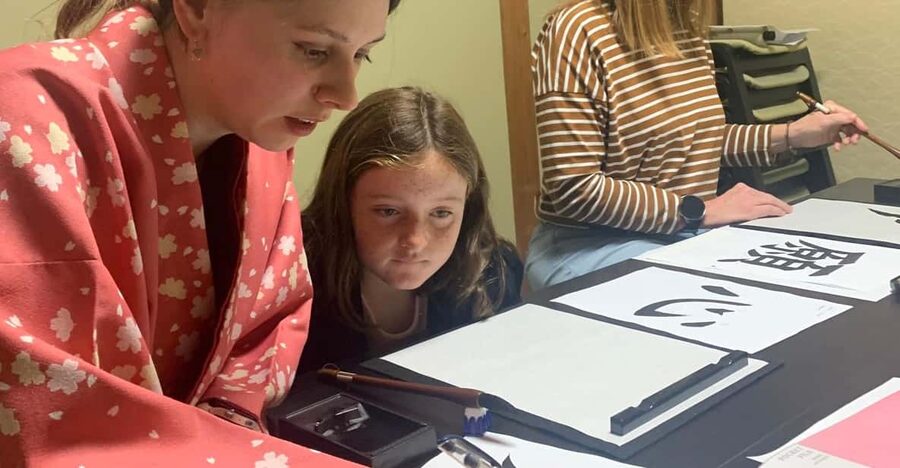
Kyoto teaches by slowing you down, and this shodō class does exactly that. You practice real Japanese calligraphy in a quiet townhouse setting, with guided instruction and a take-home piece you can frame or gift. I like that it is beginner friendly, and I also love the close guidance that helps you get your brush pressure and spacing right fast.
Your location is a big part of the appeal too. The meeting point is near Kiyomizu Temple, at the end of the alley next to the Starbucks on Ninenzaka, so the class fits naturally into a sightseeing day without feeling like a detour.
One thing to consider: this is a short, hands-on workshop, so you will not leave with fluency. You’ll get fundamentals and a finished kanji, but if you want deep artistic training, you may want a longer session later.
In This Review
- Key Reasons This Kyoto Shodō Class Works
- Finding the Class Near Kiyomizu Temple and Ninenzaka
- What Happens in 50 Minutes of Shodō Practice
- Tools, Ink, and Paper Setup (Where Good Strokes Start)
- Brush Handling: Pressure, Angles, and Stroke Control
- Writing Basic Kanji with Balance and Placement
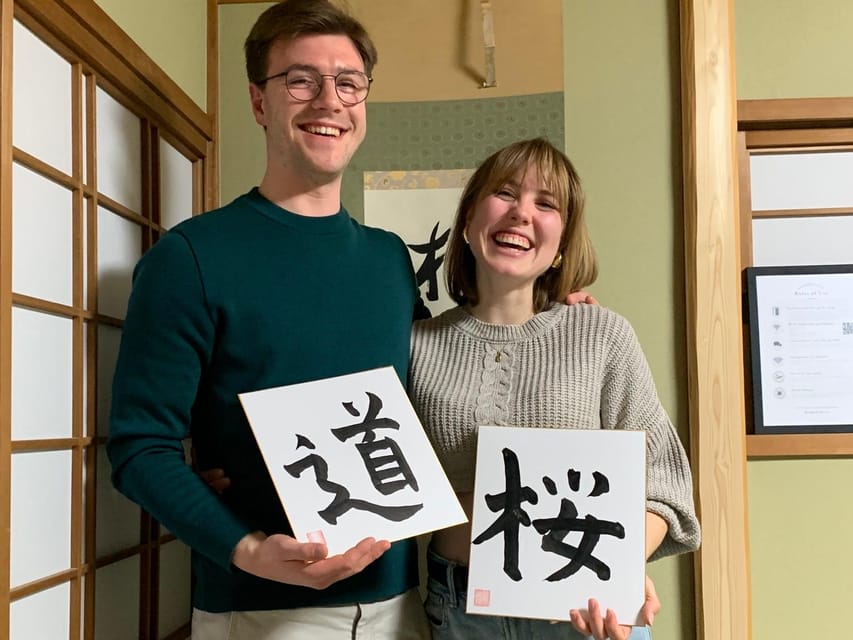
- The Take-Home Souvenir You’ll Actually Want to Keep
- Who This Kyoto Calligraphy Class Is Best For
- Price, Time, and Value for $49 Per Person
- What You Need to Bring (and the Rules That Keep It Smooth)
- Should You Book This Kyoto Shodō Workshop?
- FAQ
- Where is the meeting point?
- How long is the calligraphy class?
- How much does it cost?
- Is it beginner friendly?
- What language is the class taught in?
- What do I need to bring?
- What if I forget socks?
- Is kimono included?
- Is this class suitable for children?
- Are pets or large bags allowed?
- What do I take home?
Key Reasons This Kyoto Shodō Class Works
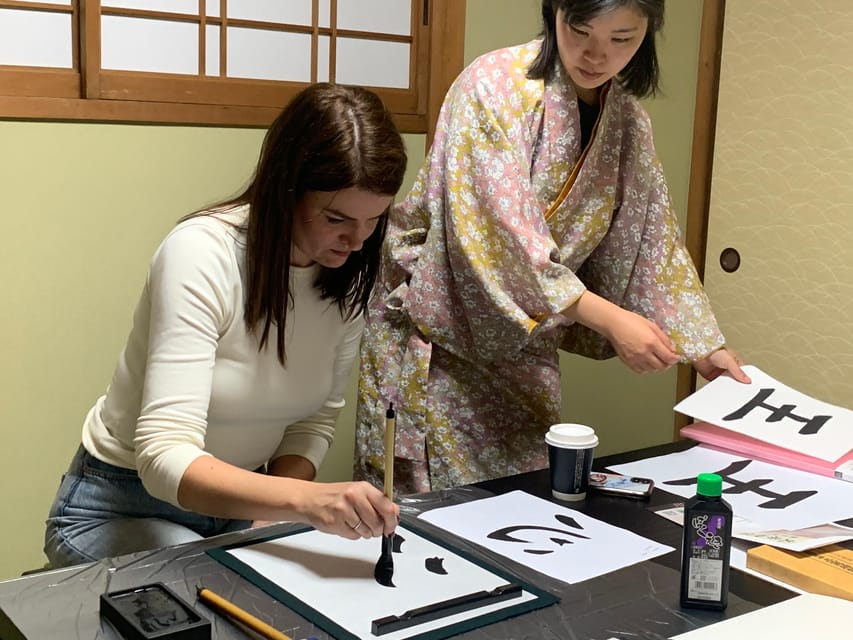
- Townhouse setting near Ninenzaka and Kiyomizu: easy to pair with a classic Kyoto walking route.
- True calligraphy basics: brush, ink, paper, and pressure taught from the start.
- A calm, focused pace: time is used for practice, not lectures that wander.
- You write simple kanji: you end with something real, not just practice scraps.
- Take-home souvenir: your finished piece becomes a lasting memory.
- Socks required, and messy clothes welcome: you come prepared and relax into the process.
Finding the Class Near Kiyomizu Temple and Ninenzaka
This workshop is set up in a practical spot for visitors who want the Kyoto experience without overplanning. You meet at the end of the alley by Ninenzaka, next to the Starbucks near Kiyomizu Temple. That matters because Ninenzaka is one of those areas where you can easily lose track of time while walking between viewpoints, shops, and small side streets.
The alley location also explains the vibe. In a back-street townhouse, the noise level drops compared to the main lanes. You are not fighting foot traffic while trying to learn brush technique. If you are planning to visit Kiyomizu anyway, you can treat the class like a pause button between your morning walking and evening dinner.
A quick practical tip: wear shoes you can keep on and move with easily. The class asks you to bring socks and to wear clothes that can get dirty, so plan your outfit around ink risk and comfortable sitting.
More Craft Workshops in Kyoto
- Authentic knife making experience at a blacksmith in Kyoto
★ 4.8 · 350 reviews - 1-Hour Japanese Archery Experience in Kyoto
★ 5.0 · 176 reviews - Kyoto: Calligraphy class at Buddhist temple in city center
★ 5.0 · 167 reviews
What Happens in 50 Minutes of Shodō Practice
The full experience runs about 50 minutes, so you should expect a focused sequence. The flow is built to take you from basics to a finished kanji within a single session. That short format is a feature, not a compromise, because it keeps you practicing the parts that matter most: brush handling, ink use, and the shape logic behind Japanese strokes.
You start with context. The instructor introduces calligraphy, including its cultural background and how shodō connects to Japanese traditions. Then you move straight into materials, because with calligraphy, tools and technique are inseparable. If ink behaves differently, if your brush handling is off, your strokes will show it immediately.
After that, the class becomes mostly practice time with careful guidance. You learn how to hold the brush, adjust pressure, and translate what you see on paper into marks that look balanced. By the end, you are writing basic kanji with attention to vertical and horizontal balance and letter placement.
Because the class is beginner friendly, you do not need prior Japanese knowledge. You also do not need an art background. The teaching aims at giving you control, not testing your talent.
Tools, Ink, and Paper Setup (Where Good Strokes Start)
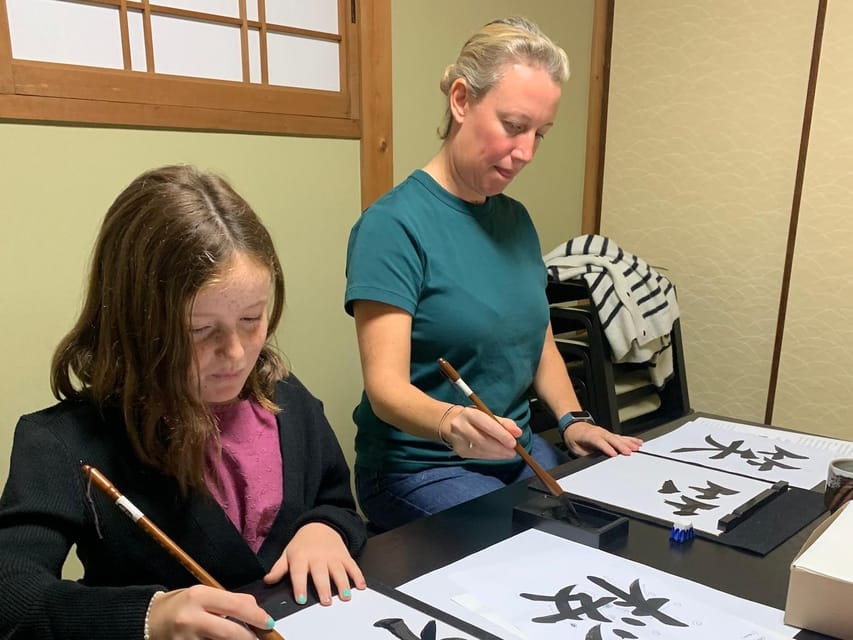
Before you write, you learn the essential tools and how to care for them. You cover what each item does in shodō, including brushes, ink sticks, inkstones, and the writing paper and paperweight. Even if you have watched calligraphy videos online, this part is where things click, because you see how the tools translate into stroke texture and consistency.
Here is why this matters for you: brush pressure and ink readiness affect everything you do. If the ink is too watery or too thick, your stroke line quality changes. If you do not treat the brush properly, the tip shape you need for dots and sweeps becomes harder to control.
You also learn how to prepare the writing area. Using the writing paper and paperweight is not just setup. It becomes part of the meditative rhythm of calligraphy. You spend time getting ready in the calm, methodical way shodō is traditionally practiced, rather than rushing straight to the first stroke.
Clothes that can get dirty is not a casual warning. Ink and brush work can be messy, even when you try to be careful. Plan for that, and you’ll feel free to focus on technique instead of worrying about your outfit.
Brush Handling: Pressure, Angles, and Stroke Control
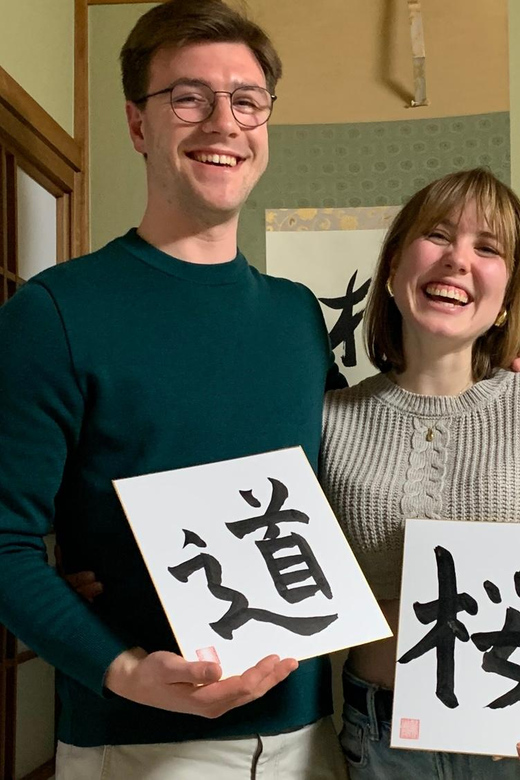
Brush technique is taught step by step. You receive instruction on how to hold the brush correctly, and how to adjust brush pressure so your strokes have the right character. This is the moment where a lot of people realize calligraphy is not just drawing. It is controlled movement.
You practice basic brushwork such as drawing lines, making strokes, and creating dots or sweeps. The dot and sweep work is especially useful because it teaches you how the brush tip behaves. Dots need a clean touch, while sweeps require a controlled release and smooth movement.
A helpful detail for your learning: you are guided carefully, so you can correct your grip and movement early, before it becomes a bad habit. In practice, the teacher and assistant pacing lets you ask questions when you get stuck on a specific stroke shape.
If you want to get the most from a short session, focus on two things while you practice: keep your hand steady at the start of each stroke, and commit to the full motion rather than stopping mid-stroke.
A different sort of day in Japan:
- PERFECT KYOTO 1-Day Bus Tour
★ 5.0 · 13,518 reviews - Kyoto: Fushimi Inari, Kinkakuji, Bamboo Grove 1 Day Bus Tour
★ 4.8 · 4,316 reviews - Kyoto: Tea Ceremony in a Traditional Tea House in Kiyomizu
★ 4.9 · 3,519 reviews - Kyoto Geisha Walking Tour: Gion District & Hidden Gems
★ 4.7 · 3,273 reviews
Writing Basic Kanji with Balance and Placement
The class ends with writing simple kanji characters. You work on vertical and horizontal balance and on letter placement, which is a big deal in shodō. In many other art styles, you can fix proportions after the fact. In calligraphy, the placement is part of the message, and the structure shows immediately.
So you are not only learning how to make a mark. You are learning how to distribute space. Even for beginners, this is satisfying, because you can see improvement quickly. One character becomes a reference point for spacing, another for balance, and soon you can tell why a stroke feels right or off.
Seasonal themes and expressions are included as part of your deeper understanding of Japanese culture through calligraphy. That means you are not just copying shapes. You are learning what the strokes can communicate, including how seasonal ideas and phrasing can appear in calligraphy choices.
The result is a take-home piece that feels personal, not generic.
The Take-Home Souvenir You’ll Actually Want to Keep
Your calligraphy stays with you. That take-home souvenir is one of the most practical reasons to book. Photos fade and memories blur, but a finished shodō piece becomes a physical reminder of a specific moment in Kyoto.
You might also find the included original booklet helpful after the class. When you try to recreate a stroke later, having a small guide keeps you from guessing and lets you practice with more confidence. Even if you never become an expert, it makes your souvenir more than a one-time event.
If you want to make the piece last, treat it like paper art. Keep it dry, avoid heavy handling, and consider framing once you get home. That small extra step turns your workshop output into a long-term memory.
Who This Kyoto Calligraphy Class Is Best For
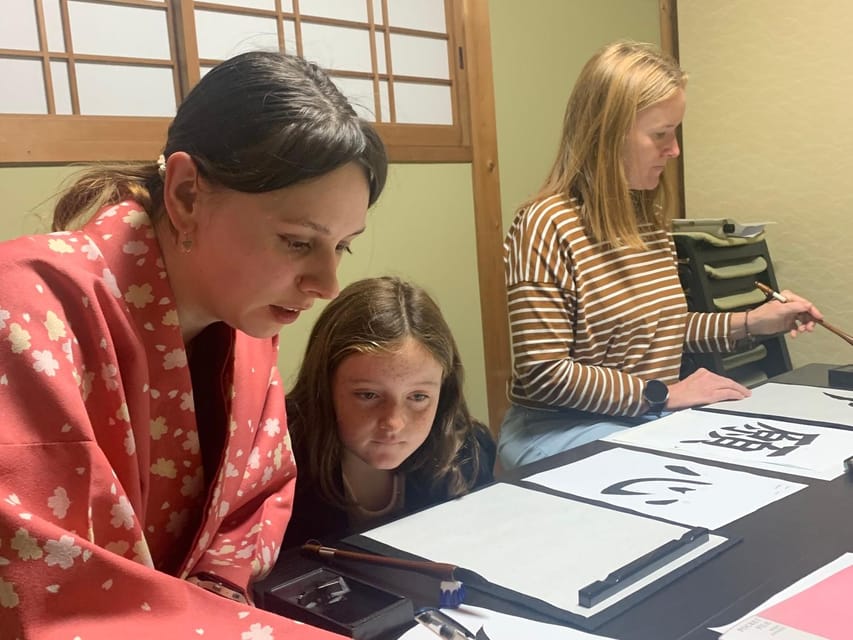
I think this fits best for travelers who want something calm and hands-on in Kyoto. If your trip is packed with temples and viewpoints, this is a good counterbalance. You sit, focus, and learn a craft you can repeat later.
It also works well for people who feel intimidated by traditional arts. The class is beginner friendly, and you do not need Japanese or prior art experience. The structure helps you move from basic tool knowledge to actual writing without requiring background knowledge.
It is not designed for very young children. It is not suitable for children under 10, and the environment includes rules like no noise and restrictions on items like large bags and selfie sticks. If you travel with kids, this may work only if they are old enough to follow directions comfortably and handle the messy material aspect.
You also should know the style of learning is English. The host or greeter is English, and the class is conducted in English if you reserve close to the day of the session.
Price, Time, and Value for $49 Per Person
For $49 per person with about 50 minutes of instruction, you are paying for two things: expert guidance and a finished souvenir created during the session. Calligraphy can seem simple from the outside, but the tools and technique are precise. That precision is exactly what you are buying.
Here’s how to think about value for your trip. If you only want to watch a craft, you could find demonstrations in Kyoto. If you want to learn the fundamentals enough to produce a piece you can keep, this format is efficient. You get taught preparation, brush handling, core stroke practice, and basic kanji construction all in one sitting.
Also, the location saves you time. Meeting near Ninenzaka and Kiyomizu means you can pair it with walking days rather than reorganizing your itinerary around transport. That is practical value that often gets ignored when people only compare ticket prices.
If you are sensitive to ink mess, choose clothes accordingly and you’ll feel the value more clearly. This class becomes enjoyable when you stop trying to stay perfectly clean.
What You Need to Bring (and the Rules That Keep It Smooth)
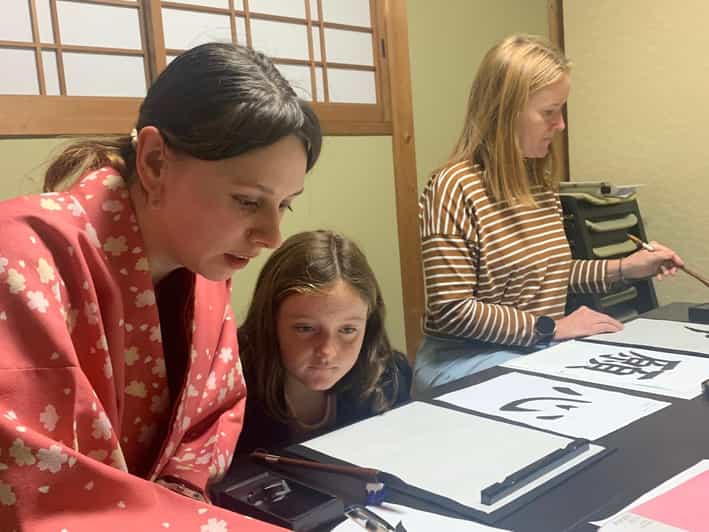
Bring socks. If you show up without socks, socks can be provided with a fee. Also wear clothes that can get dirty, since ink work may splash or stain.
Other practical reminders: you cannot bring pets, and you should avoid strollers and luggage or large bags. Selfie sticks are not allowed, and you are expected to keep noise low and follow indoor smoking restrictions. You also should not bring alcohol or drugs.
For a comfortable experience, wear simple layers. You will likely be sitting for the workshop. If you bring a small, easy-to-handle bag for essentials, you are more likely to stay relaxed while you write.
Should You Book This Kyoto Shodō Workshop?
Book it if you want a short, meaningful activity that feels very Kyoto, with real instruction and a take-home result. It is especially smart if you are near Kiyomizu and Ninenzaka anyway, because the meeting point is so convenient.
Skip it or consider another option if you are hoping for long-form calligraphy training. This is fundamentals plus a completed kanji, not multi-session mastery. Also, if you cannot wear socks or handle the idea of messy clothes, this might be stressful.
If you like learning crafts by doing, this $49, 50-minute class is a strong choice.
FAQ
Where is the meeting point?
The class meets near Kiyomizu Temple, at the end of the alley next to the Starbucks on Ninenzaka.
How long is the calligraphy class?
The duration is about 50 minutes.
How much does it cost?
The price is $49 per person.
Is it beginner friendly?
Yes. No Japanese or art experience is needed.
What language is the class taught in?
The class is English.
What do I need to bring?
You should bring socks and clothes that can get dirty.
What if I forget socks?
If you do not have socks on the day, socks can be provided for a fee.
Is kimono included?
Kimono is not included. (A kimono option is available as a 2-piece type kimono in paid add-on, based on the information provided.)
Is this class suitable for children?
It is not suitable for children under 10.
Are pets or large bags allowed?
Pets are not allowed, and luggage or large bags are also not allowed. Selfie sticks are not allowed too.
What do I take home?
You keep your finished calligraphy as a souvenir, and you receive an original booklet about calligraphy.
Newly listed around Kyoto
- Kyoto: Private Customizable Day Trip by Car★ 5.0 · 38 reviews
- Kyoto: Photo Shoot with a Private Vacation Photographer★ 5.0 · 8 reviews
- Kyoto Private Car Tour with Japanese Navigator (+Nara) T5★ 4.7 · 19 reviews
- Kyoto: Nishiki Market and Depachika Food Tour with a Local★ 4.7 · 76 reviews
- Kyoto: Hands-on Takoyaki and Okonomiyaki Cooking (1 Hour)★ 4.7 · 25 reviews
- Kyoto: Non-Verbal Theatre Show Tickets at GEAR★ 4.9 · 154 reviews
- Kyoto: Personalized Guided Private Tour★ 4.8 · 19 reviews
- Kyoto: Personalize, private tour (3h, 5h, 8h) [W/Car Option]★ 4.9 · 24 reviews
Japanese Craft Workshops, compared.
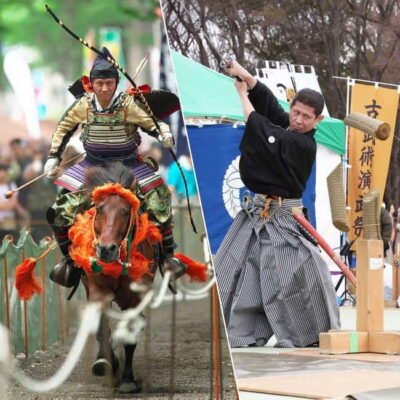
Samurai Sword & Archery Class from Samurai Descendant
Read our review →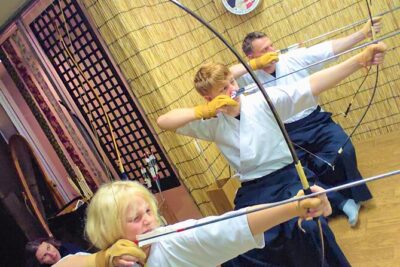
Japanesel Archery Experience HIROSHIMA CASTLE SHARAKU
Read our review →
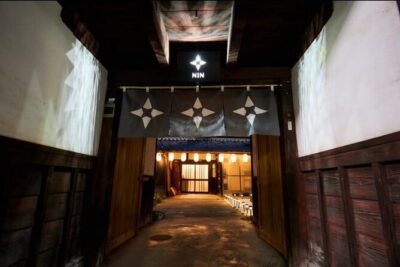
Authentic knife making experience at a blacksmith in Kyoto
Read our review →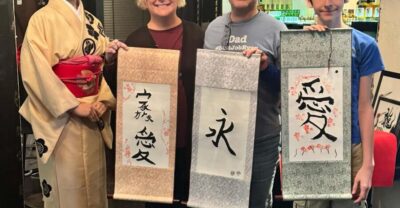
Browse the lists this tour appears in