
Review · HISTORICAL TOURS
Kyoto UNESCO World Heritage Sites 1d Tour from Osaka/Kyoto
Kyoto can feel like a movie set, but this route moves fast. You get Kinkakuji’s Golden Pavilion at the start and the option for a standout A5 Kobe Beef lunch, all wrapped into a 9 to 10 hour plan. The tradeoff is simple: it is a packed day, and weather or traffic can squeeze time at stops.
What I like most is how the day mixes postcard sights with big-spaces-that-hit-you-in-the-feelings moments, like the 1,001 golden Kannon statues at Sanjusangendo. Add a small group setting and a guide who can explain what you are looking at, including English and Chinese support. One thing to consider is that on busier days, English and Chinese groups may ride together.
Key to the experience is the human side. In one booking I saw, the guide Kaytu was praised for history knowledge, and you will feel that in how the stops connect. You are visiting four UNESCO World Heritage sites plus a lot of classic Kyoto scenery, with guided time at the big-ticket temples and more flexible time in neighborhoods.
In This Review
- Key highlights you will actually notice
- A long day plan from Osaka or Kyoto, and how to make it feel shorter
- Kinkakuji Golden Pavilion: why that 40-minute stop matters
- Arashiyama Bamboo Grove and Togetsukyo Bridge: the photo stop that earns its hype
- Kimono Forest, Tenryuji Temple, and Arashiyama free time you can actually use
- Sanjusangendo: the 1,001 golden statues and how to experience them in a crowd
- Kiyomizudera: the wooden stage, panoramic views, and Otowa Waterfall option
- Ninenzaka and Sannenzaka: finishing the day with traditional streets and shopping time
- The optional A5 Kobe Beef lunch: is it worth it?
- Guide, group size, and language support: how Kaytu can change your day
- Price and value: what $59 buys you, and what costs extra
- Who this Kyoto UNESCO World Heritage Sites day tour is best for
- Should you book it, or choose something slower?
- FAQ
- How long is the Kyoto UNESCO World Heritage Sites tour?
- What UNESCO World Heritage sites are included?
- Is lunch included?
- Does the tour include temple tickets?
- What languages does the guide speak?
- Where do I meet the tour and where do I get dropped off?
- What if traffic or weather causes changes?
Key highlights you will actually notice
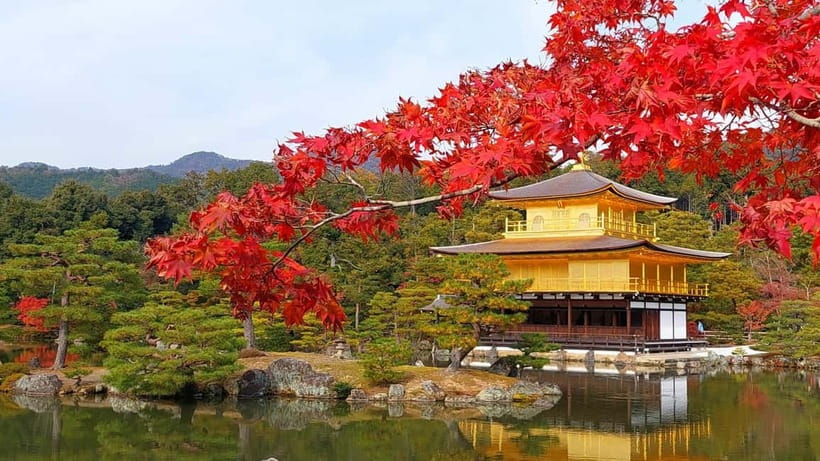
- Kinkakuji with Mirror Pond reflections, including the gold-leaf look from multiple angles
- Arashiyama Bamboo Grove and Togetsukyo Bridge, good walking and big photo payoff
- Sanjusangendo’s 1,001 golden Kannon statues, a whole hall that changes your pace
- Kiyomizudera’s wooden stage and panoramic views, plus optional time for the Otowa Waterfall area
- Optional A5 Kobe Beef lunch, an easy value add if you love food as much as temples
A long day plan from Osaka or Kyoto, and how to make it feel shorter
This is the kind of tour you book when you want Kyoto’s best-known spiritual and visual hits without the hassle of trains, tickets, and figuring out what to prioritize. Duration is about 9 to 10 hours, and you will ride in an air-conditioned vehicle with a small group when available.
Here is how to think about the timing. The morning is structured around major temples with set visit windows. Kinkakuji is about 40 minutes, Sanjusangendo is about 40 minutes, and Kiyomizudera gets about 80 minutes. In between, you get blocks of free time for photos, shopping, and wandering.
A practical note: the operator says the tour departs regardless of weather or traffic unless they notify you otherwise, and if severe traffic forces changes, planned attractions can be reduced without refund. So, you will get value most reliably when you keep expectations flexible. If you want the slow-and-calm version of Kyoto, consider a shorter temple-focused tour instead. If you want the greatest hits in one day, this fits.
More History Tours in Kyoto
- Kyoto Gion Historical Walking Tour
★ 5.0 · 188 reviews - Historical Kyoto E-Bike Tour
★ 5.0 · 181 reviews - Kyoto: Private 2.5 Hour Historical Walking Tour
★ 4.9 · 121 reviews
Kinkakuji Golden Pavilion: why that 40-minute stop matters
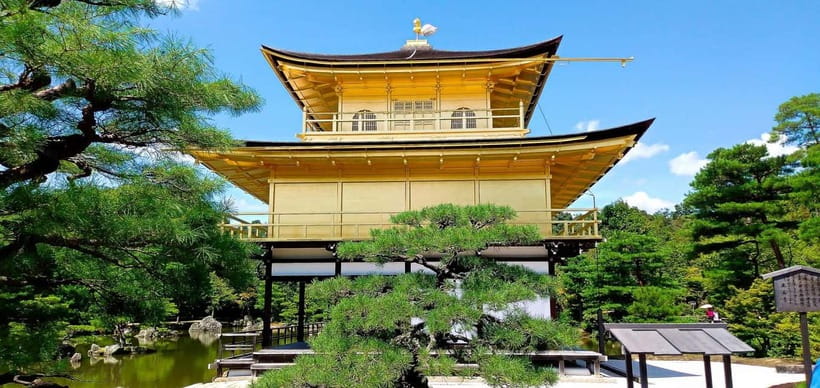
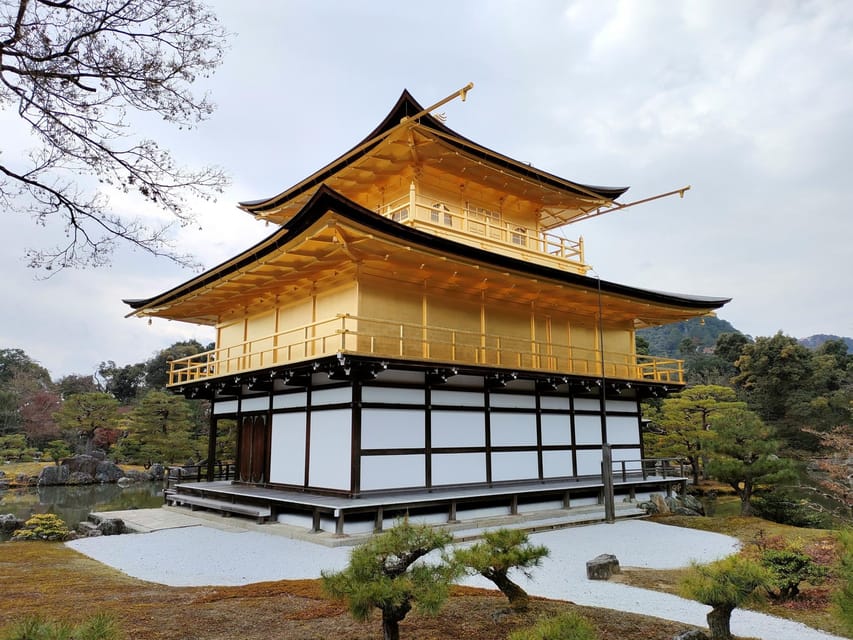
Your day starts at Kinkakuji, the Golden Pavilion. This Zen temple is famous for its shimmering gold leaf, and you get a guided visit time of about 40 minutes. The standout visual is the way the Mirror Pond can reflect the pavilion, creating that iconic harmony between architecture and water.
What I like about this stop is that you are not just looking at a building. The guide time helps you connect what you are seeing with the meaning people attach to it, especially in Zen contexts where design and placement matter. If you arrive with a little patience, the reflection moment is usually worth it, because you can angle yourself toward the pond view rather than only staring straight at the pavilion.
Two tips that help in a short slot:
- Wear shoes you can move in, because even with a time limit, you will want to reposition for the best pond angles.
- Bring a phone camera habit, not a perfection habit. The magic is in the overall look, so move quickly and capture the reflection without losing time at the same spot.
Tickets for Kinkakuji are included, so you are not spending your limited morning time lining up or figuring out admission.
Arashiyama Bamboo Grove and Togetsukyo Bridge: the photo stop that earns its hype
After Kinkakuji, you head west to Arashiyama, where the pace shifts from formal temple grounds to scenic walking. This section runs around 2.67 hours, including a photo stop, sightseeing, and time for lunch and free wandering, depending on your plan for the optional meal.
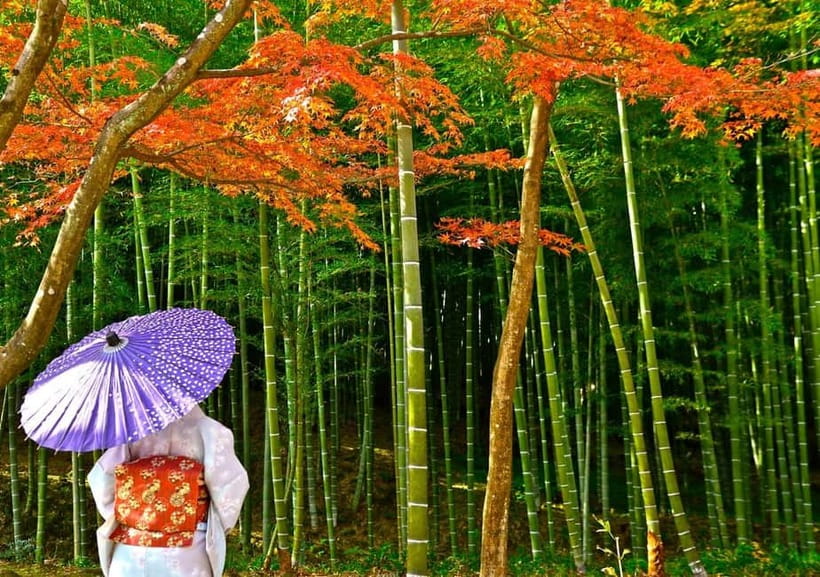
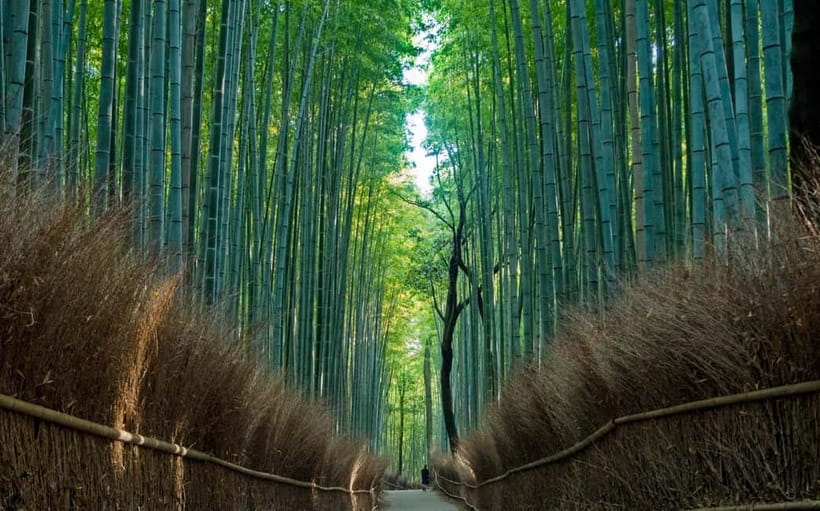
The biggest set-piece here is the Bamboo Grove. Expect towering stalks, filtered light, and that “cathedral” feeling where sound seems to change as you move. It is one of those places where the visuals are strong, but the atmosphere is the real reason people remember it.
Right after that, you get a photo stop at Togetsukyo Bridge, with time to visit and wander. The bridge view centers on mountains and reflections over the Katsura River area. Even if you do not spend forever at the railing, the view gives you that instantly recognizable Arashiyama look.
One consideration: Arashiyama can draw crowds, and your time is limited by the overall 9 to 10 hour schedule. If you want fewer people in your photos, aim to move with the group, then take your own few minutes once you see where the flow thins out. Also, plan your photos like a sprint, because you want energy left for the later temple halls.
Kimono Forest, Tenryuji Temple, and Arashiyama free time you can actually use
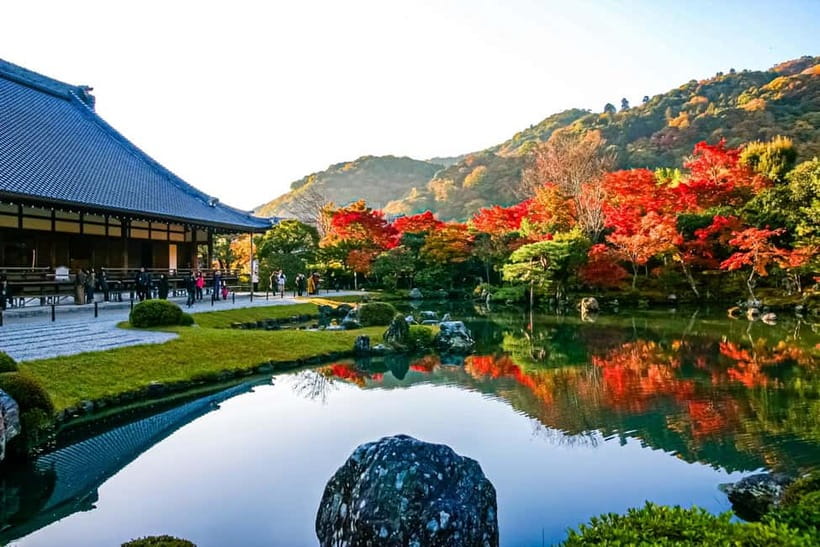
In Arashiyama, you do not just do bamboo and bridges. The route also includes additional photo and sightseeing stops, including the Kimono Forest photo stop. This is exactly what it sounds like: a quick photo opportunity and then back into free time.
You will also visit Tenryuji Temple. Your schedule gives you time for the visit, plus free time for sightseeing and wandering. Since this tour is built around four UNESCO World Heritage sites, Tenryuji is one of the UNESCO stops in your day, alongside Kinkakuji, Sanjusangendo, and Kiyomizudera.
Here is the practical way to benefit from this block:
- Use the guided portion to anchor the big ideas, then
- Spend free minutes just soaking in the layout, gardens, and walking rhythm.
In Arashiyama, that rhythm matters. If you rush everything like you are racing a checklist, the “Kyoto feeling” can vanish. If you slow down for a couple minutes between landmarks, you will feel the difference.
And if you are a shopper, this is one of your better windows. The schedule explicitly includes shopping time in Arashiyama, and later your day adds shopping streets around Kiyomizudera.
A few more Kyoto days to weigh up
- From Kyoto: Nara History Guided Half Day Bus Tour with Lunch
★ 4.8 · 114 reviews - 4.5-hr Kyoto Historical Highlights Bike Tour with UNESCO
★ 4.7 · 13 reviews - Cycling Tour at Uji’s Matcha Green Tea Fields and Heritage
★ 5.0 · 10 reviews - World Heritage Shirakawa-go and Experience Tours from Kanazawa
★ 5.0 · 4,049 reviews
Sanjusangendo: the 1,001 golden statues and how to experience them in a crowd
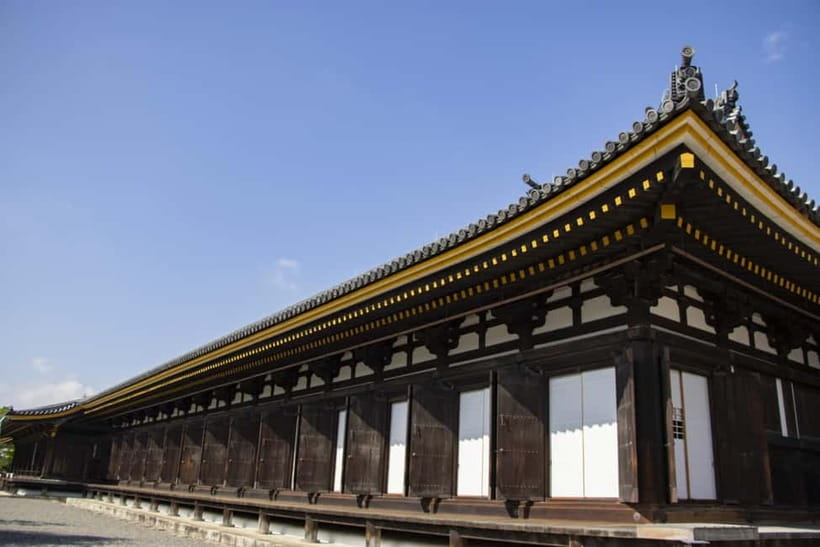
One of the most dramatic moments in this tour is Sanjusangendo. You get about 40 minutes, and this is where the emotional tone changes.
Sanjusangendo is known for its long wooden hall, and inside you see 1,001 life-sized statues of Kannon, the Goddess of Mercy. The tour description frames it like an “army of compassion,” and the scale is hard to process until you are standing there and looking down the row.
The reason this stop works so well on a day tour is that it gives you variety. Kinkakuji is about reflection and elegance. Arashiyama is scenery and atmosphere. Sanjusangendo is intensity. The hall layout makes you slow down naturally, even if the day is busy.
A useful way to not feel rushed here:
- Look from one end first, then shift your viewpoint partway down the hall.
- Spend a minute scanning the golden statues, then spend your next minute letting your eyes rest. That second pause makes the space feel larger.
Tickets for Sanjusangendo are included, so you do not lose time to admission logistics.
Kiyomizudera: the wooden stage, panoramic views, and Otowa Waterfall option
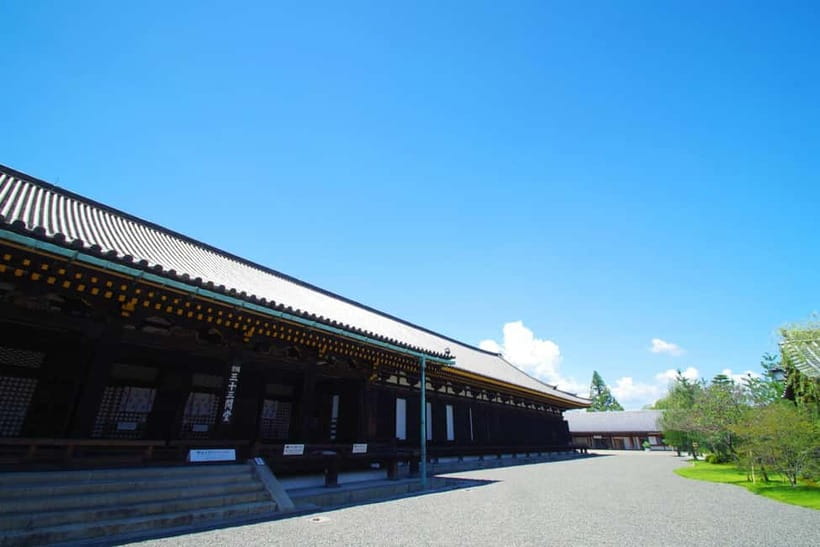
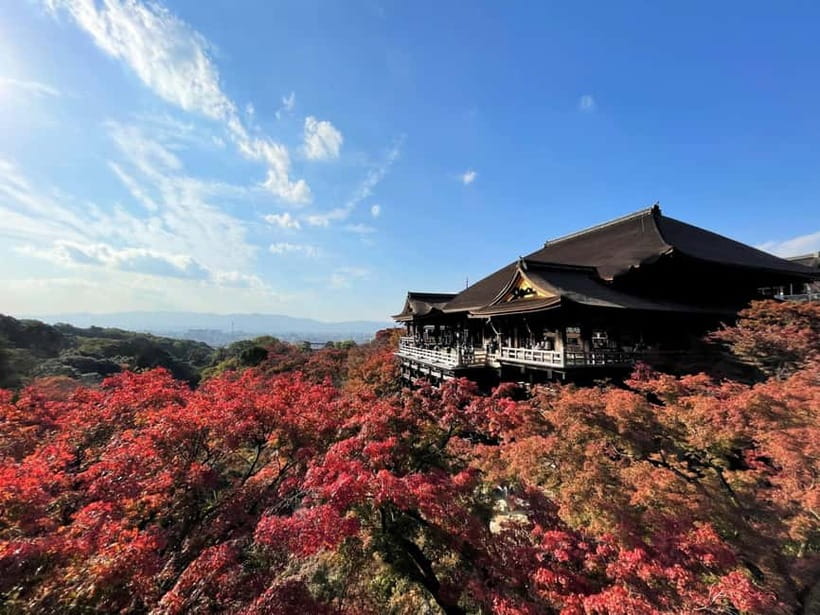
The final UNESCO stop is Kiyomizudera, the Temple of Pure Water. You get about 80 minutes, which is generous compared with the other major sites. This gives you room to see the iconic architecture and still have time to enjoy the surroundings rather than only snapping photos and leaving.
Kiyomizudera’s star is its massive wooden stage built without a single nail. The tour info also emphasizes panoramic views from the area, with scenery that can shift depending on season. If you like photographing from elevated points, this is one of your best chances of the day.
Before you leave, you can also visit the Otowa Waterfall area. The water is described as sacred, with promises tied to health, longevity, and success. Even if you are not into the spiritual claims, the stop adds another sensory layer beyond the stage view. Water has a way of making a place feel cooler and calmer.
The schedule also includes Kiyomizudera Koyasunoto Pagoda as part of your visit. After that, you move into neighborhood wandering time.
Ninenzaka and Sannenzaka: finishing the day with traditional streets and shopping time
After Kiyomizudera, you head to Ninenzaka and Sannenzaka. Both are visited with time for shopping, and this is where the tour pivots from temple architecture into street-level Kyoto.
This part of the day can be surprisingly valuable, even if you are not a big shopper. Those streets are great for:
- Finding small gifts you can actually carry home,
- Using the last hour to people-watch and slow down, and
- Getting a feel for what Kyoto looks like when it is not just temple signage and tour groups.
If your feet are tired by then, do not force big purchases. Treat it like a stroll. The best part is often just walking and soaking up the atmosphere with zero “must see every inch” pressure.
The optional A5 Kobe Beef lunch: is it worth it?
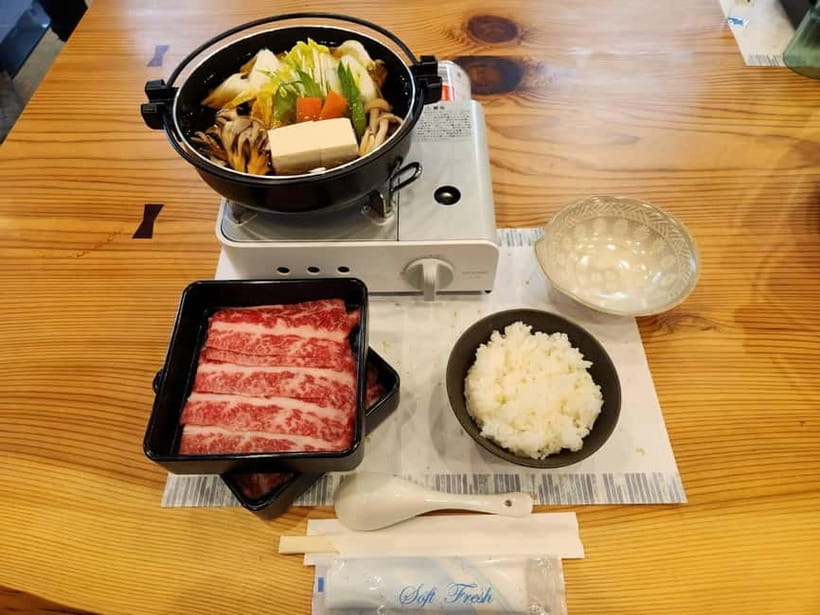
This tour offers an optional A5 ranked Kobe Beef lunch, described as world famous with famous marbling and a melt-in-your-mouth texture. It is included only if you select the lunch option, so you are choosing to spend extra for a meal built into a day that already covers major sights.
So is it worth it? In a day tour like this, it can be a great value if you:
- Plan to eat lunch anyway, and
- Want a single “food moment” that you can anchor your day around.
You also get a practical benefit. Lunch timing helps you avoid the most common problem with Kyoto day planning, where you wander hungry, then waste time trying to find a place that works for your schedule. When the meal is built into the route, you keep your momentum.
If you are traveling on a tighter budget, skip it and use the time for a simpler meal during your Arashiyama free time. You will still get plenty of Kyoto scenery, and the rest of the tour includes major paid attractions like Kinkakuji and Sanjusangendo tickets.
Guide, group size, and language support: how Kaytu can change your day
You will travel with an English / Chinese-speaking guide, and the tour is described as having small group available. One detail to keep in mind: the operator notes that depending on participant numbers, English-speaking and Chinese-speaking guests may have to share the same bus.
That is not necessarily bad. It often means the group is larger than the “small” label suggests on certain days. The key is that the guide should still provide context as you move between sites.
In the booking I saw, the guide Kaytu was specifically praised for being knowledgeable about history. Even if you only catch a few points during each stop, that kind of history grounding makes the sites feel connected, not random. You start to see patterns in layout, purpose, and aesthetic choices.
Price and value: what $59 buys you, and what costs extra
The listed price is $59 per person, and the tour duration is 9 to 10 hours. Importantly, included items include an air-conditioned vehicle, an English/Chinese-speaking guide, and tickets for Kinkakuji and Sanjusangendo.
That means you are paying for both transportation and major admission costs at key stops. The optional part is lunch. So the value question is really: do you want a premium food moment today, or would you rather keep spending focused on the temples and scenic walking?
If your goal is seeing the major UNESCO sites efficiently, the included tickets help the price feel more reasonable. If you are the type who likes long stays at one or two places instead of covering four UNESCO sites in a day, this price might feel like you are paying for speed. In that case, you might choose a slower, more focused tour.
Who this Kyoto UNESCO World Heritage Sites day tour is best for
This tour fits best if you:
- Want to cover Kinkakuji, Tenryuji, Sanjusangendo, and Kiyomizudera in one day,
- Like a mix of temples and scenic districts, and
- Prefer a guided plan that handles key logistics like ticketing at the major included sites.
It may not fit if you:
- Hate tight timing and want long, unstructured time at each landmark,
- Need the ability to alter the route easily if you get delayed, or
- Want a low-crowd experience. This route focuses on big icons, and those are usually popular.
Also, a simple rule: arrive early to the meeting point. The tour says you should arrive 10 minutes before departure, and they do not accommodate delays or wait for any reason.
Should you book it, or choose something slower?
Book this tour if you want Kyoto’s most recognizable UNESCO sites plus Arashiyama scenery in one efficient day, with tickets for Kinkakuji and Sanjusangendo already handled. The bamboo and bridge section is a great counterbalance to the heavier temple stops, and the Kiyomizudera stage is one of those moments that makes the long day feel justified.
Skip or consider an alternative if you know you get overwhelmed by crowd flow, or if you want slower exploration with fewer transitions. You will still see a lot here, but it is designed for coverage, not quiet.
FAQ
How long is the Kyoto UNESCO World Heritage Sites tour?
The tour lasts about 9 to 10 hours. The exact schedule can vary due to traffic.
What UNESCO World Heritage sites are included?
The tour includes visits to Kinkakuji, Tenryuji Temple, Sanjusangendo, and Kiyomizudera.
Is lunch included?
Lunch is included only if you select the lunch option. The tour offers an optional A5 ranked Kobe Beef lunch.
Does the tour include temple tickets?
Yes. Tickets are included for Kinkakuji Temple and Sanjusangendo Temple.
What languages does the guide speak?
The guide provides English and Chinese support.
Where do I meet the tour and where do I get dropped off?
You have two starting location options, VIPヴィラなんば and 京都VIPラウンジ, and drop-off is also at those two locations. The exact meeting point depends on the option booked.
What if traffic or weather causes changes?
The tour departs regardless of weather or traffic unless the operator notifies you otherwise. In severe traffic, some attraction time may be reduced without refund.
Newly listed around Kyoto
- From Osaka/Kyoto: Private Kyoto & Nara Day Trip with Pickup★ 4.7 · 122 reviews
- Kyoto & Nara Full Day Customised Tour★ 3.8 · 33 reviews
- From Osaka: Sagano Train Ride and Kyoto Guided Day Tour★ 4.3 · 180 reviews
- From Osaka: Amanohashidate and Ine Bay Day Trip★ 4.6 · 209 reviews
- From Kyoto: Nara, Osaka & Kobe Day Trip – 3 Cities in 1 Day★ 4.6 · 160 reviews
- From Kyoto: Japanese Drum Taiko Workshop in Osaka★ 4.7 · 11 reviews
- Fish cutting class★ 5.0 · 9 reviews
- Dance and Game with Maiko★ 3.9 · 46 reviews
Historical Tours, compared.
World Heritage Shirakawa-go and Experience Tours from Kanazawa
Read our review →
World Heritage Kyoto & Nara Uji Authentic Matcha Experience
Read our review →
World Heritage Shirakawa-go Morning Guided Tour
Read our review →
Hiroshima Historical Walking Tour – Why A-Bomb was Dropped
Read our review →
Hiroshima Peace (Heiwa) Walking Tour at World Heritage Sites
Read our review →
Yanaka Walking Tour: Historic and Traditional District of Tokyo
Read our review →
Shinjuku Historical Walking Tour & Secret Backstreets
Read our review →Browse the lists this tour appears in