
Review · MATCHA & TEA CEREMONY SESSIONS
Asakusa Cultural Walk & Matcha Making Tour
Asakusa can feel like a theme park. This small-group walk keeps it human, with temple customs, local food stops, and a hands-on matcha making break that actually tastes worth the effort. I especially liked the way the guide explained everyday temple and neighborhood etiquette, and the lunch where you get to work your own griddle. One thing to consider: lunch is listed as okonomiyaki or monjayaki, so if monjayaki is your top goal, be ready for either option.
I also like that the pacing is built for real wandering. You get time at the main sights, a stroll through the shopping lanes, then a café lunch plus matcha, so you finish with energy to keep exploring on your own. The group stays small (up to 8), which makes it easier to ask questions instead of yelling over a crowd.
In This Review
- Key Highlights Worth Your Time
- Why This Asakusa Walk Feels Less Tourist, More Local
- Meeting at Kaminarimon, Then Getting Oriented Fast
- Matoi (纏) to Asakusa Shrine: The Calm Start That Sets the Tone
- Nakamise Shopping Lane: How to Browse Without Getting Ripped Off
- A Second Asakusa Shrine Stop: Why Two Visits Work
- Kaminari Issa Tea Ceremony (55 Minutes): Where the Day Gets Slower
- Hoppy Street and Your Lunch Plan: Okonomiyaki or Monjayaki Reality
- What You Actually Learn on This Tour (Not Just What You See)
- Matcha Making: Why the Workshop Portion Matters
- The Snack, the Lunch, and How to Avoid Food Letdown
- Value Check: Is $88 Reasonable for 3 Hours in Asakusa?
- Who This Tour Fits Best, and Who Should Rethink
- Weather Swaps and What to Expect If It Turns Rainy
- Should You Book This Asakusa Cultural Walk & Matcha Making Tour?
- FAQ
- How long is the Asakusa Cultural Walk & Matcha Making Tour?
- What is included in lunch?
- Do you get to make matcha, or is it just tasting?
- Is there a vegetarian option?
- Is the tour gluten-free?
- How big is the tour group?
- Where do we meet for the tour?
- What happens if the weather is bad?
- Is luggage allowed?
Key Highlights Worth Your Time
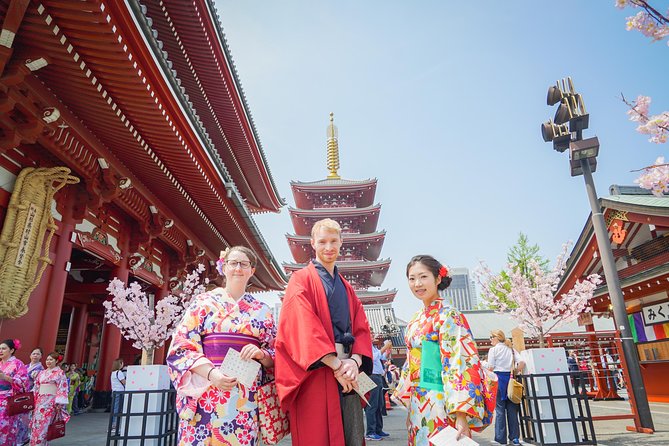
- Small group (up to 8) keeps the walk personal, not chaotic
- Matcha making experience plus tasting a top-ranked matcha
- Hands-on lunch with okonomiyaki or monjayaki, plus 1 drink
- Asakusa Shrine, Nakamise, Kaminari Issa, and Hoppy Street in a logical route
- Tour photos included so you do not have to play photographer all day
Why This Asakusa Walk Feels Less Tourist, More Local
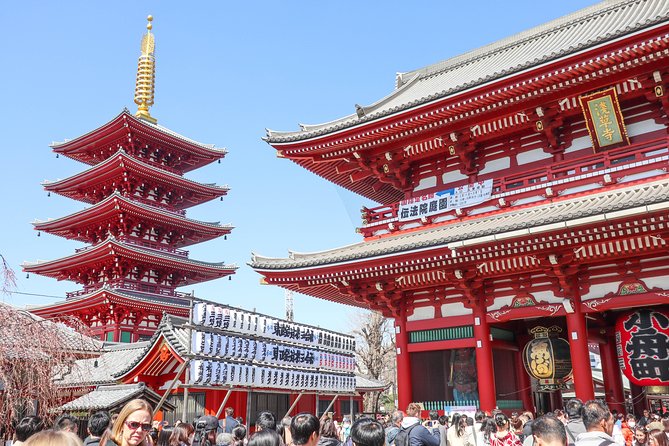
Asakusa has two speeds. One is the “follow the crowd to the big temple photo.” The other is the rhythm locals actually live with, where shrines, snack alleys, and backstreet cafés all matter.
This tour leans hard into the second speed. You walk as a small group with an English-speaking local guide who talks through traditions at temples and how people behave around them. That guidance helps you avoid the common mistake of treating Asakusa like just scenery, instead of a working neighborhood.
The food part is also practical. You are not stuck with an expensive, pre-packaged meal in the busiest zone. You stop in places that feel like they serve locals first, then visitors.
More Tea Ceremonies in Tokyo
- Matcha Making Class in Tokyo with Authentic Japanese Sweets Set
★ 5.0 · 744 reviews - Kimono Tea Ceremony at Tokyo, Asakusa Maikoya
★ 5.0 · 638 reviews - Tokyo: Traditional Tea Ceremony with a Tea Master
★ 5.0 · 528 reviews
Meeting at Kaminarimon, Then Getting Oriented Fast
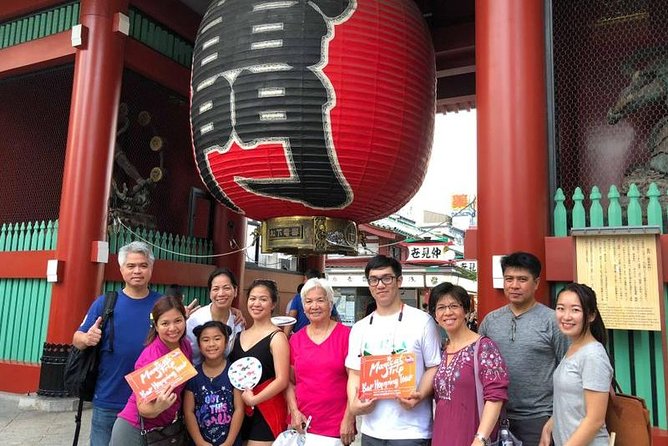
You meet in front of the Kaminarimon Police Box at Senso-ji, about a 3-minute walk from Asakusa Station (Ginza Line Exit #1). Your guide holds a red or orange sign, so you can spot the group without doing Olympic-level eye scanning.
You start at 11am and finish around 2:00 pm. That timing is useful because it leaves your afternoon open, when Asakusa can shift from morning family energy to a more relaxed wander.
One logistics note that matters: the tour must start on time. If you arrive late and miss the group, you cannot join late, and you cannot get a refund or reschedule. So, plan to arrive a few minutes early and keep your phone battery for navigation.
Also, travel light. Luggage or large bags are not allowed on this tour, so think daypack, not suitcase.
Matoi (纏) to Asakusa Shrine: The Calm Start That Sets the Tone
The walk begins at 纏 (Matoi). Even if you are not sure what you are looking at, the guide usually helps you understand why that spot matters, and then you move quickly into shrine etiquette and the local flow.
You get your first Asakusa Shrine stop for about 20 minutes. This is not just a “stand here and take a photo” moment. It is the part where you learn how temples work as part of daily life, not a one-time sightseeing stop.
What I like about starting with the shrine is that it tunes your brain. Instead of rushing through the big landmarks, you pick up the basics of how people move, offer, and observe. That makes everything else you see feel more meaningful.
Nakamise Shopping Lane: How to Browse Without Getting Ripped Off
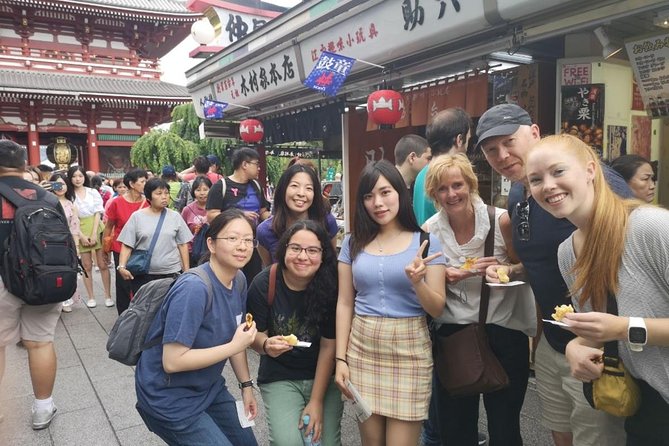
Next is Nakamise, for about 20 minutes. Nakamise is where you will see the classic snack-and-souvenir corridor that leads you toward Senso-ji.
Here, the guide’s value is in what to look for and what to skip. The goal is to avoid the overpriced traps right next to the postcard spots. You still get the experience of walking the lane, but you are doing it with a filter.
One practical advantage of a timed stop: you do not wander for an hour and end up too tired to eat. You browse long enough to feel the place, then you move on.
More Walking Tours in Tokyo
- Tokyo Tsukiji Fish Market Food and Culture Walking Tour
★ 5.0 · 3,184 reviews - Tokyo: Shinjuku Local Bar and Izakaya Guided Walking Tour
★ 4.9 · 1,794 reviews - Tokyo: Tsukiji Fish Market Food and Walking tour
★ 5.0 · 1,724 reviews - Tokyo: Asakusa Walking Tour with Sensoji Temple Visit
★ 4.8 · 1,583 reviews
A Second Asakusa Shrine Stop: Why Two Visits Work
Then you loop back for another Asakusa Shrine visit, around 25 minutes. Two stops might sound redundant, but it actually helps you slow down twice.
The first time gives context. The second time lets you absorb details you might have missed while your brain was still orienting. By then, you know what to look for and how to read the space.
Kaminari Issa Tea Ceremony (55 Minutes): Where the Day Gets Slower
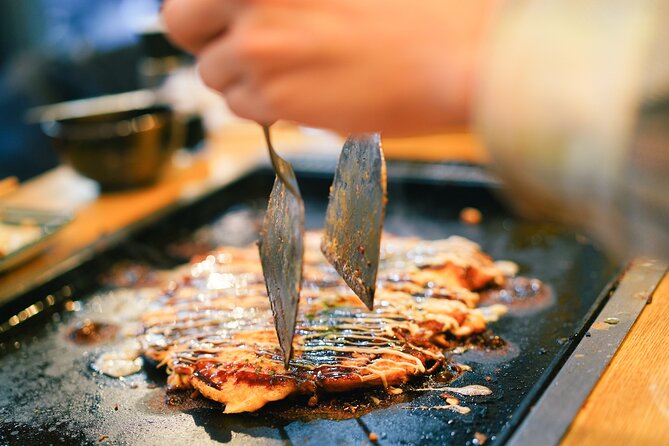
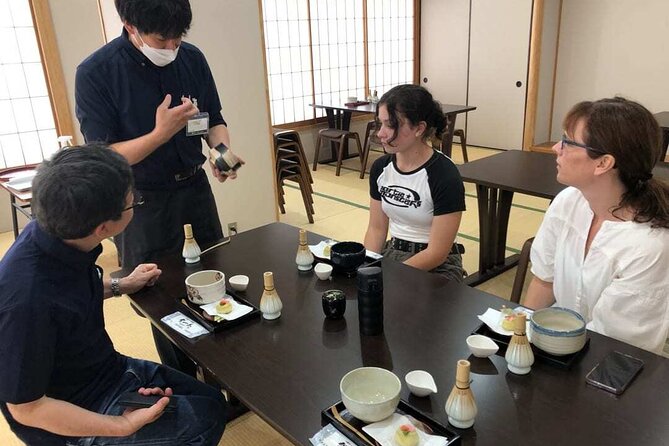
Around Kaminari Issa, the tour shifts into a tea ceremony segment for about 55 minutes. This is where the day stops being a checklist and becomes a sensory experience.
You take a break in a Japanese-style teahouse setting. You learn about matcha as powdered green tea, and you get guided steps that explain what you are tasting and why it matters.
This is also where matcha making becomes hands-on. The highlight of the tour is learning how to prepare matcha and then tasting the highest ranked matcha as part of the experience. For me, that is the difference between “snack culture” and “culture with substance.”
If you have seen other tea experiences, you might expect vague history talk. Instead, the structure matters: you are shown the process step-by-step, then you taste what you made.
Hoppy Street and Your Lunch Plan: Okonomiyaki or Monjayaki Reality
After tea, you move to Hoppy Street for about 15 minutes, and it also acts as your finish point. This street is known for casual dining energy, so it is a great place to end when you still want to keep exploring.
Lunch is about 40 minutes at a local café, and it includes okonomiyaki or monja-yaki plus 1 drink. You also get to make your own, so you are not just eating, you are participating.
Here is the honest consideration: monjayaki is a big selling point, but lunch is listed as either option. In a past booking, one guest said they expected monjyayaki but received okonomiyaki instead, which left them a bit disappointed.
If monjayaki is non-negotiable for you, it is worth confirming which one you will get when you book. Even if you end up with okonomiyaki, you still get the hands-on cooking, which is the bigger skill experience.
What you get at lunch is also tied to why this tour is good value. The price is not only for walking and photos. You are paying for time, instruction, and a meal that is part workshop.
What You Actually Learn on This Tour (Not Just What You See)
This is the kind of tour where the guide’s role becomes the product. You are walking through major Asakusa sights, but the real difference is the explanations around them.
The guide shares insights on:
- Japanese temple traditions and how people behave in shrine spaces
- Local lifestyles beyond the main tourist corridor
- What to buy and what to eat in the area, so you are not guessing
And because it is a live guide, you can ask follow-ups on the spot. That is the practical advantage. You do not leave with ten saved tabs, you leave with a clear sense of what matters here.
Past participants specifically praised guides for their warmth and communication. Names that came up include Hina for outstanding tea process knowledge, Nori for being fantastic, and Ramesh for friendliness and fun. Different days, different personalities, but the common thread was clear: the guide made the experience feel easy and alive.
Matcha Making: Why the Workshop Portion Matters
A lot of tours say matcha. This one says matcha making, and you actually do it. That is a big deal because it changes your relationship with the taste.
When you prepare matcha yourself, you pay attention to texture and technique instead of just chasing the “green tea flavor.” You also learn what “good matcha” means in plain terms, not as an abstract food trend.
And then you taste the highest ranked matcha as part of the same experience. That pairing of making plus tasting is what makes it feel like more than a photo moment.
If you care about food craft, this is the part that justifies the price more than the sightseeing.
The Snack, the Lunch, and How to Avoid Food Letdown
The tour includes a small snack and lunch. In many cases, that means you should not arrive starving, especially since the walk is roughly three hours.
However, one review pointed out that the advertised snack was missing. If you have a sensitive stomach or strict meal timing, treat this as a “walk then eat” day, but do not assume the exact snack moment will always match what you imagine from the marketing.
Also remember: additional food and drinks are available for purchase, but they are not included. So if you want street snacks beyond what is provided, budget extra or bring a little cash for options along the route.
One more useful tip: the tour data says you do not need to pay for the guide’s food and drinks. That small line saves you from the awkward guessing game.
Value Check: Is $88 Reasonable for 3 Hours in Asakusa?
For $88 per person, you get a lot bundled together: a small-group local guide, tour photos, a matcha making experience, a snack, and lunch (okonomiyaki or monjayaki) plus 1 drink, all within about 3 hours.
If you were to do this on your own, you would spend money on entry time at stops, pay for lunch, and then still have to figure out which food places are worth your money. You would also likely miss the “how to behave here” cultural context that makes shrines and lanes feel less confusing.
So the value depends on what you want. If your plan is only to hit Senso-ji and buy souvenirs, then $88 is probably too much. If your plan is to actually eat well, learn the local rhythms, and come away with something you made yourself, then it is a fair deal.
Who This Tour Fits Best, and Who Should Rethink
This tour is described as suitable for all ages, and it works well for families, couples, groups of friends, and solo travelers.
It also fits people who:
- Want to see the main Asakusa highlights without getting lost
- Care about food experiences, especially matcha and savory Japanese pancakes
- Like asking questions rather than reading everything in a guidebook
Consider rethinking if:
- You have a gluten intolerance. This tour says it is not suitable for people with gluten intolerance.
- You want guaranteed allergy-free or strict dietary accommodations. The food is prepared in kitchens not belonging to the tour operator, and allergy-free guarantees and substitutions are not promised.
Also note: some locations on the route are not accessible by wheelchair or stroller. So if mobility is a key factor, plan for a bit of uneven access.
Weather Swaps and What to Expect If It Turns Rainy
Bad weather can change the day. The tour notes that a rickshaw ride could be replaced with a Ninja Experience in Asakusa if conditions are poor.
You might still get a fun activity, but it is smart to keep expectations flexible. If you are arriving specifically for one mode of transport, build in a Plan B mindset.
Should You Book This Asakusa Cultural Walk & Matcha Making Tour?
Book it if you want a guided Asakusa day that adds meaning, not just motion. The matcha making workshop plus tasting is the headline, and the hands-on lunch is the practical payoff. Add in the small group size, tour photos, and an English guide, and you get a solid three hours that leaves you fed and oriented.
Skip it or ask extra questions before booking if monjayaki is your top obsession, because lunch is listed as either okonomiyaki or monja-yaki. Also skip if gluten intolerance is an issue, since this tour is not suitable for that.
If you want Asakusa the way locals navigate it, this tour is a good way to start, and then you can keep wandering after you finish near Hoppy Street.
FAQ
How long is the Asakusa Cultural Walk & Matcha Making Tour?
The tour lasts about 3 hours.
What is included in lunch?
Lunch is included and consists of okonomiyaki or monja-yaki plus 1 drink.
Do you get to make matcha, or is it just tasting?
You get a matcha making experience, and you also taste the matcha as part of the experience.
Is there a vegetarian option?
Yes, there is a vegetarian menu available. The information says it is not vegan.
Is the tour gluten-free?
No. The tour is not suitable for people with gluten intolerance, and gluten-free is not guaranteed.
How big is the tour group?
The group is small, limited to up to 8 participants.
Where do we meet for the tour?
You meet in front of the Kaminarimon Police Box, Senso-ji, about 3 minutes from Asakusa Station Ginza Line Exit #1. The guide holds a red or orange sign.
What happens if the weather is bad?
If the weather is bad, a rickshaw ride could be replaced with a Ninja Experience in Asakusa.
Is luggage allowed?
No. Luggage or large bags are not allowed.
Newly listed around Tokyo
- Tokyo private transfer for Yokohama Port★ 4.5 · 63 reviews
- Luxury Kimono Photoshoot at Ginza Tokyo★ 5.0 · 7 reviews
- Tokyo Allstar Food Tour★ 4.5 · 206 reviews
- Tokyo Art Aquarium Museum E-Ticket with optional Tokyo Metro Pass★ 5.0 · 17 reviews
- Tokyo: Best Ginza Food Tour at 3 Local Eateries★ 5.0 · 83 reviews
- Private One Day Nikko Tour with Bilingual driver★ 3.5 · 11 reviews
- PRIVATE tour in 180SX to Daikoku+++++★ 5.0 · 6 reviews
- Kabuki Talk★ 5.0 · 10 reviews
Matcha & Tea Ceremony Sessions, compared.
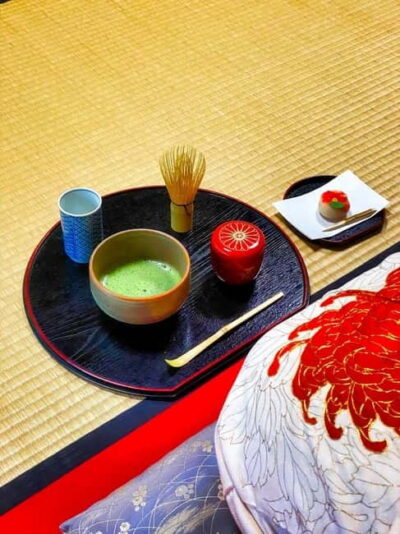
Tea Ceremony in a Traditional Tea House in Kiyomizu
Read our review →
World Heritage Kyoto & Nara Uji Authentic Matcha Experience
Read our review →
Browse the lists this tour appears in