
Review · WORKSHOPS
Fish cutting class
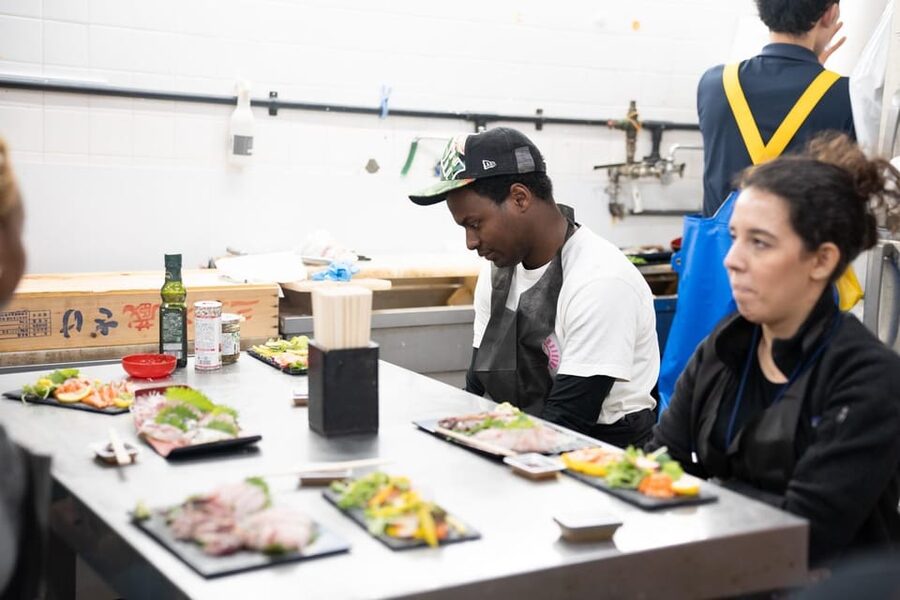
You start with raw fish and end with lunch you made yourself. I really like the small group feel and the knife skills part that goes beyond eating sushi. One thing to consider is that you will get a bit messy, and the class uses raw fish.
The whole session happens inside Kimura in Nishiki Market, a shop that’s been operating for centuries. I also like that the instruction is geared for beginners, so you are not thrown in cold. If you hate handling food directly, this is not the kind of class that stays hands-off.
In This Review
- Key highlights you should care about
- Kimura in Nishiki Market: why the setting matters
- The 150-minute flow: from watching fillets to making your own
- Knife handling that actually teaches you what to do
- Sashimi and carpaccio: the part you will remember
- Lunch at the end: what you eat and why it hits differently
- Soy sauce options for gluten free and halal diets
- What to bring and the rules that keep it comfortable
- Price and value: is $77 worth 150 minutes of hands-on fish work?
- Who should take this fish cutting class in Kyoto
- Should you book Kimura’s fish cutting class?
- FAQ
- Where is the fish cutting class held?
- How long is the class?
- What is the price per person?
- Is the class taught in English?
- What is the group size?
- What do I need to bring and wear?
- What dietary accommodations are available?
- Is alcohol included?
Key highlights you should care about
- A real fishmongers shop in Nishiki Market, not a demo kitchen
- Filleting start to finish, with watching, then you do it, then you improve
- Sashimi and carpaccio from your own cuts, plus a commemorative photo with the fish
- English instruction and a small group capped at 8 participants
- Dietary soy sauce options include gluten free and halal soy sauce
Kimura in Nishiki Market: why the setting matters
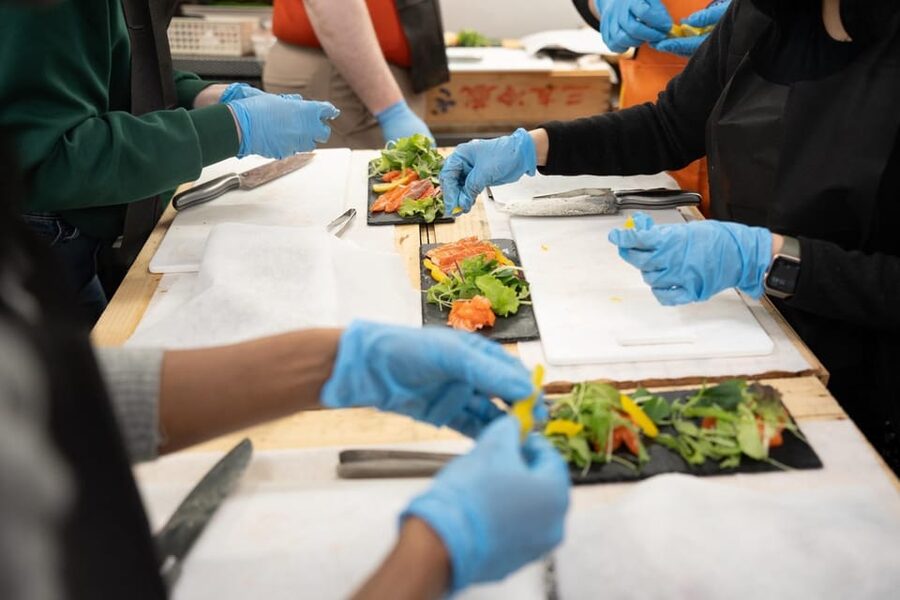
This class meets at a fish shop called Kimura in Kyoto’s Nishiki Market area. That location matters because it keeps the experience grounded in how fish is actually handled before it becomes food on a plate.
You stay for about 150 minutes, which is long enough to learn a basic workflow and still have time to eat. The class runs with an instructor in English, and it is limited to 8 participants, so you should get real attention when you grip the knife or adjust your cut.
You will also wear a provided apron, blue and orange. Plan to dress like you might wipe your hands on yourself after class, because fish prep is not a dry, clean activity.
A few more Kyoto days to weigh up
- PERFECT KYOTO 1-Day Bus Tour
★ 5.0 · 13,518 reviews - Kyoto: Fushimi Inari, Kinkakuji, Bamboo Grove 1 Day Bus Tour
★ 4.8 · 4,316 reviews - Kyoto: Tea Ceremony in a Traditional Tea House in Kiyomizu
★ 4.9 · 3,519 reviews
The 150-minute flow: from watching fillets to making your own
The session starts with a quick introduction from the instructor. Then the instructor fillets fish first, so you can see how the blade follows the bone and how the knife angle stays consistent.
Next comes your turn. Participants fillet fish with guidance, and the instructor corrects issues as they happen, which is the difference between a fun photo op and something you can actually repeat later. Even if you have never held a knife for food prep, the class is described as welcoming for beginners.
After your first cuts, the instructor teaches you careful techniques for improving your results. The pacing is set up so you feel progress during the class, not just at the very end.
A good way to think about this part is like learning a recipe method, not memorizing steps. When you understand where the blade goes and why, you also start to understand why sashimi tastes the way it does, straight from the cut.
Knife handling that actually teaches you what to do
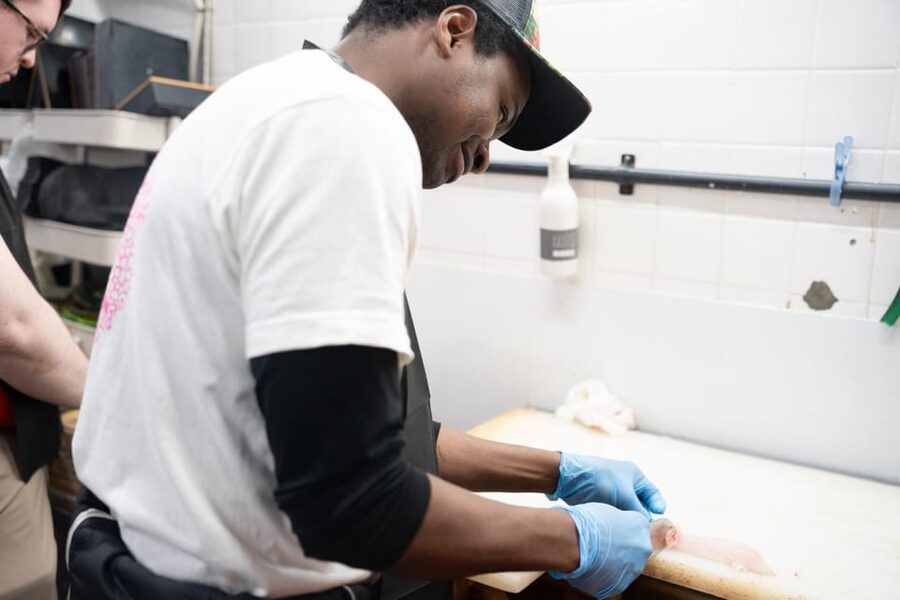
Knife skills can sound abstract in a cooking class, but this one focuses on the practical basics. You are using the provided knife and also the provided gloves and apron, which helps you focus on technique instead of fussing with gear.
The class format is structured as watch, try, refine. That works because you can compare your hand position with the example immediately, then adjust on the spot when the instructor points out what to change.
You will likely notice two things as you work. First, filleting is about steady control more than force. Second, the quality difference shows up quickly, because a cleaner cut makes the fish easier to slice into even pieces later.
English instruction helps here too. You can ask questions when something feels unclear, instead of guessing from gestures only.
Sashimi and carpaccio: the part you will remember
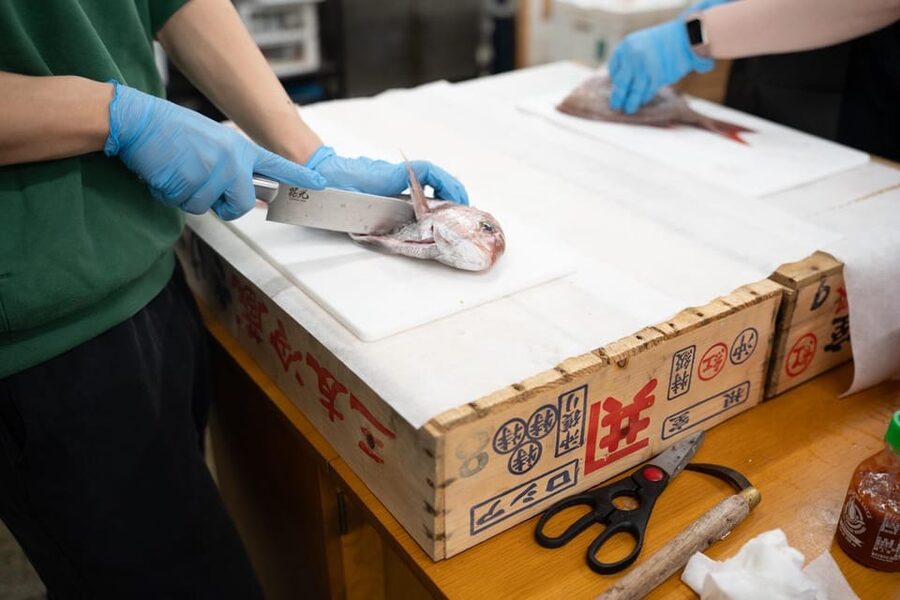
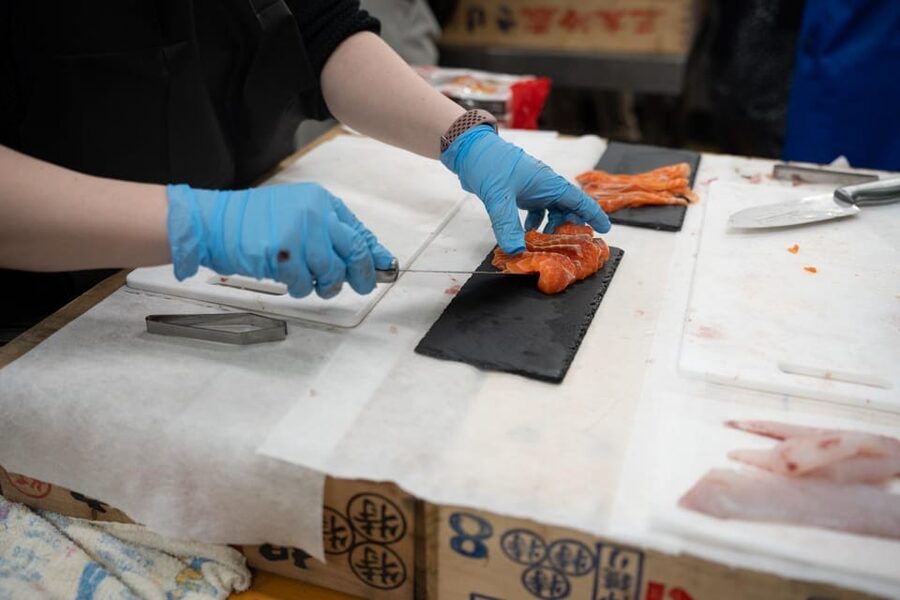
Once the fish is filleted, you move into the preparation phase. Participants make sashimi from the filleted fish, and you also make carpaccio.
This is where your work becomes visible. Your cuts turn into thin slices, and suddenly you see what good technique looks like on the plate, not just on the cutting board.
There is also a commemorative photo opportunity with the fish. It is a small detail, but it helps you capture the moment when the class stops feeling like training and starts feeling like an actual meal you are proud of.
You will use soy sauce and carpaccio sauce, both provided. That matters because you are not scrambling to match flavors at the end, you are tasting what the class is built around.
And yes, the big takeaway is simple: the best sashimi is the sashimi you make yourself. It is not a slogan, it is the logic of the whole workshop, because your pride and attention are tied to each slice.
A different sort of day in Japan:
- Kyoto Geisha Walking Tour: Gion District & Hidden Gems
★ 4.7 · 3,273 reviews - Kyoto: Tea Ceremony Ju-An at Jotokuji Temple
★ 4.9 · 3,207 reviews - Kyoto: 45-Minute Tea Ceremony Lesson Experience
★ 4.3 · 2,378 reviews - Kyoto: Gion Geisha District Walking Tour – Stories of Geisha
★ 4.7 · 2,187 reviews
Lunch at the end: what you eat and why it hits differently
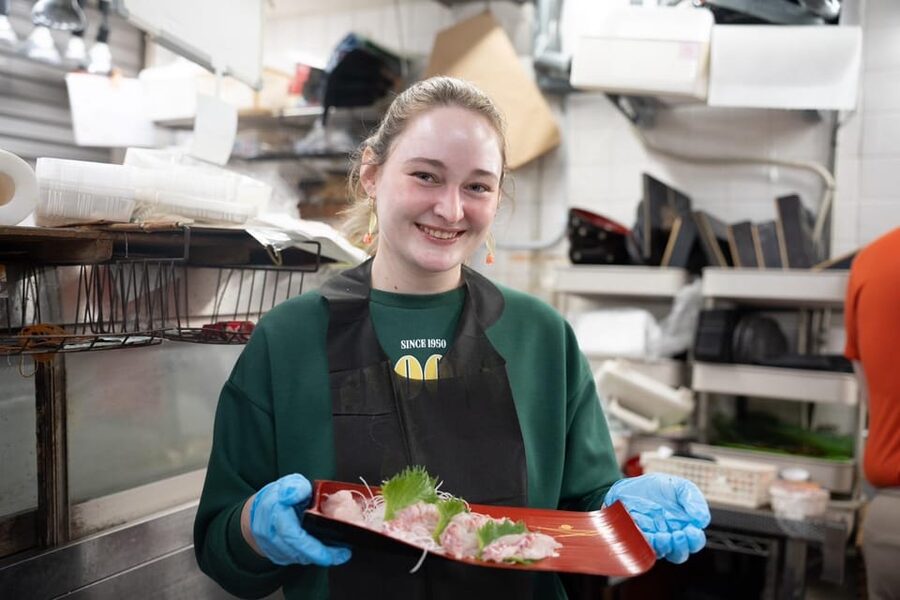
After the cutting and prep, participants eat the fish they filleted themselves for lunch, with rice provided. This is a big value point, because you are not leaving with only a lesson, you are leaving with a full meal outcome.
You should also expect that the lunch experience is built from the fish you handled, not a separate pre-prepared substitute. That is the reason the class feels different from sushi classes where you mostly assemble already prepared ingredients.
Some sessions may include extra cooking items taught by the instructor, like miso soup and tempura, depending on how the instructor builds the menu for the group. The core of what you do remains fish cutting, sashimi, and carpaccio.
What makes this satisfying is the feedback loop. When you eat what you made, you immediately connect taste to technique, so your appreciation of Japanese food culture becomes practical, not just theoretical.
Soy sauce options for gluten free and halal diets
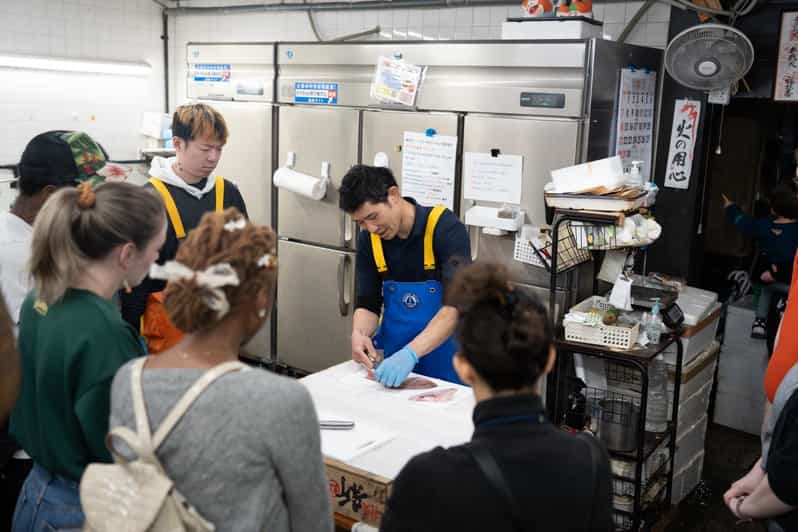
If you eat with restrictions, this class makes a real effort to handle it. You can ask about gluten free soy sauce and halal soy sauce, and the info says they are available.
Soy sauce is central here because you are using it during your tasting, not just as a side condiment. Having an appropriate option means you can focus on the fish and the cut, instead of worrying whether you can safely taste what everyone else is using.
If you have other dietary needs beyond soy, you might want to message ahead since the provided details only specifically mention gluten free and halal soy sauce.
What to bring and the rules that keep it comfortable
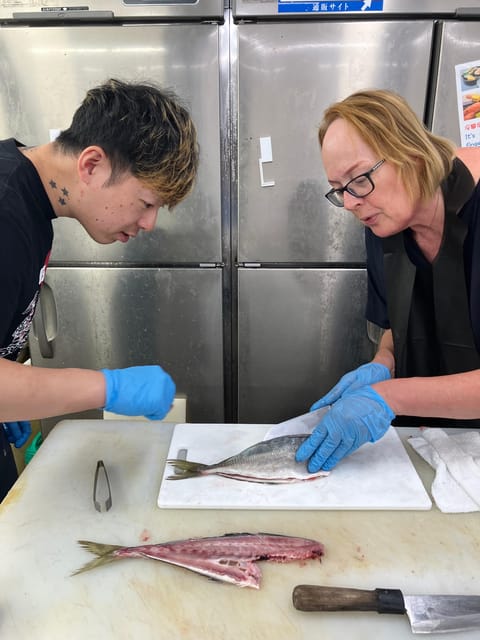
Bring clothes that can get dirty. Even with gloves and aprons, fish prep can mean splashes, smells, and the occasional sticky moment that never looks elegant in photos.
You will not be allowed any nudity, which is standard safety and comfort wording. Also, children under 10 years are not suitable, so this is very much an adult learning experience.
Beginners are welcome, which is reassuring if you are rusty or unsure about knife work. The class design assumes you are still learning how to hold the knife and how to guide it through the process.
Price and value: is $77 worth 150 minutes of hands-on fish work?
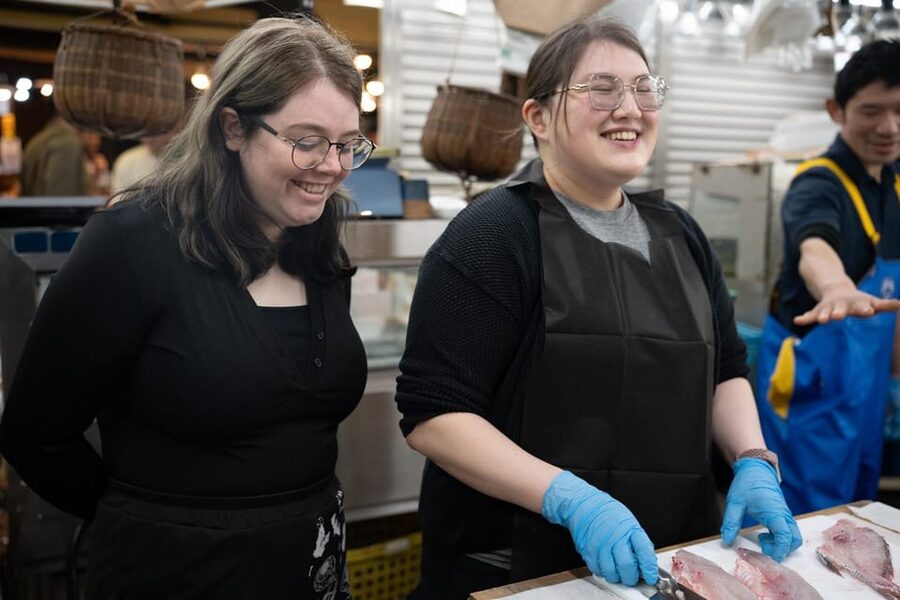
At about $77 per person for 150 minutes, the main value comes from the time spent doing the actual work. A lot of food experiences are either short tastings or assembly-only cooking, and you do not get much transferable skill.
Here, you handle the fish, you learn the workflow, and you eat what you produce. That combo is why the class tends to feel like more than a meal. You are paying for technique, feedback, and an eating experience built directly on your cuts.
The included items also help the math. You get the fish you handle, rice, the knife, the apron, rubber gloves, soy sauce, and carpaccio sauce. So you are not bringing extra gear or paying for basic supplies.
Also, the small group size is part of the value. When there are fewer people, the instructor can correct your grip and angle when it matters, instead of giving general comments while the room moves on.
Who should take this fish cutting class in Kyoto
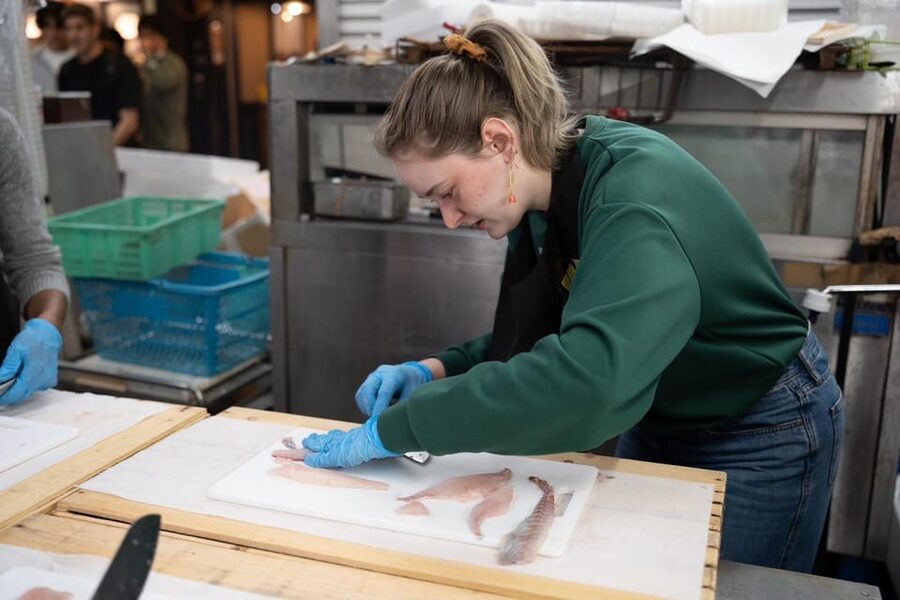
This is a great fit if you love food and want to understand how sashimi starts long before it reaches a restaurant counter. I like that the class focuses on preparation skills, not just how to eat.
It is also a good choice if you want something more focused than a general cooking tour. The whole workshop is built around fish processing, so your time stays coherent.
You may especially like it if you are a sashimi enthusiast and want to learn the basics you can picture when you order raw fish later. You will likely leave with better respect for how much care goes into clean cuts.
Skip it if you are looking for a light, hands-off tasting. You will handle raw fish and use a knife, and even though the class is beginner-friendly, it is still a working workshop.
Should you book Kimura’s fish cutting class?
Book it if you want a hands-on meal in Kyoto’s Nishiki Market that teaches you real technique, not just assembly. The combination of filleting from the start, making sashimi and carpaccio, and eating your own work makes it feel worth the $77 price for many people.
Think twice if you are sensitive to mess or uncomfortable with raw fish prep. Otherwise, it is a smart choice for anyone who wants to connect Japanese food culture to the actual work behind it.
If you do book, wear dirty-ready clothes, come curious, and be ready to ask questions in English when you need clarity.
FAQ
Where is the fish cutting class held?
It is held at a fish shop called Kimura in Nishiki Market in Kyoto.
How long is the class?
The duration is 150 minutes.
What is the price per person?
The price is $77 per person.
Is the class taught in English?
Yes, the instructor provides instruction in English.
What is the group size?
The class is a small group limited to 8 participants.
What do I need to bring and wear?
You should bring clothes that can get dirty. You will also be provided an apron, rubber gloves, and a knife.
What dietary accommodations are available?
The class offers gluten free soy sauce and halal soy sauce. You can inquire about these options.
Is alcohol included?
No, beer and alcohol are not included. Rice and sauces are included along with the fish you handle.
Newly listed around Kyoto
- Dance and Game with Maiko★ 3.9 · 46 reviews
- Cycling Tour at Uji’s Matcha Green Tea Fields and Heritage★ 5.0 · 10 reviews
- Cool Kyoto: 5-Hour Walking Tour with the Last Samurai★ 4.8 · 73 reviews
- Kyoto Ume Liqueur Experience with CHOYA – Make Your Souvenir★ 5.0 · 6 reviews
- Cycle Kyoto’s Hidden Gems & Gion Stroll★ 5.0 · 29 reviews
- Candlelit Zen: Evening Meditation at Kyoto’s Secret Temple★ 5.0 · 10 reviews
- Kyoto: Private Walking Tour with Kiyomizu Temple & Gion★ 5.0 · 7 reviews
- Kyoto to Arashiyama Day Trip – Private & Personalized★ 4.2 · 22 reviews
Workshops, compared.
Sushi Making Tokyo Roll and Authentic Japanese Sushi Class
Read our review →
Roll and Authentic Sushi Making Class in Asakusa
Read our review →
Ramen Cooking Class at Ramen Factory in Kyoto
Read our review →
Sushi Making Class in a Happi Coat near a Famous Spot
Read our review →
Tokyo Sushi Making Class in Tsukiji with Professional Chef
Read our review →
Ramen & Gyoza Cooking Class in Tokyo with Local Supermarket Visit
Read our review →Browse the lists this tour appears in