
Review · WORKSHOPS
Fish Cutting workshop in Kyoto Japan
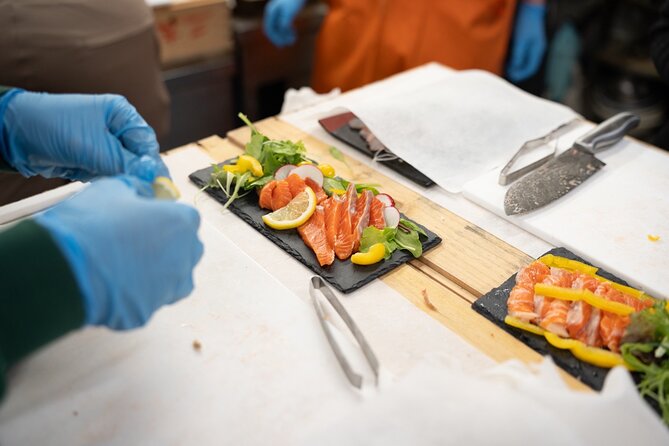
Knife skills meet sushi in Kyoto. This hands-on workshop has you learn how to handle and cut raw fish, then eat what you make as sashimi. I like that the class keeps the group small, so you get plenty of hands-on help, and I like that they teach safe fish handling early for beginners. One possible drawback: you’ll be using knives, so kids under 8 are asked not to join.
The setting matters too. You meet at Kimura Fresh Fish in Kyoto, and the whole flow is built around learning real fish-shop technique, not just watching. Expect a practical 2 hours 30 minutes focused on three cuts, plus a lunch you actually helped prepare. The price is not cheap, so it makes the most sense if you’re the type who wants to leave with skills, not just photos.
In This Review
- Key things you’ll notice fast
- Kyoto fish cutting at Kimura Fresh Fish: where the class happens
- What you actually learn: cutting fish into sashimi-ready pieces
- First lessons: handling the fish safely, even if you’re new
- The cutting practice: three pieces, guided technique, real feedback
- Lunch is part of the lesson, not an add-on
- Price and value: what $98.53 gets you in Kyoto
- Who this class suits best (and who should reconsider)
- Practical tips before you go
- Should you book the Kyoto fish cutting workshop?
- FAQ
- How long is the fish cutting workshop in Kyoto?
- Where do I meet for the class?
- Is lunch included?
- How many people are in the group?
- Are children allowed?
- What is the cancellation policy?
Key things you’ll notice fast
- Small group, maximum 6 people, so your questions do not get lost
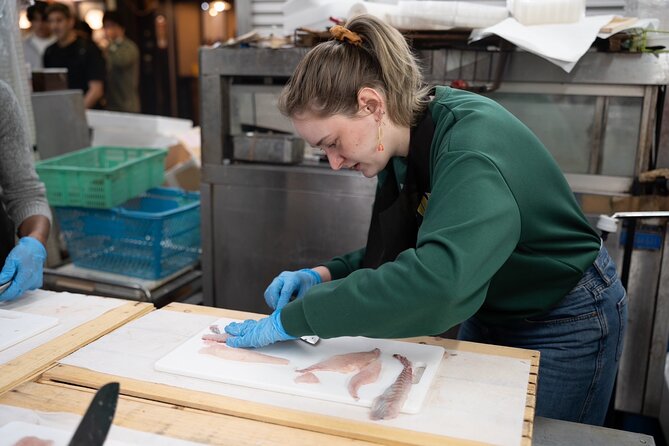
- Cutting practice on your own fish, not just a demo
- Three-piece sashimi lunch, which turns effort into a meal
- Beginner-friendly handling tips first, before you pick up the knife
- Expert teaching passed down through generations, from a long-time fish specialist
- Mobile ticket, plus a meeting point near public transportation
Kyoto fish cutting at Kimura Fresh Fish: where the class happens
This workshop is built around a very practical idea: learn fish processing by doing it, in the same world where fresh fish still moves daily. Your start point is Kimura Fresh Fish, at 483 Nakauoyachō, Nakagyo Ward, Kyoto. It is easy to reach using public transportation, and the meeting location is the kind of spot that makes you slow down and pay attention to the real stuff, like fresh fish quality and careful handling.
The class runs about 2 hours 30 minutes, so it feels like a focused session rather than an all-day production. You also get a mobile ticket, which is helpful because you will not be juggling paper confirmations while you’re trying to find the shop.
A big reason this location works well for the experience: you are not learning abstract knife theory. You are learning in a fish-focused environment, where technique connects directly to what you see and touch.
A few more Kyoto days to weigh up
- PERFECT KYOTO 1-Day Bus Tour
★ 5.0 · 13,518 reviews - Kyoto: Fushimi Inari, Kinkakuji, Bamboo Grove 1 Day Bus Tour
★ 4.8 · 4,316 reviews - Kyoto: Tea Ceremony in a Traditional Tea House in Kiyomizu
★ 4.9 · 3,519 reviews
What you actually learn: cutting fish into sashimi-ready pieces
The main goal is simple, and it is also the reason this stands out from many food tours. You learn how to prepare raw fish and cut it into three pieces by yourself. Then you eat those cuts as sashimi.
Here’s how the learning typically lands for most people:
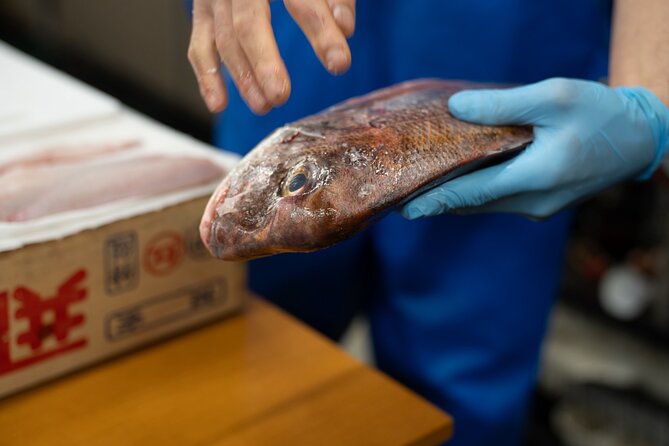
- First, you learn how to handle fish correctly (so it stays in good condition).
- Next, you work on the cutting process with close attention on your technique.
- Finally, you sit down and eat what you made.
This matters because raw fish handling is not like cutting cooked meat. The texture, the grain, and the way fish breaks down are all part of why Japanese fish processing is its own skill. When you do the cutting yourself, you start to understand why certain cuts are preferred for sashimi.
You are taught basic Japanese fish processing techniques by a specialist with deep experience, including someone who has worked in a fish shop for over 20 years. There’s also an emphasis on traditional methods passed down over time, and you can feel that in the way instruction is delivered: slow steps, clear reasoning, then practice.
First lessons: handling the fish safely, even if you’re new
Knives can make people nervous. This workshop addresses that head-on by teaching fish handling carefully at the start. The approach is not just, here is a knife, good luck. It is more like, let’s get your grip and your setup right first, then we cut.
That beginner-friendly sequence is important for two reasons:
- You avoid bad habits early. With sashimi-level fish, small mistakes show up fast.
- You get confident enough to focus on precision, not fear.
Because the class is limited to a maximum of 6 travelers, you also tend to get more direct supervision when it’s your turn. That watchful help is exactly what makes hands-on classes work. If you need a tweak, you get it right away, not after the moment has passed.
One note to plan for: this is hands-on food prep with knives. If you are squeamish about raw fish, you might want to think twice. But if you’re curious and willing to follow instructions, you should find the pace manageable.
The cutting practice: three pieces, guided technique, real feedback
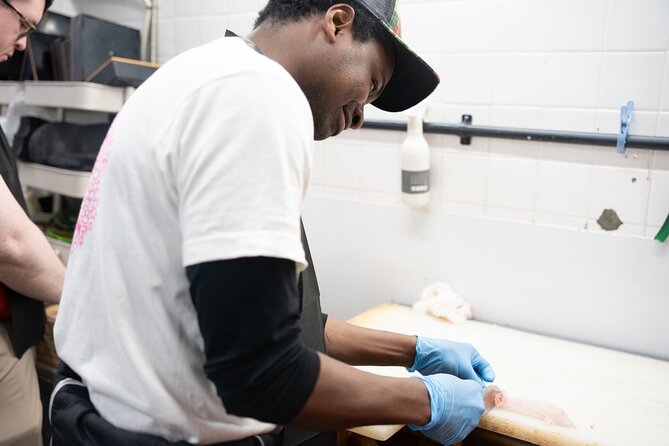
Your hands-on portion is built around getting you cutting safely and correctly. You cut the fish into three pieces yourself. That number is helpful because it is enough practice to learn something real, but it still keeps the class within a steady 2 hours 30 minutes.
What I like about the way the instruction is described:
- The demonstration happens step by step.
- When it’s your turn, the instructor is watching to make sure your cuts are correct.
- Questions get answered immediately.
This is where the small group size pays off. When you are working at your own pace, you do not want to wait for the next interruption. In a group of 6, it is easier to get clarity fast, especially if you’re asking practical questions like how to position the fish or how to adjust pressure.
If your goal is knife skills, you’ll likely come away with more than just a fish story. You’ll have a sense of how to control a blade with purpose, not just chop.
A different sort of day in Japan:
- Kyoto Geisha Walking Tour: Gion District & Hidden Gems
★ 4.7 · 3,273 reviews - Kyoto: Tea Ceremony Ju-An at Jotokuji Temple
★ 4.9 · 3,207 reviews - Kyoto: 45-Minute Tea Ceremony Lesson Experience
★ 4.3 · 2,378 reviews - Kyoto: Gion Geisha District Walking Tour – Stories of Geisha
★ 4.7 · 2,187 reviews
Lunch is part of the lesson, not an add-on
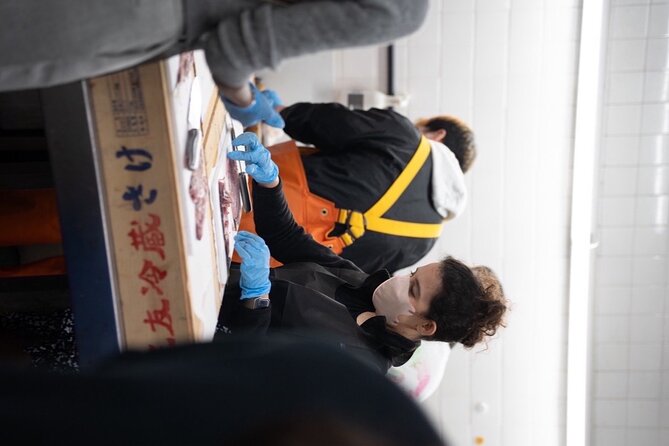
This workshop includes lunch, and it is not a separate meal you eat while someone else finishes cooking. You enjoy the food you prepare as sashimi.
That is a major value point. When you eat what you processed, you get instant feedback about your work. You notice texture and cut quality. You learn what tastes different when the fish is cut well.
And because the fish is described as fresh and high quality, lunch becomes the reward for doing the hard part. The class sets up the experience so you end hungry in the best way, ready to taste the result.
If you like food experiences where the meal has a story you can explain, this one fits. You can point to the cuts you made and understand why sashimi is served the way it is.
Price and value: what $98.53 gets you in Kyoto
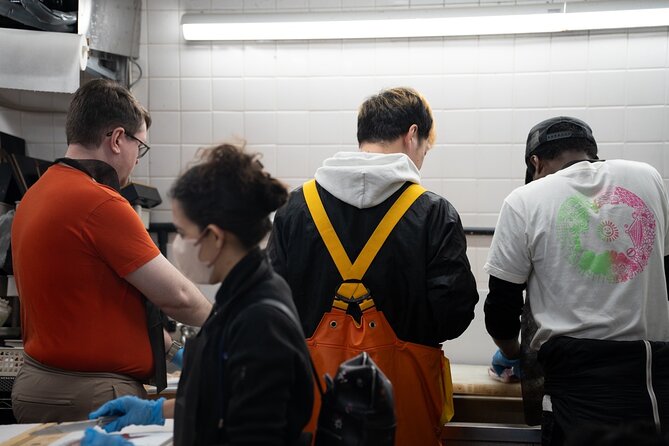
At $98.53 per person, this is not a budget activity. But it is also not just a lecture with a small snack. You’re paying for several things at once:
- Hands-on knife work with supervision
- Access to a specialist with long experience in fish processing
- A market-based setting that supports the real-world lesson
- A meal you prepare yourself, included in the price
The value logic is pretty straightforward. Many cooking classes give you a tasting, but this one gives you the satisfaction of preparing sashimi-ready cuts and eating them right after. That combination makes it feel more like skill training than entertainment.
One practical factor: since the average booking window is around 48 days in advance, this is the kind of class people plan ahead for. If you want a specific date and time, you should try to book early.
Also keep in mind that private transportation is not included, so you’ll want to plan your own route to the meeting point.
Who this class suits best (and who should reconsider)
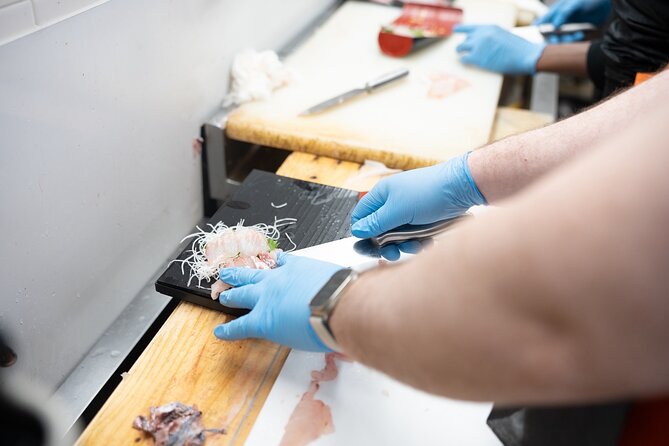
This workshop fits best if you:
- Want real technique, especially if you cook or want to improve your knife comfort
- Enjoy Japanese food enough to go beyond ordering
- Prefer small group instruction where questions actually get answered
- Are comfortable with raw fish and following safety guidance closely
It may be less ideal if you:
- Want a passive experience, where you just watch
- Feel strongly uncomfortable handling knives
- Are traveling with children under the recommended minimum age, since children under 8 are asked not to participate due to knife handling
If you’re coming to Kyoto and you already have a handle on the basics of Japanese cuisine, this is a smart add-on. It turns sashimi from something you order into something you understand.
Practical tips before you go
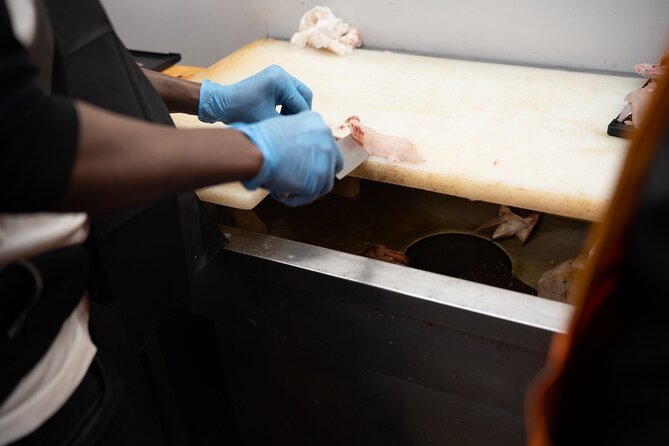
A few things will help you get the most out of the session.
First, come ready to work. This is not a slow tasting class. It is hands-on knife practice with guidance, then eating.
Second, wear clothing that lets you move easily. You will be focused on your cutting and your posture, and you will want comfort more than fashion.
Third, go in hungry, or at least with the right expectations. You’ll learn and cut, then you’ll eat your own sashimi lunch. If you’ve already had a huge meal, lunch may feel like a bonus you cannot fully enjoy.
Finally, bring curiosity. Questions are part of the process here. If you ask about fish handling or cutting choices, that interaction is a big part of how the class becomes memorable.
Should you book the Kyoto fish cutting workshop?
I think this is a solid booking if you want skills you can use, not just a food stop. The combination of small group, careful instruction from experienced fish processing specialists, and a lunch built from your own cuts makes it feel like a true hands-on experience. And if you are serious about knife comfort, the supervision and step-by-step guidance are exactly the kind of support that helps you improve.
I would skip it only if you prefer a purely observational tour, or if raw fish plus knife work sounds like a hard no. For the right person, though, it’s one of those Kyoto experiences where the meal at the end actually proves you learned something.
FAQ
How long is the fish cutting workshop in Kyoto?
The workshop lasts about 2 hours 30 minutes.
Where do I meet for the class?
You meet at Kimura Fresh Fish, 483 Nakauoyachō, Nakagyo Ward, Kyoto, 604-8125, Japan.
Is lunch included?
Yes. Lunch is included.
How many people are in the group?
The maximum group size is 6 travelers.
Are children allowed?
Children under 8 years old are asked not to join because they handle knives.
What is the cancellation policy?
You can cancel for a full refund if you cancel up to 24 hours in advance of the experience’s start time. If you cancel less than 24 hours before, the amount you paid will not be refunded.
Newly listed around Kyoto
- Zen Meditation for Life in Kyoto★ 5.0 · 10 reviews
- Kyoto: Zen Meditation at a Private Temple with a Monk★ 5.0 · 25 reviews
- Kyoto Private Customizable Day Tour with Guide and Vehicle★ 5.0 · 52 reviews
- Private Wagyu Beef Tour with a Local Guide★ 5.0 · 6 reviews
- Kyoto: Gion Geisha District & Sake-in-Hand Walking Tour★ 5.0 · 37 reviews
- Your Private Vacation Photography Session In Kyoto★ 5.0 · 110 reviews
- Private Guided Traditional Buddhist Cooking in Japan★ 5.0 · 16 reviews
- Private Pewter Sake Cup Experience with a Kyoto Artisan★ 5.0 · 31 reviews
Workshops, compared.
Sushi Making Tokyo Roll and Authentic Japanese Sushi Class
Read our review →
Roll and Authentic Sushi Making Class in Asakusa
Read our review →
Ramen Cooking Class at Ramen Factory in Kyoto
Read our review →
Sushi Making Class in a Happi Coat near a Famous Spot
Read our review →
Tokyo Sushi Making Class in Tsukiji with Professional Chef
Read our review →
Ramen & Gyoza Cooking Class in Tokyo with Local Supermarket Visit
Read our review →Browse the lists this tour appears in