Review · MORNING
From Kyoto: Nara Guided Morning Tour
A half-day in Nara feels like a whole world. This Kyoto to Nara guided morning tour lines up Todaiji Temple, Nara Park, and Kasuga Taisha, with an easy coach ride and an English guide to keep everything moving. You get the key icons of Nara without spending your limited daylight on train maps.
I love the straight-forward mix of big-ticket sights and real atmosphere. You stand in the Great Buddha Hall at Todaiji, then step into Nara Park where 1,400-plus deer roam like they own the place, and you can feed them with the special crackers from the park.
One thing to plan for: the half-day tour ends around 12 PM at Kintetsu Nara Station, not back in Kyoto. You will handle the ride home yourself.
In This Review
- Key things that make this tour work
- The value of a Kyoto to Nara morning: less stress, more icons
- Coach ride details: what you get between Kyoto and Nara
- Todaiji Temple and the Great Buddha Hall: where you should focus
- Nara Park deer time: adorable, sacred, and a little bossy
- Kasuga Taisha Shrine and the lantern path: UNESCO feels calmer in the morning
- Time management: how the 4 hours actually feels on your feet
- What to bring (and what to avoid) so the morning goes smoothly
- Who this tour suits best
- Should you book the Kyoto to Nara guided morning tour?
- FAQ
- Where do I meet for the Kyoto to Nara guided morning tour?
- What time does the tour start?
- How long is the tour?
- Does the tour include a return trip to Kyoto?
- What attractions are included in the itinerary?
- Is admission to Todaiji Temple included?
- Can I feed the deer in Nara Park?
- Should you book this tour?
Key things that make this tour work
- Todaiji’s Great Buddha Hall is the main event, and you get a guided visit with admission included
- Nara Park deer time includes practical rules for feeding safely and avoiding surprises
- Kasuga Taisha Shrine adds the UNESCO contrast, including the stone lantern-lined approach
- Air-conditioned coach + free Wi-Fi makes the Kyoto to Nara transfer painless
- Audio headsets in 7 languages help you follow along even when the group moves fast
The value of a Kyoto to Nara morning: less stress, more icons
Nara is one of those places where you can easily fill a day and still miss the things you actually came for. This tour solves that by building a tight 4-hour morning route around the top sites most people want: Todaiji Temple, Nara Park, and Kasuga Taisha Shrine. It is the kind of plan that lets you feel productive, without turning the trip into a sprint.
At $77 per person, what makes the price feel fair is what you get bundled in. You are not just paying for someone to point at temples. You are getting transportation on an air-conditioned coach with free Wi-Fi, an English-speaking professional guide, Todaiji admission, and multilingual audio headsets. For many visitors, that package also saves time, because you are going door-to-door from Kyoto’s meeting point and getting a structured route rather than figuring it out mid-trip.
You will also like the timing. The morning start helps you see the parks and lantern approaches before late-morning crowds thicken. That matters at Kasuga Taisha, where the experience feels calmer when you reach the paths early.
The main consideration is logistics after the tour. If you are used to day tours that bring you back to Kyoto, the handoff at Kintetsu Nara Station can feel abrupt. Still, if you plan your return route ahead, it is manageable.
A few more Kyoto days to weigh up
- PERFECT KYOTO 1-Day Bus Tour
★ 5.0 · 13,518 reviews - Kyoto: Fushimi Inari, Kinkakuji, Bamboo Grove 1 Day Bus Tour
★ 4.8 · 4,316 reviews - Kyoto: Tea Ceremony in a Traditional Tea House in Kiyomizu
★ 4.9 · 3,519 reviews
Coach ride details: what you get between Kyoto and Nara
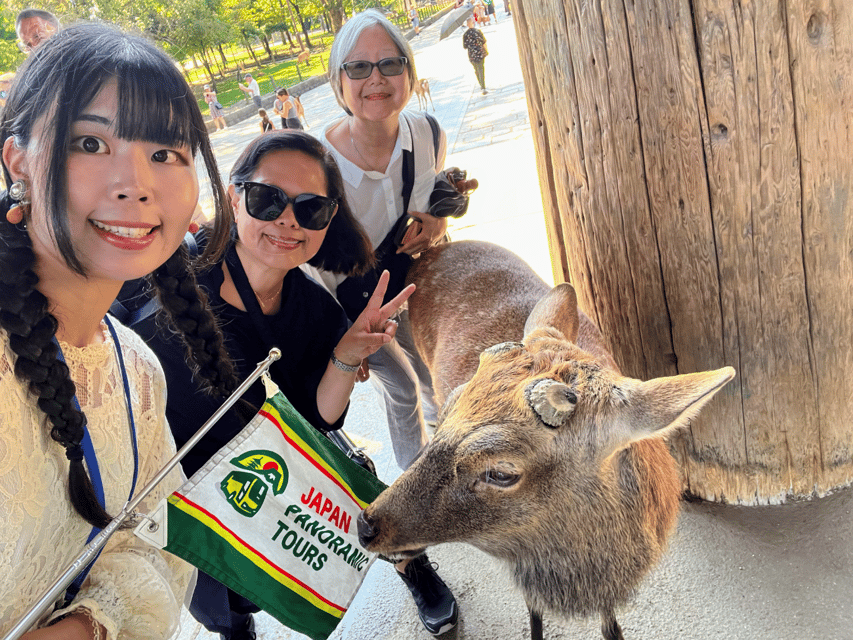
The meeting point is simple to find, in front of Kyoto Avanti at Tully’s Coffee side (〒601-8003 Kyoto City, Minami Ward, Higashikujo Nishiyamao-cho 31 AVANTI). Meeting time is 7:50 AM and departure is 8:00 AM. Look for the green and white Japan Panoramic Tours flag.
Once you are on the bus, you get the kind of comfort that matters in Japan. The coach is air-conditioned, and it includes free Wi-Fi, so you can quickly check train times for your afternoon return from Nara. During the ride, you also pass recognizable historic landmarks such as Fushimi Castle and Heijokyo Palace, which gives you a useful sense of place before you ever reach the temple steps.
The group tempo is built for a morning schedule: short guided stops, then walking time, then you move again. That is why the audio headsets and the guide’s pace are such a big part of the experience. They help you stay oriented when you are moving through gates, halls, and park paths.
Also, the tour includes time to walk. You should wear comfortable shoes. You can expect a moderate amount of walking, plus stairs and hills during the visits. If you have mobility limitations, note that this tour is not suitable for wheelchair users or people with mobility impairments.
Todaiji Temple and the Great Buddha Hall: where you should focus
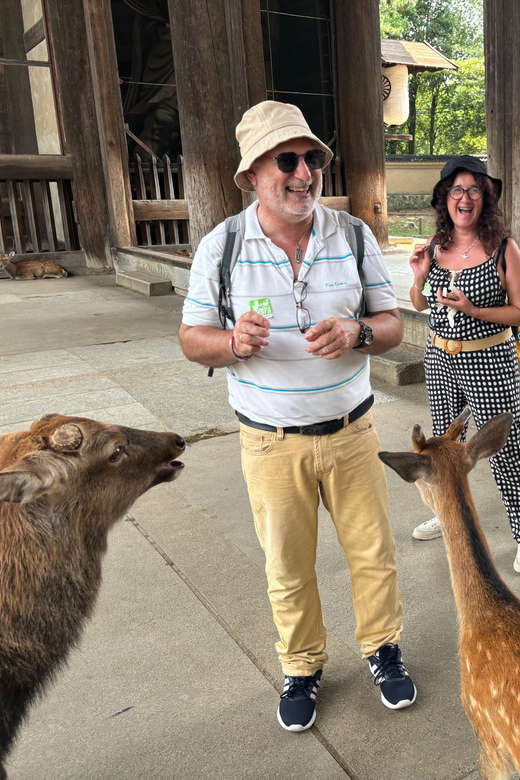
Todaiji Temple is the place where Nara feels monumental in a way that photographs never fully explain. Your first guided stop takes you to the temple complex, and you spend about 50 minutes at Todaiji with a guide.
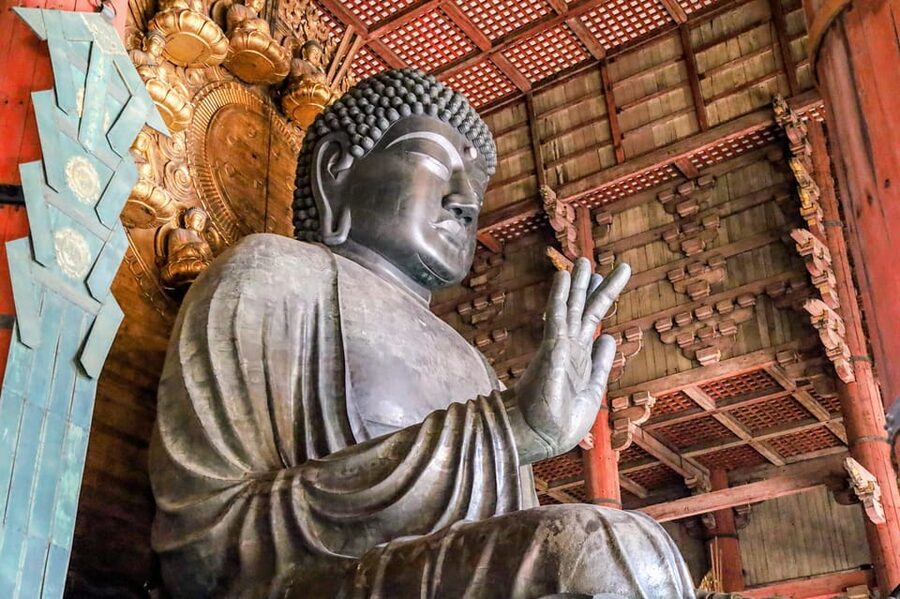
As you arrive, the Great Buddha Hall (Daibutsuden) dominates everything. This is a wooden structure, and the main attraction is the Great Buddha of Nara inside. The guide helps you understand what you are seeing, so it is not just a quick look at something famous.
A practical tip: slow down once you are inside. The hall is huge, and it is easy to rush and miss details you will remember later. Pay attention to the scale, and let your eyes adjust before you start taking photos. Also, flash photography is not allowed, so plan to shoot without it.
You will also pass the Nandaimon Gate, a grand entrance flanked by guardian statues. That is one of the best “photo meets meaning” moments on the route. The gate frames you for the shift from palace-like grandeur into open park space.
One small operational reality: the tour order can change slightly due to traffic, weather, or operations. If you arrive later than planned, you still get the core experience at Todaiji, but your exact photo light might vary. Morning timing usually helps, though.
Nara Park deer time: adorable, sacred, and a little bossy
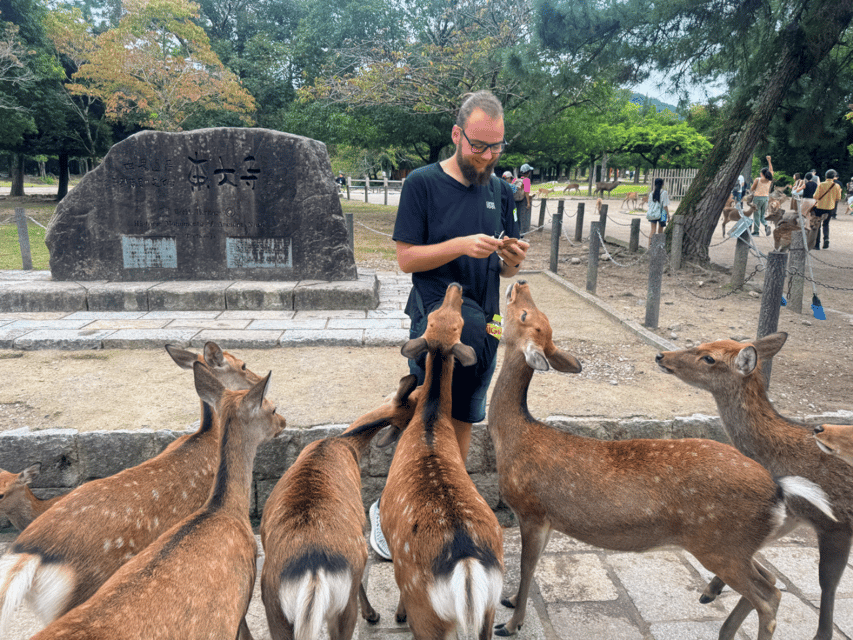
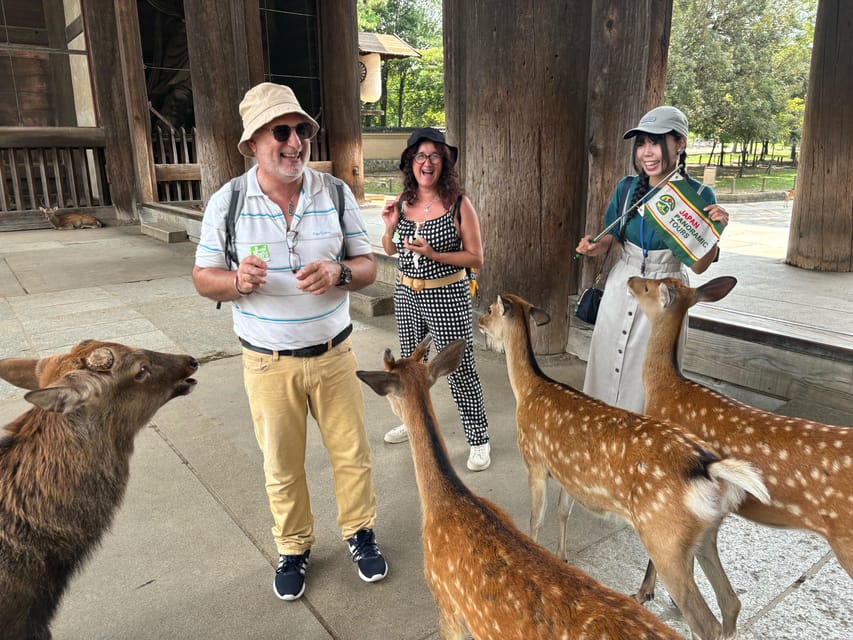
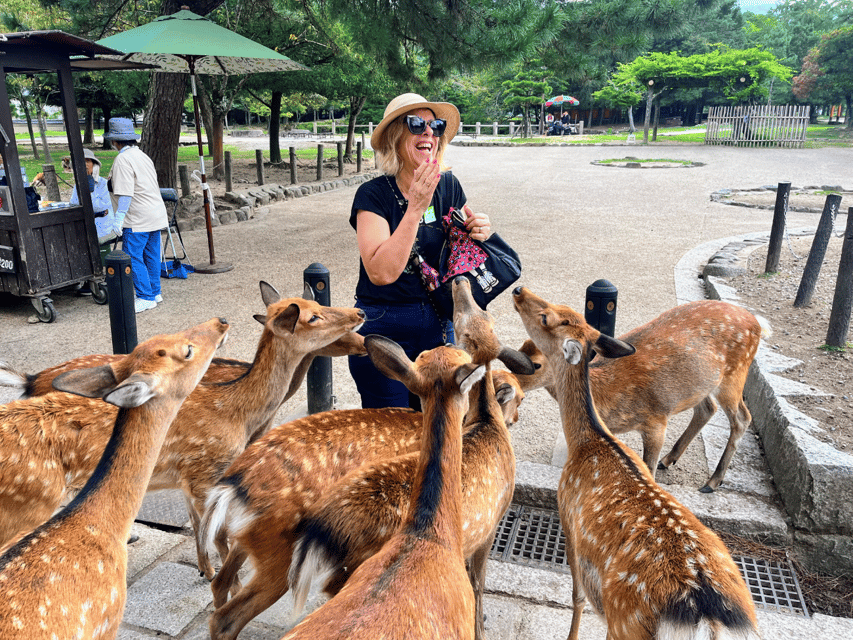
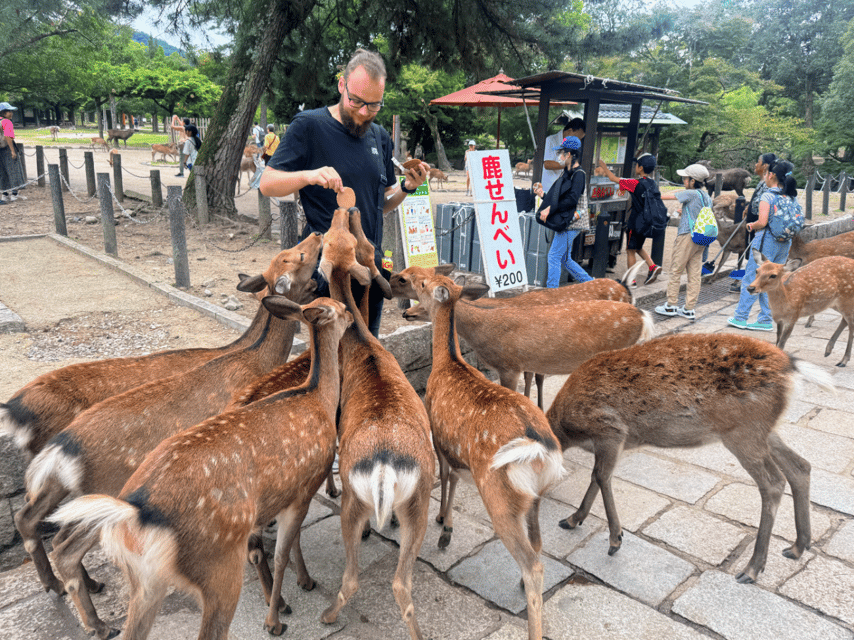
After Todaiji, you step right into Nara Park. This is where the tour becomes uniquely Nara. The park is home to over 1,400 wild deer, and they are considered sacred messengers of the gods, which is part of why the area feels more like a living cultural space than a typical animal park.
You get around 30 minutes of free time in the park. Use this window well. Don’t try to sprint across the park. Instead, aim to enjoy the deer interactions near the main flow so you are not spending all your time repositioning.
Feeding the deer is allowed, but you need to do it responsibly. You should only feed with the special crackers sold in the park. The guide’s instructions matter here, and it is worth listening closely because deer behavior can be fast and insistent.
Here is the practical deer rule that I always tell friends: if you have crackers, keep them secure and ready, but do not wave them around. If you do not have crackers, keep your hands visible so the deer know you are not holding food. Some guides also give warnings about deer getting aggressive if people act like a vending machine.
From past experiences on this tour route, guides such as Den, Sakura, Tommy, and Mai-san are known for giving clear, funny safety advice while still making it feel natural. That combo helps a lot, especially if you are traveling with kids or if you feel unsure around wild animals.
Also bring water and sunscreen if it is sunny. Park time sounds short, but it adds up fast in warm weather, and you will walk more than you think.
A different sort of day in Japan:
- Kyoto Geisha Walking Tour: Gion District & Hidden Gems
★ 4.7 · 3,273 reviews - Kyoto: Tea Ceremony Ju-An at Jotokuji Temple
★ 4.9 · 3,207 reviews - Kyoto: 45-Minute Tea Ceremony Lesson Experience
★ 4.3 · 2,378 reviews - Kyoto: Gion Geisha District Walking Tour – Stories of Geisha
★ 4.7 · 2,187 reviews
Kasuga Taisha Shrine and the lantern path: UNESCO feels calmer in the morning
Next comes Kasuga Taisha Shrine, another top Nara stop and a UNESCO World Heritage Site. Your guided time here is about 40 minutes.
What makes Kasuga Taisha stand out is the approach lined with around 3,000 stone lanterns. In many seasons and during special festivals, those lanterns are lit, and that is when the shrine experience turns into something truly magical. Even without a festival, the lantern-lined pathways create a quiet mood that feels very different from Todaiji’s scale.
This stop works well as the second half of your morning because it changes the texture of the trip. Todaiji hits you with big architecture and a huge icon. Kasuga Taisha hits you with rhythm, symmetry, and atmosphere.
Because you are walking and turning through shrine areas, it helps to have the audio headsets if you are not fully following every word the guide says in English. The audio is available in multiple languages, and it makes the information feel more accessible when the group is moving.
Another small tip: if you care about photos, think about timing and angle before you reach the main lantern approach. You are walking on pathways where other people are also stopping. Planning a couple of “pause spots” helps you avoid awkward traffic jams in the best photo areas.
Time management: how the 4 hours actually feels on your feet
The tour runs for about 4 hours, from Kyoto to Nara in the morning. You depart at 8:00 AM and end around 12 PM at Kintetsu Nara Station.
That schedule is the core of why this tour is popular for first-time Nara visits. You get:
- a ride that starts you moving right away
- a guided Todaiji experience
- park free time for deer
- a guided Kasuga Taisha stop
- and then an easy end point for returning to Kyoto
But you need to be realistic about walking. You will handle moderate walking plus stairs and hills during the tour. If you know you have a short walking tolerance, bring a little extra buffer in your plan for the station and your return ticket.
Also, do not miss the key logistical point: the tour does not include a return ride back to Kyoto. Several people end up managing their own train or bus connection from Nara, and the station staff are generally helpful, but you still want to have a plan.
A simple way to reduce stress is to check your Kyoto return option before you get on the bus. With the coach Wi-Fi, you can do it. Then, when you finish at Kintetsu Nara Station, you are not scrambling.
What to bring (and what to avoid) so the morning goes smoothly
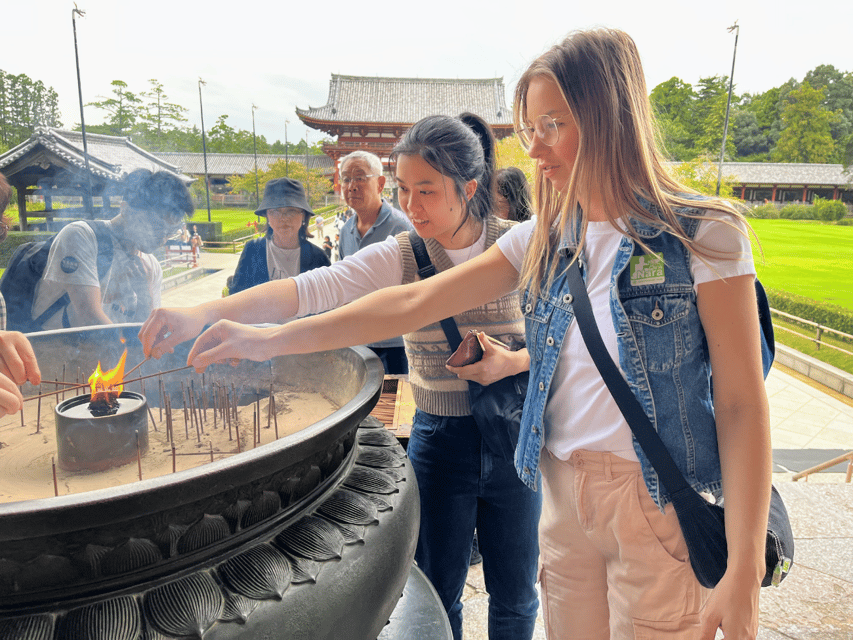
This tour is short, so packing matters. Here is what I would bring based on the tour guidance:
- Comfortable shoes for walking, stairs, and hills
- Hat and sunscreen for sunny days
- Water so park time is tolerable
- Camera (and remember flash photography is not allowed)
- Cash (useful for anything you buy on-site, including park crackers)
If you plan to feed deer, keep crackers accessible, but do not treat it like a free-for-all. Deer can cluster quickly.
Avoid anything that violates tour rules, like smoking or flash photography. Alcohol is also not allowed in the vehicle, and intoxication is not permitted. It is a respectful setting, and the morning schedule depends on everyone being on time. No refunds apply for latecomers or no-shows because the bus departs on schedule.
If it is rainy, bring an umbrella or a raincoat. Weather can change walking comfort fast, especially outdoors in Nara Park.
Who this tour suits best
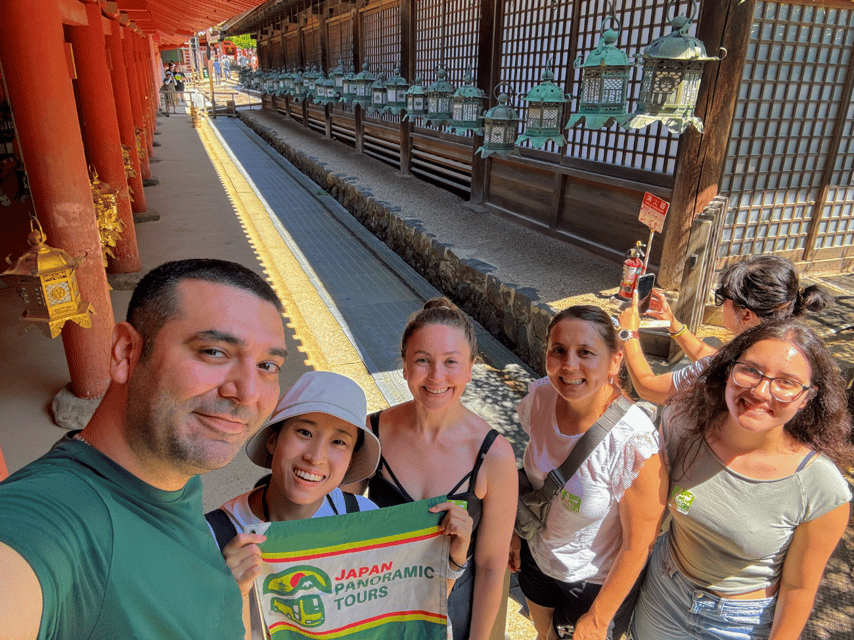
This is a strong match if you want the Nara highlights without a full day. It is especially good for:
- first-timers who want Todaiji, deer, and Kasuga Taisha in one morning
- travelers who prefer a guide to explain what you are seeing
- people who appreciate structure, but still want a little park time to wander
It is less ideal if you need wheelchair access or have mobility impairments, since the tour involves walking, stairs, and hills.
If you enjoy culture but also like nature and wildlife moments, this is one of those rare tours that balances both. The deer interactions are the fun payoff, but the temple and shrine stops keep it grounded in why Nara matters historically and spiritually.
Should you book the Kyoto to Nara guided morning tour?
Yes, if you want a high-value hit list with low planning stress. You are paying for a package that includes transportation, Todaiji admission, and a guide who helps you connect the sights instead of just getting photos. With audio headsets in Spanish, French, Italian, German, Portuguese, and Ukrainian, it is also easier to follow even if your English is limited.
Book it if:
- you are in Kyoto on a tight schedule
- you want to see the Great Buddha of Nara and Kasuga Taisha on the same morning
- you do not mind ending at Kintetsu Nara Station and handling your own return
Skip it (or choose a different format) if:
- you strongly prefer a full-day plan that includes lunch and a return transfer
- your mobility makes stairs and hills difficult
- you do not want any responsibility for getting back to Kyoto
In short, this is a smart way to see the big three Nara experiences early, and still keep your afternoon free.
FAQ
Where do I meet for the Kyoto to Nara guided morning tour?
Meet in front of the Kyoto Avanti building at Tully’s Coffee side. The address is 〒601-8003 Kyoto City, Minami Ward, Higashikujo Nishiyamao-cho 31 AVANTI. Look for the green and white Japan Panoramic Tours flag.
What time does the tour start?
You meet at 7:50 AM, and the bus departs at 8:00 AM.
How long is the tour?
The duration is 4 hours. It concludes at Kintetsu Nara Station around 12 PM.
Does the tour include a return trip to Kyoto?
No. The tour finishes at Kintetsu Nara Station around 12 PM, and returning to Kyoto by bus is not included.
What attractions are included in the itinerary?
The tour includes a guided visit to Kasuga Taisha, free time in Nara Park, and a guided visit to Todaiji Temple, including the Great Buddha Hall area.
Is admission to Todaiji Temple included?
Yes. Admission to Todaiji Temple is included.
Can I feed the deer in Nara Park?
Feeding the deer is allowed, but only responsibly and with the special crackers sold in the park.
Should you book this tour?
If you are short on time but still want the core Nara experiences, this tour is a solid choice. You get the major sights, comfort on the way from Kyoto, and helpful guide support, with the only big catch being that you finish in Nara and must plan your own ride back to Kyoto.
Newly listed around Kyoto
- Taste of Nishiki Market Walking Food Tour with Local guide★ 5.0 · 17 reviews
- Kyoto: Sushi Making Class with Sushi Chef★ 4.8 · 64 reviews
- Simple Plan with Maiko★ 4.4 · 10 reviews
- Shibori Furoshiki Course at Kyoto Shibori Museum★ 5.0 · 21 reviews
- Kyoto: City Secrets eBike Tour★ 4.9 · 196 reviews
- Sacred Pathways: Discover the Philosopher’s Path of Kyoto★ 4.9 · 20 reviews
- Private Tour to Monkey Park and Arashiyama Highlights★ 5.0 · 22 reviews
- Private Nara Tour from Osaka – Meet at Your Hotel★ 5.0 · 22 reviews
Morning, compared.
Kyoto Early Morning Tour with English-Speaking Guide
Read our review →Early Morning Tour with English-Speaking Guide
Read our review →
World Heritage Shirakawa-go Morning Guided Tour
Read our review →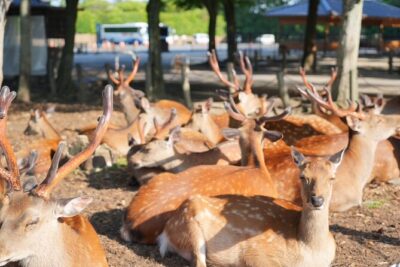
Nara Early Morning Tour (Kyoto or Osaka Departure Available)
Read our review →
Hiroshima in a Nutshell: Morning Bike Adventure
Read our review →