
Review · WORKSHOPS
Fukusa Shibori Class
A shibori class feels like science and art. You wrap and dye silk using kasamaki and nuishime methods at the Kyoto Shibori Museum, then take your finished cloth home. I especially loved how hands-on it is, and how the museum samples help you see what you are making before and after. One thing to consider is the pace, it is designed for a short session, so you will need to focus to get the best results in time.
I also liked the small-group feel, with lots of help from the staff. In one class I heard the teacher Roy was careful and supportive, making the steps clear without rushing you. The only real drawback is that this is built around making a specific cloth, so it is not the kind of class where you can freestyle every detail from scratch.
In This Review
- Key things to know before you go
- Kasamaki And Nuishime: What You Actually Make
- Kyoto Shibori Museum: Why The Displays Matter
- Your Hands-On Class Flow In 60 To 90 Minutes
- Getting Techniques You Can Repeat At Home
- Price And Value: Is $71.67 Reasonable?
- Logistics That Affect Your Day (Short Version)
- Who Should Take This Shibori Class?
- Should You Book Fukusa Shibori Class?
- FAQ
- How long is the Fukusa Shibori Class?
- Where does the class take place?
- What shibori techniques will I learn?
- Can I take the finished work home?
- What is included in the class?
- What is the minimum age?
- How big is the group?
- Is the museum admission included?
- Is there free cancellation?
Key things to know before you go
- Two shibori techniques in one session: kasamaki plus nuishime
- You dye a silk wrapping cloth (38cm x 38cm) and take it home
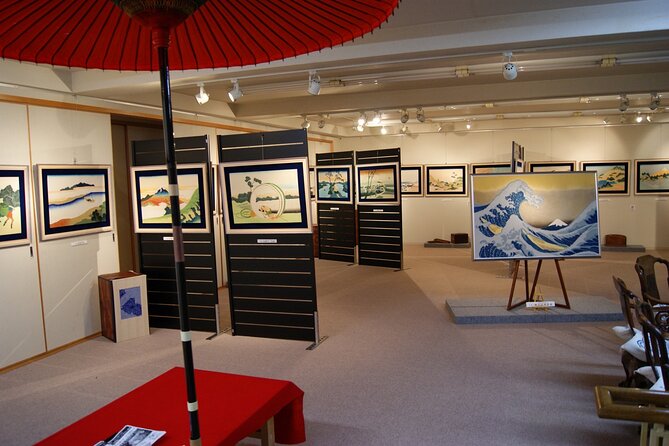
- Museum displays do not feel like waiting: they help you understand classic results
- Small class size (maximum 15) means more attention
- Traditional tools and fabrics are used, not replicas
- Mobile ticket keeps things simple once you arrive
Kasamaki And Nuishime: What You Actually Make
This experience centers on two classic Japanese shibori cloth-wrapping techniques, kasamaki and nuishime. That matters because you are not just watching dyeing. You are doing the key “resist” steps that create the patterns before dye even touches the fabric.
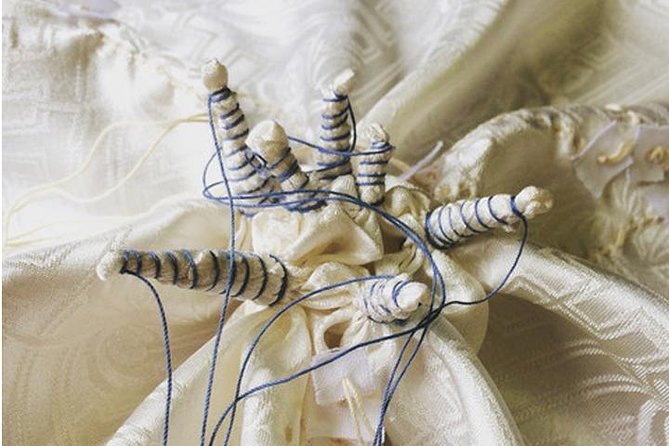
Kasamaki starts with stitching around the shape you want to form. You pull the thread tight, then wrap the tightened threads around a cone of fabric several times. Nuishime is more linear: you stitch along a line, then pull the thread tight. Those two mechanics create very different pattern logic, which is why combining them in one class is such a smart way to learn.
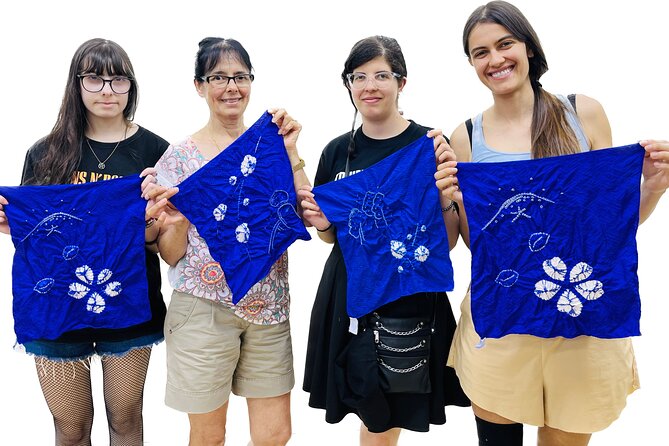
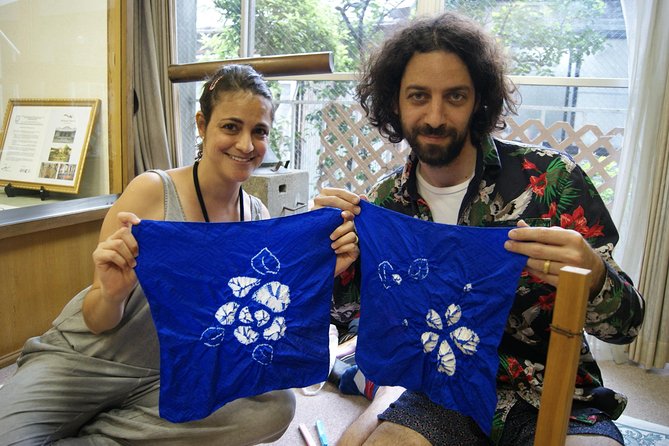
The class has you dye a silk wrapping cloth sized 38cm x 38cm. When the resist is removed, the pattern becomes visible. You are effectively making a small wearable or display-ready piece, not just practicing a craft step. And because it is silk, the end result tends to feel more special than paper crafts or cotton souvenirs.
A few more Kyoto days to weigh up
- PERFECT KYOTO 1-Day Bus Tour
★ 5.0 · 13,518 reviews - Kyoto: Fushimi Inari, Kinkakuji, Bamboo Grove 1 Day Bus Tour
★ 4.8 · 4,316 reviews - Kyoto: Tea Ceremony in a Traditional Tea House in Kiyomizu
★ 4.9 · 3,519 reviews
Kyoto Shibori Museum: Why The Displays Matter
The location is a big part of the value. You are at the Kyoto Shibori Museum, not a random studio tucked into a side street. During your time there, you can explore displays of classic kasamaki and nuishime shibori dyeing. Seeing finished examples matters because shibori is one of those crafts where the final look depends on invisible prep steps.
Even better, there is a museum shop where you can look around after you make your own piece. That gives you a chance to compare your pattern choices and results with what is being sold. It is also a good way to spot what style you might want to remember on future trips, like what scale of pattern you like or whether you prefer more graphic lines or softer textures.
One more detail that helps: staff provide information, and many people find the instructional video helpful. Even if you are already familiar with tie-dye style crafts, shibori has its own rhythm. The museum context helps you learn that rhythm instead of guessing.
Your Hands-On Class Flow In 60 To 90 Minutes
The class runs about 1 hour to 1 hour 30 minutes, so it fits easily into a morning or afternoon in Kyoto. A shorter time window is not a problem here, it is part of the design. You get just enough time to learn the process, complete the key wrapping steps, and produce the take-home cloth.
Here is what to expect in the flow:
- You start at the Kyoto Shibori Museum.
- You learn about dying cloth and the two techniques you will use.
- You work on the cloth using traditional shibori steps for kasamaki and nuishime.
- You dye the silk wrapping cloth using both methods.
- You leave with a finished memento.
Because the class is small, maximum 15 travelers, you are less likely to feel stuck waiting for your turn. In the experience I looked at, people described having professional shibori makers or staff around, ready to help. That is the kind of environment that turns a “workshop” into real learning, especially when your hands are doing something your brain has never done before.
The teacher guidance also matters. One person specifically said Roy was careful, helped them learn the process, and supported understanding. That combination is important: you want clarity on what to do next, but also enough explanation that you can repeat the method later without needing a staff member next to your elbow.
Getting Techniques You Can Repeat At Home
A souvenir is nice, but the best part of shibori classes is the repeatable logic. This class is designed so you learn tricks to do these techniques at home, not just how to finish this one cloth.
You can think of it as learning two “controls”:
- Tension control: pulling the thread tight is central to both methods.
- Form control: kasamaki adds the cone wrapping, while nuishime focuses on stitching along a line.
When you are doing kasamaki, your choices about how you stitch around the shape and how tightly you pull will influence the crispness and shape of the resist. In nuishime, the line stitch and tight pull create pattern boundaries that show up after dyeing.
If you like crafts, you will probably enjoy the feeling of understanding why the pattern looks the way it does. And if you do not plan to recreate it at home right away, you can still use what you learn when you shop. You will recognize technique cues faster, so you spend less time decoding labels and more time enjoying the craft.
A different sort of day in Japan:
- Kyoto Geisha Walking Tour: Gion District & Hidden Gems
★ 4.7 · 3,273 reviews - Kyoto: Tea Ceremony Ju-An at Jotokuji Temple
★ 4.9 · 3,207 reviews - Kyoto: 45-Minute Tea Ceremony Lesson Experience
★ 4.3 · 2,378 reviews - Kyoto: Gion Geisha District Walking Tour – Stories of Geisha
★ 4.7 · 2,187 reviews
Price And Value: Is $71.67 Reasonable?
At $71.67 per person, this is not a low-cost activity, but it is also not trying to be a “luxury” class. The value comes from three things that are directly tied to your time in Kyoto:
- A real silk piece you take home
You are not leaving with a sketchbook or a photo. You dye a silk wrapping cloth sized 38cm x 38cm, and that becomes your memento.
- Two technique lessons in one sitting
Kasamaki and nuishime each have distinct steps. Getting both in one session means more learning per hour than a class that focuses on only one method.
- Museum setting plus examples to learn from
You get hands-on time at the Kyoto Shibori Museum, with displays showing prime samples of classic dyeing. That context makes the instruction more meaningful.
There is also a practical value point: this activity uses a mobile ticket, and it is scheduled for a set duration that is easy to plug into your day. It is the kind of booking you can plan around without needing a complex itinerary.
If you are deciding whether to book, I would compare it to other “make something” experiences in Kyoto. If you want a craft that is rooted in Japanese technique, and you want a take-home result made with traditional tools and fabrics, this one fits that need well.
Logistics That Affect Your Day (Short Version)
This class is at Kyoto Shibori Museum, address 135-5 Shikiamichō, Nakagyo Ward, Kyoto, 604-8261, Japan. It ends back at the meeting point, so you do not need to worry about getting across town right afterward.
It is near public transportation, and there is parking for two cars plus bicycle parking spaces. So if you are car-free, that is usually fine. If you are driving or cycling, it helps to know the parking is limited.
The minimum age is 8 years, and adult pricing applies to any age. That is a useful detail for families, because it signals that kids are expected to participate in the class format, not just watch.
Also, the class cap is 15 travelers, which typically means a more manageable group size. In Kyoto, where some activities feel crowded, that small number can be a big part of why the experience works.
Who Should Take This Shibori Class?
This fits best if you want a hands-on craft in a setting that teaches you the “why,” not just the “how.”
You will probably enjoy it if:
- You like traditional arts and want a practical, tactile lesson
- You want a Kyoto memento that is tied to technique, not generic souvenirs
- You are traveling with family, since the minimum age is 8 and the activity is short enough for most people’s attention span
- You prefer a smaller group where the teacher and staff can help while you work
It is also a good choice for hot afternoons. One person highlighted it as a fun way to spend a hot afternoon, and that tracks. A guided studio-style activity inside a museum gives you structure when you do not feel like walking all day.
If you are the type who hates timelines, this might feel a bit structured. But the class is designed around a complete, take-home cloth, so time limits are part of the point. You are there to finish something, not just dabble.
Should You Book Fukusa Shibori Class?
I think you should book if you want a Kyoto craft that teaches real technique, and you care about taking home something made with care. The combination of kasamaki plus nuishime, a silk piece sized 38cm x 38cm, and the museum displays makes it more than a quick activity. It is a focused learning moment with an end product you can see and use.
Skip it if you are looking for a long, slow workshop where you can experiment freely for hours. This is a 60 to 90 minute class, so you will want to be ready to follow the process and concentrate while you work. Also, if you are hoping for a class that lets you fully customize every design element, this one is more about technique and the cloth result than total artistic freedom.
If that sounds like your kind of craft day, this is a strong Kyoto option.
FAQ
How long is the Fukusa Shibori Class?
The class lasts about 1 hour to 1 hour 30 minutes.
Where does the class take place?
You meet at the Kyoto Shibori Museum, located at 135-5 Shikiamichō, Nakagyo Ward, Kyoto 604-8261, Japan, and the activity ends back at the meeting point.
What shibori techniques will I learn?
You will learn two techniques during the class: kasamaki and nuishime.
Can I take the finished work home?
Yes. After dyeing, you will end up with a silk wrapping cloth that you can take home.
What is included in the class?
The experience includes a hands-on cloth-wrapping and dyeing class using traditional shibori tools and fabrics, plus you can explore displays in the museum.
What is the minimum age?
The minimum age is 8 years, and adult pricing applies to any age.
How big is the group?
The class has a maximum of 15 travelers.
Is the museum admission included?
The admission ticket is free for this experience.
Is there free cancellation?
Yes, you can cancel for a full refund up to 24 hours in advance of the experience start time.
Newly listed around Kyoto
- Zen Meditation for Life in Kyoto★ 5.0 · 10 reviews
- Kyoto: Zen Meditation at a Private Temple with a Monk★ 5.0 · 25 reviews
- Kyoto Private Customizable Day Tour with Guide and Vehicle★ 5.0 · 52 reviews
- Private Wagyu Beef Tour with a Local Guide★ 5.0 · 6 reviews
- Kyoto: Gion Geisha District & Sake-in-Hand Walking Tour★ 5.0 · 37 reviews
- Your Private Vacation Photography Session In Kyoto★ 5.0 · 110 reviews
- Private Guided Traditional Buddhist Cooking in Japan★ 5.0 · 16 reviews
- Private Pewter Sake Cup Experience with a Kyoto Artisan★ 5.0 · 31 reviews
Workshops, compared.
Sushi Making Tokyo Roll and Authentic Japanese Sushi Class
Read our review →
Roll and Authentic Sushi Making Class in Asakusa
Read our review →
Ramen Cooking Class at Ramen Factory in Kyoto
Read our review →
Sushi Making Class in a Happi Coat near a Famous Spot
Read our review →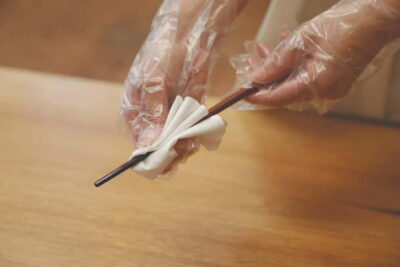

Tokyo Sushi Making Class in Tsukiji with Professional Chef
Read our review →
Ramen & Gyoza Cooking Class in Tokyo with Local Supermarket Visit
Read our review →Browse the lists this tour appears in