
Review · WORKSHOPS
Hanakoushi cotton Scarf Class
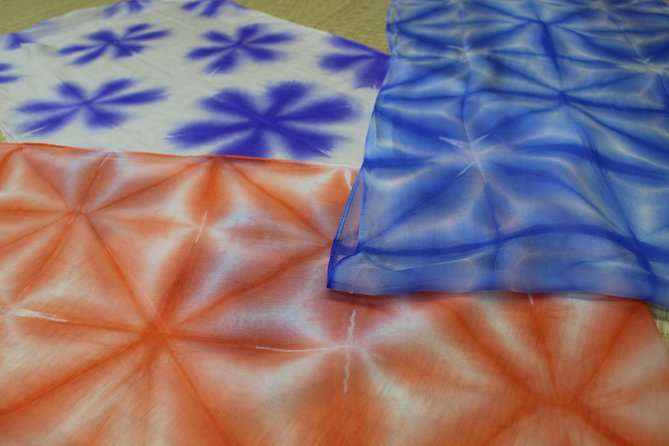
You leave with your own scarf. That simple fact makes this Kyoto Shibori Museum class feel like a real souvenir, not a purchase. In a private session, you learn how to dye a cotton scarf using the hanakoushi shibori folding style within the sekka shibori tradition.
I like two things most. First, the instruction is hands-on and paced for your group, so you are not just watching. Second, while your scarf dries, you can slow down and enjoy the museum displays, tools, samples, and the shop.
One consideration: the finished scarf is described as a cotton piece (175cm x 50cm). If you are hoping for a different fabric, it is smart to confirm before you go, since some scarf references in past sessions mention silk in general.
In This Review
- Key things to know before you dye
- Kyoto Shibori Museum: a calm stop before the folding starts
- Choosing your color and making the hanakoushi fold
- Dyeing time, then a museum visit while it dries
- Your finished scarf: what to expect before you buy anything else
- How the private format makes the lesson feel worth $43.35
- What to do after your hands-on session (and how to plan your day)
- Who this class is for, and who should think twice
- A quick reality check on time and effort
- Should you book this Hanakoushi cotton scarf class?
- FAQ
- Where is the meeting point for the Hanakoushi cotton Scarf Class?
- How long does the class take?
- Is this a private class?
- What scarf will you dye and take home?
- What technique do you learn during the class?
- What do you do while the scarf dries?
- Is there time to shop at the museum?
- Will I get a mobile ticket, and when do I get confirmation?
- Is there free cancellation?
Key things to know before you dye
- Private, just your party means you get more attention during folding and dyeing
- Sekka shibori focus teaches traditional dye technique through a practical project
- Hanakoushi method is the specific folding and dye process used for the scarf you take home
- A built-in museum break happens while your scarf dries, about 30 minutes
- Shopping time inside the museum lets you pick up extra shibori souvenirs and textiles
Kyoto Shibori Museum: a calm stop before the folding starts
This class is based at the Kyoto Shibori Museum, in Nakagyo Ward, at 135-5 Shikiamichō. It is an easy add-on to a day because it is near public transportation, and the museum itself gives you something to enjoy even if you just want a short cultural reset.
The class is a mobile-ticket experience, and you receive confirmation at booking. In practice, that matters because it keeps things simple once you arrive, no hunting for paper tickets.
Another thing I appreciate here is the tone. Several people highlight that staff are patient, friendly, and able to explain clearly in solid English. You can be a total beginner, and you will still know what to do next.
A few more Kyoto days to weigh up
- PERFECT KYOTO 1-Day Bus Tour
★ 5.0 · 13,518 reviews - Kyoto: Fushimi Inari, Kinkakuji, Bamboo Grove 1 Day Bus Tour
★ 4.8 · 4,316 reviews - Kyoto: Tea Ceremony in a Traditional Tea House in Kiyomizu
★ 4.9 · 3,519 reviews
Choosing your color and making the hanakoushi fold
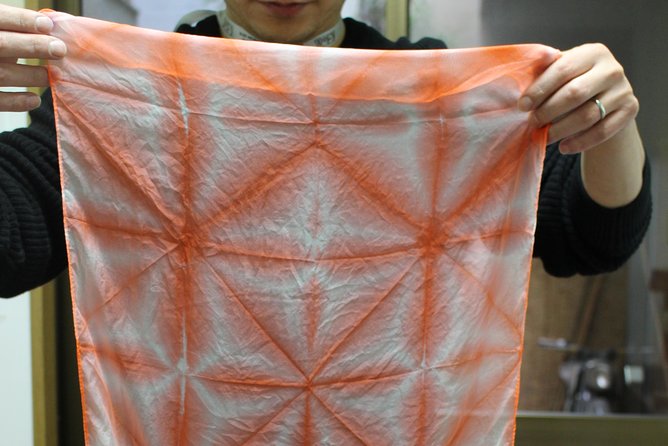
The lesson centers on dyeing a long scarf, described as 70 inches x 17 inches, which is 175cm x 50cm. You will dye a cotton scarf using the sekka shibori approach, and the project follows the hanakoushi shibori method for folding your fabric first.
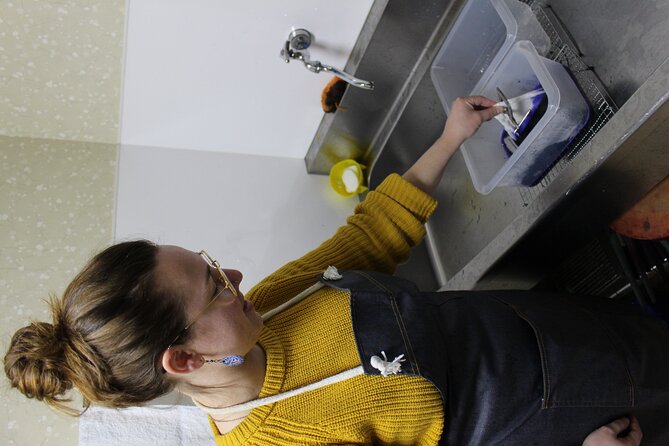
The flow is straightforward. You start by choosing your favorite color, then you fold your scarf in a specific way. After the folding step, the dyeing comes next.
What makes this feel more authentic than a typical tourist craft is that the folding is not treated like a gimmick. You are learning the method, not just slapping dye on fabric. And because it is private, you are less likely to feel lost if the steps move faster than you expect.
Timing here is short. The activity is listed around 30 minutes, but the museum also notes classes can take 30 to 60 minutes per session. So plan for something in that range, especially if your instructor is walking you through each choice.
Dyeing time, then a museum visit while it dries
Once dyeing is done, there is a natural pause. Your scarf needs time to dry, about 30 minutes. During that waiting period, you are not stuck sitting around. You can tour the museum displays at an easy pace.
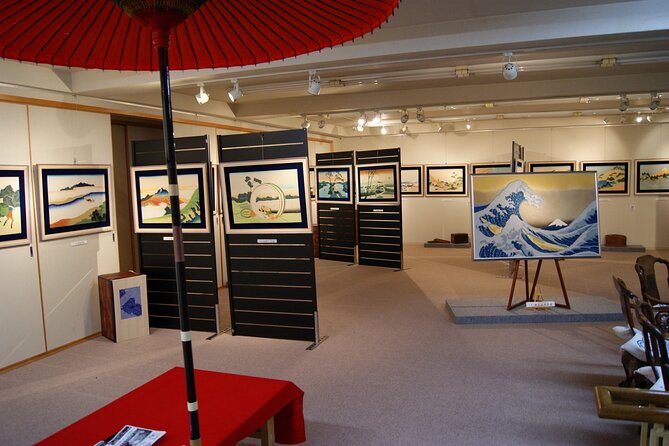
Inside, you can browse art pieces, tools, and samples tied to shibori. This is a nice moment to connect your hands-on work to what you are seeing on the walls. It is also when the whole experience stops being just craft time and becomes craft context.
If you like a museum that does not feel huge, this one fits the bill. People describe the museum as small but interesting, with a lot of visual detail for the time you spend there. You might find it is the best use of that drying window.
You also get time at the museum shop. The shop sells shibori items, souvenirs, fabrics, and more. One family in a previous session said they used their museum visit to buy a purse and clothing items for their parents, which is exactly the kind of practical souvenir planning that works well in Kyoto.
Your finished scarf: what to expect before you buy anything else
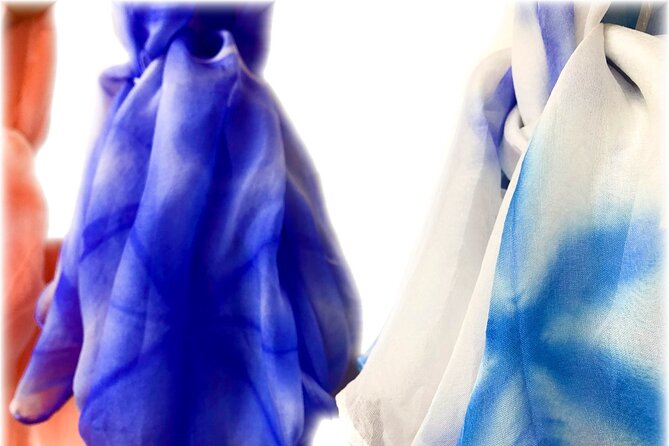
Your take-home result is the point. You leave class with a beautiful scarf that you made as your Kyoto keepsake.
Size and material are your main “check this” items. The class description calls for a 175cm x 50cm cotton scarf. That length gives you options at home, from draping like a wrap to styling as a scarf or adding it as a textile accent.
Also note the fabric type comes up inconsistently in some people’s descriptions. The class details are clear about cotton, so if you are the type who cares deeply about fiber, confirm the material at booking. That one small question can prevent disappointment.
In terms of quality, the tone of feedback is strongly positive about the end result. People often say the scarf turns out beautifully and that the process feels rewarding. Even the folks who wanted more than just a craft lesson still seemed to enjoy the finished product.
A different sort of day in Japan:
- Kyoto Geisha Walking Tour: Gion District & Hidden Gems
★ 4.7 · 3,273 reviews - Kyoto: Tea Ceremony Ju-An at Jotokuji Temple
★ 4.9 · 3,207 reviews - Kyoto: 45-Minute Tea Ceremony Lesson Experience
★ 4.3 · 2,378 reviews - Kyoto: Gion Geisha District Walking Tour – Stories of Geisha
★ 4.7 · 2,187 reviews
How the private format makes the lesson feel worth $43.35
The listed price is $43.35 per person, and it is booked about 23 days in advance on average. That price is not huge for a Kyoto workshop, but it also is not the kind of bargain craft where you race through and hope for the best.
You are paying for four things that add real value:
- Private, exclusive instruction for your party
- A structured folding and dyeing process tied to traditional technique
- A take-home scarf that becomes a souvenir you cannot replicate at home the same way
- Museum access time while your scarf dries, including viewing and shopping
In past sessions, people described small or individual session sizes, with instructors guiding them step by step. One person said they were the only participant in their session and that Nina guided them through making their scarf in an informative and fun way. Another set of comments points to staff like Yokahama-san helping explain both the craftsmanship and the art behind the technique.
Those named examples matter, because they reflect the human side of the experience: you are not getting a generic script. You get a teacher in the room, and you can ask questions.
What to do after your hands-on session (and how to plan your day)
Because the scarf needs drying time, your schedule can be flexible. You can treat this class as a short anchor event, then build the rest of your day around the museum experience.
If you are the type who likes to browse before buying, do the museum section during the drying window. That way, when you shop, you have context for what you like. Several people specifically mention the museum shop and its attractive shibori items and fabrics.
If you are building a Kyoto day around culture, this fits well with a slower pace. It is not a long museum crawl day. It is a short craft workshop with real technique, plus a compact museum visit.
Also, plan your clothing like you are going to be near dye-related materials. The class is not described as messy-chaotic, and many comments say the process feels modernized and simplified for tourists. Still, wear something comfortable that you do not mind in a hands-on studio environment.
Who this class is for, and who should think twice
This works great if you want:
- A hands-on Kyoto experience that ends with something you made
- Traditional Japanese craft technique in a short session
- A private class that feels personal, not crowded
- A souvenir that is practical and meaningful
It is also a good choice if you like learning from explanations you can follow. People highlight that instructors are kind, helpful, and able to communicate the steps clearly, including in English.
I would think twice if:
- You are strictly shopping for a fashion scarf and not interested in the technique. If you just want a quick purchase, the museum shop alone might be enough.
- You need a specific fabric like silk. The class description points to cotton, so confirm expectations.
- You want a long deep class. This one is built to be efficient. You make one scarf, learn the folding and dyeing process, then move on with your day.
A quick reality check on time and effort
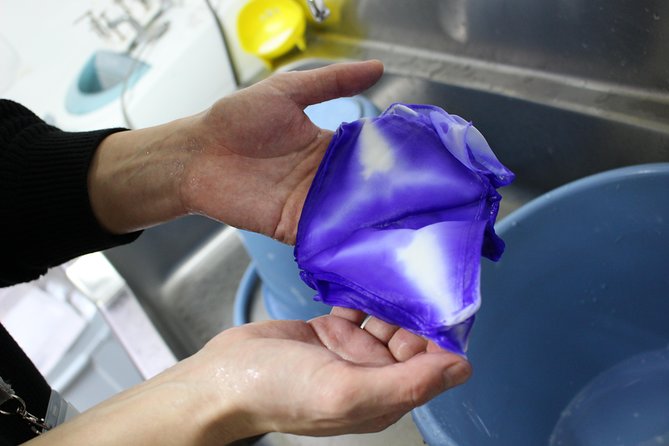
This is not a “hours and hours” project. The activity is listed at about 30 minutes, and the museum notes classes usually take 30 to 60 minutes. So you are getting a compact dose of craft instruction.
The effort is in the folding and dye steps, not in tying thousands of tiny bits of fabric for a full-day ordeal. Some previous participants specifically called out that the process has been simplified so tourists can complete a beautiful scarf without spending an entire day on tiny ties.
If you come in with the right mindset, it feels like a win. You do real craft work, you leave with a real result, and you still have time to enjoy the museum.
Should you book this Hanakoushi cotton scarf class?
Book it if you want one of the best types of Kyoto souvenirs: a scarf you made, not a scarf you bought. At this price, the private instruction plus the take-home textile plus the museum time makes it feel fair, not gimmicky.
Skip it or at least confirm details if you are picky about fabric type, especially if you were expecting silk. Also consider your tolerance for a short class. This is efficient by design, so it suits people who want a focused workshop, not a multi-hour immersion.
If you want a memorable Kyoto moment that fits into a day, I think this one is an easy yes. You walk in to learn folding and dyeing, and you leave with a piece of cloth that carries the story of the technique.
FAQ
Where is the meeting point for the Hanakoushi cotton Scarf Class?
You meet at Kyoto Shibori Museum, 135-5 Shikiamichō, Nakagyo Ward, Kyoto, 604-8261, Japan.
How long does the class take?
The duration is listed as about 30 minutes, and the museum notes classes usually take 30 to 60 minutes per class.
Is this a private class?
Yes. It is a private tour or activity, and only your group participates.
What scarf will you dye and take home?
You dye a cotton scarf sized 70 inches x 17 inches (175cm x 50cm) using the hanakoushi shibori method.
What technique do you learn during the class?
The class teaches dyeing using the traditional sekka shibori method, specifically using the hanakoushi shibori approach for the scarf you make.
What do you do while the scarf dries?
While your fabric dries for about 30 minutes, you can learn more about shibori by browsing art pieces, tools, and samples in the museum.
Is there time to shop at the museum?
Yes. There is a museum shop that sells shibori items, souvenirs, fabrics, and more.
Will I get a mobile ticket, and when do I get confirmation?
You use a mobile ticket, and confirmation is received at the time of booking.
Is there free cancellation?
Yes. You can cancel for a full refund up to 24 hours in advance of the experience start time, with no refund if you cancel within 24 hours.
Newly listed around Kyoto
- Zen Meditation for Life in Kyoto★ 5.0 · 10 reviews
- Kyoto: Zen Meditation at a Private Temple with a Monk★ 5.0 · 25 reviews
- Kyoto Private Customizable Day Tour with Guide and Vehicle★ 5.0 · 52 reviews
- Private Wagyu Beef Tour with a Local Guide★ 5.0 · 6 reviews
- Kyoto: Gion Geisha District & Sake-in-Hand Walking Tour★ 5.0 · 37 reviews
- Your Private Vacation Photography Session In Kyoto★ 5.0 · 110 reviews
- Private Guided Traditional Buddhist Cooking in Japan★ 5.0 · 16 reviews
- Private Pewter Sake Cup Experience with a Kyoto Artisan★ 5.0 · 31 reviews
Workshops, compared.
Sushi Making Tokyo Roll and Authentic Japanese Sushi Class
Read our review →
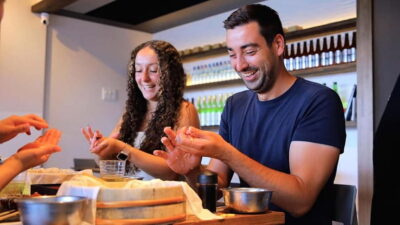
Roll and Authentic Sushi Making Class in Asakusa
Read our review →
Ramen Cooking Class at Ramen Factory in Kyoto
Read our review →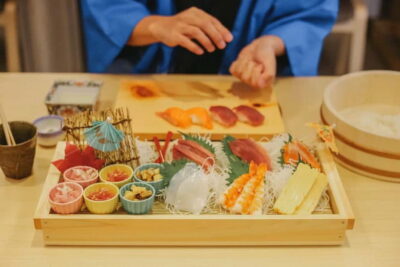
Sushi Making Class in a Happi Coat near a Famous Spot
Read our review →

Tokyo Sushi Making Class in Tsukiji with Professional Chef
Read our review →
Ramen & Gyoza Cooking Class in Tokyo with Local Supermarket Visit
Read our review →Browse the lists this tour appears in