
Review · SAMURAI SWORD & NINJA TRAINING
Kamakura; First Samurai Capital walking tour
Kamakura hits you fast, then stays with you. This First Samurai Capital walking tour turns today’s calm streets into a timeline of shogun power, Rinzai Zen, and 800-year-old craft. I like how it strings together major sights with real context, not just photo stops.
You get two things I really value: a guided look at Engaku-ji with its big Zen landmarks, and a hands-on-feeling finale at the Kamakura-bori lacquer museum. Expect one tradeoff, though, there’s a real climb at Engaku-ji, including 135 stairs.
The pace is built for seeing a lot in one half day. It’s a small group capped at 4, and you start at Kita-Kamakura Station, where the area feels quieter than central Kamakura. That said, if you hate stairs, plan carefully, because the route includes ups, downs, and multiple temple steps.
If you like history that’s tied to specific places, this works. You’ll walk through the same kind of ceremonial spaces the first shogun’s era helped shape, then finish with craft that still shows up in tea culture today.
In This Review
- Key Highlights You Should Know
- Why This Kamakura First Samurai Capital Walk Makes Sense
- Getting Oriented at Kita-Kamakura Station, East Exit
- Engaku-ji Zen Temple: Sanmon Gate, Dragon Ceiling, and 135 Stairs
- Kencho-ji Temple: The Prestigious Rinzai-Zen Stop
- Tsurugaoka Hachimangu: Samurai Power, Hachiman, and Dankazura Walks
- Finishing at the Kamakurabori Lacquerware Museum and Gift Stop
- Price and Value: What $63 Gets You (and What to Budget Extra)
- Walking Pace, Stairs, and Who This Tour Suits Best
- Guide Experience: What You’ll Feel During the Walk
- Should You Book the Kamakura First Samurai Capital Walking Tour?
- FAQ
- Where does the tour start?
- How long is the tour?
- Is the tour in English?
- How many people are in a group?
- What’s included in the price?
- Are temple admission fees included?
- What should I wear or bring?
- Is the tour wheelchair accessible?
Key Highlights You Should Know
- Kita-Kamakura setup: Start at Kita-Kamakura Station, then head almost immediately to Engaku-ji.
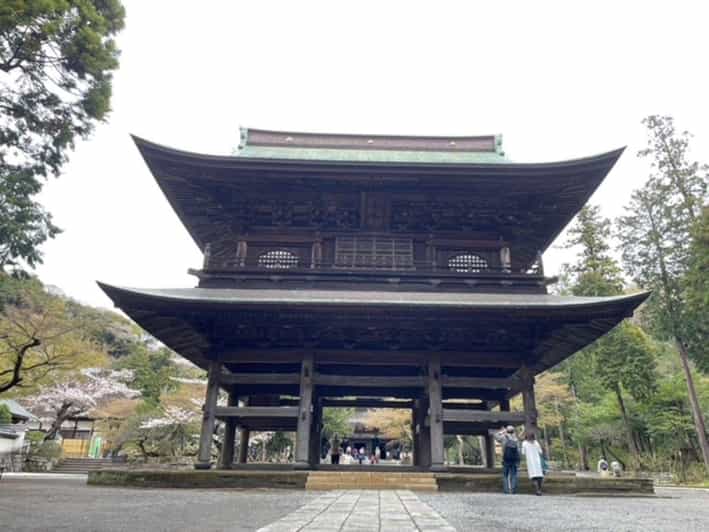
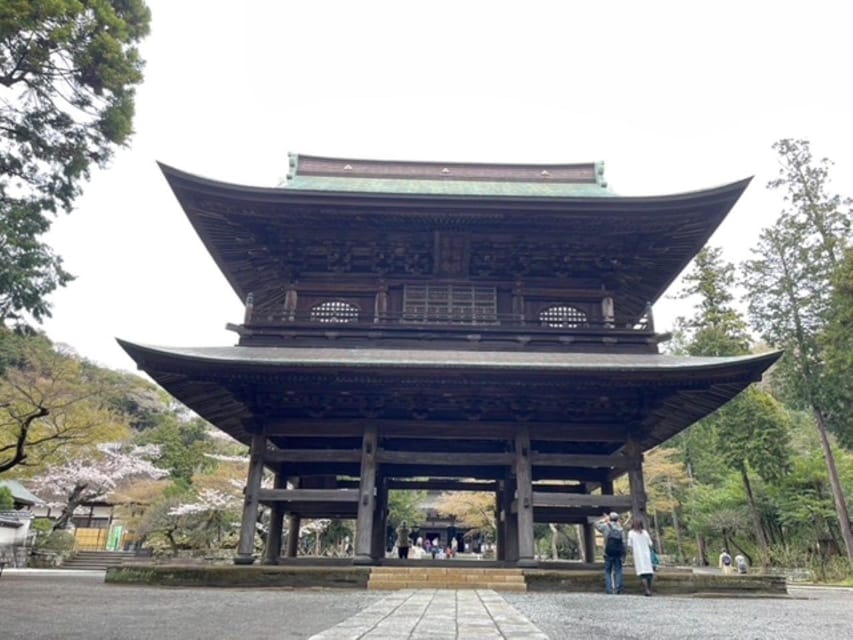
- Engaku-ji step-and-detail circuit: Sanmon Gate, Buddha Hall, dragon ceiling at Hatto, and a 135-stair climb to Bonsho.
- Kencho-ji at full scale: A more prestigious Rinzai-Zen stop with grand gates and halls.
- Tsurugaoka Hachimangu views from the hill: A shrine tied to warfare and good fortune, with scenic Kamakura sightlines.
- Dankazura walkway: A long ceremonial path from the former seacoast area up to the torii gates, plus cherry blossom fame.
- Museum time for Kamakura-bori lacquer: An 800-year-old tradition, with pieces from the Muromachi period onward.
Why This Kamakura First Samurai Capital Walk Makes Sense
Kamakura can feel like a day trip you already understand, until you see it through the lens of its warrior-era role. In this walk, you’re not just taking in temples. You’re learning how political power, religious practice, and craft developed side by side.
The route is also smart for timing. You begin at Kita-Kamakura Station, then you hit Engaku-ji quickly. That matters because Kamakura temples can get crowded later. Starting here gives you a calmer rhythm, and you’re not rushing between far-flung areas.
And the “samurai capital” angle is not a slogan. You’ll connect the dots between the shogun-era desire to project authority and the way shrines and Zen institutions functioned in daily life. The temples are still peaceful. You just understand what they were built to do.
More Samurai and Ninja sessions in Kamakura:
- Kamakura: Walking Tour through the City of Samurai
★ 4.9 · 12 reviews - Tokyo: Samurai Restaurant Show Ticket with 2 Drinks
★ 4.5 · 1,307 reviews - Kyoto Samurai Experience
★ 5.0 · 1,294 reviews
Getting Oriented at Kita-Kamakura Station, East Exit
Your meeting point is Kita-Kamakura Station, East exit, and the guide meets you just outside the ticket gate. The details are surprisingly helpful here because Kita-Kamakura has a long platform and only certain lines stop there.
A practical tip: if you’re coming from Tokyo on the Yokosuka line, you’ll want the carriage closest to the driver. You’ll exit the ticket gate nearest the front of the platform for trains heading toward Zushi, Yokosuka, and Kurihama. If you’re coming the other way, toward Tokyo, you’ll do the opposite, ride the rearmost carriage and exit the closest gate on that side.
It’s a small thing, but it saves stress when you’re trying to start the tour on time. And once you’re with the guide, the walk begins right away.
Engaku-ji Zen Temple: Sanmon Gate, Dragon Ceiling, and 135 Stairs
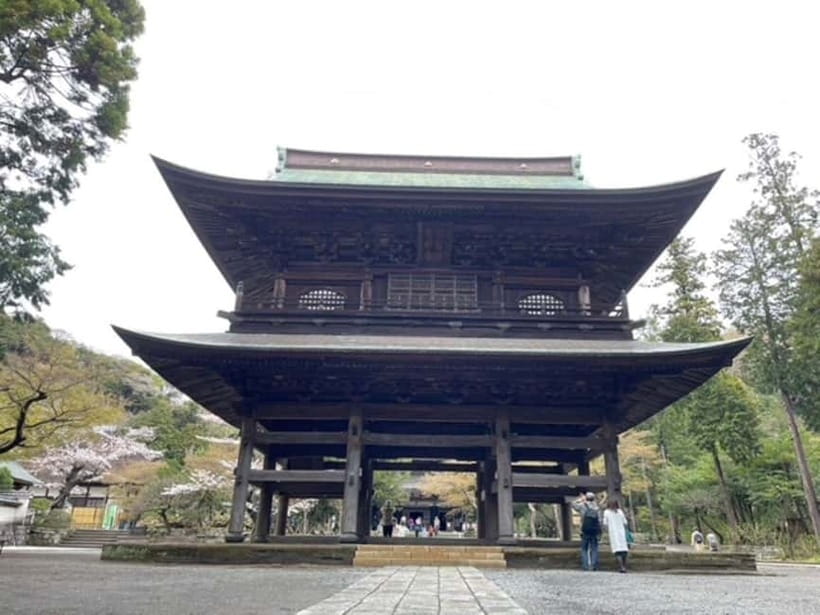
Engaku-ji is the second most important Rinzai-Zen temple in Kamakura, and it’s also close to the station, around a two-minute walk. That’s a big deal because it lets you start the day with temple intensity instead of transit time.
Here’s what you can expect as you move through the compound:
First, you enter through the Sanmon Gate. Gates like this are more than entrances. They frame your shift from street level to sacred space.
Next comes the Butsuden (Buddha Hall), where you’re meant to admire the Buddha statue. One important consideration: the Butsuden is listed as closed for maintenance until 2027. If your goal is that specific hall, this is the one item you should mentally flag. Your guide can still help you understand what the hall represents, even if access is limited.
Then you go to Hatto (Dharma Hall). The star detail here is the dragon painted on the ceiling. It’s the kind of touch that makes Zen art feel less abstract and more physical, a story you’re walking through.
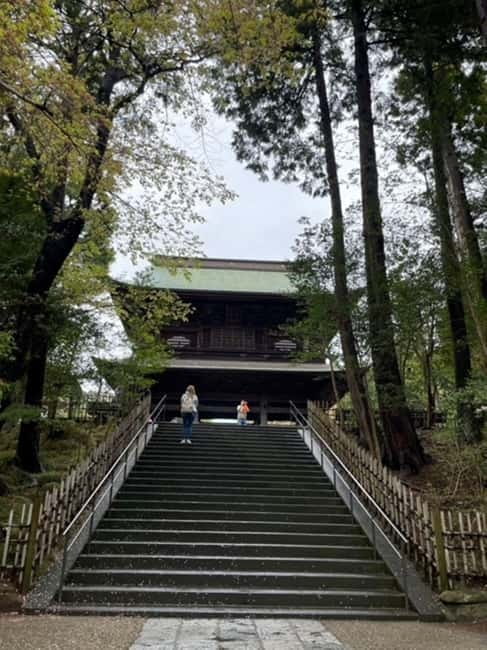
Finally, you climb 135 stairs to see Bonsho, the temple bell and a national treasure. This is the part your calves will remember. But it also gives you a payoff: you get the bell at the right moment, with the effort building the sense of arrival.
If you want context, this is where you learn how Rinzai Zen temple design communicates values. You’re not just looking at structures. You’re seeing how space shapes attention.
Kencho-ji Temple: The Prestigious Rinzai-Zen Stop
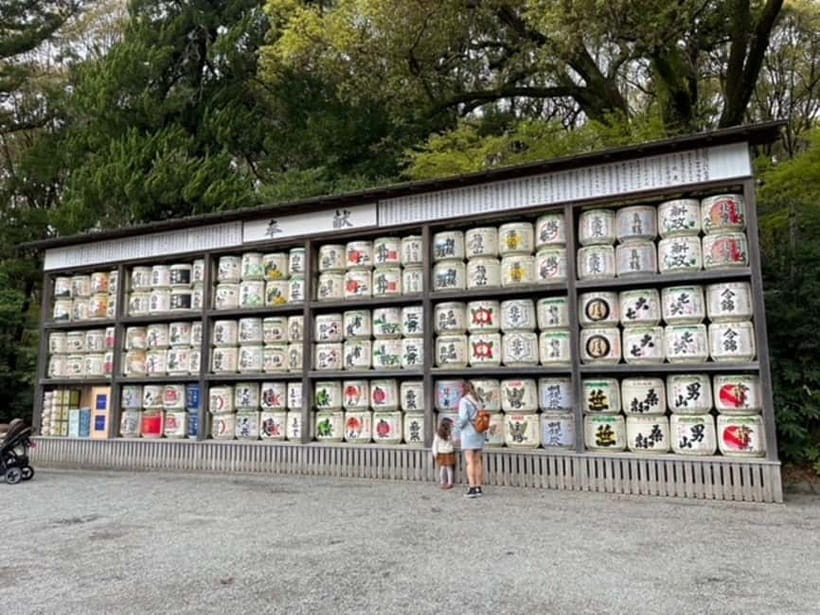
After Engaku-ji, you’ll walk on foot to Kencho-ji, about 15 minutes. This is where the tour shifts from “important Zen sites” to “this is the big one.”
Kencho-ji is described as the most prestigious Zen temple in Kamakura. The experience here is bigger in scale, including the gates and halls you’ll recognize from other temple visits, but with a sense of greater authority.
You’ll likely get guided stops that focus on architecture and meaning rather than just dates. That matters because Zen temples can look similar at first glance if you’re not trained to notice the differences. With a guide, you start seeing how the buildings, gates, and ritual spaces reflect the temple’s role in Kamakura’s religious life.
The practical side: plan on another chunk of walking and standing. This isn’t a sit-down lecture. It’s a temple walk where you pause, look, then keep going.
A few more Kamakura days to weigh up
- Kamakura Historical Walking Tour with the Great Buddha
★ 5.0 · 129 reviews - Kamakura: A Journey Through Medieval Japan (Walking Tour)
★ 4.9 · 26 reviews - Kamakura: Half day Walking tour & Japanese sweets
★ 5.0 · 11 reviews - Kyoto Geisha Walking Tour: Gion District & Hidden Gems
★ 4.7 · 3,273 reviews
Tsurugaoka Hachimangu: Samurai Power, Hachiman, and Dankazura Walks
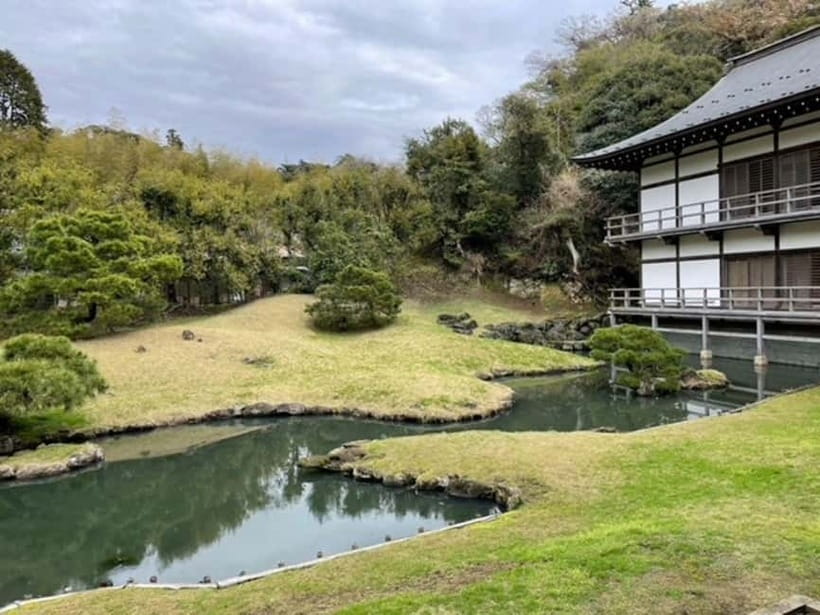
Tsurugaoka Hachimangu is the symbol of Kamakura as the first samurai capital. It was built to display and impress the power of the first shogun, and it has stayed central ever since.
The shrine is dedicated to Hachiman, the deity of good fortune in warfare. If you’re connecting Kamakura’s warrior history to religious space, this is the key stop. You can feel it in the way the shrine sits on higher ground and in how ceremonies and visitors orient toward it.
Location matters. From the hill you get a scenic view of Kamakura, and that gives you a physical sense of what “capital power” meant in the landscape.
Then comes Dankazura, a 450m walkway stretching from the then seacoast up to the Third Torii gate. This path is linked to the first shogun as well, built to pray for the safe delivery of an heir. That’s a useful detail because it connects politics, family continuity, and religion in one line.
Dankazura is also famous for cherry blossoms. Even if your season is not peak bloom, you still get the idea: this is a ceremonial route people walk for more than sightseeing.
Your tour then moves through torii gates from Third to Second, with the grounds entrance starting at the current start point of Dankazura. These transitions help you understand how the shrine’s layers work like a slow reveal.
Finishing at the Kamakurabori Lacquerware Museum and Gift Stop
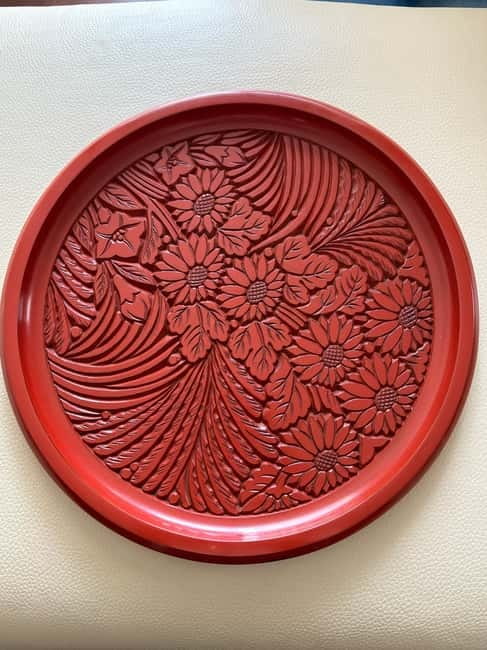
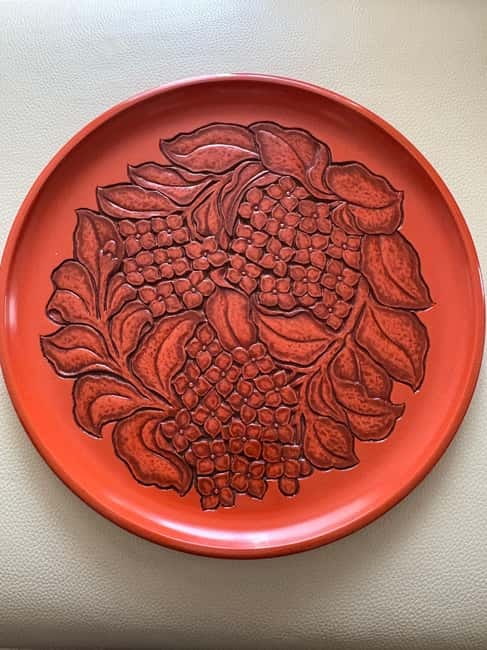
Kamakura-bori lacquerware is one of those cultural threads that makes the whole trip feel more complete. It’s described as a METI-certified Japanese traditional craft, with roots tied to Buddhist sculptors from around 800 years ago.
Here’s what makes it more than a “museum visit”:
- During the Edo period (1603 to 1868), Kamakura lacquerware spread beyond Buddhist ritual items.
- Daily goods began to be produced.
- Today, it’s popularly used in tea ceremonies.
So even if you’ve never done a tea ceremony, you’re seeing how tradition becomes practical life.
The tour includes admission to the lacquerware museum, with works spanning the Muromachi period (1336 to 1568) to the present. That timeframe matters. It shows change over time, not just a single frozen moment.
The ending is practical too. You finish at the Kamakurabori Museum area, with a local gift shop and cafe. It’s a nice way to slow down after temple walking.
Price and Value: What $63 Gets You (and What to Budget Extra)
At $63 per person for about 210 minutes, you’re paying for a structured half-day with an English licensed guide plus museum admission. The “value” part comes from the guide time. Three temple stops plus a craft museum in a small group is hard to replicate well on your own without turning your day into a map marathon.
What’s included:
- 3.5 hours of walking tour in English with a licensed guide
- Admission fee for the Kamakura Lacquerware Museum
What’s not included:
- Temple admission fees, about ¥500 for each temple
- Food and drinks
- Transportation fee
- Personal expenses
Since the tour includes three major temple/sight stops, it’s smart to plan around roughly ¥1,500 in temple entrance fees total, using the stated per-temple estimate as your baseline. Prices can shift, so keep a little extra in your cash.
If you’re interested in a goshuin stamp, budget about ¥500. That’s worth it if you like collecting temple travel keepsakes.
Also, because the tour runs rain or shine, you’ll want to bring supplies. A hat, water, and weather-appropriate clothing are not optional in summer heat.
Walking Pace, Stairs, and Who This Tour Suits Best
This is a guided walking tour with ups, downs, and stairs. The 135 stairs at Engaku-ji is the headline workout moment. Add in temple steps and hill terrain around Kamakura, and you’ll want comfortable shoes.
The tour is also not suitable for:
- Wheelchair users
- People with a cold
- People over 95 years
That’s not a guess. It’s stated. If your mobility is limited, you’ll likely find the terrain and stair count too much.
Who it fits best:
- You want a first-timer route that covers the big Kamakura names without feeling scattered
- You like Rinzai Zen and want basic ideas tied to where you stand
- You care about craft culture, especially Kamakura-bori lacquer and how it connects to daily life and tea
If you already know a lot about Kamakura and want only deep academic history, you might find it more interpretive than lecture-like. But if you want a solid, story-driven walk, it’s built for that.
Guide Experience: What You’ll Feel During the Walk
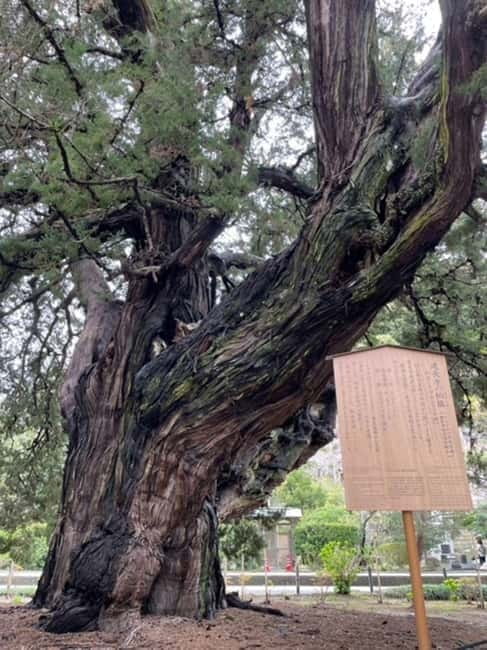
A standout theme from high ratings is the guide’s storytelling and organization. Many participants highlight that the guide keeps explanations clear and adjusts attention to the group.
In particular, the name Yurie comes up in guide feedback, with notes about friendly, precise English and practical guidance. One very useful detail: a hand-drawn map at the end helped people keep exploring on their own without getting lost. That’s a real quality-of-day benefit.
Another point that shows up repeatedly is how the guide connects religion, architecture, and messages. Zen temples can feel formal and hard to decode. Here, you get help reading what you’re seeing, like the dragon ceiling at Hatto or the meaning behind ceremonial routes.
You also get small-group dynamics. Limited to 4 participants, you’re less likely to feel like a number in a long line.
Should You Book the Kamakura First Samurai Capital Walking Tour?
I’d book this if you want an efficient half-day that blends three core Kamakura experiences: Zen temples, Tsurugaoka Hachimangu, and Kamakura-bori lacquer culture. The small group, the guide time, and the museum admission are the core value drivers. It’s the kind of tour that helps you leave with a mental map of Kamakura, not just a camera roll.
I’d think twice if stairs are a deal breaker for you. Engaku-ji’s 135-stair climb is central to the tour experience. Also, if seeing the specific Buddha Hall is your top priority, note that the Butsuden is listed as closed for maintenance until 2027.
If you’re reasonably active and want a guided route with real context, this is a strong pick. It’s one of the better ways to turn a Kamakura day trip into something that feels meaningful.
FAQ
Where does the tour start?
You meet at Kita-Kamakura Station, East exit. The guide meets you just outside the ticket gate.
How long is the tour?
The duration is 210 minutes, about 3.5 hours.
Is the tour in English?
Yes, the tour is in English with a live tour guide.
How many people are in a group?
It’s a small group, limited to 4 participants.
What’s included in the price?
The price includes the 3.5-hour English walking tour with a licensed guide, and the admission fee for the Kamakura Lacquerware Museum.
Are temple admission fees included?
No. Temple admission fees are not included, and the tour lists an approximate ¥500 per temple.
What should I wear or bring?
Wear comfortable shoes because there’s a lot of walking, ups and downs, and stairs. Bring drinks and a hat for hot sun, and dress for rain or shine.
Is the tour wheelchair accessible?
No. It is not suitable for wheelchair users. It is also not suitable for people with a cold and people over 95 years.
Newly listed around Kamakura
- Kamakura: Private History and Heritage Tour by Rickshaw★ 4.9 · 7 reviews
- Kamakura Private Custom Tour with Local Guide★ 5.0 · 7 reviews
- Kamakura: Walking Tour through the City of Samurai★ 4.9 · 12 reviews
- Kamakura: Half day Walking tour & Japanese sweets★ 5.0 · 11 reviews
- Kamakura: Daibutsu Hiking Trail Tour with Local Guide★ 5.0 · 10 reviews
- Kamakura Half Day Tour with a Local Expert Guide★ 4.4 · 23 reviews
- Kamakura and Enoshima: Private Guided Day Tour with Vehicle★ 3.9 · 17 reviews
- Kamakura: A Journey Through Medieval Japan (Walking Tour)★ 4.9 · 26 reviews
Samurai Sword & Ninja Training, compared.
Samurai Ninja Museum Guided tour and Experience
Read our review →
Kendo and Samurai Experience with Uniform and Gear
Read our review →
Samurai Sword Class by Experts in Traditional Arts
Read our review →
Skip the lines Basic Ticket at SAMURAI NINJA MUSEUM KYOTO
Read our review →
Samurai Sword & Archery Class from Samurai Descendant
Read our review →
Browse the lists this tour appears in