

Review · WORKSHOPS
Kyo-arashi Shibori Scarf Class
Shibori looks hard, until you fold. This class at the Kyoto Shibori Museum is a fun, hands-on way to learn the kyo-arashi shibori method and walk away with a personalized silk scarf you actually made. One possible drawback is that the session is short, about 30 minutes to 1 hour, so you get one finished scarf, not much time for repeated experiments.
I especially like that you do more than just dye. You also get museum admission and the chance to try on a shibori kimono while your fabric dries. The instruction is very approachable, and one reviewer specifically mentioned an English-speaking instructor named Nina, which is a great sign if you want clear guidance without guesswork.
In This Review
- Key points to know before you go
- Kyoto Shibori Museum and why this scarf class feels special
- The real work, folding around a pipe and dyeing your silk
- Choosing colors and setting yourself up for a scarf you will actually wear
- What to do while your fabric dries: museum browsing and kimono time
- Price, timing, and how to plan around a short but meaningful session
- Who this class is best for, and who should skip it
- Should you book the Kyo-arashi scarf class?
- FAQ
- How long is the Kyo-arashi Shibori scarf class?
- What does the price include?
- Can I choose the colors for my scarf?
- Is this activity private?
- What is the minimum age to join?
- Where does the class take place?
Key points to know before you go

- Kyo-arashi shibori, done step-by-step on a silk scarf sized 70 by 17 inches (180 by 44 cm)
- Pick your own dye color(s) and see the pattern reveal after pressing and unfolding
- Museum admission included, so you can look around while everything sets
- Kimono try-on time during the drying period, which makes the class feel bigger than it is
- Private group class so it feels personal, not like a crowded factory line
Kyoto Shibori Museum and why this scarf class feels special
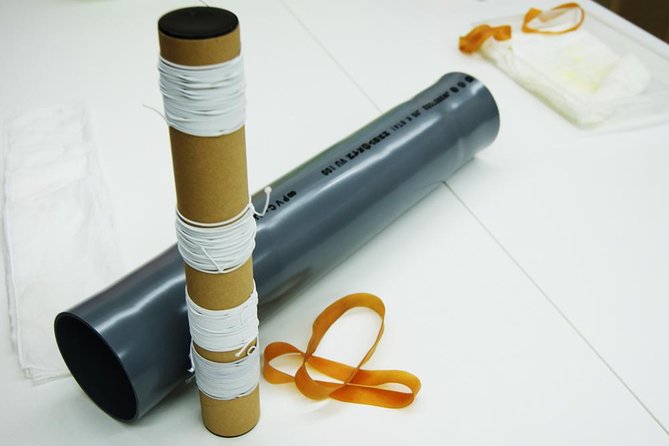
Kyoto has no shortage of craft experiences, but this one has a clear advantage: it is anchored in a dedicated setting, the Kyoto Shibori Museum. That matters because shibori is not just a craft where you follow a recipe. It is a process with real technique behind the look. When you learn in a museum space built around the art, you get context as well as hands-on time.
Also, the class is designed for first-timers. You are not expected to already know Japanese textile terms. Instead, you learn the method through folding, wrapping, stringing, dyeing, pressing, and unfolding. In other words, it teaches you the logic of the pattern, not just the final result.
For me, the most reassuring part is that you leave with something concrete, a finished souvenir scarf made from your session. You are not buying a finished item after the fact. You are learning a technique, making decisions, and then watching your fabric transform. That is the kind of “I did this” memory you keep longer than another photo.
A few more Kyoto days to weigh up
- PERFECT KYOTO 1-Day Bus Tour
★ 5.0 · 13,518 reviews - Kyoto: Fushimi Inari, Kinkakuji, Bamboo Grove 1 Day Bus Tour
★ 4.8 · 4,316 reviews - Kyoto: Tea Ceremony in a Traditional Tea House in Kiyomizu
★ 4.9 · 3,519 reviews
The real work, folding around a pipe and dyeing your silk
Here is the core of what you will do, and it is more mechanical than you might expect at first. You start at the museum with guidance from the staff. The goal is to dye silk using the kyo-arashi shibori method, which creates that distinctive patterned effect through tight folding and controlled dye access.
First, you fold your fabric in the specific way taught during the session. Then you wrap a pipe in the fabric. Next comes the part that makes the pattern possible: you wind a string around the pipe and tighten it enough that the fabric bunches down. The instructor then shows you how to dye the fabric with your chosen color.
After dyeing, you undo the string and roll the fabric with a towel. You then press it. This is one of those steps that feels simple, but it is important, because it helps the fabric hold the shapes you created during folding. Finally, you unfold to see the results.
The practical takeaway: this is a process class, not a “watch and touch nothing” experience. If you like working with your hands and following steps carefully, you will have a great time. If you hate waiting while things dry and set, plan your expectations around that. Your fabric needs time to dry after dyeing.
Choosing colors and setting yourself up for a scarf you will actually wear
The class lets you customize your scarf to your own color preferences, and you dye using your favorite color. That is more than a nice option. It lets the finished souvenir match your style, not just the museum’s samples.
One thing to know from the way the class is described is that you do the creative choices, but you do not control everything. Shibori patterns are made by how the fabric is folded and secured, not by painting freehand. So even if two people pick similar colors, the visual texture can still differ because of how each piece is wrapped and tightened during the folding step.
That actually can be a good thing. It makes your scarf feel personal in a way mass-produced souvenirs never do. Your scarf is not just dyed silk, it is the outcome of a specific technique performed on your own fabric.
Also, the scarf you dye is a good size for Kyoto souvenirs. You are working with a 70 by 17 inch (180 by 44 cm) silk scarf. That length gives you real styling options, like wearing it as a scarf or wrapping it in a simpler way over a bag or coat. You are not making a tiny craft that feels too precious to use.
What to do while your fabric dries: museum browsing and kimono time
A smart design choice here is what happens during the drying period. While your scarf is drying, you are free to browse the museum displays and try on a shibori kimono.
This is valuable because it turns the class into a half of a day experience without stretching it. You are not stuck waiting idly in a chair. Instead, you can look around and learn how shibori works beyond your one scarf. The museum visit is included, so you are not paying extra for the chance to understand what you are making.
The kimono try-on is also a strong add-on. You get to experience shibori in a wearable form, which helps you connect the dots between the technique and the look. If you have ever wondered what shibori textiles look like in motion, the kimono try-on is a quick way to get that feel.
One practical note: because your scarf is drying, your schedule is linked to the process. If you are trying to cram Kyoto into rigid time blocks, build in some flexibility. The class is short, but the dyeing steps still need that drying time.
A different sort of day in Japan:
- Kyoto Geisha Walking Tour: Gion District & Hidden Gems
★ 4.7 · 3,273 reviews - Kyoto: Tea Ceremony Ju-An at Jotokuji Temple
★ 4.9 · 3,207 reviews - Kyoto: 45-Minute Tea Ceremony Lesson Experience
★ 4.3 · 2,378 reviews - Kyoto: Gion Geisha District Walking Tour – Stories of Geisha
★ 4.7 · 2,187 reviews
Price, timing, and how to plan around a short but meaningful session

The price is $50.30 per person. For a hands-on silk dye class that includes museum admission and a kimono try-on, I think it is a reasonable value. You are paying for instructor guidance, a professional technique setup, and the included museum time, plus you take home the product you make.
Timing is also workable. The class runs about 30 minutes to 1 hour. That makes it easier to fit into a Kyoto day than longer workshops that can eat up half your itinerary. You also get multiple start times, which helps if you prefer mornings for shops or afternoons for slower museum browsing.
A small planning detail: this experience is often booked about 23 days in advance on average. That does not mean you must book immediately, but it does mean you should not treat it as a last-minute add-on if your dates are fixed.
Logistics are friendly. You receive a mobile ticket, and the tour is private, meaning only your group participates. It is also near public transportation, and there is two-car parking and bicycle parking if you are coming by bike or car.
If you are arranging Kyoto days, aim to schedule the class when you are not rushing to the next train. You will enjoy it more when you can follow the steps without tight timing stress.
Who this class is best for, and who should skip it
This class is a great fit if you want a real craft experience with a clear outcome. The format makes it friendly for people who have never done dyeing before. You get supervision from a professional, and you end up with a scarf you can take home.
Age matters here: the minimum age is 12, and adult pricing applies to all ages. That means it can be a fun family activity for older kids and teens, especially if they like crafts and are patient enough to see the process through to unfolding and the final reveal.
It is also a good choice if you enjoy Japanese culture through making things, not just watching from a distance. The museum and kimono try-on add cultural context without requiring advanced background knowledge.
I would not choose this if your main goal is a long, multi-hour masterclass. The session is designed to be efficient. You make one scarf and get the key steps, but the time limit is real.
Should you book the Kyo-arashi scarf class?
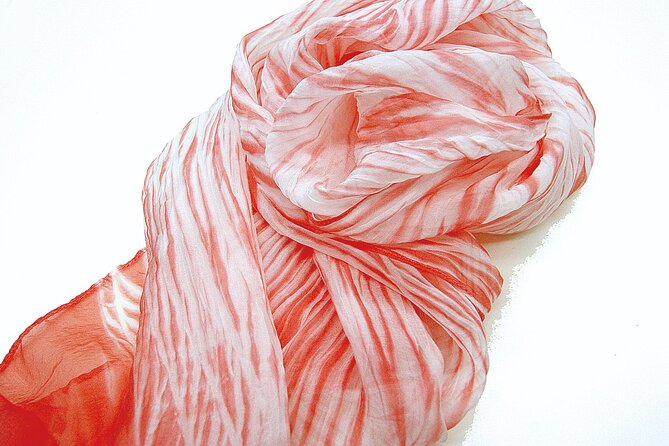
I think you should book this if you want a memorable Kyoto souvenir with an actual story behind it. The combination of professional guidance, a clear technique you can repeat in your memory, and the chance to browse the museum plus try on a shibori kimono makes it feel like more than a quick activity.
It is especially worth it if you like “hands-on, finishable” experiences. If you are the type who gets restless watching demonstrations, this gives you a role in the process from folding to dyeing.
If you do not like waiting at all, or if you are traveling with someone under 12, you might want to look at other Kyoto craft options. The short session and minimum age are the main tradeoffs.
FAQ

How long is the Kyo-arashi Shibori scarf class?
Classes usually take about 30 minutes to 60 minutes per class.
What does the price include?
The price includes admission to the Kyoto Shibori Museum and the opportunity to try on a kimono.
Can I choose the colors for my scarf?
Yes. You can customize your scarf to your color preferences and dye it with your favorite color during the class.
Is this activity private?
Yes. It is a private tour or activity, and only your group will participate.
What is the minimum age to join?
The minimum age is 12 years, and adult pricing applies to all ages.
Where does the class take place?
It takes place at the Kyoto Shibori Museum, 135-5 Shikiamichō, Nakagyo Ward, Kyoto, 604-8261, Japan. The activity ends back at the meeting point.
Newly listed around Kyoto
- Zen Meditation for Life in Kyoto★ 5.0 · 10 reviews
- Kyoto: Zen Meditation at a Private Temple with a Monk★ 5.0 · 25 reviews
- Kyoto Private Customizable Day Tour with Guide and Vehicle★ 5.0 · 52 reviews
- Private Wagyu Beef Tour with a Local Guide★ 5.0 · 6 reviews
- Kyoto: Gion Geisha District & Sake-in-Hand Walking Tour★ 5.0 · 37 reviews
- Your Private Vacation Photography Session In Kyoto★ 5.0 · 110 reviews
- Private Guided Traditional Buddhist Cooking in Japan★ 5.0 · 16 reviews
- Private Pewter Sake Cup Experience with a Kyoto Artisan★ 5.0 · 31 reviews
Workshops, compared.
Sushi Making Tokyo Roll and Authentic Japanese Sushi Class
Read our review →
Roll and Authentic Sushi Making Class in Asakusa
Read our review →
Ramen Cooking Class at Ramen Factory in Kyoto
Read our review →
Sushi Making Class in a Happi Coat near a Famous Spot
Read our review →

Tokyo Sushi Making Class in Tsukiji with Professional Chef
Read our review →
Ramen & Gyoza Cooking Class in Tokyo with Local Supermarket Visit
Read our review →Browse the lists this tour appears in