
Review · WORKSHOPS
Kyoto: Beginner Knife Sharpening & Handle Fitting Workshop
Kyoto teaches knife skills fast. I love the take-home result, because you leave with the knife you sharpen and the handle you fit, packaged for the trip. I also love how English support and close feedback help beginners actually get it right, taught by instructors such as Julio, with translations showing up when needed. One possible drawback: handle fitting uses fire, so smoke can appear and your clothes may smell smoky if you wear your best outfit.
You’ll spend about 2 hours in a small group (up to 3 participants) at Japanese knife shop HIRAI. You start by choosing one knife style for the workshop, Santoku, Deba, or Yanagi, then move through sharpening on the shop’s whetstone and fitting the included magnolia handle, with an engraving add-on available if you tell them in advance.
In This Review
- Quick reasons this workshop feels worth it
- Where to find HIRAI and how the workshop actually starts
- Choosing Santoku, Deba, or Yanagi before you touch the stone
- Sharpening on a whetstone, with corrections that build confidence
- What you should do to get more out of sharpening practice
- Handle fitting with fire, and why your clothes matter
- Engraving, packaging, and taking the knife home the same day
- The knife skills you carry home, not just the souvenir
- Price and value: what $161 includes, and where extra costs can pop up
- Logistics that matter in real life: small group, timing, rules
- Who this workshop fits best, and who should pass
- Should you book this knife workshop in Kyoto?
- FAQ
- What is the duration of the Kyoto knife sharpening and handle fitting workshop?
- Where is the meeting point?
- What knife types can I choose from for the workshop?
- Can I take my knife home after the workshop?
- Is there an English guide available?
- Is engraving available, and is it included?
- Do I need to purchase a whetstone?
- Is the handle included, and can I choose something other than magnolia?
Quick reasons this workshop feels worth it
- Small group, up to 3 participants, so you are not stuck watching from the back.
- Two core skills in one: sharpening technique and handle fitting, not just a demo.
- You get to take your knife home, packaged right after the work.
- No sales pressure vibe in the way it is run, even though there are beautiful knives on-site.
- English support is available, and corrections are given clearly for beginners.
- Optional engraving is built into the experience if you request it ahead of time.
Where to find HIRAI and how the workshop actually starts
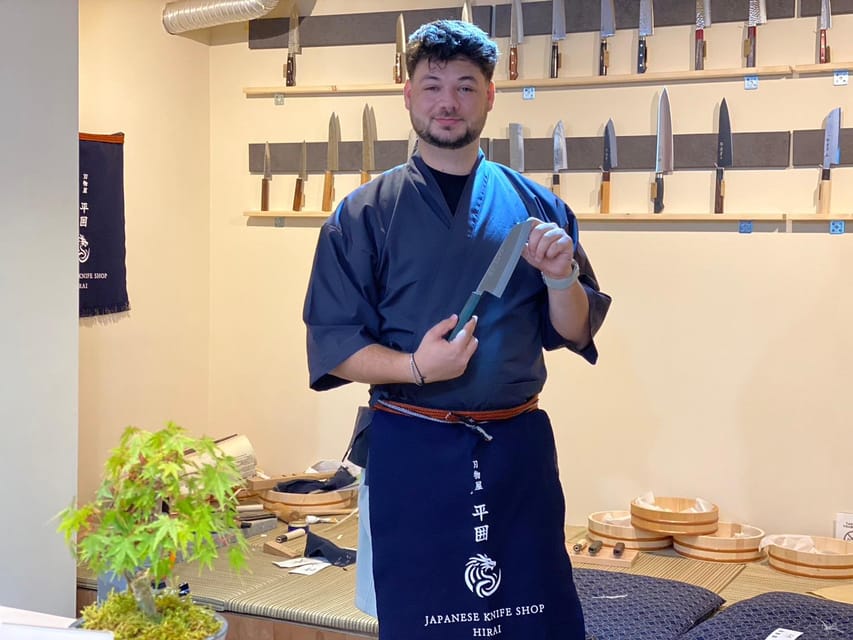
This is a shop-based experience, so the first smart move is simple: go straight to Japanese knife shop HIRAI and find the white storefront curtain at the building. This matters because you want a smooth start. Arrive a few minutes early, and you’ll avoid that awkward rush while you figure out where to stand and who to check in with.
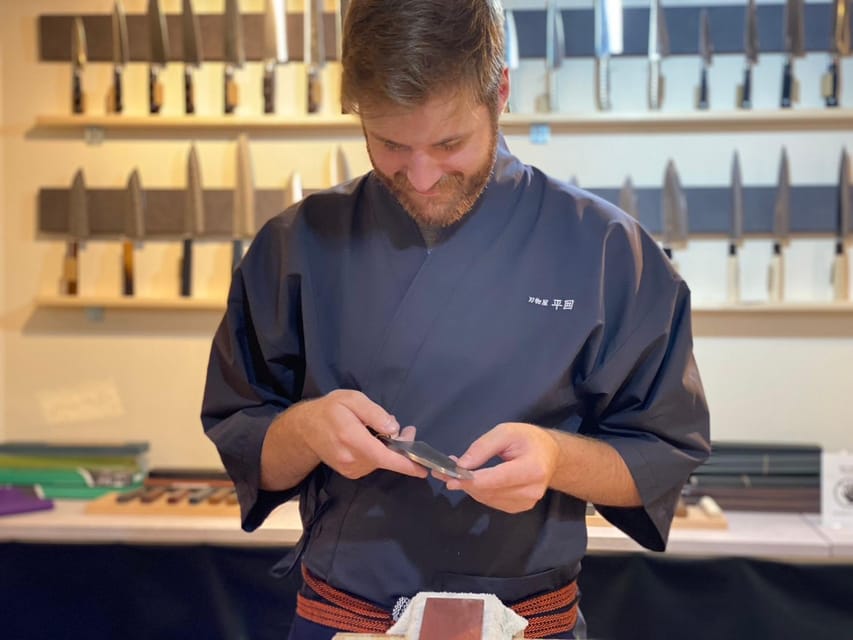
Once you’re inside, the pace is calm and practical. You’re not dealing with a long lecture. Instead, you’re guided into what Japanese knives are and why sharpening and proper handle fitting matter, then you move quickly to doing the work yourself. That mix is a big part of why the class feels friendly for first-timers, including people who were unsure about using whetstones.
A few more Kyoto days to weigh up
- PERFECT KYOTO 1-Day Bus Tour
★ 5.0 · 13,518 reviews - Kyoto: Fushimi Inari, Kinkakuji, Bamboo Grove 1 Day Bus Tour
★ 4.8 · 4,316 reviews - Kyoto: Tea Ceremony in a Traditional Tea House in Kiyomizu
★ 4.9 · 3,519 reviews
Choosing Santoku, Deba, or Yanagi before you touch the stone
A key part of your experience is choosing the knife you will sharpen. You pick from Santoku, Deba, or Yanagi, and that choice shapes what you’re working with during the class. Even if you do not know the differences yet, the instructors frame it as practical, hands-on learning.
If you care about the final look, consider engraving early. Engraving is available, and you should let the shop know in advance if you want letters added. The workshop supports up to 4 characters, so think of initials, a short name, or a small set of symbols you’ll actually want to see on the blade for years.
Two things to keep in mind here:
- You can only engrave if you arrange it ahead of time, not on the fly.
- The included engraving fee applies when you request engraving as part of the workshop.
Sharpening on a whetstone, with corrections that build confidence
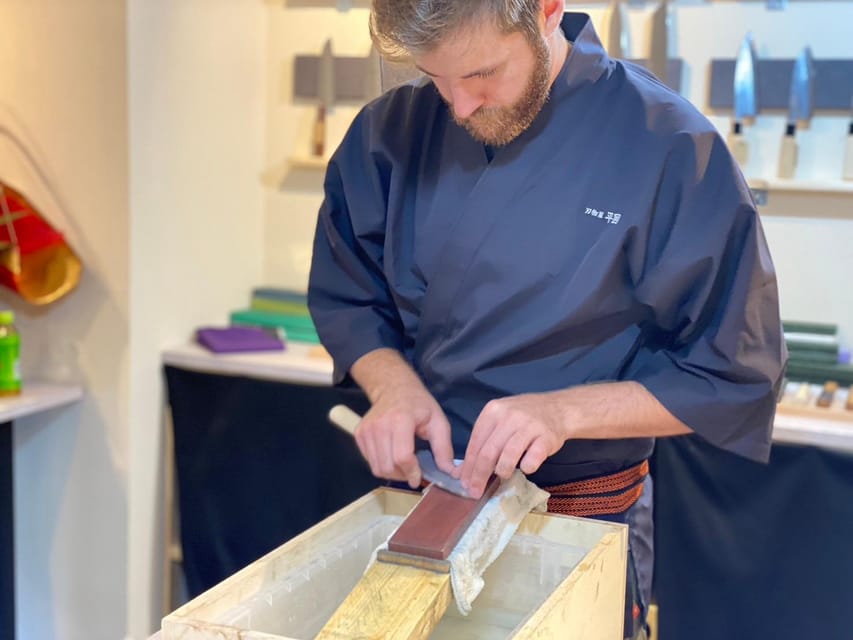
The sharpening section is where you go from watching to doing. You get your own knife for the workshop, and the shop provides the whetstones, so you do not need to buy gear just to take the class. Your main job is to learn the method and then practice while the instructor checks what you are doing.
What makes this section work well for beginners is the emphasis on clarity and adjustment. The feedback you receive is hands-on, not just motivational. In reviews, people specifically praised the way the English support and the instructor’s patience helped them correct technique, especially when YouTube learning had left them with mixed results. That is exactly what you want from a class like this, because sharpening feels simple until you try to repeat it at home.
You’ll also notice how the instructor keeps the progress grounded. Instead of rushing you through the motions, they help you reach a proper result you can trust. That confidence matters because you are taking the knife home, not leaving with only a souvenir photo.
What you should do to get more out of sharpening practice
If you want the best outcome, treat the class like skill training, not sightseeing. Pay attention to the basics the instructor repeats, then commit to practicing the same steps until your motions feel consistent. If something feels awkward, ask for a correction right away. In a small group, your questions get time.
A different sort of day in Japan:
- Kyoto Geisha Walking Tour: Gion District & Hidden Gems
★ 4.7 · 3,273 reviews - Kyoto: Tea Ceremony Ju-An at Jotokuji Temple
★ 4.9 · 3,207 reviews - Kyoto: 45-Minute Tea Ceremony Lesson Experience
★ 4.3 · 2,378 reviews - Kyoto: Gion Geisha District Walking Tour – Stories of Geisha
★ 4.7 · 2,187 reviews
Handle fitting with fire, and why your clothes matter
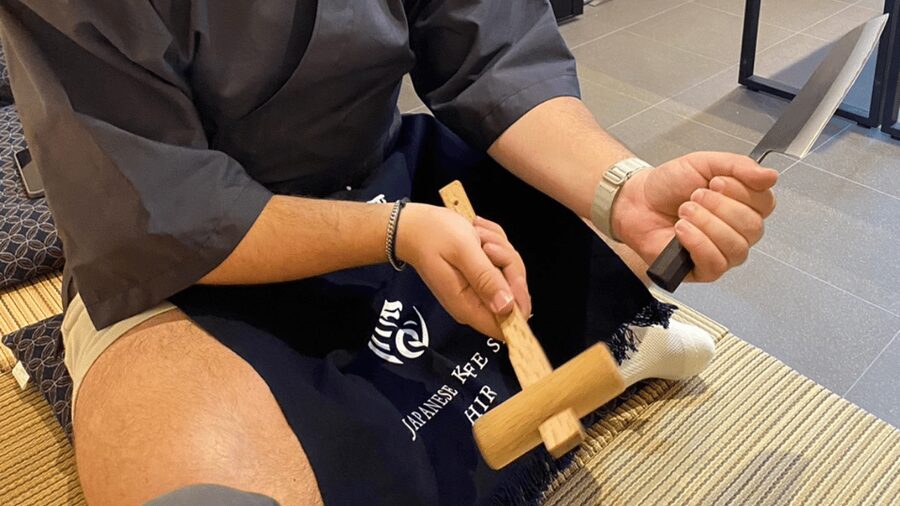
The handle fitting part is where the workshop becomes memorable. You will attach a handle in the shop, and the included option is a magnolia tree handle. This is not just a “stick it on and go” moment. It is hands-on craftsmanship, with a technique that can involve heat.
Here is the practical consideration that can surprise people: during handle fitting, they use fire, so smoke can come out. If you do not want your clothes to smell smoky, wear something you do not mind getting that odor on it. The workshop provides a Japanese working uniform and an apron, which helps, but your outer layers still matter.
If you are particular about appearance or comfort, there is also a way to customize. You can choose other handle types, but it requires an additional fee, and the price changes depending on what kind of handle you choose. If you want to keep costs predictable, stick with the magnolia handle, which is included.
Engraving, packaging, and taking the knife home the same day
When your sharpening and handle fitting are complete, you package your knife and take it home. That is one of the strongest reasons to book this workshop instead of just visiting a store. You are not only buying a knife. You are learning the care steps and building a personal connection to the exact knife you’ll use.
If you requested engraving, it is part of the experience workflow. The engraving fee is included, but again, you need to request what you want ahead of time and keep it within the character limit. Think of the engraving as your Kyoto marker, a small detail that makes the knife feel like yours from day one.
Packaging is handled for you after the workshop. That matters for travel because you are dealing with a blade. You do not want to figure out storage and protection right after class while you’re trying to get through the rest of Kyoto.
The knife skills you carry home, not just the souvenir
A lot of workshops stop at the wow factor. This one is different because it teaches you what to do afterward. Reviews repeatedly point out that the class focuses on practical technique for daily use, not vague advice.
You leave with:
- A knife you sharpen in the session
- The magnolia handle you attach in the workshop
- A clear sense of how the process works, supported by demonstration plus your own practice
- Confidence that you can replicate the steps rather than guessing at angles and pressure
Even if you plan to keep using your current kitchen knives, learning how Japanese knife sharpening works changes your whole approach. You start thinking in terms of maintenance, timing, and consistency. If you’ve ever had a knife that always feels dull, the class gives you a path to diagnose the problem instead of replacing blades every season.
Price and value: what $161 includes, and where extra costs can pop up
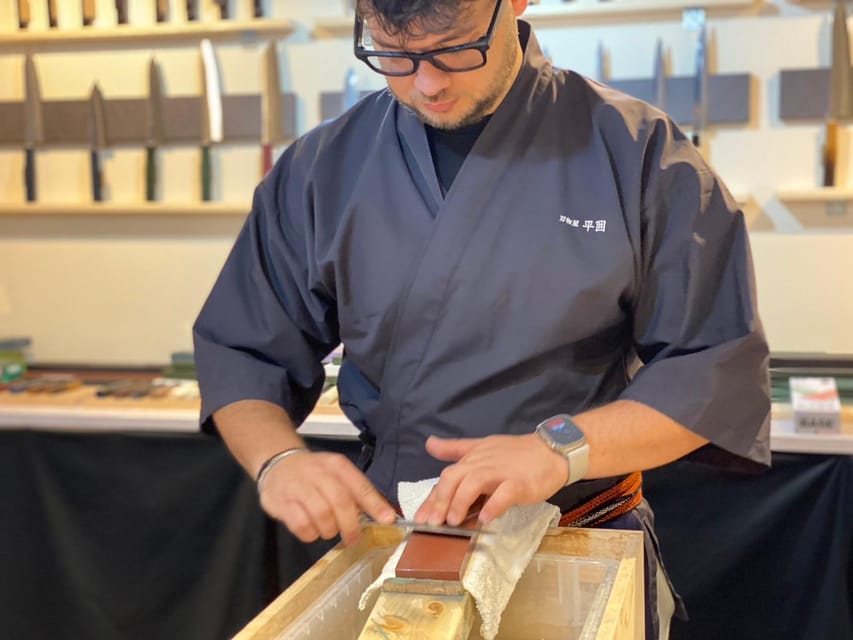
At $161 per person for a 2-hour session, this is not a casual activity price, but it also is not a “pay for nothing but a demonstration” setup. The value comes from what is included.
Your price covers:
- A knife you sharpen during the workshop
- The handle you attach, specifically the magnolia handle
- Japanese working uniform and an apron
- The experience fee
- Engraving fee, assuming you request engraving in advance
What is not included:
- Buying additional knives from the shop
- Choosing handle types other than magnolia (additional fee applies)
- Purchasing a whetstone, since you use the shop’s provided whetstones during the class
So how do you judge value? You compare it to the price of the knife alone. Here, you are learning sharpening technique and handle fitting on a real blade, then taking that blade home. Several reviews also highlight that it feels like a good deal because the activity is not much more than the cost of the knife, once you factor in instruction.
The only time the total cost can rise is if you upgrade handles or decide to buy extra knives onsite. The workshop itself is not designed around sales pressure, which is a big relief if you want to enjoy the craft without feeling pushed.
Logistics that matter in real life: small group, timing, rules
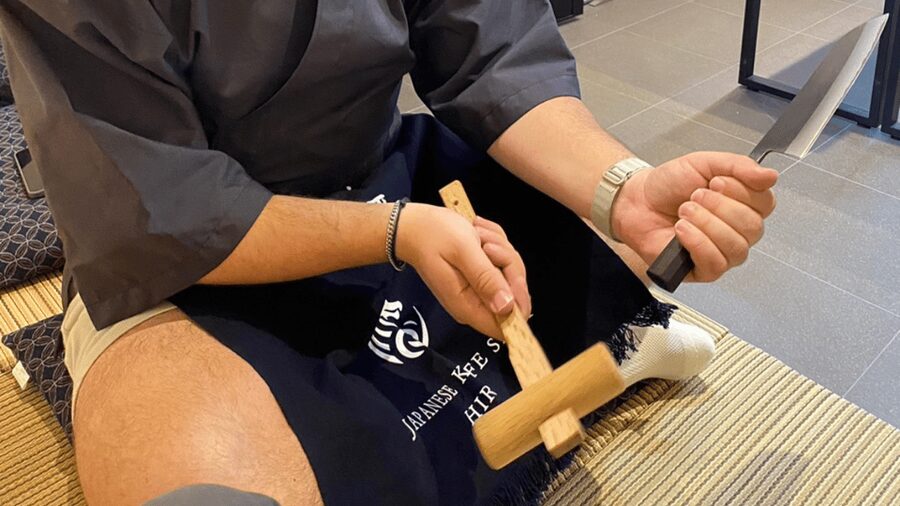
This experience is limited to a small group, capped at 3 participants. That size affects everything. You get more time with the instructor. You also get a calmer workshop environment, which makes concentration easier during sharpening and fitting.
Plan on a 2-hour duration. That is long enough to learn both main skills, but short enough that it fits neatly into a busy Kyoto day.
You also should know what not to do. Pets and baby strollers are not allowed. Smoking is not allowed, alcohol and drugs are not allowed, and noise is discouraged. Keep your phone on silent, and treat the class like a focused workshop.
Who this workshop fits best, and who should pass
This is a beginner-friendly workshop, but it still has limits. It is not suitable for children under 15, wheelchair users, or people over 80. If you are comfortable standing and concentrating for about 2 hours, it should work well.
Who will love it most:
- You want to learn knife maintenance you can do at home, not just buy a tool
- You are curious about Japanese knives and want hands-on learning rather than reading
- You like small-group classes where you get direct corrections
- You want a Kyoto souvenir with real usefulness
Who might find it less ideal:
- You are very sensitive to smoke smells, because handle fitting uses fire and visible smoke can occur
- You are only interested in buying a knife quickly, because the workshop is about learning, not shopping alone
- You want a guaranteed custom setup on the spot, because other handles cost extra and must be chosen during the process
Should you book this knife workshop in Kyoto?
If you like the idea of leaving Kyoto with a knife you can actually maintain, this is one of the better ways to spend your time. The strongest reasons to book are simple: you learn sharpening technique, you fit a real handle, and you take the finished knife home the same day, packaged for travel.
I would book it if you’re a beginner who wants clear guidance with close feedback, and you can wear an outfit you don’t mind getting smoky. I would skip it if your top priority is minimizing any mess or smell, or if you only want a quick purchase without hands-on practice.
If you’re even slightly interested in sharpening and knife care, this is the kind of Kyoto experience that keeps paying off after you return home.
FAQ
What is the duration of the Kyoto knife sharpening and handle fitting workshop?
The workshop lasts about 2 hours.
Where is the meeting point?
You should come directly to the shop (Japanese knife shop HIRAI). Look for the white storefront curtain at the building.
What knife types can I choose from for the workshop?
You can choose one knife for the workshop from Santoku, Deba, and Yanagi knives.
Can I take my knife home after the workshop?
Yes. After the workshop, they package your knife and you can take it home.
Is there an English guide available?
Yes. The instructor supports English and Japanese.
Is engraving available, and is it included?
Engraving is available if you request it in advance. The fee is included, and you can request up to 4 characters.
Do I need to purchase a whetstone?
No. Customers use the whetstones provided by the shop.
Is the handle included, and can I choose something other than magnolia?
A magnolia tree handle is included. You can choose other handle types, but it requires an additional fee that depends on the handle type.
Newly listed around Kyoto
- Taste of Nishiki Market Walking Food Tour with Local guide★ 5.0 · 17 reviews
- Kyoto: Sushi Making Class with Sushi Chef★ 4.8 · 64 reviews
- Simple Plan with Maiko★ 4.4 · 10 reviews
- Shibori Furoshiki Course at Kyoto Shibori Museum★ 5.0 · 21 reviews
- Kyoto: City Secrets eBike Tour★ 4.9 · 196 reviews
- Sacred Pathways: Discover the Philosopher’s Path of Kyoto★ 4.9 · 20 reviews
- Private Tour to Monkey Park and Arashiyama Highlights★ 5.0 · 22 reviews
- Private Nara Tour from Osaka – Meet at Your Hotel★ 5.0 · 22 reviews
Workshops, compared.
Sushi Making Tokyo Roll and Authentic Japanese Sushi Class
Read our review →

Roll and Authentic Sushi Making Class in Asakusa
Read our review →
Ramen Cooking Class at Ramen Factory in Kyoto
Read our review →
Sushi Making Class in a Happi Coat near a Famous Spot
Read our review →

Tokyo Sushi Making Class in Tsukiji with Professional Chef
Read our review →
Ramen & Gyoza Cooking Class in Tokyo with Local Supermarket Visit
Read our review →Browse the lists this tour appears in