
Review · WORKSHOPS
Kyoto: Japanese Koto & Shamisen Concert and Koto Class
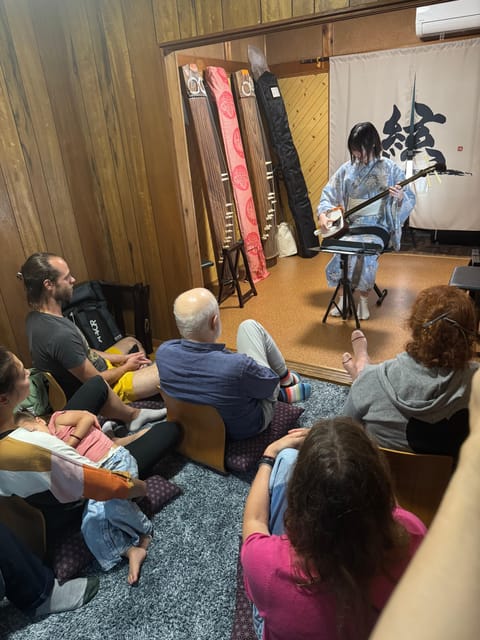
Kyoto’s koto sounds best in a living room. This concert and class trades temple crowds for a cozy, old Japanese house setup, with professional koto and shamisen music that ranges from classical to contemporary and even original pieces. I especially like the close-up Q&A time, plus the fact that you can try a simple koto piece yourself at the end. One drawback to plan for: the venue can be a little tricky to locate in a residential alley, so give yourself extra time, especially later in the evening.
You also get real cultural context, not just performance. The program starts with an introduction to the instruments and the sheet music, then you watch the live set, and you finish with guidance that helps beginners get their hands on the koto (no prior experience needed). It’s priced at about $38 per person, and that works out well because the experience includes materials, instrument use, guided instruction, and even photos of you during the activity.
In This Review
- Key highlights worth your attention
- A concert in a small Kyoto home, not a temple hall
- The 1 hour to 100 minutes flow, from instrument intro to hands-on koto
- Koto and shamisen music, and how the program spans styles
- Q&A and photos, the real reason this feels personal
- Try the koto at the end, what beginner coaching really means
- Who teaches you, and what languages you can expect
- Price and value at about $38 per person
- Finding the small house, and pairing it with Kyoto sights
- Who should book this koto concert and class?
- Should you book this Kyoto koto and shamisen concert and class?
- FAQ
- Where is the meeting point?
- How long is the concert and koto class?
- What languages are available during the experience?
- Is this experience beginner-friendly?
- Will I have time to ask questions?
- Are photos included?
- Do I get to try the koto myself?
- What is included in the price, and what is not?
- What ages is it suitable for?
- What happens if I arrive late or need to cancel?
Key highlights worth your attention
- A small home setting that feels personal, not staged like a theater show
- Classical to contemporary, plus original compositions depending on season and performer
- Close-up Q&A with the performer so you can ask real questions
- Try-playing time on the koto with a pro coach, even as a first-timer
- English or Japanese support, with friendly explaining throughout
A concert in a small Kyoto home, not a temple hall
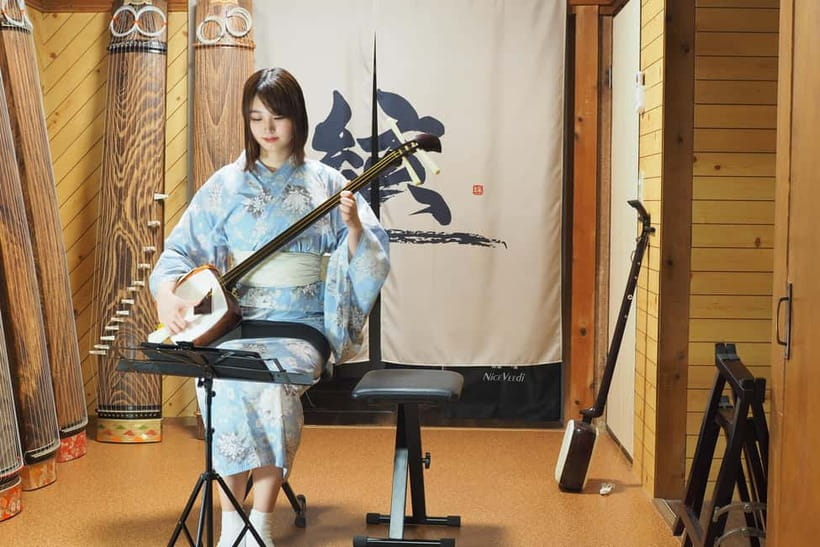
In Kyoto, it’s easy to end up in the same kind of cultural boxes: ticketed halls, big buildings, or spaces designed for watching from a distance. This experience takes a different approach. You’re in an old, small Japanese house, the kind of place where sound feels close and conversations feel natural between segments of the program.
That change matters. With koto and shamisen, the details are in the tone and timing. In a cozy venue, those textures land faster in your ears. And because it’s not a huge crowd, you’re more likely to feel like you’re meeting the music, not just consuming it.
I also like that the hosts set a warm, homey tone from the start. The program includes a brief introduction to what you’re hearing and how the music is organized on the sheet music, so the performance makes sense as you listen. It’s a calmer, more human way to understand traditional instruments.
A few more Kyoto days to weigh up
- Kyoto: Traditional Concert at Townhouse or Bathhouse
★ 4.9 · 224 reviews
The 1 hour to 100 minutes flow, from instrument intro to hands-on koto
This runs about 1 hour to 100 minutes, and the schedule is built around three phases: orientation, performance, and practice.
First comes a short introduction. You’ll learn about the traditional instruments featured in the show, including the koto and shamisen. The instruction also touches on the sheet music so you’re not completely lost while the musicians perform. One of the biggest wins here is that the presenter and performer are ready to explain how to read the score, not just what the instruments are.
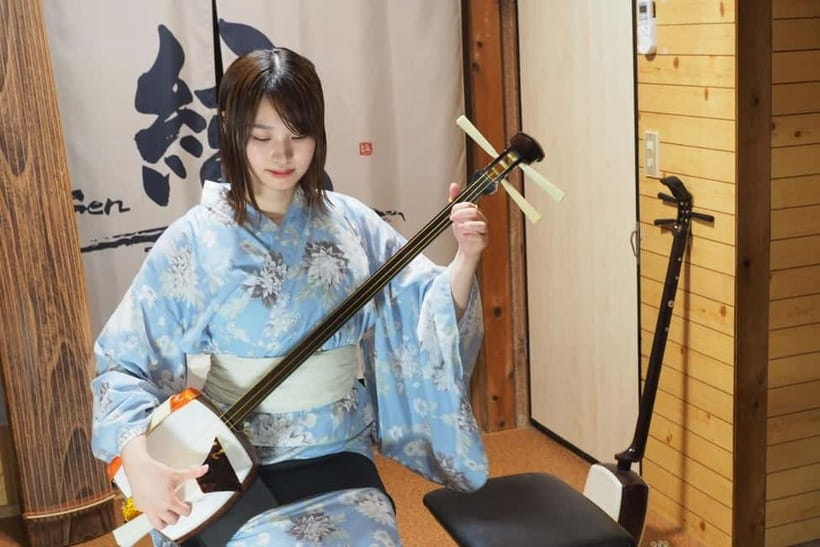
Next is the live performance. Expect a mix of styles, including classical pieces, contemporary compositions, and original works. Some sessions are seasonally themed, and the exact program can vary depending on the performer and when you go.
Then you get the part that often makes people remember the experience for months: a close-up Q&A. You have time to talk with the professional koto player, ask questions, and get a deeper sense of what you just heard. After that, you can take photos.
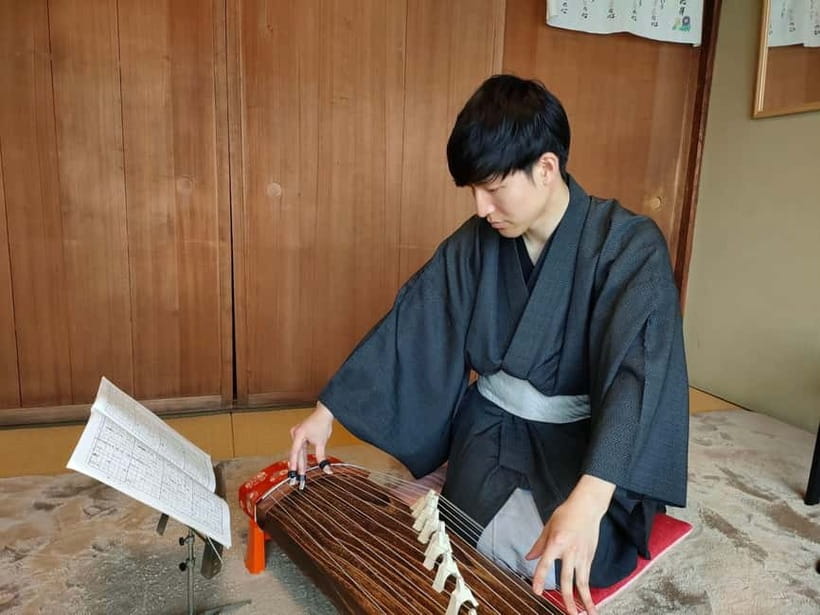
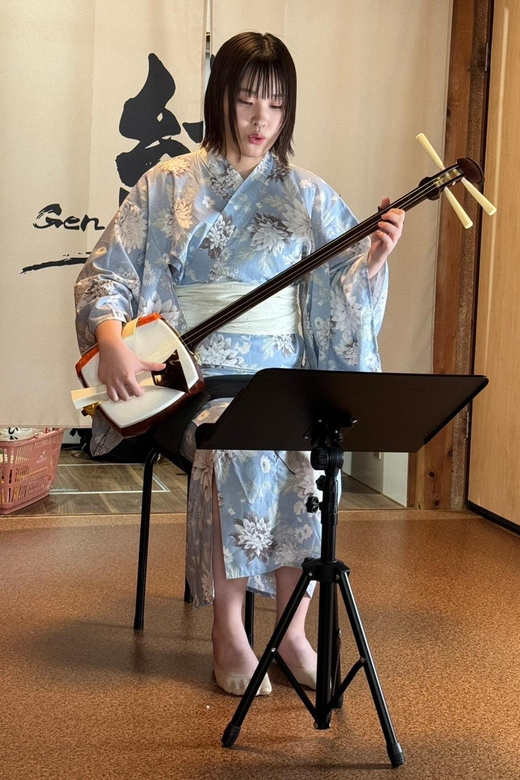
Finally, you try playing. You get koto use and materials, plus instructor guidance. You won’t be expected to master anything complicated. Instead, you’ll work on a simple piece and basic techniques with a professional nearby, which is the fastest route to feeling the instrument’s charm up close.
Koto and shamisen music, and how the program spans styles
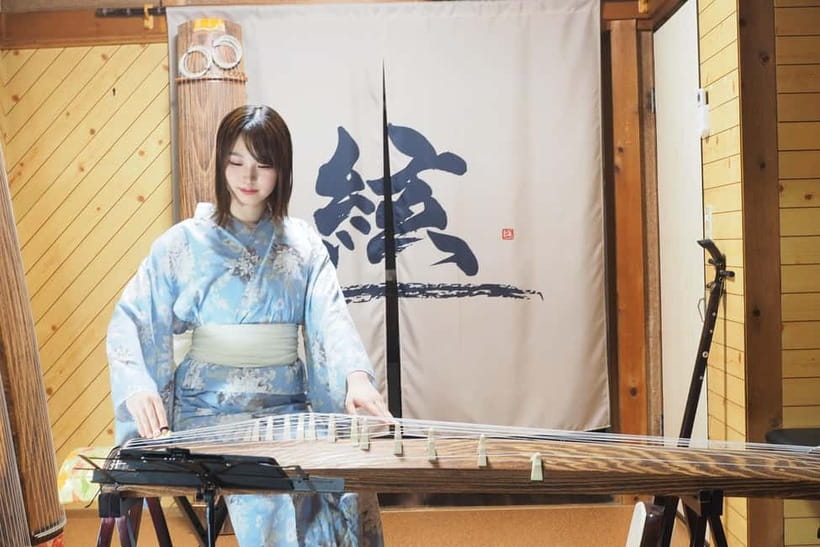
What I like most about this setup is that it doesn’t treat traditional music as museum-only. The concert includes music from classical roots to contemporary energy, plus original compositions. That mix helps you connect faster because you’re not listening to only one mood.
You may hear traditional pieces with vocals, depending on the program. You might also hear contemporary pieces where the rhythm and delivery feel more driving. Either way, the point is variation. The experience is designed so you can recognize that the koto and shamisen can sound elegant, emotional, and also modern.
One practical takeaway for you: pay attention to how the performers switch techniques and delivery. Even when you do not know the theory, you can still hear differences in how the musicians produce tone and phrasing. In at least one recent session, the performer used different techniques that created noticeably different timbre, and that kind of contrast is easier to appreciate in the intimate room.
Also, the program changes by season or performer. So if you’re coming more than once to Kyoto cultural events, this is less likely to feel repetitive than a standard fixed set.
Q&A and photos, the real reason this feels personal
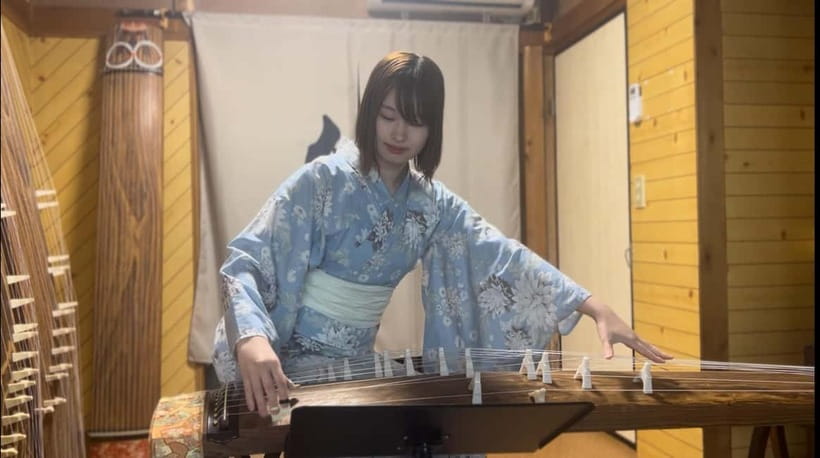
A lot of concerts end the moment the last note fades. Here, they build in time for interaction. After the performance, you get close-up Q&A with the performer. That’s a big deal because koto and shamisen can feel mysterious if you only encounter them in recordings.
When Q&A is done well, it turns confusion into clarity. You can ask about the instruments, the sheet music, and the way pieces are approached. I especially value the safe, supportive vibe described by recent guests. It’s the kind of setting where questions don’t feel awkward, even if your knowledge is zero.
Photos are included, and that’s not just a nice-to-have. In a small home venue, you’ll likely want visual proof of the moment you actually sat with the instrument. Some guests also mention photos being sent later, so plan for a nice follow-up even after you leave the house.
A different sort of day in Japan:
- PERFECT KYOTO 1-Day Bus Tour
★ 5.0 · 13,518 reviews - Kyoto: Fushimi Inari, Kinkakuji, Bamboo Grove 1 Day Bus Tour
★ 4.8 · 4,316 reviews - Kyoto: Tea Ceremony in a Traditional Tea House in Kiyomizu
★ 4.9 · 3,519 reviews - Kyoto Geisha Walking Tour: Gion District & Hidden Gems
★ 4.7 · 3,273 reviews
Try the koto at the end, what beginner coaching really means
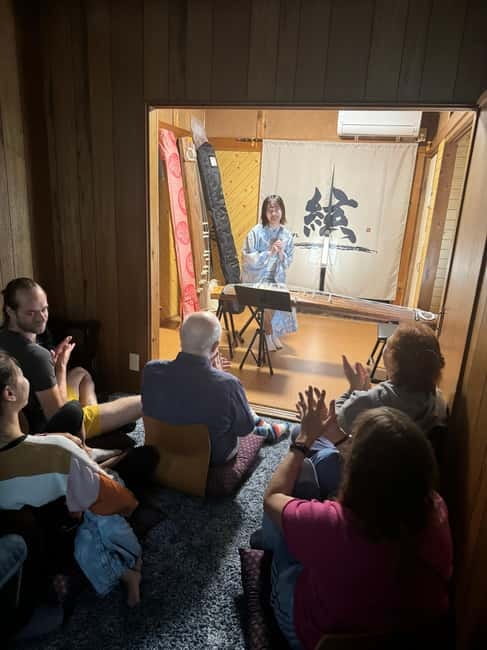
The hands-on portion is not a gimmick. It’s guided koto practice with a professional instructor. You’ll get the koto instrument, the necessary materials and tools, and instruction on how to approach a simple piece.
Here’s the useful part: you don’t need musical background. The experience is described as beginner-friendly, including for people who consider themselves complete beginners. The teaching style is encouraging and supportive, and the goal is for you to leave having physically played the instrument, not just watched it.
Expect something like:
- A short intro to how to hold or position yourself for playing (at the level needed for beginners)
- Guided practice with basic techniques
- A chance to play a simple piece with help during the session
One reason I think this works for you is that it gives the music a second layer. You listen first, then you act out what you heard. That makes koto feel less abstract and more like a language you can at least speak a few words of.
Also, because the group is private or small-group, you’re more likely to get help when your timing or hand placement is off. Some bookings have even run with a solo guest besides the performers and guides, which is about as personalized as it gets.
Who teaches you, and what languages you can expect
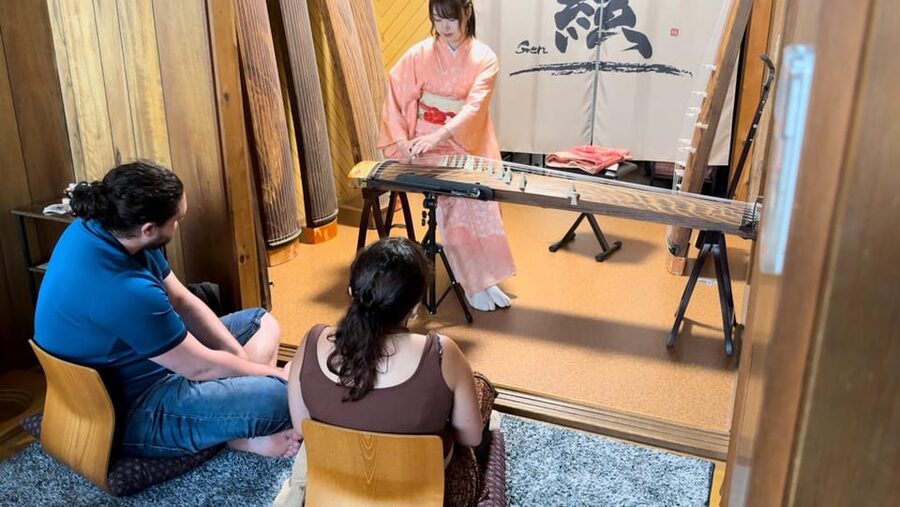
The instructor support is listed as English and Japanese. That matters because koto and shamisen terminology can be hard to guess from context. When you can ask questions and get explanations in your preferred language, you’ll understand more and enjoy the performance more.
From named examples in recent experiences, sessions may involve performers and presenters such as Kyoko and Aoi, with Shohei also appearing as part of the team in some combinations. Even if you do not catch every name in the moment, you can count on the core team being friendly and focused on helping you connect to the music.
If you plan to attend with family, this language support can be a deciding factor. It’s easier for kids and non-Japanese speakers to stay engaged when the explanation is clear and the performer can respond to questions.
Price and value at about $38 per person
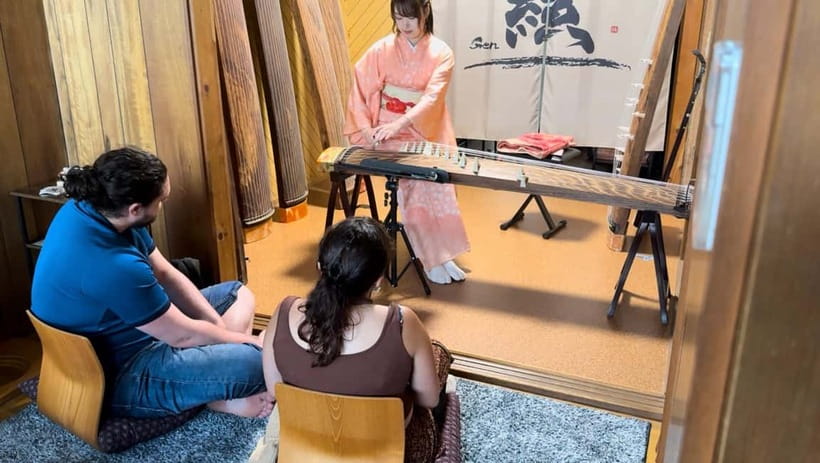
At $38 per person, this is not just a performance ticket. It’s a performance plus guided instruction plus instrument access plus photos.
Here’s what’s included:
- All necessary materials and tools
- Use of the koto instrument
- Skilled instructor guidance
- Brief history and cultural introduction
- Private session for your group
- Photos of your experience
That bundle is why the price tends to feel fair. You’re paying for access, not only sitting in a seat. If you’ve ever done instrument experiences elsewhere, you know that hands-on time usually costs extra. Here, the hands-on part is part of the core offering.
Also, the time structure is efficient. In around 1 hour to 100 minutes, you get intro, performance, Q&A, photos, and try-playing. It’s the kind of experience that fills a gap nicely when your Kyoto day needs something culture-based but not half-a-day long.
One more note: a performance-only option may be available for those who want to pay less, so if you only care about listening, it could be worth checking.
Finding the small house, and pairing it with Kyoto sights
Logistics are small but real here. The venue is in an older, smaller house in a residential area. One recent guest noted that it was a bit of a struggle to find at first, and the alley was dark, with waiting outside for a few minutes before the show. I’d treat that as your cue to do two things:
- Plan extra time to locate the entrance.
- If you’re using taxi, ask the driver to drop you at the closest point possible, then follow clear instructions from the booking.
Also, late arrival can shorten your time in the experience. So if you’re stacking this with another Kyoto stop, don’t schedule it like a last-minute detour.
The good news is you can connect this with major sights nearby. The experience’s location is positioned well for adding on other areas of Kyoto, including:
- Arashiyama, about 25 minutes by train and on foot, with an easy route via Saiin Station (Hankyu Line to Randen Line transfer)
- Nijo Castle, about 20 minutes by train and on foot, just one station from Nijo Castle-mae on the Tozai Line
- Kinkakuji (Golden Pavilion), about 20 to 25 minutes by bus and on foot, accessible from Nishioji Sanjo bus stop in about 16 minutes
- Nishiki Market, about 25 minutes by train and on foot, with a direct ride on the Hankyu Line to Karasuma or Kawaramachi
That makes it workable for a themed day. For example, you can do a morning or early afternoon sightseeing block, then come back for the performance in the evening when sound and atmosphere feel extra special.
Who should book this koto concert and class?
This experience fits best if you want an authentic cultural moment with real access to the performers.
You’ll likely enjoy it if:
- You like hands-on experiences, not only passive sightseeing
- You want to hear how koto and shamisen can cover both classical and contemporary sounds
- You value Q&A time and personal explanations
- You are okay with a smaller, slightly hard-to-find venue in a residential area
I’d also say it’s a smart choice for families who want something calmer and more intimate than a crowd-heavy attraction. But check ages carefully. The experience is listed as not suitable for babies under 1 and children under 4 years, so plan accordingly if you’re traveling with little ones.
If you have physical limitations or allergies, the guidance is to inform the provider ahead of time. That’s a practical step so the team can prepare for your needs.
And if you need a flexible schedule, the booking is described as reserve now and pay later, which can help when you’re building a Kyoto plan around train times and weather.
Should you book this Kyoto koto and shamisen concert and class?
I think you should book it if you want Kyoto culture that feels close, not distant. The biggest reasons are simple: you get a real live performance in an old home setting, you can ask questions in person, and you get to try playing the koto yourself with guidance. That combination is hard to beat at around $38 per person, especially because the price includes materials, instrument use, instruction, and photos.
You might skip it if you strongly prefer large, easy-to-navigate venues, or if you really want a self-guided museum-style experience with no interaction. Also, if you’re worried about finding a small residential house, give yourself extra time so you don’t start the evening stressed.
If you book, show up early enough to settle in. Then go in curious, not expectant. You do not need to know the instruments first. The whole program is built to get you from first-time listener to at least one moment of hands-on playing.
FAQ
Where is the meeting point?
The meeting point may vary depending on the option you booked, so you’ll want to follow the specific instructions provided for your selection.
How long is the concert and koto class?
The total experience lasts 1 hour to 100 minutes, depending on availability and the session start time.
What languages are available during the experience?
The instructor is listed as offering English and Japanese.
Is this experience beginner-friendly?
Yes. The experience is described as accessible for beginners, and you get instructor guidance to try playing a simple piece on the koto.
Will I have time to ask questions?
Yes. There is a close-up Q&A session with the professional performer after the live performance.
Are photos included?
Yes. Photos of your experience are included.
Do I get to try the koto myself?
Yes. At the end of the program, you have the opportunity to try playing the koto with guidance from a professional instructor.
What is included in the price, and what is not?
Included items are materials and tools, use of the koto instrument, skilled instructor guidance, a brief cultural introduction, a private session for your group, and photos. Not included are transportation to and from the location, meals and drinks, and souvenirs or additional koto accessories.
What ages is it suitable for?
It is listed as not suitable for babies under 1 year and children under 4 years. If you’re traveling with young kids, confirm ages before booking.
What happens if I arrive late or need to cancel?
Late arrivals may result in a shortened experience time. The activity offers free cancellation up to 24 hours in advance for a full refund.
Newly listed around Kyoto
- Taste of Nishiki Market Walking Food Tour with Local guide★ 5.0 · 17 reviews
- Kyoto: Sushi Making Class with Sushi Chef★ 4.8 · 64 reviews
- Simple Plan with Maiko★ 4.4 · 10 reviews
- Shibori Furoshiki Course at Kyoto Shibori Museum★ 5.0 · 21 reviews
- Kyoto: City Secrets eBike Tour★ 4.9 · 196 reviews
- Sacred Pathways: Discover the Philosopher’s Path of Kyoto★ 4.9 · 20 reviews
- Private Tour to Monkey Park and Arashiyama Highlights★ 5.0 · 22 reviews
- Private Nara Tour from Osaka – Meet at Your Hotel★ 5.0 · 22 reviews
Workshops, compared.
Sushi Making Tokyo Roll and Authentic Japanese Sushi Class
Read our review →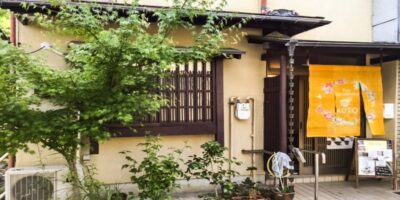
Roll and Authentic Sushi Making Class in Asakusa
Read our review →
Ramen Cooking Class at Ramen Factory in Kyoto
Read our review →
Sushi Making Class in a Happi Coat near a Famous Spot
Read our review →

Tokyo Sushi Making Class in Tsukiji with Professional Chef
Read our review →
Ramen & Gyoza Cooking Class in Tokyo with Local Supermarket Visit
Read our review →Browse the lists this tour appears in