
Review · MATCHA & TEA CEREMONY SESSIONS
Kyoto: Kimono Rental and Matcha Experience
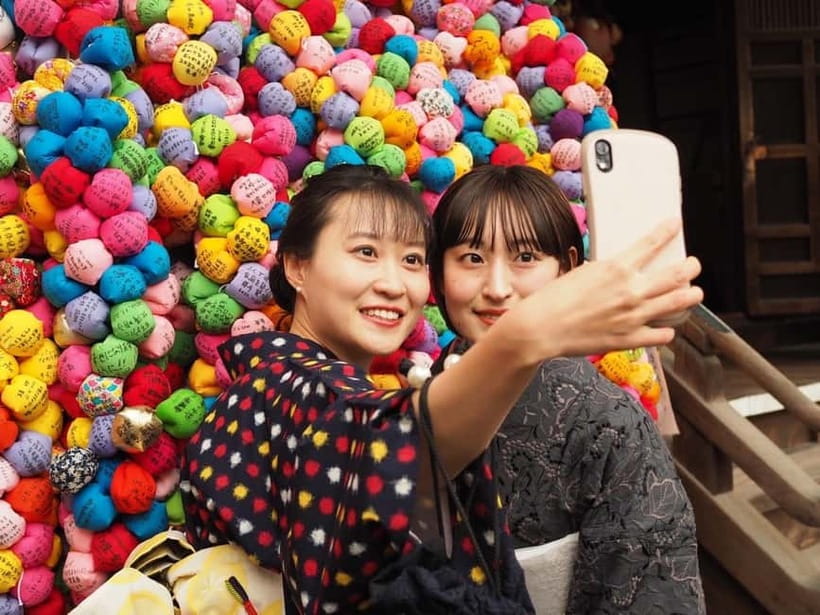
Kimono in Kyoto feels like a movie set. This day pairs easy kimono rental near Kyoto Station with a hands-on matcha break, then you get to walk the old streets in your outfit. You’ll have English-speaking support, plus a simple plan that keeps the day moving without stress.
What I like most is the practical kimono setup, everything included so you can focus on enjoying Kyoto instead of figuring out clothing logistics. Second, I really value the tea moment, you watch a short tea ceremony and then whisk your own frothy matcha in a tatami room that feels like you stepped into a quieter era.
One thing to think about: the schedule is time-bound. You need to return your kimono by the stated cutoff, so if you’re the type who loves to linger for hours, build in extra time at the start.
In This Review
- Key highlights you will care about
- Finding MK Kimono Rental Mimosa at Kyoto Station Hachijo Exit
- Your kimono setup is the point, and it includes the hard parts
- Calligraphy moment before the matcha ritual
- Ichinenzaka 362 Café: watch tea, then whisk your own matcha
- Walking the Kiyomizu-dera streets in kimono, with photo timing that works
- Price and logistics: when $50 feels fair
- Timing you must respect, especially for kimono return
- Who this experience is best for
- Should you book the Kyoto kimono and matcha experience?
- FAQ
- Where is the kimono rental shop located?
- Is there English help during the experience?
- What is included in the kimono set?
- Do I get transportation included?
- Can I change or return the kimono somewhere else after matcha?
- What time do I need to return the kimono?
Key highlights you will care about
- Kyoto Station convenience: The store is in front of the Hachijo exit, about a 1-minute walk.
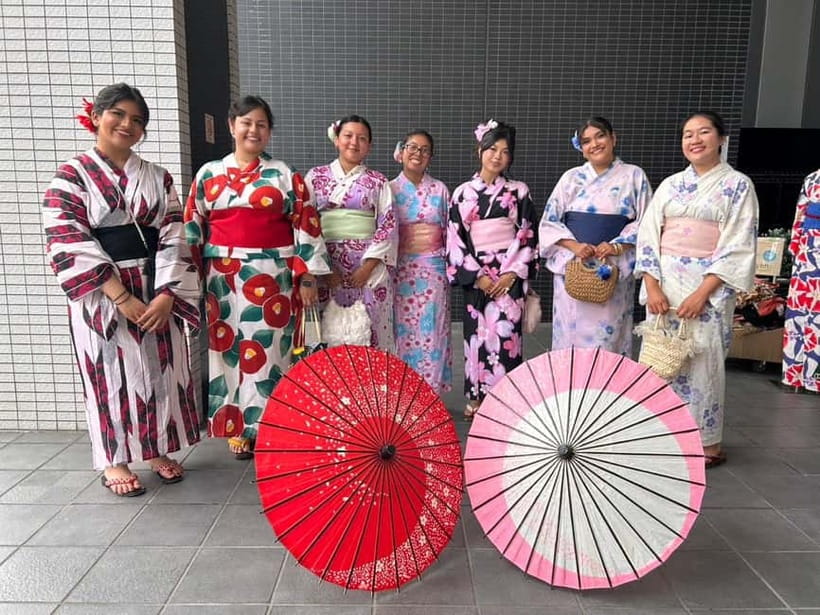
- Full kimono kit included: Kimono or yukata, obi, socks, shoes, bag, and innerwear are part of your package.
- Hands-on matcha: You learn during a short tea ceremony, then whisk your own bowl.
- Kiyomizu area photo time: After tea, you walk the traditional streets in kimono near Kiyomizu-dera.
- English-speaking guidance: Staff guide you throughout, so first-timers can relax.
- One-way taxi included: Transportation from Kyoto Station to the Kiyomizu area is included.
Finding MK Kimono Rental Mimosa at Kyoto Station Hachijo Exit
Start the day where most Kyoto plans begin, right by Kyoto Station. The MK Kimono Rental Mimosa Hachijo-guchi store is located in front of the Hachijo exit, and it’s only about a minute walk from there.
That matters because Kyoto can be a puzzle when you land. When your meeting point is this close to the train hub, you lose less time hunting for directions and more time being ready for photos and tea. If your train arrival runs even slightly late, you’re still in good shape because the location is so close.
When I plan a photo day, I like options. Here, you can change kimono at the same location where you enjoyed matcha, or you can go back to Kyoto Station to change there later (that return-to-station step is not included in the price). Either way, you can shape the ending to match your next stop.
More Kimono Rentals in Kyoto
- Kimono Tea Ceremony at Kyoto Maikoya, NISHIKI
★ 5.0 · 911 reviews - Kyoto: Kimono Rental with Hairstyling and Accessories
★ 4.8 · 653 reviews - KYOTO Tea Ceremony with kimono near by Imamiya Jinjya Shrine
★ 5.0 · 343 reviews
Your kimono setup is the point, and it includes the hard parts
Kimono rental can be intimidating if you’ve never done it. The good news is that this set is built for first-time visitors, and it’s not just a garment on a hanger.
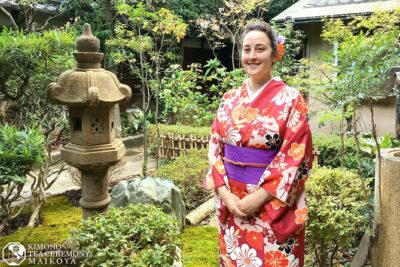
Your package includes everything you typically need to look put-together:
- Kimono (or yukata in summer)
- Obi belt
- Socks, shoes
- Bag
- Innerwear
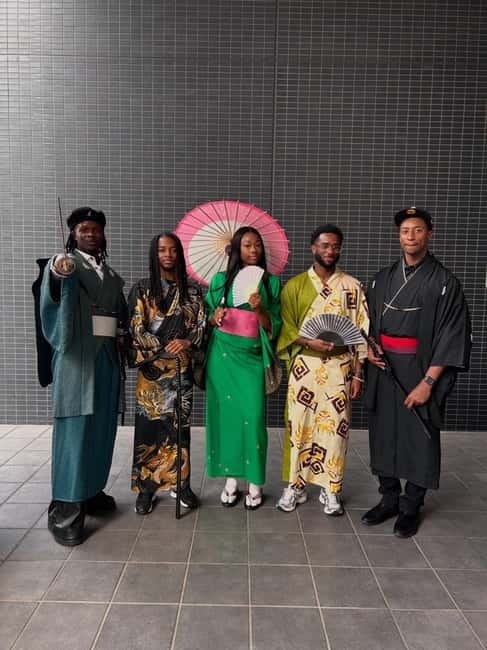
In winter, men also receive a haori jacket, which helps a lot with comfort in cooler Kyoto evenings. It’s a small detail, but it prevents that awkward feeling of dressing up while still being cold and uncomfortable.
Also worth noting: there is free luggage storage. That’s useful if you arrive early, need to store day bags, or just want to keep your hands free while you’re getting dressed and going to tea. Kyoto walking in kimono is easier when your essentials are already handled.
What to expect on the “how will this fit me” question: you’ll get English-speaking staff help throughout the process. That guidance is the difference between kimono day as a relaxing experience and kimono day as a constant adjustment session.
Calligraphy moment before the matcha ritual
The flow of the day starts with a calligraphy class. You’ll have a short class moment before the rest of the experience, which is a nice way to warm up before tea and street photos.
Why I like this order: it gives your brain something cultural to focus on right away, instead of rushing straight into logistics. And it also makes the kimono feel more “purposeful.” A kimono day isn’t only about looking good for pictures, it’s about stepping into the atmosphere of traditional arts.
After calligraphy, the day shifts toward tea. You’ll take a private taxi ride to the matcha café area near Kodaiji Temple, which keeps the route simple and reduces walking while you’re still getting used to your outfit.
Ichinenzaka 362 Café: watch tea, then whisk your own matcha
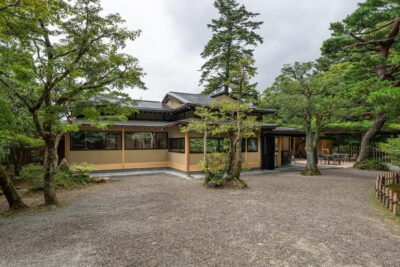
The matcha part happens at Ichinenzaka 362 Café, near Kodaiji Temple. The taxi takes you from Kyoto Station to the Kiyomizu area, so you can get there without navigating buses or trains in kimono.
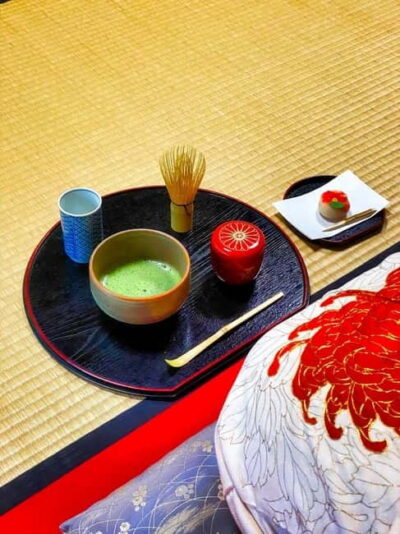
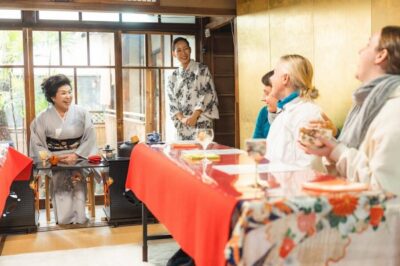
At the café, you’ll enjoy a short tea ceremony in a tatami room of a renovated townhouse. Even if you’re not an expert in tea, you’ll feel the change in pace. Tatami rooms encourage quiet focus, and the ceremony gives you a structured, guided way to understand what matcha is and how it’s prepared.
Then comes the best part, you whisk your own matcha. You watch the basics first, then you do the stirring yourself until you get that frothy texture in your own bowl. It turns matcha from something you sip into something you actively make, which is why this step lands so well.
English-speaking staff guide you throughout. That means you’re not stuck guessing what you’re supposed to do with the whisk. It also helps you understand the rhythm of the process, not just repeat movements.
One practical note: if you want to keep photos looking clean, wear something comfortable underneath your innerwear. The staff provide the innerwear, but your comfort can still affect how confident you feel during hands-on parts.
More Tea Ceremonies in Kyoto
- Kyoto: Tea Ceremony in a Traditional Tea House in Kiyomizu
★ 4.9 · 3,519 reviews - Kyoto: Tea Ceremony Ju-An at Jotokuji Temple
★ 4.9 · 3,207 reviews - Kyoto: 45-Minute Tea Ceremony Lesson Experience
★ 4.3 · 2,378 reviews - Kyoto: Table-Style Tea Ceremony at a Kyo-Machiya
★ 4.9 · 1,211 reviews
Walking the Kiyomizu-dera streets in kimono, with photo timing that works
After tea, the experience turns into a Kyoto photo and strolling moment. You’ll walk around the traditional streets near Kiyomizu-dera while wearing your kimono, with plenty of chances to stop at shops and wooden-house streets that look like Kyoto on postcards.
This is where the value of having a guided starting point shows up. If you show up in kimono without a plan, it can turn into chaos, awkward shoe moments, and “where do we go now?” stress. Here, the route after tea is built around the Kiyomizu area, so you can spend your energy on enjoying the atmosphere instead of debating where to wander.
Photo advice that actually helps:
- Move slowly. Kimono walking changes your stride, so take it easy in the first few minutes.
- Plan a first photo stop soon after tea. Early on, you tend to be less rushed and your hair and outfit are still “fresh.”
- Look for wooden shop fronts and narrow street angles. Those lanes are what make kimono day look authentic, not staged.
Also, in one booking experience, a participant noted that the staff helped with a beautiful hairstyle. That kind of attention matters. If you care about how you look in photos, ask the staff for guidance, because small adjustments can make a huge difference in how your kimono sits and how your hair photographs.
Price and logistics: when $50 feels fair
The price is listed at $50 per person for a 1-day experience. On paper, that sounds simple, but the real value is in what’s included.
For your money, you get:
- A kimono set (normal plan)
- Matcha experience
- One-way taxi from Kyoto Station to the Kiyomizu area
When transportation is already handled, the day becomes easier to enjoy. You’re not paying extra to reach the tea café while dressed up, and you don’t have to coordinate your route after you’ve spent time learning matcha and getting into kimono mode.
The kimono set is also not bare-bones. You receive the kimono or yukata, obi belt, socks, shoes, bag, and innerwear. Many “rental only” deals make you solve more problems yourself. Here, the package is built to be complete enough for a street-ready day.
Possible drawback for value seekers: you are tied to the set-day flow. The experience includes transport to the tea café and then shifts into strolling, but you won’t have a freeform all-day itinerary that you can stretch endlessly. If you want long, unscheduled wandering across Kyoto, you may still love this, but treat it as a focused half-to-full-day cultural break rather than a full independent day.
Timing you must respect, especially for kimono return
This is not a “grab it and go anytime” activity. The rental and tea hours are specific.
Kimono rental is open from 9:00 am to 6:00 pm. The last check-in is 3:00 pm, and you need to return your kimono by 5:30 pm. The matcha café runs from 10:00 am to 6:00 pm, with last order at 5:30 pm.
That matters because kimono days are easiest when you start early enough to enjoy the streets without rushing the ending. If you’re coming from another morning plan, make sure you can reach the store, get dressed, and still have time to get to tea.
If you need a next-day return for the kimono, there are added fees depending on the return time window: 9:00 am to 10:00 am has a +1,100 yen fee, and 10:00 am to 6:00 pm has a +2,200 yen fee. You’ll want to plan around that if you’re building a multi-day Kyoto itinerary.
One more practical point: pets are not allowed, and alcohol and drugs are not allowed. Also, the experience is not suitable for pregnant women and people over 95 years. Those limits are worth respecting because kimono use and the hands-on tea moment require comfortable movement.
Who this experience is best for
If you’re a first-timer in Kyoto, this is a solid fit. You get a close-to-station start, English-speaking staff, and a structure that prevents day-one confusion.
It also works well if you want photos that feel authentic. The kimono + Kiyomizu area streets are a strong combo, and the matcha activity gives you an experience to match the visuals, not just a costume rental.
It may be less ideal if you want to control every minute. The day has a planned rhythm, including the taxi ride and the tea ceremony slot. You can still stroll and explore after tea, but you’re not fully steering the schedule from minute one.
Should you book the Kyoto kimono and matcha experience?
I’d book it if you want a calm, guided way to do kimono in Kyoto without getting stuck on the logistics. The value feels strongest when you include the included taxi, because it removes a common pain point for dressed-up sightseeing.
Skip it if you need total freedom all day, or if you already know you will want a very late ending. The return cutoff is real, and kimono day becomes stressful if you treat it like an open-ended wander plan.
If you want an easy win in Kyoto that blends traditional clothing, a hands-on tea moment, and street photos near Kiyomizu-dera, this is a strong choice.
FAQ
Where is the kimono rental shop located?
The kimono rental shop is the MK Kimono Rental Mimosa Hachijo-guchi store in front of the Hachijo exit of Kyoto Station.
Is there English help during the experience?
Yes. English-speaking staff are available and will guide you through the experience.
What is included in the kimono set?
The kimono set includes the kimono (or yukata in summer), obi belt, socks, shoes, bag, and innerwear. Men also receive a haori jacket in winter.
Do I get transportation included?
Yes. A one-way private taxi from Kyoto Station to the Kiyomizu area is included.
Can I change or return the kimono somewhere else after matcha?
You can change and return kimono at the same location where you enjoyed the matcha, or you can go back to Kyoto Station to change there (not included in the price).
What time do I need to return the kimono?
Kimono rental runs from 9:00 am to 6:00 pm. Last check-in is 3:00 pm, and you must return by 5:30 pm.
Newly listed around Kyoto
- Kyoto: Maiko, Samurai, or Kimono Rental and Tea Ceremony★ 4.3 · 31 reviews
- Kyoto: Maiko Happy Hour at a Historic Machiya★ 4.0 · 6 reviews
- Kyoto: Local Home Visit and Japanese Calligraphy Class★ 5.0 · 66 reviews
- Kyoto : Maiko Makeover stroll and photo shoot experience★ 3.9 · 9 reviews
- Kyoto: Local Food Tasting Tour at the Nishiki Market★ 4.7 · 135 reviews
- Kyoto: Maiko Dinner in Traditional Restaurant and Tour★ 4.8 · 55 reviews
- Kyoto: KITSUNE Nightclub Admission Ticket with Drink★ 4.2 · 13 reviews
- Kyoto: Kiyomizudera, Higashiyama and Yasaka Discovery Tour★ 4.8 · 17 reviews
Matcha & Tea Ceremony Sessions, compared.
Tea Ceremony in a Traditional Tea House in Kiyomizu
Read our review →
World Heritage Kyoto & Nara Uji Authentic Matcha Experience
Read our review →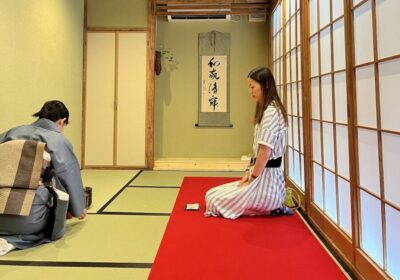
Browse the lists this tour appears in