Review · MORNING
Kyoto Morning Tour from Kyoto or Osaka
Kyoto in a single morning is a nice cheat code. This half-day tour strings together three UNESCO-linked stops, with a guide, entrance tickets, and round-the-city bus time that saves you effort before noon. I especially like the focus on big names like Nijo Castle and Kinkakuji, so you are not guessing what to prioritize.
Nijo Castle brings the shogun-era drama, and you get time to walk through the palace interiors and gardens at a human pace. I also love that the Golden Pavilion stop is paired with Kyoto’s imperial side at the Kyoto Imperial Palace, so your morning tells a clear story about power, design, and faith. One thing to keep in mind: Kyoto’s main sites can be closed on set days, and if the palace or Nijo Castle is not open, the tour swaps in alternate places, which can change the day’s highlight.
In This Review
- Key things to know before you go
- A smooth morning plan that keeps Kyoto efficient
- Price, what you get, and where the value actually lands
- Meeting point and end point, and why you should arrive early
- Stop 1: Nijo Castle and the Tokugawa-era interiors
- Stop 2: Kinkakuji (Golden Pavilion) and that one-way flow
- Stop 3: Kyoto Imperial Palace, what you can see, and what happens when it is closed
- Transportation and group size: the underrated part of a “busy morning” tour
- Who the tour fits best (and who should skip it)
- Guides, pace, and how to make the most of the morning
- Practical tips that prevent the common morning headaches
- What your morning feels like when it works well
- Should you book Kyoto Morning Tour from Kyoto or Osaka?
- FAQ
- What sites are included on the Kyoto Morning Tour?
- How long is the tour?
- Where do I meet and where does the tour end?
- Is the tour price all-inclusive?
- Is there a way to hear the guide during the tour?
- Is the Kyoto Imperial Palace always part of the tour?
- What if Nijo Castle is closed?
- How big is the group?
- Does the tour include food, hotel pickup, or return transport to Osaka?
- What is the cancellation policy?
Key things to know before you go
- Three top UNESCO-linked sights in one morning, with set visit windows at each stop
- Admissions and transportation included, so you do not hunt tickets or routes first thing
- Air-conditioned bus between landmarks, a real quality-of-life upgrade on hot mornings
- Smallish group size capped at 40, which helps with flow at crowded gates
- Site swap rules if Kyoto Imperial Palace or Nijo Castle is closed, including Kitano Tenmangu Shrine
- No return to Osaka included, and the tour ends at Kyoto Station
A smooth morning plan that keeps Kyoto efficient
This tour is built for one main goal: help you see Kyoto’s headline sights without burning your entire day in lines and transit. It runs about 4 hours 40 minutes, which is a very workable window if you want time afterward for Nishiki Market, Gion strolls, or just a long, earned coffee.
You meet at Kyoto Avanti 31 in Minami Ward, and you end in front of Kyoto Avanti (across from the Kyoto Station Hachijo Exit). That end point is handy because Kyoto Station is one of the easiest places to reset your plans. You are close to trains, buses, and all the logistics you might need to get back to Osaka later.
The structure matters. With three stops that are spread out, you can either spend your morning planning trains and buses, or you can let someone else stitch the route together. For first-time visitors, that is a big deal. You get fewer decisions and more looking.
A few more Kyoto days to weigh up
- PERFECT KYOTO 1-Day Bus Tour
★ 5.0 · 13,518 reviews - Kyoto: Fushimi Inari, Kinkakuji, Bamboo Grove 1 Day Bus Tour
★ 4.8 · 4,316 reviews - Kyoto: Tea Ceremony in a Traditional Tea House in Kiyomizu
★ 4.9 · 3,519 reviews
Price, what you get, and where the value actually lands
At $87.19 per person, this is not a budget tour. But it is also not just a bus ride with a stamp. The price covers entrance fees and transportation between sites, plus a national government licensed English guide interpreter fee. In practice, that turns the tour into a “pay once, worry less” package.
Here is how I’d think about value:
- If you would otherwise buy tickets at Nijo Castle and Kinkakuji, plus pay for the bus or train hops between them, the cost becomes easier to swallow.
- If you are short on time and want the “Kyoto basics” in one morning, the saved planning and transit time often feels worth it.
- If your top priority is one specific building, like the Kyoto Imperial Palace, you should know closures can shift what you see. That is the main place where the value equation can wobble.
Meeting point and end point, and why you should arrive early
You start at Kyoto Avanti 31, near the Kyoto Station area. The meeting point is not hard if you are already oriented, but one common early-trip problem is just being in the wrong Avanti entrance area. Your best move is simple: show up a little early and confirm you are standing at the right side of the building.
The tour ends at Kyoto Station, which is great for getting back into your own plans. If you are doing a day trip from Osaka, you will still need to handle the return to Osaka yourself. The tour does not include assistant service back to Osaka, and it does not include return transportation expenses from Kyoto.
Stop 1: Nijo Castle and the Tokugawa-era interiors
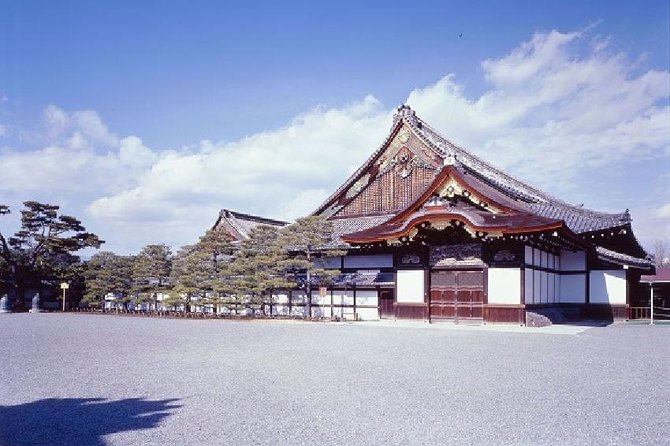
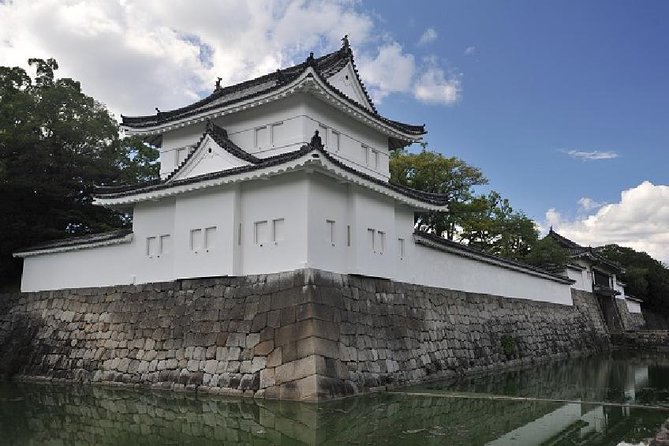
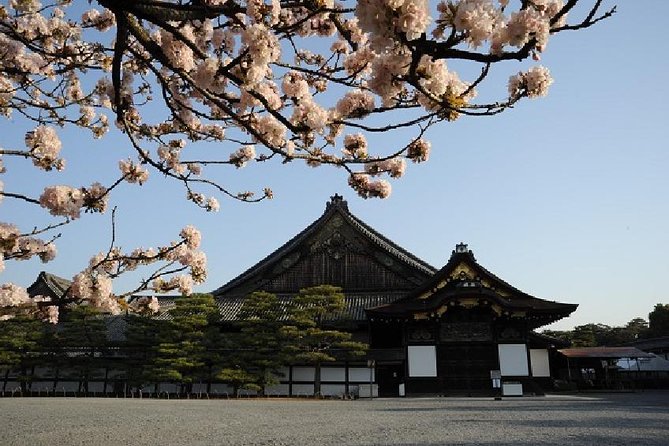
Your first stop is Nijo Castle, a UNESCO World Heritage site tied to the Tokugawa shogunate. This is not just a photo stop. The castle complex is known for the interiors of major halls and the refined look of the palace structures.
What makes Nijo Castle stand out is the feel of authority made physical. The complex was constructed on orders connected to Tokugawa Ieyasu, and it is famous for palace-style architecture and impressive carved decor inside the Ninomaru Palace. Even if you do not read every detail, you can sense the design choices: formal spaces, carefully framed rooms, and an overall “this is power” mood.
You typically get about 50 minutes here, with admission included. That is usually enough to:
- walk the main paths and gardens,
- take in the showpiece interiors, and
- not rush so much that your photos look like you were sprinting.
One drawback to flag: Nijo Castle has closure days. In particular, it is closed on Tuesdays in certain winter and summer periods, and there is also a date range closure from Dec. 26 to Jan. 3. If it is closed on your day, the tour swaps to Ryoan-ji Temple. So if Nijo Castle is your must-see, check your exact day before you fall in love with the idea of it.
A different sort of day in Japan:
- Kyoto Geisha Walking Tour: Gion District & Hidden Gems
★ 4.7 · 3,273 reviews - Kyoto: Tea Ceremony Ju-An at Jotokuji Temple
★ 4.9 · 3,207 reviews - Kyoto: 45-Minute Tea Ceremony Lesson Experience
★ 4.3 · 2,378 reviews - Kyoto: Gion Geisha District Walking Tour – Stories of Geisha
★ 4.7 · 2,187 reviews
Stop 2: Kinkakuji (Golden Pavilion) and that one-way flow
Next up is Kinkakuji Temple, the Golden Pavilion. This is Kyoto’s most recognizable temple silhouette, and it is easy to see why people keep coming back. The wooden structure covered in thin layers of gold-like material sits by water, so you get that classic contrast of shine and reflection.
The tour gives you about 45 minutes at this stop. That is enough to enjoy:
- the architecture and its standout pavilion look,
- the surrounding pond setting, and
- the garden areas you can access within the route.
A practical tip: Kinkakuji can feel crowded, and it has a flow system that can include climbing and uneven stepping in some sections. If your feet are sensitive, wear shoes with good grip. The time will go fast, so do not plan to “linger” like you would in a quiet neighborhood temple.
If you care about hearing your guide, this is also one of the places where sound can be tricky. At busy stops, the group gets spread out and there is more overlap of tour groups. If the guide provides audio through a microphone system, it is often clearer when you are closer to the front. If you are farther back, you might miss a few details.
Stop 3: Kyoto Imperial Palace, what you can see, and what happens when it is closed
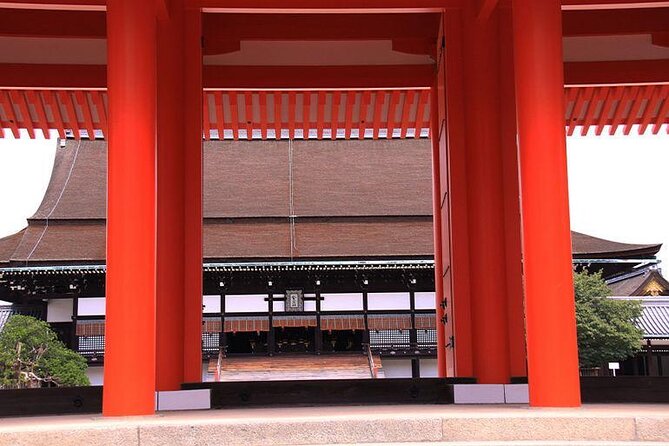
Your final stop is Kyoto Imperial Palace, once the emperor’s residence before the capital moved to Tokyo. The focus here is on the former imperial setting, including areas tied to enthronement ceremony locations and the simplicity of the building design.
You typically have about 40 minutes at this stop, and admission is included. The experience is different from the temples. It is more about formality and the way spaces were laid out for ceremony and governance.
However, Kyoto calendar reality matters. Kyoto Imperial Palace is closed to visitors on Mondays, or on the following day if Monday is a holiday. There are also days when the Imperial Household Agency has events, and then the palace may not be accessible.
When it is closed, the tour does not leave you empty-handed. It swaps to Kitano Tenmangu Shrine. If the closed day falls on the 25th, the swap destination is Nishi Hongan-ji Temple.
This is the most important decision point for whether this tour matches your expectations. If the palace is your top reason for booking, you should check what day you are going. If the palace is closed, you will still see a major Kyoto site, but it will not be the same type of visit.
Transportation and group size: the underrated part of a “busy morning” tour
Between stops, you ride in an air-conditioned vehicle. That might sound like a small perk, but it helps a lot in Kyoto mornings when you start walking and then suddenly hit humidity or heat.
Group size is capped at 40, which keeps the tour from turning into a moving crowd stamp. Still, it is not private. You should expect:
- some splitting by pace at gates,
- lines that affect how quickly you can take photos,
- and moments where you are just trying to hear the guide while everyone shifts positions.
The audio experience is one of the few things that varies by day and group placement. Some people found it easy to listen, and others said it was harder to hear in crowded zones. If you want the guide’s explanations, stay closer to the group front when you can.
Who the tour fits best (and who should skip it)
This is a great match if:
- You want a first pass at Kyoto’s highlights without building a full itinerary.
- You are visiting from Osaka and need a morning that keeps you anchored.
- You like guided context, especially the story connection between shogun power and imperial legacy.
It might not be the best match if:
- Your entire trip plan depends on seeing a specific closed-day site with no swaps.
- You prefer slow temple wandering with lots of unstructured time.
- You get annoyed when you feel slightly rushed through big attractions.
For families, the tour can work because it is half-day length. Children up to 5 years old join free, but they are not provided with bus seats, so you may want to plan accordingly if you need assigned space.
Guides, pace, and how to make the most of the morning
A big part of the experience is the guide. The tour has consistent praise for guides who can explain Japanese history in a way that lands fast, without turning everything into a lecture. Names that pop up in guide write-ups for this tour include Mr. Harada, Casey (KC), Jessie, and Jun. The common theme is lively storytelling plus practical organization.
Still, the schedule is tight. You get set amounts of time at each stop, so the pacing is naturally brisk. One useful way to handle that is to decide what you want most at each location before you arrive. For example:
- At Nijo Castle, pick one or two interior areas or a garden route that you want to hit first.
- At Kinkakuji, set your “must photo” angle early, then let the rest be discovery.
- At the Imperial Palace, focus on architecture layout and ceremony-related areas you can access within the allowed time.
If you do that, you will feel in control even when the tour feels busy.
Practical tips that prevent the common morning headaches
A few small moves will make your Kyoto morning smoother:
- Wear grippy shoes. Even when walking routes look tame, uneven steps can pop up, especially at Kinkakuji areas with a route system.
- Bring water, but keep your expectations realistic. Food and drinks are not included.
- Use your mobile ticket. The tour uses mobile ticketing, so have your confirmation accessible.
- Plan your afternoon after the drop-off. Since the tour ends at Kyoto Station, your next step can be easy, but only if you are not mentally still at Stop 3.
And the biggest practical warning: verify the day’s closures in advance if the Kyoto Imperial Palace or Nijo Castle is your anchor. The tour does swap destinations, but it can change the tone of the morning.
What your morning feels like when it works well
When this tour is a good fit, it feels like a “guided highlight reel” that actually teaches you what you are looking at. You start with shogun-era power at Nijo Castle, move to the optical wow factor of the Golden Pavilion, and finish with Kyoto’s imperial architecture setting.
That arc gives you a sense of Kyoto not just as scenery, but as a place where systems of rule and belief were built into wood, stone, and garden design. You do not need to be a history nerd to enjoy it. You just need to be curious.
The tour also does a good job reducing decision fatigue. You do not need to figure out which stop is closest, what order makes sense, or how to buy tickets quickly. You just follow the plan and spend your energy on seeing.
Should you book Kyoto Morning Tour from Kyoto or Osaka?
Book it if:
- You want three major Kyoto sights in one short morning.
- You value admissions and transportation included so your morning runs clean.
- You are okay with a set schedule and an occasional crowd.
Consider passing or choosing another option if:
- You are visiting on a day when the Kyoto Imperial Palace or Nijo Castle is likely closed and you would be disappointed by the swap.
- You dislike fast pacing and prefer long, slow time in fewer places.
- You want a tour that includes pickup or return to Osaka. This one does not include hotel pickup/drop-off and does not provide return transportation to Osaka.
If you are short on time and you want a solid first Kyoto morning, this is one of the more practical ways to get there. Just treat it like a highlight sprint, not a leisurely Kyoto day.
FAQ
What sites are included on the Kyoto Morning Tour?
The tour highlights include Nijo Castle, Kinkakuji Temple (Golden Pavilion), and the Kyoto Imperial Palace. If the palace or Nijo Castle is closed, the tour visits alternate destinations listed for those closures.
How long is the tour?
The tour duration is about 4 hours 40 minutes.
Where do I meet and where does the tour end?
You start at Kyoto Avanti 31 Higashikujō Nishisannōchō, Minami Ward, Kyoto, and the tour ends in front of Kyoto Avanti, across from the Kyoto Station Hachijo Exit.
Is the tour price all-inclusive?
The tour includes entrance fees and transportation costs, plus the licensed English guide interpreter fee. Food and drinks are not included.
Is there a way to hear the guide during the tour?
The tour uses an English-speaking guide interpreter and is organized as a guided group experience. Exact audio setup details are not specified in the provided information, so you may want to stay closer to the group front if you want the best chance of hearing.
Is the Kyoto Imperial Palace always part of the tour?
Kyoto Imperial Palace is closed to visitors on Mondays (and in some cases the following day if Monday is a holiday) and on days with Imperial Household Agency events. On those days, the tour visits Kitano Tenmangu Shrine instead, and Nishi Hongan-ji Temple if the closed day falls on the 25th.
What if Nijo Castle is closed?
Nijo Castle is closed on Tuesdays in specific periods (including January, July, August, and December) and from Dec. 26 to Jan. 3. If it is closed, the tour visits Ryoan-ji Temple instead.
How big is the group?
The tour has a maximum of 40 travelers.
Does the tour include food, hotel pickup, or return transport to Osaka?
No. Food and drinks are not included. There is no hotel pick-up and drop-off, and the tour ends at Kyoto Station without including return transportation expenses from Kyoto to Osaka.
What is the cancellation policy?
You can cancel for a full refund if you cancel at least 24 hours before the experience’s start time.
Newly listed around Kyoto
- Taste of Nishiki Market Walking Food Tour with Local guide★ 5.0 · 17 reviews
- Kyoto: Sushi Making Class with Sushi Chef★ 4.8 · 64 reviews
- Simple Plan with Maiko★ 4.4 · 10 reviews
- Shibori Furoshiki Course at Kyoto Shibori Museum★ 5.0 · 21 reviews
- Kyoto: City Secrets eBike Tour★ 4.9 · 196 reviews
- Sacred Pathways: Discover the Philosopher’s Path of Kyoto★ 4.9 · 20 reviews
- Private Tour to Monkey Park and Arashiyama Highlights★ 5.0 · 22 reviews
- Private Nara Tour from Osaka – Meet at Your Hotel★ 5.0 · 22 reviews
Morning, compared.
Kyoto Early Morning Tour with English-Speaking Guide
Read our review →Early Morning Tour with English-Speaking Guide
Read our review →
World Heritage Shirakawa-go Morning Guided Tour
Read our review →
Nara Early Morning Tour (Kyoto or Osaka Departure Available)
Read our review →
Hiroshima in a Nutshell: Morning Bike Adventure
Read our review →