
Review · WORKSHOPS
Kyoto: Traditional Mini Umbrella Making Workshop
Tiny umbrellas, big craft, and a calm Kyoto workshop. I love that you build your own mini wagasa with genuine Japanese materials, and I love the warm instruction from artisans such as Ai Takenaka. You’ll leave with a small object that feels thoughtfully made, not mass-produced.
The main trade-off is time. 90 minutes is plenty for the core build, but if you want extra-perfect finishing, there is an optional upgrade.
In This Review
- Key highlights worth your time
- Finding the workshop near Shijo Kawaramachi, fast and easy
- What the 90-minute class feels like inside
- Building your Hime Wagasa, one careful step at a time
- Designing your mini umbrella to match your taste
- Optional finishing touches, if you want it extra polished
- Take-home package: stand, box, and carry bag
- Price and value: what $70 gets you in Kyoto
- Who this workshop is best for (and who should skip it)
- Practical expectations: timing, rules, and comfort
- Should you book Kyoto’s mini umbrella making workshop?
- FAQ
- How long is the Kyoto traditional mini umbrella making workshop?
- What is the price per person?
- What do I make during the workshop?
- Are materials included?
- What do I take home at the end of the class?
- Where is the meeting point?
- Who teaches the class?
- Is there an option to pay extra for extra finishing?
- What is the policy on cancellation?
- Is the workshop suitable for children?
Key highlights worth your time
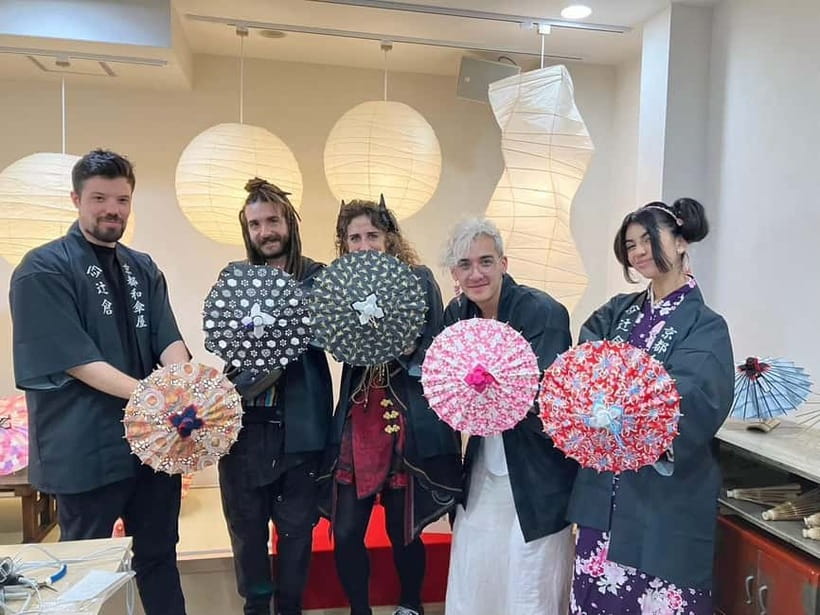
- Japan’s oldest umbrella shop setting, with traditional tools and a shop that feels like a living workshop
- Hands-on wagasa construction using genuine Japanese materials, not just watching a demo
- Design your own mini Japanese umbrella, so it feels personal
- A made-for-gifting symbol of happiness, built to be shown and shared
- Take-home extras included, including a bamboo stand plus a decorative box and carry bag
Finding the workshop near Shijo Kawaramachi, fast and easy
This class is in central Kyoto, in the practical part of town where you can still enjoy a full day of sightseeing. Your meeting point is just a 2-minute walk north from the Shijo Kawaramachi intersection, which is one of Kyoto’s main shopping hubs.
That location matters. If you’re staying nearby, you can treat the workshop like a calm reset in the middle of your day. And because it is close to a big intersection, you can get there without a whole transportation puzzle.
A few more Kyoto days to weigh up
- PERFECT KYOTO 1-Day Bus Tour
★ 5.0 · 13,518 reviews - Kyoto: Fushimi Inari, Kinkakuji, Bamboo Grove 1 Day Bus Tour
★ 4.8 · 4,316 reviews - Kyoto: Tea Ceremony in a Traditional Tea House in Kiyomizu
★ 4.9 · 3,519 reviews
What the 90-minute class feels like inside
Walk into the workshop and you’re met with a serene setup that makes you slow down. Expect traditional decorations, including Japanese umbrellas displayed around the space, plus lighting that keeps the focus on your hands and the materials.
The pace is guided, not rushed. You get instruction in a way that works even if you have zero craft experience. Based on what people consistently praise, the instructors are patient, and they keep the process clear step-by-step.
You’ll also want to know the class language setup. The instructor works in Japanese and English, so you’re not stuck guessing what to do next.
Building your Hime Wagasa, one careful step at a time
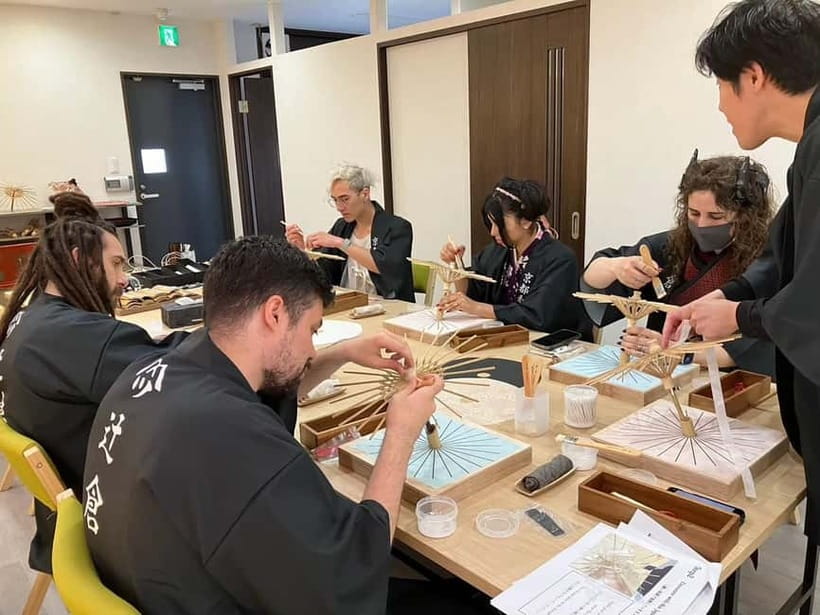
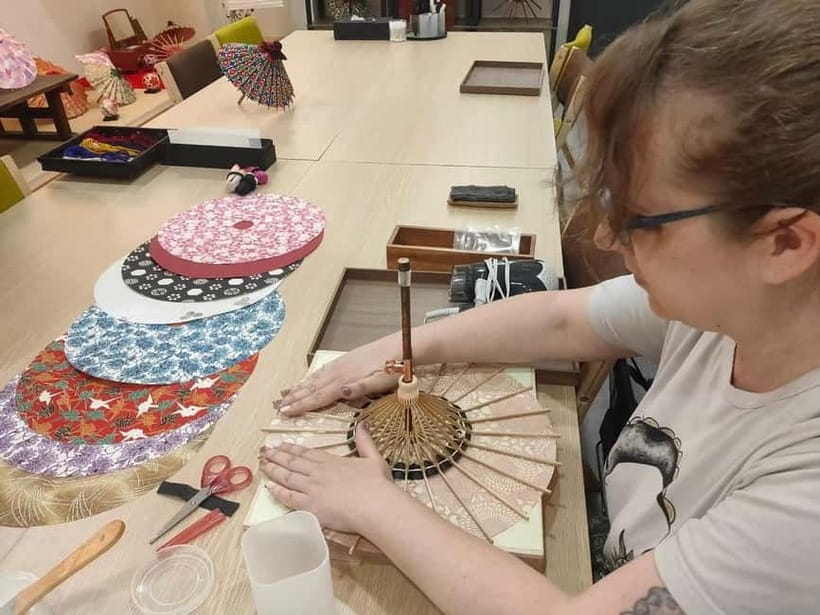
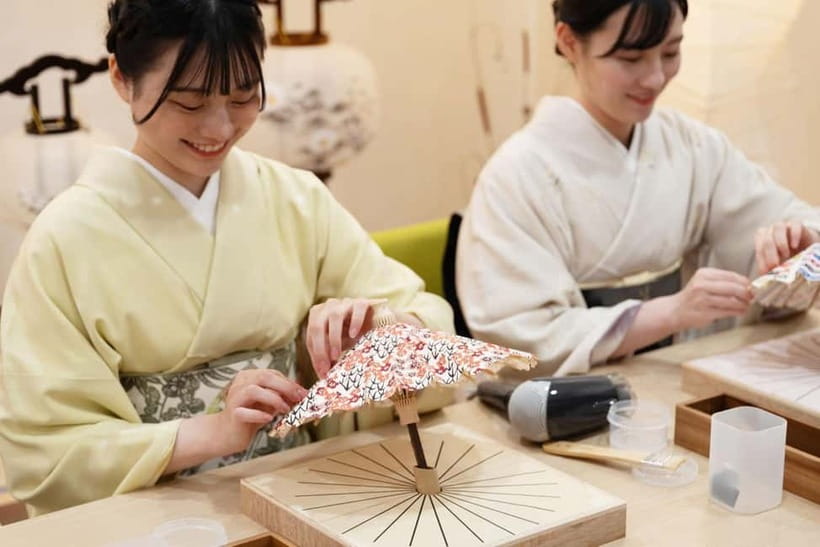
The heart of the experience is making a Hime Wagasa, a traditional Japanese umbrella scaled down into a mini form. You’re not just decorating something. You’re constructing the umbrella using the genuine Japanese materials provided.
This is the part that most people find oddly satisfying. Crafting wagasa takes attention. The work rewards steady hands and careful alignment, and you can feel the transformation from raw components into something elegant.
You’ll shape and assemble the pieces yourself. That is where the skill of the workshop matters, because the tiny parts demand precision. The guidance is designed to keep you moving forward without making you feel behind.
Designing your mini umbrella to match your taste
One of the best parts is that your mini Japanese umbrella doesn’t have to look like everyone else’s. You make decisions during the build and design your own version that reflects your personal style and your interest in Japanese tradition.
What I like about this approach for visitors is that it turns a craft class into a souvenir with meaning. The result is small enough to take home easily, but it still carries the vibe of a traditional object you’d want to display.
And it’s not just about aesthetics. A wagasa is also cultural symbolism. The workshop frames your umbrella as a symbol of happiness, which makes gifting feel natural, not forced.
A different sort of day in Japan:
- Kyoto Geisha Walking Tour: Gion District & Hidden Gems
★ 4.7 · 3,273 reviews - Kyoto: Tea Ceremony Ju-An at Jotokuji Temple
★ 4.9 · 3,207 reviews - Kyoto: 45-Minute Tea Ceremony Lesson Experience
★ 4.3 · 2,378 reviews - Kyoto: Gion Geisha District Walking Tour – Stories of Geisha
★ 4.7 · 2,187 reviews
Optional finishing touches, if you want it extra polished
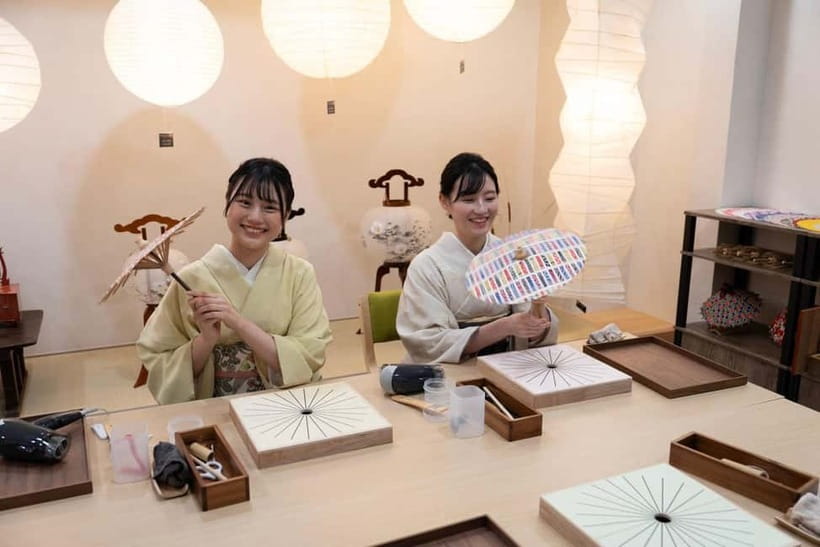
You can opt for a craftsman to add finishing touches for an additional fee. That’s a smart option if you’re the type who notices tiny details and wants the final look to feel especially refined.
But don’t pressure yourself. The standard build already gives you a complete umbrella project with take-home display accessories. The optional upgrade is for people who want that last level of finesse.
Take-home package: stand, box, and carry bag
After the workshop, you don’t just leave with a fragile item in a tote. Your class includes a bamboo umbrella stand to take home, plus a decorative box and a carry bag.
That matters more than it sounds. A wagasa is a crafted object, and you want a safe place to store it and a nice way to display it. The stand helps you treat it as a desk or shelf piece, not a thing that gets shoved in luggage.
So you get three wins at once: a usable display stand, protective packaging, and a carry bag for the trip back.
Price and value: what $70 gets you in Kyoto
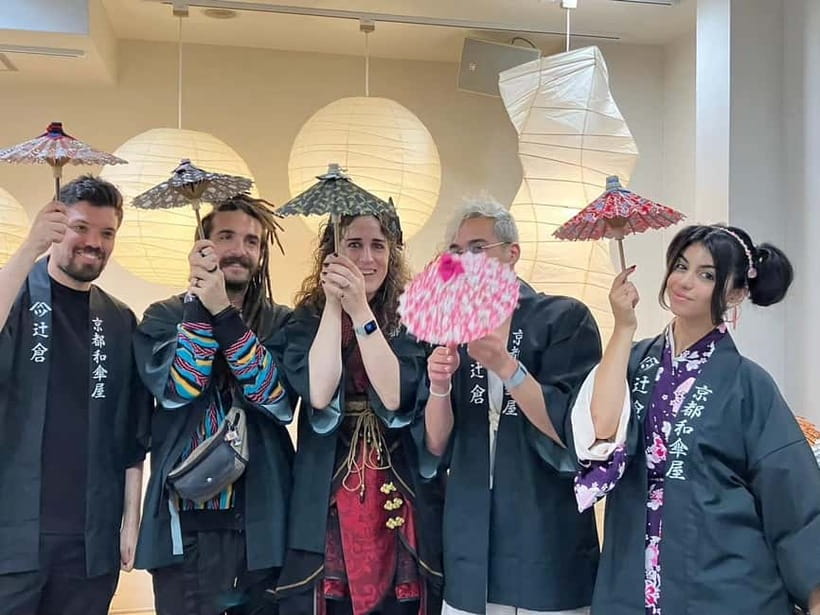
At $70 per person for 90 minutes, this sits in the mid-range for hands-on craft experiences in Kyoto. The value comes from what is actually included: all materials for crafting your Hime Wagasa, plus take-home accessories like the bamboo stand, decorative box, and carry bag.
You’re also paying for instruction that keeps the process doable. Wagasa construction has a learning curve, and the workshop’s focus on patient guidance is a big part of why people call it a highlight.
If you’re deciding between this and a hands-on class that only teaches a single surface technique, this one is different. You’re creating the object itself, piece by piece. That is the kind of souvenir that feels worth the time, not just the price.
Who this workshop is best for (and who should skip it)
This class is a great fit if you want something more grounded than a typical museum visit. It’s especially good for visitors who enjoy making, slow activities, or learning traditional crafts with clear guidance.
It’s also a nice choice for people who like taking home a small cultural artifact. A mini wagasa is easy to pack and share, and the workshop frames it as a symbol of happiness, which makes it gift-friendly.
On the practical side:
- Children under 6 are not suitable.
- It’s wheelchair accessible.
- You should plan for a focused hands-on session, not a quick photo stop.
Practical expectations: timing, rules, and comfort
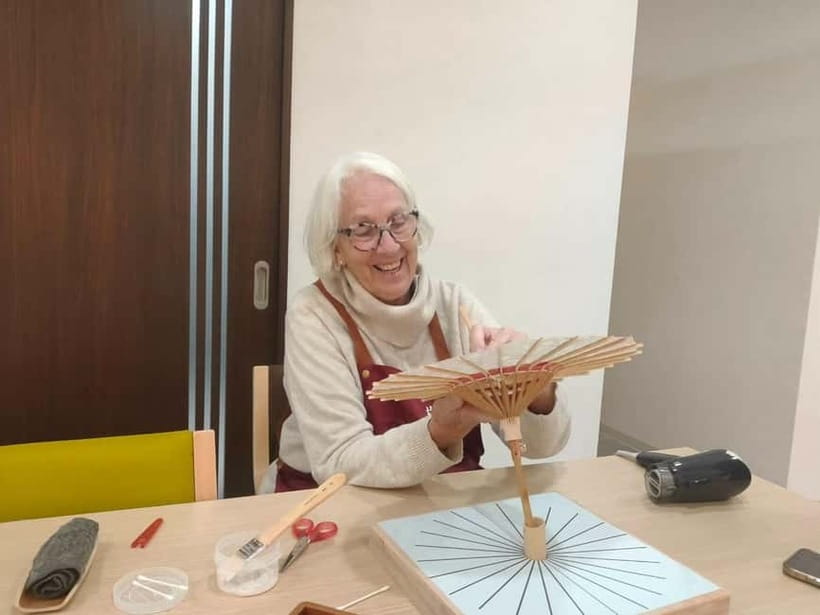
The workshop runs for 90 minutes, with starting times that depend on availability. That makes it workable for most Kyoto schedules, especially if you are flexible and want a break from walking.
There are also straightforward rules. Smoking, alcohol, and drugs are not allowed, and explosive substances are not allowed. It’s the kind of policy that helps keep the space calm and safe for delicate craft work.
If you’re coming with accessibility needs, the workshop is listed as wheelchair accessible, which is a strong plus in a city where older buildings can be tricky.
Should you book Kyoto’s mini umbrella making workshop?
Book it if you want an authentic Kyoto experience where you make the souvenir yourself. The combination of genuine materials, hands-on construction, and thoughtful take-home packaging makes it feel like more than a quick activity.
Skip it if you’re looking for something fast and casual, or if you hate detail work. The umbrella build needs focus, and the mini size still involves careful assembly. Also, if you’re traveling with very young children, the stated guideline is not suitable under 6.
If you like crafts, Japanese objects with meaning, and guided work that ends in a physical result you can display, this is a smart use of your time in Kyoto.
FAQ
How long is the Kyoto traditional mini umbrella making workshop?
The workshop duration is 90 minutes.
What is the price per person?
The price is $70 per person.
What do I make during the workshop?
You craft your own mini Japanese umbrella, a Hime Wagasa (traditional Japanese umbrella).
Are materials included?
Yes. All materials for crafting your Hime Wagasa are included.
What do I take home at the end of the class?
You take home a bamboo umbrella stand, plus a decorative box and a carry bag for your umbrella.
Where is the meeting point?
The workshop is located in central Kyoto, about 2 minutes’ walk north from the Shijo Kawaramachi intersection.
Who teaches the class?
The instructor provides instruction in Japanese and English.
Is there an option to pay extra for extra finishing?
Yes. You can opt for a craftsman to add finishing touches for an additional fee.
What is the policy on cancellation?
You can cancel up to 24 hours in advance for a full refund.
Is the workshop suitable for children?
Children under 6 years are not suitable. The workshop is wheelchair accessible.
Newly listed around Kyoto
- Taste of Nishiki Market Walking Food Tour with Local guide★ 5.0 · 17 reviews
- Kyoto: Sushi Making Class with Sushi Chef★ 4.8 · 64 reviews
- Simple Plan with Maiko★ 4.4 · 10 reviews
- Shibori Furoshiki Course at Kyoto Shibori Museum★ 5.0 · 21 reviews
- Kyoto: City Secrets eBike Tour★ 4.9 · 196 reviews
- Sacred Pathways: Discover the Philosopher’s Path of Kyoto★ 4.9 · 20 reviews
- Private Tour to Monkey Park and Arashiyama Highlights★ 5.0 · 22 reviews
- Private Nara Tour from Osaka – Meet at Your Hotel★ 5.0 · 22 reviews
Workshops, compared.
Sushi Making Tokyo Roll and Authentic Japanese Sushi Class
Read our review →

Roll and Authentic Sushi Making Class in Asakusa
Read our review →
Ramen Cooking Class at Ramen Factory in Kyoto
Read our review →
Sushi Making Class in a Happi Coat near a Famous Spot
Read our review →

Tokyo Sushi Making Class in Tsukiji with Professional Chef
Read our review →
Ramen & Gyoza Cooking Class in Tokyo with Local Supermarket Visit
Read our review →Browse the lists this tour appears in