
Review · WORKSHOPS
Traditional Japanese Flower Styling Workshop – Ikebana in Kyoto
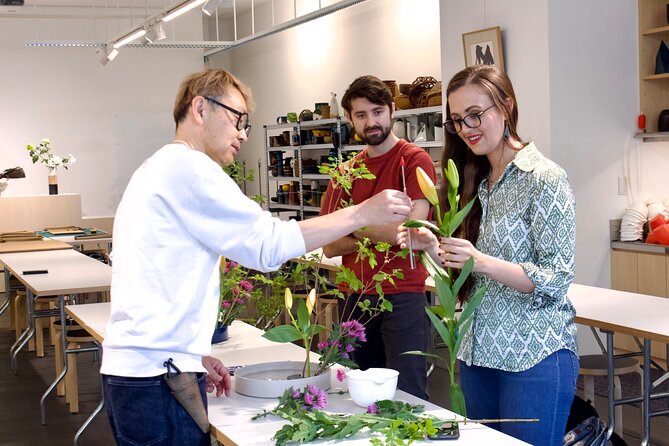
In Kyoto, flowers teach patience. This Traditional Japanese Flower Styling workshop focuses on basic ikebana forms and gives you a practical way to shape stems with guidance, not guesswork. I love the hands-on instruction and the fact that you learn the thinking behind the arrangements, so it is not just pretty-by-chance.
The workshop is also a great fit if you want something that sticks. You can create multiple ikebana styles even without special vases or tools back home, and you even get a chance to ask questions about Japanese food and culture during the relaxed wrap-up. One possible drawback is that 1 hour 45 minutes moves fast, so you will leave with fundamentals, not a full advanced curriculum.
In This Review
- Key Things to Know Before You Go
- Where You’ll Learn Ikebana in Kyoto: Sogetsu WEST
- What You Actually Learn in 1 Hour 45 Minutes
- Inside Sogetsu WEST: Containers That Change the Whole Arrangement
- The Philosophy Part: More Than Flower Arrangement Rules
- Meet Your Instructor: Fooraku and the Relaxed Guidance Style
- From First Stems to Your Finished Arrangement
- Taking Ikebana Home: No Special Vases Required
- Price and Value: What $104.24 Buys You
- Logistics That Matter (And What to Do With Them)
- Who This Workshop Is Best For
- Should You Book This Ikebana Class in Kyoto?
- FAQ
- How long is the Traditional Japanese Flower Styling Workshop (Ikebana) in Kyoto?
- Is this workshop private or shared with other travelers?
- What is the meeting point and where does it end?
- Do I need special flowers, vases, or tools?
- Will I get photos or learning materials after the class?
- Is there a cancellation policy?
Key Things to Know Before You Go
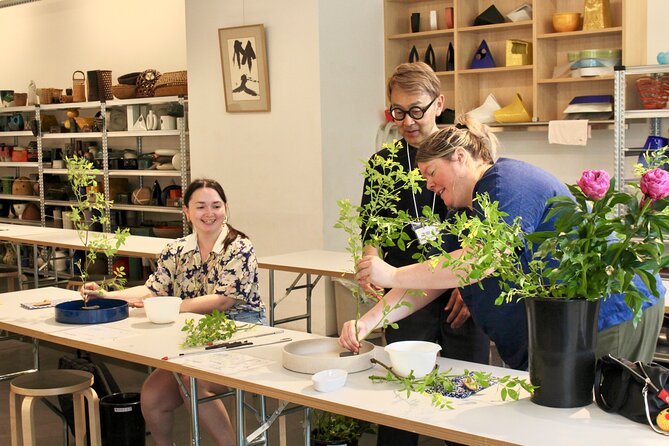
- A private workshop with Fooraku at Sogetsu WEST in Shimogyo Ward
- Over 300 container options to see and understand how containers change the mood
- No special tools needed and you can keep using the skills at home
- History, philosophy, and practical freshness tips for keeping flowers looking good
- A photo of your finished arrangement plus slides by email on request
- Time for conversation after class, including Japan questions
Where You’ll Learn Ikebana in Kyoto: Sogetsu WEST
Ikebana is often described as minimalist, but the real secret is that it is structured. You are not just arranging flowers, you are making choices about line, space, balance, and season. That is exactly what this class sets you up to do, in a focused 1 hour 45 minutes at Sogetsu WEST.
You meet at Sogetsu WEST at 20-4 Sujakudōnokuchichō in Shimogyo Ward, Kyoto (600-8842). It is a convenient setup for walking in, getting oriented, and starting right away, and the venue is near public transportation. The vibe is calm and purposeful, which matters because ikebana is not a race.
This is also a private tour/activity, meaning it is just your group. That helps a lot when you want to ask questions, double-check stem placement, or ask what you can do differently at home.
A few more Kyoto days to weigh up
- PERFECT KYOTO 1-Day Bus Tour
★ 5.0 · 13,518 reviews - Kyoto: Fushimi Inari, Kinkakuji, Bamboo Grove 1 Day Bus Tour
★ 4.8 · 4,316 reviews - Kyoto: Tea Ceremony in a Traditional Tea House in Kiyomizu
★ 4.9 · 3,519 reviews
What You Actually Learn in 1 Hour 45 Minutes
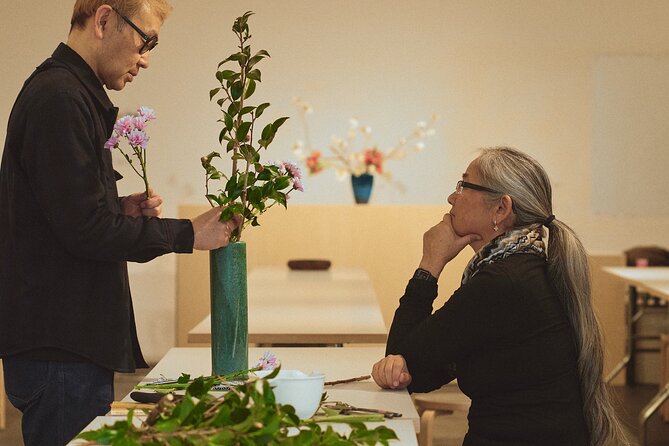
This workshop is built around the basic forms of ikebana. The goal is simple: you should walk out knowing how to structure an arrangement, not just copy one look. The instructor guides you step by step, and you also learn the reasoning behind the choices, including the philosophy and history of ikebana.
Here is what that means for your brain, in plain terms. If you learn the “why,” you stop relying on rules like, Make it taller, make it lower. Instead, you start understanding how an arrangement communicates. It is the difference between following a recipe and being able to cook once you have ingredients in front of you.
You also get practical tips for keeping flowers fresh. Even if you nail the arrangement in class, the moment you get home you still have to deal with water uptake, timing, and the realities of indoor air. Those details are part of what makes the workshop feel useful rather than just ceremonial.
Inside Sogetsu WEST: Containers That Change the Whole Arrangement
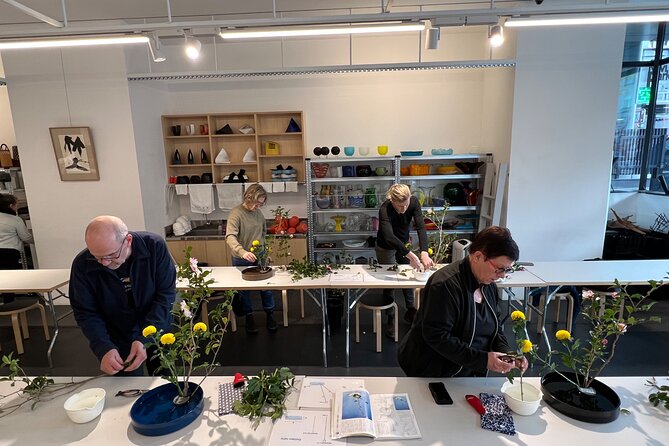
One of the coolest details here is the setting. Sogetsu WEST is home to over 300 different types of flower containers. Containers sound like a minor thing until you realize they control so much of the visual message.
A container can:
- Make an arrangement feel formal or casual
- Shift the apparent weight of stems
- Change the direction your eye travels
- Turn a simple material choice into a specific mood
In class, you get to learn how container choices connect to the style of ikebana you are aiming for. Even if you do not leave with a literal shelf of Japanese vases, you will take away the mindset: the container is not an afterthought. It is part of the composition.
That is also why this workshop is friendly to travelers. You are not stuck hunting for rare containers or specialty tools during your trip. Instead, you learn how to work with what is available later.
The Philosophy Part: More Than Flower Arrangement Rules
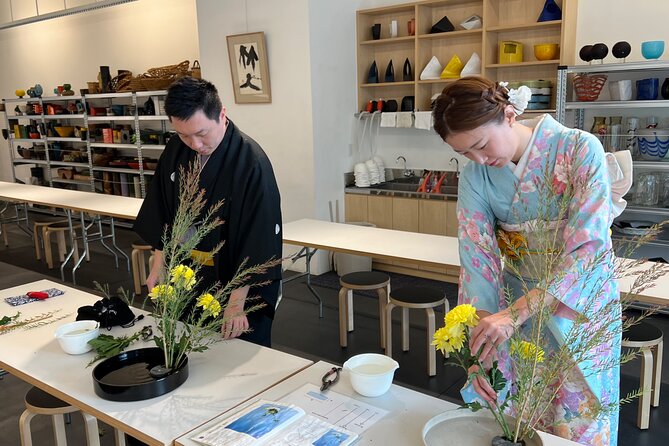
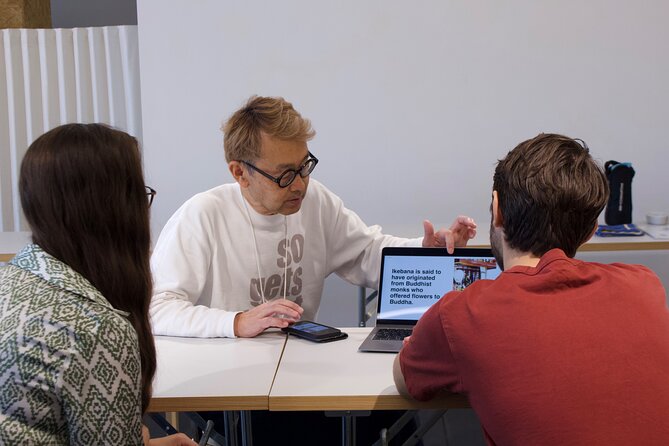
Ikebana has a reputation for being deep, but the best version of that depth is practical. In this class, the history and philosophy are taught in a way that helps you build your arrangement with confidence.
You will learn about:
- The aesthetic sense behind ikebana
- The joy of seasonality, in how arrangements are chosen
- The idea of everyday life in Japanese culture, reflected through seasonal beauty
This is not just abstract talk. When someone explains what the arrangement is trying to communicate, your choices get easier. For example, you can move stems and adjust spacing without panic because you understand what you are aiming for.
The instructor also shares what you can think of as “secrets,” meaning the smaller techniques that create the final effect. You get to learn those during the session rather than discovering them the hard way later.
A different sort of day in Japan:
- Kyoto Geisha Walking Tour: Gion District & Hidden Gems
★ 4.7 · 3,273 reviews - Kyoto: Tea Ceremony Ju-An at Jotokuji Temple
★ 4.9 · 3,207 reviews - Kyoto: 45-Minute Tea Ceremony Lesson Experience
★ 4.3 · 2,378 reviews - Kyoto: Gion Geisha District Walking Tour – Stories of Geisha
★ 4.7 · 2,187 reviews
Meet Your Instructor: Fooraku and the Relaxed Guidance Style
The instructor for this workshop is Fooraku. Based on what people say after the class, he brings years of practice, with training and study in ikebana for over 30 years. You can feel the difference when someone knows how to correct your hands without making it feel stiff.
English ability is another real-world factor. In this case, the feedback is clear that Fooraku’s English is strong, and he keeps the pace relaxed. That matters because ikebana is physical and spatial. If communication is shaky, you lose time and your confidence takes a hit.
The tone also leaves room for questions. After you finish your arrangement, you get post-session conversation where you can ask about Japanese food, culture, or traditions. That is a big plus if Kyoto feels like more than temples to you, and you want human context.
From First Stems to Your Finished Arrangement
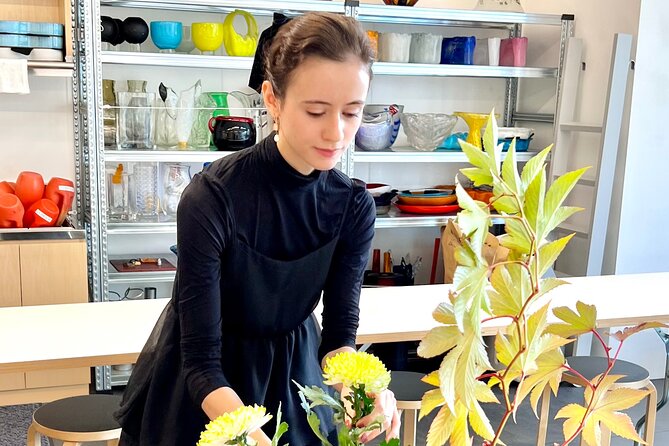
The hands-on portion is where the workshop really pays off. You start with the basics and build into the full arrangement. The instructor guides your hand placement, angles, and composition choices while you work.
Because this is ikebana, the details matter: the way stems lean, the empty space you leave, and how the arrangement reads as a whole. You will not just place flowers randomly and call it done. You learn to treat each stem like a line in a drawing.
You also learn that you can create various ikebana styles. Even though you are learning basics, you are not limited to one formula. That is why this experience works well for returning travelers too. You get enough variety in one session that you can keep experimenting after.
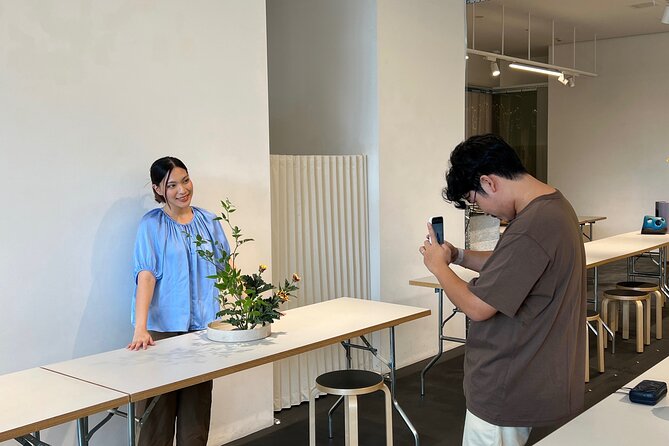
Once you finish, the class takes a picture of your arrangement. That small moment is genuinely useful. In the rush of travel, it is easy to forget how you set up your composition. The photo becomes a reference for recreating it later.
Taking Ikebana Home: No Special Vases Required
One of the strongest selling points is the homework-friendly approach. You can create ikebana at home without special tools or traditional Japanese containers. The workshop emphasizes skills you can reuse.
That matters for two reasons.
First, it lowers the friction. In Japan you can be tempted to buy something expensive or niche to mimic the class. Here, the emphasis is on what you learned, not on collecting gear.
Second, it helps you keep practicing past the novelty stage. If you only know how to do one arrangement using one specific container, the practice fades. But if you know how to structure stems and think about composition, you can keep making arrangements with what you can find locally.
If you are planning to try ikebana again at home, do not wait for a special occasion. I like to treat it like a habit. Even a small arrangement, done with the same principles you practiced in Kyoto, makes a room feel intentional.
Price and Value: What $104.24 Buys You
At $104.24 per person for about 1 hour 45 minutes, you might wonder if this is “just flowers.” The honest answer is that it is not only about the physical flowers. You are buying instruction, guidance, and the chance to ask questions in a setting built for ikebana.
A few value points that justify the price:
- Private, guided instruction rather than a demo you watch from the sidelines
- The instructor’s experience and the fact that you learn the reasoning behind choices
- Practical freshness tips, so your arrangement lasts longer
- A container-focused setting with an impressive range, over 300 types, which teaches you how style connects to form
- A photo keepsake and slides by email on request, which helps you remember and recreate
Also, timing helps. It is commonly booked about 26 days in advance on average. If you are traveling during peak season, booking early can save you from last-minute scramble, and that is when experiences like this are easiest to fit into a Kyoto plan.
Logistics That Matter (And What to Do With Them)
This is a mobile-ticket experience, so have your phone ready when you arrive. The meeting point is clearly set, and the activity ends back where you started, so you do not have to worry about getting stranded across town after class.
You do not need to bring special equipment, since the workshop is designed to teach skills you can apply later. Still, if you have sensitive shoes or you hate standing for long periods, pick comfortable footwear. You are going to be present and engaged, and comfort helps you focus on what your hands are learning.
Most travelers can participate, and because the class is private for your group, the pace can be more flexible than you might expect in a busier public setting.
Who This Workshop Is Best For
If you are the type of traveler who loves craft, details, or quiet cultural experiences, this fits well. It is also great if you want an activity that does not require advanced Japanese. The instructor communicates in English and the teaching is supported by hands-on guidance.
It is a good choice for:
- People who want a Kyoto experience that is not only temples and markets
- Travelers who like making something tangible and keeping it
- Anyone curious about Japanese aesthetics, seasonality, and everyday cultural beauty
- Travelers who want skills they can practice at home, not a one-time photo
If you only want a passive sightseeing stop, you might find a hands-on class demanding. But if you enjoy learning by doing, you will likely find it satisfying.
Should You Book This Ikebana Class in Kyoto?
I think you should book this workshop if you want a practical introduction to ikebana with real take-home value. The mix of step-by-step guidance, container awareness at Sogetsu WEST, and the ability to recreate styles later without special vases is a strong combination for the price.
Skip it if you are not interested in learning any process, or if 1 hour 45 minutes feels too short for the kind of craft immersion you want. Also, if you are traveling with the expectation that you will come away with advanced techniques, you will still enjoy the class, but it will feel like a foundation.
If you want something calm, creative, and distinctly Japanese, this is one of those experiences that pays you back later, every time you look at a simple arrangement differently.
FAQ
How long is the Traditional Japanese Flower Styling Workshop (Ikebana) in Kyoto?
The workshop lasts about 1 hour 45 minutes.
Is this workshop private or shared with other travelers?
It is private. Only your group will participate.
What is the meeting point and where does it end?
You start at Sogetsu WEST, 20-4 Sujakudōnokuchichō, Shimogyo Ward, Kyoto, 600-8842, Japan, and it ends back at the meeting point.
Do I need special flowers, vases, or tools?
The experience is designed so you can learn the basic forms and create ikebana even without special flowers or vases, and without needing special tools or traditional Japanese containers.
Will I get photos or learning materials after the class?
Your creation is photographed during the session. Slides from the session can be sent by email if you request them.
Is there a cancellation policy?
Free cancellation is available, and you can cancel up to 24 hours in advance for a full refund.
Newly listed around Kyoto
- Zen Meditation for Life in Kyoto★ 5.0 · 10 reviews
- Kyoto: Zen Meditation at a Private Temple with a Monk★ 5.0 · 25 reviews
- Kyoto Private Customizable Day Tour with Guide and Vehicle★ 5.0 · 52 reviews
- Private Wagyu Beef Tour with a Local Guide★ 5.0 · 6 reviews
- Kyoto: Gion Geisha District & Sake-in-Hand Walking Tour★ 5.0 · 37 reviews
- Your Private Vacation Photography Session In Kyoto★ 5.0 · 110 reviews
- Private Guided Traditional Buddhist Cooking in Japan★ 5.0 · 16 reviews
- Private Pewter Sake Cup Experience with a Kyoto Artisan★ 5.0 · 31 reviews
Workshops, compared.
Sushi Making Tokyo Roll and Authentic Japanese Sushi Class
Read our review →
Roll and Authentic Sushi Making Class in Asakusa
Read our review →
Ramen Cooking Class at Ramen Factory in Kyoto
Read our review →
Sushi Making Class in a Happi Coat near a Famous Spot
Read our review →

Tokyo Sushi Making Class in Tsukiji with Professional Chef
Read our review →
Ramen & Gyoza Cooking Class in Tokyo with Local Supermarket Visit
Read our review →Browse the lists this tour appears in