
Review · MATCHA & TEA CEREMONY SESSIONS
Asakusa Cultural Walk & Matcha Making Tour
Tokyo is better when you eat your way through it. This Asakusa cultural walk mixes temple customs with hands-on food time, starting with snacks on the shopping streets and ending with you cooking your own okonomiyaki. I especially like how the tour builds in both the matcha making experience and a guided taste-and-stroll route that keeps you moving. One thing to consider up front: the tour can’t accommodate gluten-free requests.
I also like that it is built for a small group, capped at seven people, so questions do not get lost in the crowd. Expect a half-day pace that fits well even on a first Tokyo morning, with a rickshaw ride through the district, plus photo coverage along the way. The biggest practical challenge is crowd and weather timing, since Sensoji can get packed and Japan summers run hot and humid.
If you like food history, temple etiquette, and learning how meals actually get made, this is a fun combo tour. You will get lunch and snacks, a certified guide, and tour photos, so you are not spending extra time hunting meals or trying to translate everything alone. Just keep your expectations realistic around food substitutions and plan for heat with water and a hat.
In This Review
- Key highlights you can plan around
- Why This Asakusa Cultural Walk Hits the Sweet Spot
- Meeting at Kaminarimon Police Box and How the Timing Feels
- Rickshaw Ride and Street Food Intro on Nakamise
- Kaminarimon Views and Shopping Street Details That Matter
- Sensoji Temple Rituals, Incense, and How People Pray
- Asakusa Shrine Next Door, Plus the Bridge to Food Streets
- Matcha Making Experience and What You’ll Actually Get From It
- Okonomiyaki or Monja yaki Lunch and the Hands On Griddle Finale
- Price and Logistics: Is It Worth $90.86 for 3 Hours?
- Should You Book This Asakusa Cultural Walk and Matcha Tour?
- FAQ
- How long is the Asakusa Cultural Walk and Matcha Making Tour?
- Where does the tour start and end?
- What time does the tour start?
- What’s included in lunch and drinks?
- Can the tour accommodate gluten-free diets or allergies?
- Is free cancellation available?
Key highlights you can plan around
- Small-group limit of 7 keeps things friendly and question-friendly
- Rickshaw ride helps you cover Asakusa without turning it into a marathon
- Nakamise shopping street snack sampling is a quick, flavorful intro
- Sensoji and Asakusa Shrine visits include how locals pray and handle temple rituals
- Matcha making experience turns a simple drink into a hands-on lesson
- Hands-on okonomiyaki or monja-yaki lunch makes the last hour the tastiest
Why This Asakusa Cultural Walk Hits the Sweet Spot
Asakusa is one of those Tokyo neighborhoods where you get layers, old streets, and daily rituals right next to each other. This tour works because it uses that reality instead of trying to “cover everything” with a long list. In about 3 hours, you get temples, snack streets, and a food experience that is interactive, not just sitting and watching.
I love the overall structure: you start with an easy cultural orientation, then you walk, taste, and ask questions, and you finish with cooking. That means you are not only learning what you see, you are tasting it, too. And because the group is capped at seven, the guide can actually explain what you are looking at instead of rushing through blur facts.
The tour also has smart value built in. It includes lunch and snacks, plus the matcha session and the cooking part. So you are paying for experiences, not just transportation between stops. At this price point, the question is not whether you can find cheaper street snacks on your own. It is whether you want a guided route that saves time and adds context while you eat.
There is also a quiet bonus: you get tour photos. When you are in Asakusa, that matters because temples and shopping streets are packed with good photo angles, and getting a decent shot in a crowd is harder than it should be.
More Tea Ceremonies in Tokyo
- Kimono Tea Ceremony at Tokyo, Asakusa Maikoya
★ 5.0 · 638 reviews - A 90 min. Tea ceremony Workshop In The Authentic Tea Room
★ 5.0 · 174 reviews - Sweets Making and Kimono Tea Ceremony at Tokyo Maikoya
★ 5.0 · 57 reviews
Meeting at Kaminarimon Police Box and How the Timing Feels
The tour starts at 11:00 am at the Kaminarimon Police Box, and it ends back at the same meeting point. That “loop back” format is practical. It reduces decision fatigue, and it helps if you are coordinating the rest of your day, like heading to another neighborhood after lunch.
The near public transportation part is also useful, especially in Tokyo where “near” can mean two different realities. Here, it’s designed so you can reach the meeting area without a big trek. I recommend planning to arrive a few minutes early anyway, because Sensoji and Nakamise areas get busy and you want your brain in travel mode, not sprint mode.
A small-group limit changes the vibe. You move as a unit, but you are not trapped in a large herd. In the past, people have even ended up with very small counts on certain days, which makes it feel more like a personalized walk than a rigid group tour. Even without that, seven is small enough for the guide to notice when someone is unsure about where to look next.
If you are traveling with kids or teens, this timing can be a lifesaver. You get enough structure to keep everyone oriented, and the food breaks give you built-in motivation to keep going. Adults often like it for the same reason, plus the fact that a half-day tour can be a great first visit orientation.
Rickshaw Ride and Street Food Intro on Nakamise
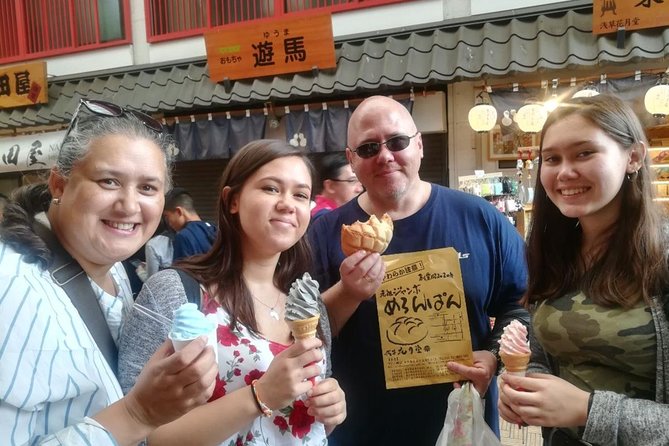
Asakusa’s main shopping area is where the neighborhood’s personality comes through fast. The tour time at Nakamise Shopping Street, near Kaminarimon, is about 20 minutes, and it is intentionally snack-focused. You will try traditional Japanese sweets, and you will also learn what you are looking at so it feels less like random shopping chaos.
This is one of the reasons the rickshaw idea matters. If you start with a guided ride and then walk through the key retail lanes, you get orientation without draining your energy. You also get to see key sights in a way that walking alone might not, especially if you do not know the streets well yet.
Nakamise is famous for being busy, and the guide’s job is not just to point. It is to help you understand why these stalls and sweets exist, and how locals treat this kind of browsing as part of the day. The best tours in Japan make you feel like you can join in, not just watch from the sidelines.
Here is a practical note: the tour includes food samplings, but you are not locked into one vendor. You get a selection over time. If you have a strong preference for certain flavors, you might still want to do a second pass later on your own, because a short guided tasting is not the same as a full souvenir hunt.
Another positive: the tour does not rush you past everything. You get small windows of time on each key street area, and it keeps moving without trying to cram in five shopping streets at full speed.
Kaminarimon Views and Shopping Street Details That Matter
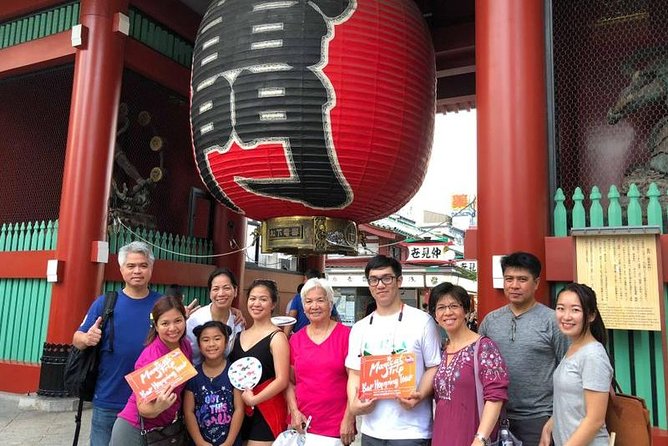
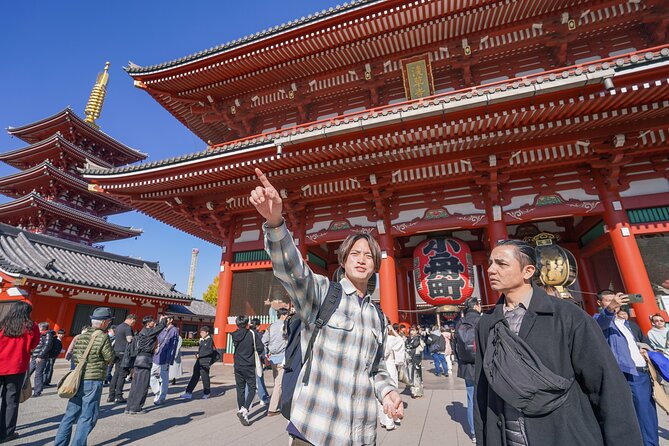
You also spend time on the Asakusa Kaminarimondori shopping street, around 15 minutes, to see Kaminarimon. That is not just a quick photo stop. Kaminarimon is a landmark with a lot of meaning in the temple area, and knowing that helps your photos look better, because you understand what you are actually capturing.
In practice, this is the segment where you can slow your pace, look up at details, and ask questions. If you want to learn how the main gate fits into the larger temple complex rhythm, this is your moment.
What I like about doing this before full temple time is simple. When you approach Sensoji having already seen the gate area, the temple visit feels like a continuation instead of a sudden jump. The guide also has an easier job explaining the layout because everyone is already oriented to what’s where.
If you are prone to “photo paralysis,” this is a good place to breathe. Take a couple good shots, then listen. You’ll get more value out of the rest of the tour if you know the story behind what you are photographing.
More Walking Tours in Tokyo
- Asakusa Senso-ji Temple and Old Tokyo Walking Tour
★ 5.0 · 560 reviews - Tokyo: Asakusa & Sensoji ー Oldest Temple Walking Tour (2hrs)
★ 5.0 · 213 reviews - Tokyo Tsukiji Fish Market Food and Culture Walking Tour
★ 5.0 · 3,184 reviews - Tokyo: Shinjuku Local Bar and Izakaya Guided Walking Tour
★ 4.9 · 1,794 reviews
Sensoji Temple Rituals, Incense, and How People Pray
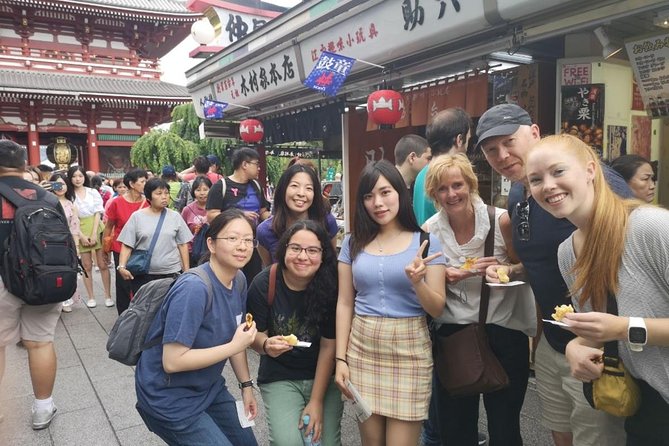
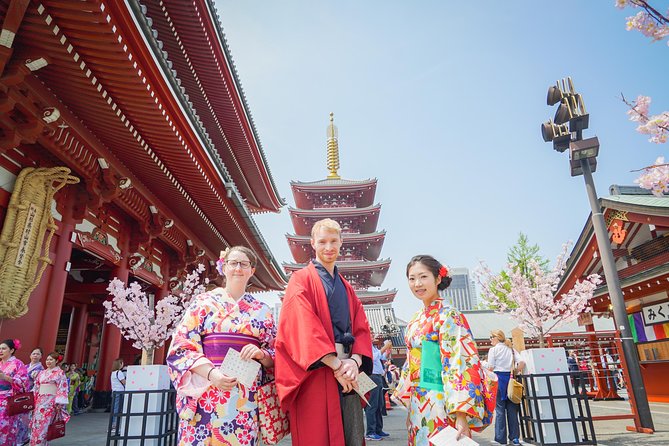
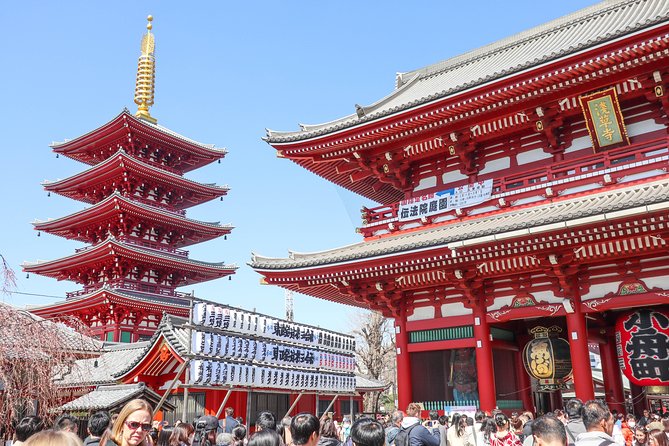
Now we get to the part most people come for. You have about 30 minutes at Senso-ji Temple. This is time for seeing the temple, understanding what Japanese visitors do there, and learning common customs like praying and fortune telling.
A couple of ritual details that show up in people’s favorite moments here: tossing a special coin and praying, plus handling incense at the incense burner area. In some temple customs, people fan the incense smoke toward themselves, believing it has healing or cleansing associations. When you know what you are looking at, you do not feel awkward. You can copy the motion with respect, then move on.
The crowd factor is real. Late spring and summer periods can be busy, and Sensoji is one of those places where everyone else has the same idea. If you hate crowded spaces, come with a patient mindset. The guide’s role helps here, because they keep you moving through the important areas without you needing to constantly reposition.
One good thing about the visit length is that it is not trying to turn temple time into an all-day assignment. 30 minutes is enough to feel the place and learn the basics, without burning out before your food experiences.
This stop is also where your guide’s personality matters. People have highlighted guides like Hana, Mihori, and Mai for being patient and helpful while explaining the culture and what to do. If you care about understanding etiquette, this is a major reason the tour scores so high.
Asakusa Shrine Next Door, Plus the Bridge to Food Streets
After Sensoji, you visit Asakusa Shrine, also about 30 minutes, and it sits right next to Sensoji, which makes the transition easy. The shrine stop gives you a chance to see another piece of the neighborhood’s spiritual life without the effort of traveling far.
This is the “slow down and absorb” segment. If the main temple feels like a wave of activity, the shrine can feel more grounded. It is still part of the same cultural zone, but it gives your brain a moment to reset between the biggest landmark and the later food portion.
Then the tour moves you toward Kappabashi Kitchen Street, the area known for kitchen-related shops and tools. This matters even if you are not a cooking hobbyist. Seeing kitchen culture up close helps connect the dots between matcha making and the okonomiyaki cooking finale. Instead of treating food as a mystery, you see tools, ingredients, and the idea that food is craft.
In other words, the shrine stop is not only spiritual. It also functions like a bridge. You go from temple rituals and customs to the world of kitchens where people prepare and shape what you will eat next.
Matcha Making Experience and What You’ll Actually Get From It
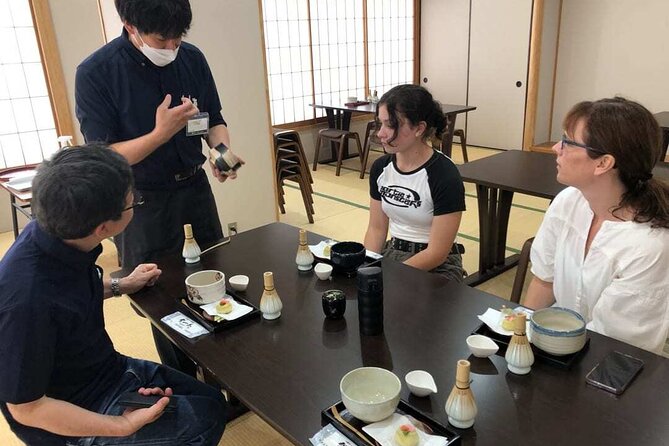
The matcha part is one of the tour’s core reasons people sign up, and it is easy to see why. A matcha session is not just about drinking tea. It is about understanding what goes into it, how it is prepared, and why the ritual matters.
You get a matcha making experience as part of the tour, and you also get a guided setting where the explanation is meant to make the process make sense. People have described getting a processing explanation and then moving into a tasting or tea moment, which is the best way to learn. You see steps, then you experience the result.
I like that this experience is included rather than offered as an optional extra. Some tours treat tea as a quick stop. Here, it is built in, and you spend enough time for it to feel like more than a photo opportunity.
If you are the type who buys matcha powder but never knows what to do with it, this is a good match. You come away with a clearer picture of what you bought and why the texture and flavor are connected to preparation. Even if you are not suddenly a matcha expert back home, you will at least understand the logic behind the craft.
Also, this is a small-group tour, so you can ask practical questions. People have praised guides like Nori san and others for conversational teaching, which usually means you do not feel like you are studying, you feel like you are hanging out with someone who genuinely wants you to get it.
Okonomiyaki or Monja yaki Lunch and the Hands On Griddle Finale
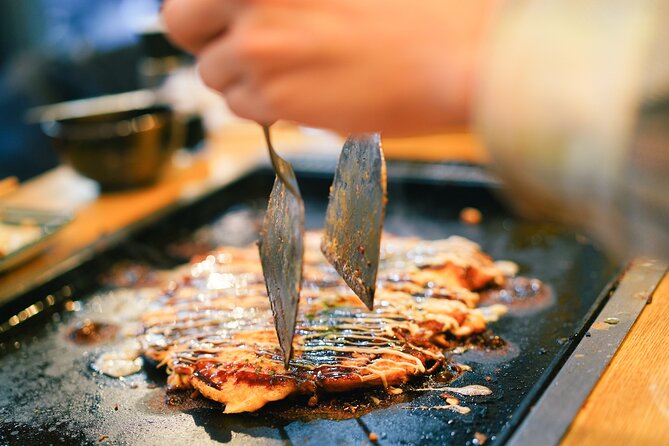
The tour ends at a traditional restaurant where you learn to make okonomiyaki. Lunch is included and comes with one drink, with the option of okonomiyaki or monja-yaki depending on what is offered that day. The key point is that you cook. You are not just eating.
This is where the tour’s value really shows. Street food tasting is fun, but hands-on cooking is different. You feel the texture changes. You learn when something is ready based on sight and smell. And you get a meal that is tied to what you learned earlier, from temple snack traditions to matcha preparation to the kitchen culture you saw around Kappabashi.
In the best moments, people have mentioned cooking on a giant griddle with the restaurant space feeling like it is made for the activity. If you like food theater but hate fake, this is the good version. The “upstairs restaurant to ourselves” type of feel has shown up in past experiences, though it is not something you should assume every time.
Diet notes are important, so read these carefully:
- Vegetarian menu is available.
- It is not vegan and not gluten-free.
- The tour says it cannot accommodate gluten-free requests.
- Allergy-free guarantees are not promised because food is prepared in kitchens not belonging to the tour operator, and substitutions might not be possible at every stop.
So if you have serious allergy needs, you should be cautious and plan ahead. If you have flexibility and need vegetarian-friendly options, you are more likely to be okay.
One more practical tip: because lunch is included, you do not need to budget for a big meal afterward. Still, you might want extra water, especially if you are hitting this in warmer months.
Price and Logistics: Is It Worth $90.86 for 3 Hours?
At $90.86 per person, you are paying for a packaged experience: guided walking, multiple included stops, snack tastings, a guided matcha session, and a cooking-based lunch with a drink. In Tokyo, that combination is usually where guided tours justify themselves, because you are buying time saved and context added.
This is not a “cheapest way to eat in Asakusa” tour. But it is one of the more efficient ways to get several Asakusa highlights in a half-day, without spending your energy figuring out customs and translations.
The included food is a major part of the value. You get lunch plus snacks, not just one small bite at the end. And you get tour photos, which you might otherwise pay for via a second device or awkward self timer shots in crowds.
Logistics are also kept simple. You start at Kaminarimon Police Box, you finish back at the same point, and you get a mobile ticket. The tour also notes that most travelers can participate, but it does not say it is guaranteed for special diets beyond the vegetarian option.
Weather matters. Japan summers can be very hot and humid, so the tour explicitly recommends bringing water and wearing a hat to prevent heat stroke. I second that strongly. If you show up under-hydrated, you might still enjoy the food portion, but you will feel less patient during the walking and temple segments.
Should You Book This Asakusa Cultural Walk and Matcha Tour?
Book it if you want a structured first look at Asakusa with temple rituals, snack tasting, and two food experiences that are hands-on: matcha and okonomiyaki. It is a solid fit for first-time visitors, food lovers, and anyone who prefers learning the “why” behind what they are seeing.
Skip it or reconsider if you need gluten-free food, or if you have complex allergy requirements. The tour clearly states it cannot accommodate gluten-free requests, and it cannot guarantee allergy-free meals or guaranteed substitutions at every stop.
Choose a morning start if you can. The 11:00 am timing gives you time to finish while the rest of the day is still flexible. And if you are the type who enjoys having someone point out what to watch for, the small-group size and strong guide support are exactly what you’re buying.
If you want an Asakusa experience that turns a scenic walk into a meal you helped make, this one is a high-value way to do it.
FAQ
How long is the Asakusa Cultural Walk and Matcha Making Tour?
It runs for about 3 hours.
Where does the tour start and end?
The tour starts at Kaminarimon Police Box, 1-chōme-3-1 Asakusa, Taito City, Tokyo, and it ends back at the same meeting point.
What time does the tour start?
The start time is 11:00 am.
What’s included in lunch and drinks?
Lunch is included and is okonomiyaki or monja-yaki, plus 1 drink. A vegetarian menu is available.
Can the tour accommodate gluten-free diets or allergies?
Gluten-free requests cannot be accommodated. The tour also states it cannot guarantee allergy-free meals, and substitutions may not be possible at certain stops.
Is free cancellation available?
Yes. You can cancel up to 24 hours in advance for a full refund. If you cancel less than 24 hours before the start time, the amount paid is not refunded.
More Walking Tours in Asakusa
- Kyoto Geisha Walking Tour: Gion District & Hidden Gems
★ 4.7 · 3,273 reviews - Kyoto: Gion Geisha District Walking Tour – Stories of Geisha
★ 4.7 · 2,187 reviews - Night Walk in Gion: Kyoto’s Geisha District
★ 4.5 · 2,003 reviews - Tokyo: Tsukiji Fish Market Food and Walking tour
★ 5.0 · 1,724 reviews
More Tea Ceremonies in Asakusa
- Japanese Matcha Tea Ceremony and Kimono Experience in Hanayaka
★ 5.0 · 26 reviews - Kyoto: Tea Ceremony in a Traditional Tea House in Kiyomizu
★ 4.9 · 3,519 reviews - Kyoto: Tea Ceremony Ju-An at Jotokuji Temple
★ 4.9 · 3,207 reviews - Kyoto: 45-Minute Tea Ceremony Lesson Experience
★ 4.3 · 2,378 reviews
Newly listed around Asakusa
- Tokyo : Asakusa Food Tour – 12 Dishes & 3 Drinks★ 5.0 · 44 reviews
- Tokyo: Customized Private Tour with a Local Guide★ 5.0 · 16 reviews
- 【Tokyo/Asakusa】Traditional Japanese Washi Papermaking experience★ 5.0 · 146 reviews
- Tokyo Japanese Dance Cabaret Theater Asakusa-Kaguwa★ 5.0 · 170 reviews
- Asakusa Kimono Photography Tour (Private Option Available)★ 5.0 · 20 reviews
- Tokyo: Asakusa & Sensoji ー Oldest Temple Walking Tour (2hrs)★ 5.0 · 213 reviews
- Asakusa Rental Kimono in Tokyo★ 5.0 · 11 reviews
- Asakusa:Family-Friendly Kimono & Yukata Experience at WARGO★ 5.0 · 30 reviews
Matcha & Tea Ceremony Sessions, compared.
Tea Ceremony in a Traditional Tea House in Kiyomizu
Read our review →
World Heritage Kyoto & Nara Uji Authentic Matcha Experience
Read our review →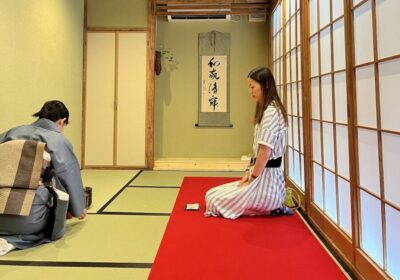
Browse the lists this tour appears in