
Review · MATCHA & TEA CEREMONY SESSIONS
Kyoto near Fushimiinari Wagashi making&Small Group Tea Ceremony
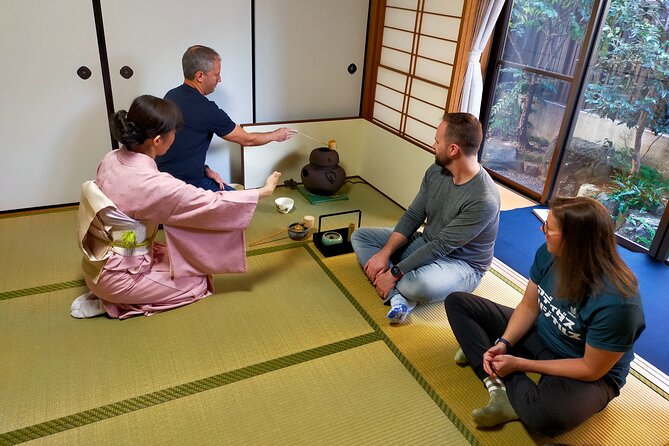
Matcha lessons beat souvenir shopping. In a local Fushimi house, you make wagashi and learn the matcha ceremony in a setting that feels welcoming, not staged. It is formal, yes, but you also get the sense of being treated like a friend who has dropped by for tea.
I love that the session is truly hands-on, not a quick performance. You will get English guidance in a small group (max 8), so you can actually ask questions. One drawback to consider: it is not recommended if you do not drink caffeine, because matcha is part of the experience.
In This Review
- Key Highlights You Should Know
- A Kyoto Tea Ceremony That Feels Local Near Fushimi Inari
- How the Small Group Format Changes Everything
- Meeting Point and Getting There Without Stress
- Step One: Making Wagashi in the House Kitchen
- Step Two: Walking to the Tea Room and Room Etiquette
- The Ceremony Portion: History, the Hanging Scroll, and Matcha Basics
- Step Three: Making and Drinking Matcha the Ceremonial Way
- What You Get for $52.26, and Why It’s Good Value
- The Best Fit: Who This Kyoto Tea Class Suits
- Things to Plan For Before You Go
- Should You Book This Kyoto Tea Ceremony?
- FAQ
- How long is the Kyoto near Fushimi Inari wagashi making and small group tea ceremony?
- What is the group size?
- Where is the meeting point?
- What time does the session start?
- What will I do during the experience?
- Is there an English-speaking instructor?
- What is included in the price?
- Can I sit on a chair instead of on the tatami floor?
- What should I wear or bring?
- Is the experience suitable for children?
- What happens if the weather is bad?
Key Highlights You Should Know
- Hands-on wagashi making in an actual home kitchen, with guidance from an English-speaking instructor
- Small group size (up to 8) so etiquette and technique make sense, not rush by
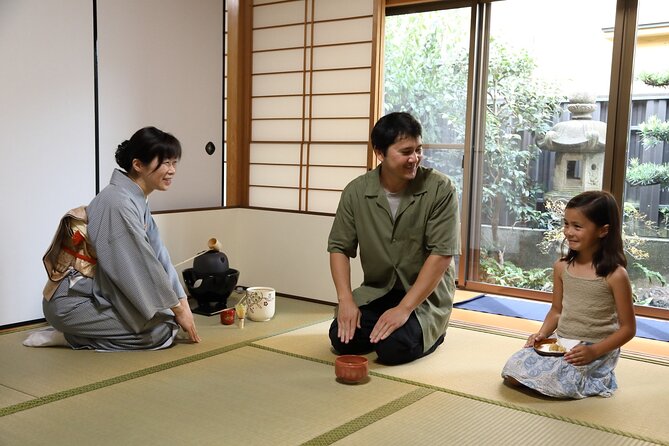
- Tatami-room tea ceremony with explanations of the hanging scroll and how to participate
- Walk through a small garden before you enter the room, when weather allows
- Two rounds of matcha enjoyment, plus coffee or tea and the sweets you made
- Clear English instruction from licensed guide interpreters who help you understand every step
A Kyoto Tea Ceremony That Feels Local Near Fushimi Inari
Kyoto has plenty of tea experiences, but this one’s location changes the vibe. You are based in the Fushimi area, and it is close enough that you can pair it with a Fushimi Inari visit later in the day. The setting also matters: this ceremony happens in an authentic Japanese-style room inside a local house. That means you are not just observing culture from behind glass, you are inside the rhythm of it.
The best part is the balance. The tea ceremony has real structure and etiquette, yet the hosts are friendly and the lesson feels like an invitation to join in. You will see how formal details still come from everyday hospitality. That is a powerful contrast to what many people expect when they hear tea ceremony.
More Tea Ceremonies in Kyoto
- Kyoto: Tea Ceremony in a Traditional Tea House in Kiyomizu
★ 4.9 · 3,519 reviews - Kyoto: Tea Ceremony Ju-An at Jotokuji Temple
★ 4.9 · 3,207 reviews - Kyoto: 45-Minute Tea Ceremony Lesson Experience
★ 4.3 · 2,378 reviews
How the Small Group Format Changes Everything
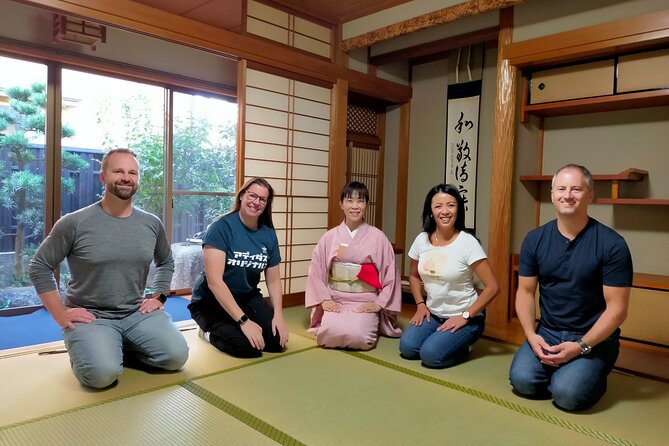
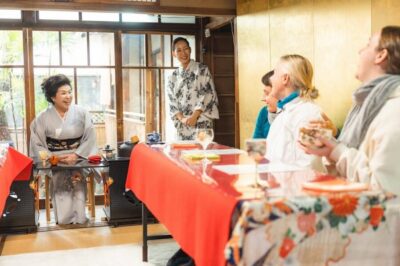
This class tops out at 8 participants, and I think that is the sweet spot. With a small group, the instructor can slow down when you need clarification, especially for the precise movements of making matcha and handling wagashi. It also helps with translations, since licensed guide interpreters are on hand to make sure the explanation lands clearly in English.
You can also feel the difference in timing. Instead of being herded through steps, you get time to practice. That is why the experience is more memorable than the typical add-on activity people rush through between big-ticket sights.
Meeting Point and Getting There Without Stress
The session meets at 38-4 Fukakusa Watamorichō, Fushimi Ward, Kyoto, 612-0022. It starts at 9:45 am, and it ends back at the same meeting point. There is no hotel pick-up and drop-off, so plan to arrive on your own via public transportation.
If you want an easy day, build your schedule around that morning start. With Fushimi Inari nearby, you can treat the tea ceremony as the calmer, more reflective anchor before or after shrine time.
Step One: Making Wagashi in the House Kitchen
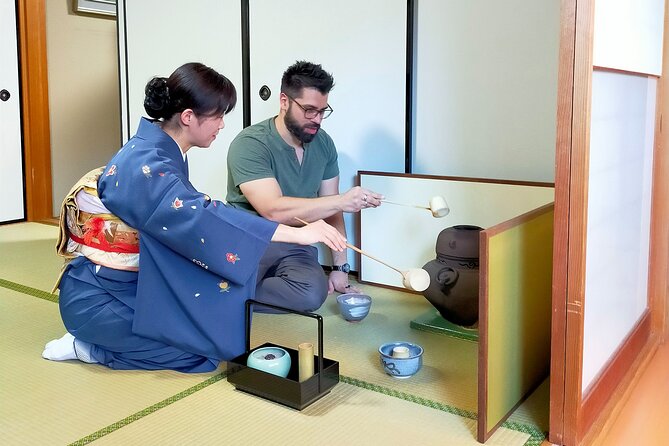
Your first stop is inside the house, where the English-speaking host guides you to the kitchen. This is not just watching someone else do the work. You will learn how to make one kind of wagashi, Japanese sweets, and you do it hands-on.
Why this matters: wagashi is not only dessert, it is part of seasonal expression and presentation. When you make it yourself, you pay attention to texture, shape, and the care behind the craft. That personal effort turns the tasting portion into something more meaningful than a cookie-like snack.
Also, you should expect that the process can get a bit hands-on. Wagashi preparation often involves sticky ingredients or dough work, and you will be better off if you come with an easygoing attitude.
A different sort of day in Japan:
- PERFECT KYOTO 1-Day Bus Tour
★ 5.0 · 13,518 reviews - Kyoto: Fushimi Inari, Kinkakuji, Bamboo Grove 1 Day Bus Tour
★ 4.8 · 4,316 reviews - Kyoto Geisha Walking Tour: Gion District & Hidden Gems
★ 4.7 · 3,273 reviews - Kyoto: Gion Geisha District Walking Tour – Stories of Geisha
★ 4.7 · 2,187 reviews
Step Two: Walking to the Tea Room and Room Etiquette
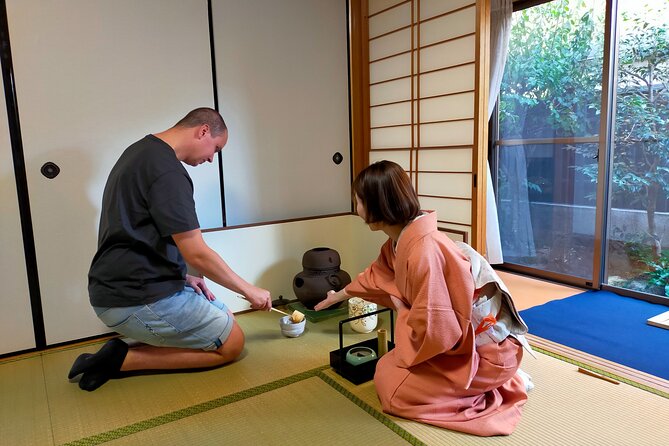
After wagashi, you transition into the tea ceremony. The flow begins with orientation. The host explains how to attend, so you know what to do before you sit down. That reduces awkwardness, especially if you have never done a traditional ceremony.
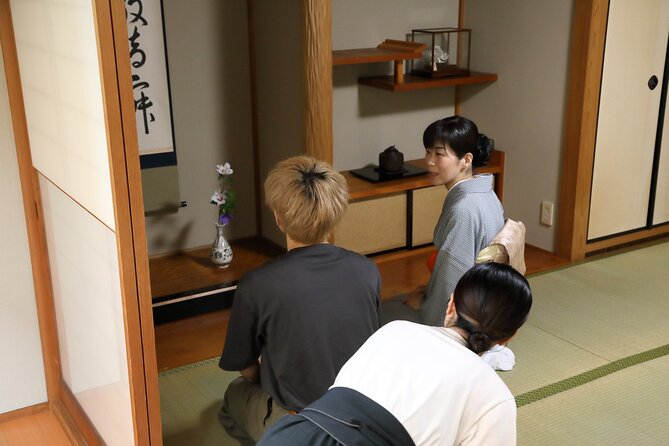
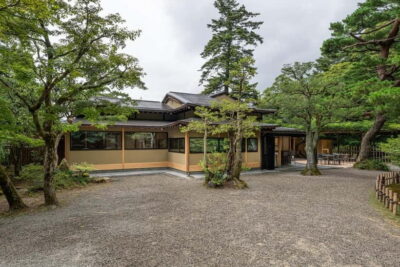
Next comes a short walk. You go outside to a tiny garden and then enter the authentic Japanese-style room. If it is not raining, you get that garden moment, which helps you shift from street mode to ceremony mode. If the weather is bad, you can still expect the tea session to happen, just without the outdoor feel.
Inside, you will sit on the tatami floor. Bare feet are not allowed in the room, so plan on wearing socks. The tour recommendation is to wear shoes that are easy to take on and off, since you will likely remove footwear before entering.
There is also a thoughtful option if you prefer not to sit on the tatami: it is possible to prepare a chair instead. If you want that, let the organizers know when you make your reservation, and they will bring chairs for your group count.
The Ceremony Portion: History, the Hanging Scroll, and Matcha Basics
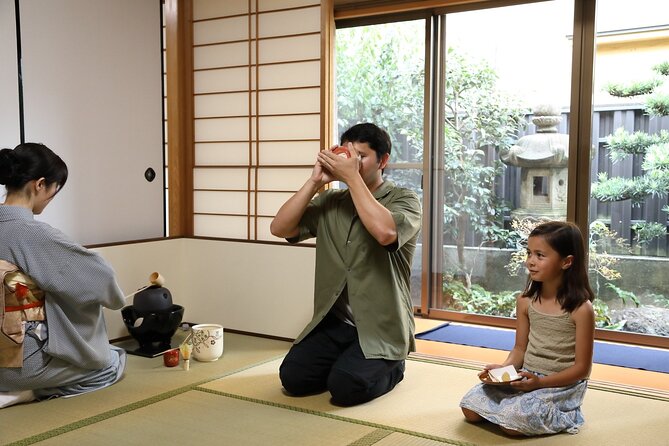
Once you are seated, the instructor explains the history of tea ceremony and the meaning of the hanging scroll on the wall. That is a subtle detail, but it changes how you experience the room. Instead of treating the ceremony as a set of tricks, you understand that each element has purpose and symbolism.
Then you move into tasting. You will savor the Japanese sweets you just made while your instructor demonstrates how to drink a bowl of matcha. This is one of those practical moments that feels small, but it helps you get the order right: sweets first, matcha next, and pacing matters.
If you have ever tasted matcha and wondered why people treat it like a ritual, this section answers that question. You learn that it is not only about flavor. It is about attention.
Step Three: Making and Drinking Matcha the Ceremonial Way
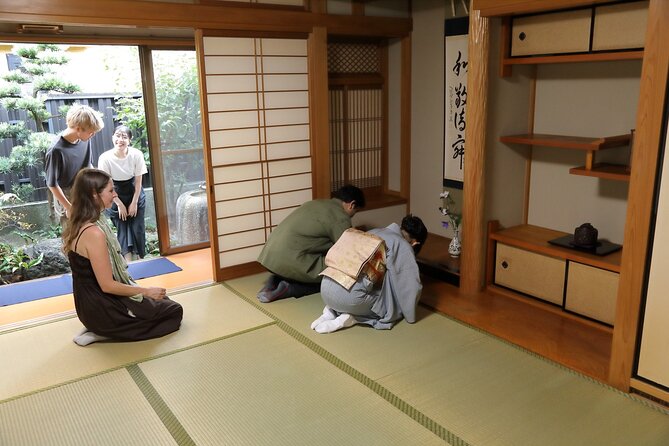
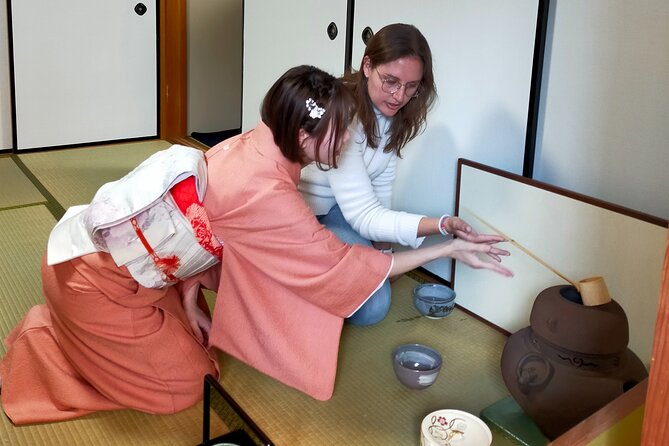
After the tasting and instruction, the host demonstrates the ceremonial preparation of matcha, and then you get your turn to prepare it yourself. You will enjoy drinking the matcha you make at the end of the process.
This is the key skill-building moment. Learning the steps means you can recreate the experience at home, with some practice and the right tools. It also gives you something better than a photo. You leave with a process you can explain to friends, and the results you can share.
Because the class is in English, you are not stuck with hand gestures and guessing. The instructors are guide interpreters, so you understand what you are doing and why. That makes the ceremony feel less intimidating and more rewarding.
What You Get for $52.26, and Why It’s Good Value
The price is $52.26 per person for an experience lasting about 1 hour 15 minutes. That might sound short, but it is a full cycle: wagashi making, guided ceremony etiquette, sweets tasting, instructor demonstration, and then you preparing matcha yourself.
Included in the cost are:
- An English-speaking instructor
- All fees and taxes
- Coffee and/or tea
- Two bowls of matcha
- Japanese traditional confectionaries
When you add up the structure and the amount of hands-on time, this price feels reasonable for Kyoto. You are paying for language support, a small group environment, and guided practice that you cannot get from a quick tasting.
The only caution is the caffeine factor. Matcha is central here, and if you do not take caffeine, the experience may not work well for you.
The Best Fit: Who This Kyoto Tea Class Suits
This is a great pick if you want a cultural experience that is calm, precise, and practical. It is also ideal if you appreciate small group learning, since you will likely ask questions and get answers in real time.
You will especially enjoy it if you:
- Like hands-on activities rather than only watching
- Want an English-friendly Kyoto experience
- Want a skill you can share later (making matcha, serving it properly)
- Appreciate etiquette and symbolism, like the hanging scroll explanation
Families can consider it too, with age guidelines: children aged 8 to 12 need at least one adult to participate, while children aged 7 or under are not able to take part in this session.
Things to Plan For Before You Go
A few practical tips make the day smoother.
First, bring or wear socks. Bare feet are not allowed in the room, and you want comfortable socks since you will sit for part of the ceremony.
Second, wear easy-to-take-off shoes. You will likely remove footwear as you move through the house, and the smoother that is, the more you can relax into the experience.
Third, think about caffeine. Matcha is included, and it is not recommended for travelers who do not take caffeine.
Finally, weather matters. The experience requires good weather, especially because there is an outdoor garden walk portion. If it is canceled due to poor weather, you will either be offered a different date or a full refund.
Should You Book This Kyoto Tea Ceremony?
Yes, if you want something authentic, small, and learn-by-doing. This class checks the boxes that most visitors quietly hope for: hands-on wagashi making, real ceremony etiquette explained in English, and the chance to prepare and drink your own matcha.
Skip it or reconsider only if you cannot do caffeine, because matcha is central to the experience. Otherwise, the combination of a calm tatami room, a short garden walk, and practical technique makes it a strong use of your time in Kyoto.
If your travel style includes learning a few skills you can reuse at home, this is the kind of Kyoto experience that lingers longer than a typical sightseeing stop.
FAQ
How long is the Kyoto near Fushimi Inari wagashi making and small group tea ceremony?
It runs for about 1 hour 15 minutes.
What is the group size?
The class has a maximum of 8 travelers.
Where is the meeting point?
You meet at 38-4 Fukakusa Watamorichō, Fushimi Ward, Kyoto, 612-0022, Japan.
What time does the session start?
The start time is 9:45 am.
What will I do during the experience?
You will learn to make wagashi, then join a tea ceremony. You will taste the sweets you made, learn about tea ceremony etiquette and meaning of the hanging scroll, watch matcha preparation, and then prepare matcha yourself.
Is there an English-speaking instructor?
Yes. The experience includes an English-speaking instructor, and the instructors are licensed guide interpreters.
What is included in the price?
Coffee and/or tea, two bowls of matcha, Japanese traditional confectionaries, and all fees and taxes are included.
Can I sit on a chair instead of on the tatami floor?
Yes. Chair seating is possible if you request it when making your reservation.
What should I wear or bring?
Bring or wear a pair of socks. Bare feet are not allowed in the room. Wear shoes that are easy to take on and off.
Is the experience suitable for children?
Children aged 8 to 12 can participate if at least one adult joins. Children aged 7 or under cannot participate.
What happens if the weather is bad?
The experience requires good weather. If it is canceled due to poor weather, you will be offered a different date or a full refund.
Newly listed around Kyoto
- Zen Meditation for Life in Kyoto★ 5.0 · 10 reviews
- Kyoto: Zen Meditation at a Private Temple with a Monk★ 5.0 · 25 reviews
- Kyoto Private Customizable Day Tour with Guide and Vehicle★ 5.0 · 52 reviews
- Private Wagyu Beef Tour with a Local Guide★ 5.0 · 6 reviews
- Kyoto: Gion Geisha District & Sake-in-Hand Walking Tour★ 5.0 · 37 reviews
- Your Private Vacation Photography Session In Kyoto★ 5.0 · 110 reviews
- Private Guided Traditional Buddhist Cooking in Japan★ 5.0 · 16 reviews
- Private Pewter Sake Cup Experience with a Kyoto Artisan★ 5.0 · 31 reviews
Matcha & Tea Ceremony Sessions, compared.
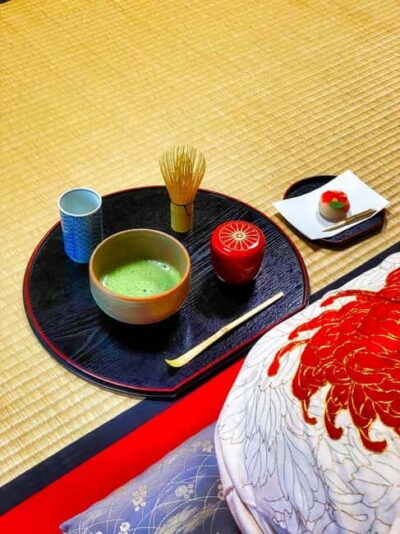
Tea Ceremony in a Traditional Tea House in Kiyomizu
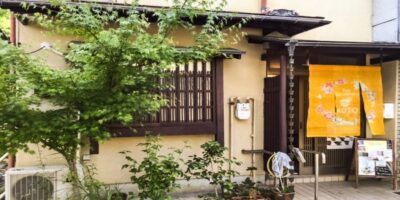
Read our review →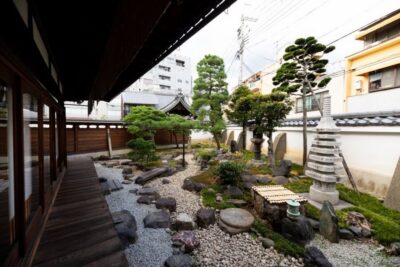
World Heritage Kyoto & Nara Uji Authentic Matcha Experience
Read our review →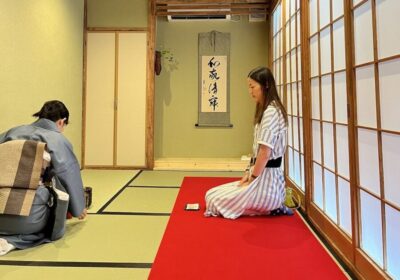
Browse the lists this tour appears in