
Review · MATCHA & TEA CEREMONY SESSIONS
Kyoto: Tea Ceremony Experience
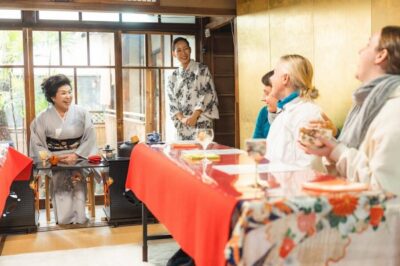
Matcha turns a side street into a calm moment. In a traditional machiya in Higashiyama, you learn how to make a proper bowl of Kyoto matcha and how the ceremony works, step by step. I really loved two things: the chance to hands-on whisk your own bowl right in the teahouse, and the way you get to taste locally made seasonal sweets alongside the tea. One consideration, plan ahead for sitting on the floor, because the tearoom is upstairs and you may feel it after a while, even though chairs and tables are available.
This is a tight, well-paced 45-minute experience led in English, with private or small-group options. You get the real ceremony flow, plus the extra context that makes it click, like the utensils, room layout choices, and even the idea of the three schools of tea ceremony. If you want something peaceful that still feels hands-on, this is it.
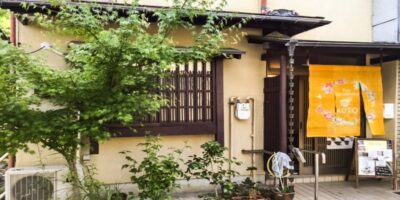
Finding the place is also easier than it sounds once you have a landmark. Look near Park Hyatt, spot the Studio Ghibli store across the street, then head for the alley branching off Ninenzaka in Higashiyama, just to the left of that store. After you go, you’re in walking range of Kiyomizu-dera, Kodai-ji, Yasaka-jinja, and the Gion area, so you can stitch it into a great Kyoto day.
In This Review
- Key things to know before you go
- Why this Kyoto tea ceremony feels like more than a performance
- Finding the machiya: Park Hyatt, Studio Ghibli, and the Ninenzaka alley
- What happens during your 45 minutes of matcha making
- Utensils, room layout, and the three schools of tea ceremony
- The taste test: matcha, foam, and seasonal sweets
- Sitting on tatami: comfort tips that keep the calm
- English hosts, small-group energy, and the pace that matters
- Kimono option nearby, and why it can be worth it
- Price and value: what $32 buys you in Kyoto
- Who should book this Kyoto matcha workshop
- Should you book a Kyoto tea ceremony with Camellia Tea Ceremony?
- FAQ
- How long is the Kyoto tea ceremony experience?
- Is the instructor/host available in English?
- What does the price include?
- What is not included in the experience?
- Where is the meeting point in Higashiyama?
- Is video recording allowed during the workshop?
- Can I take photos?
- Will I need to sit on the floor?
- Where are the tearooms located, and is there wheelchair access?
- Do they offer private or small-group options?
Key things to know before you go
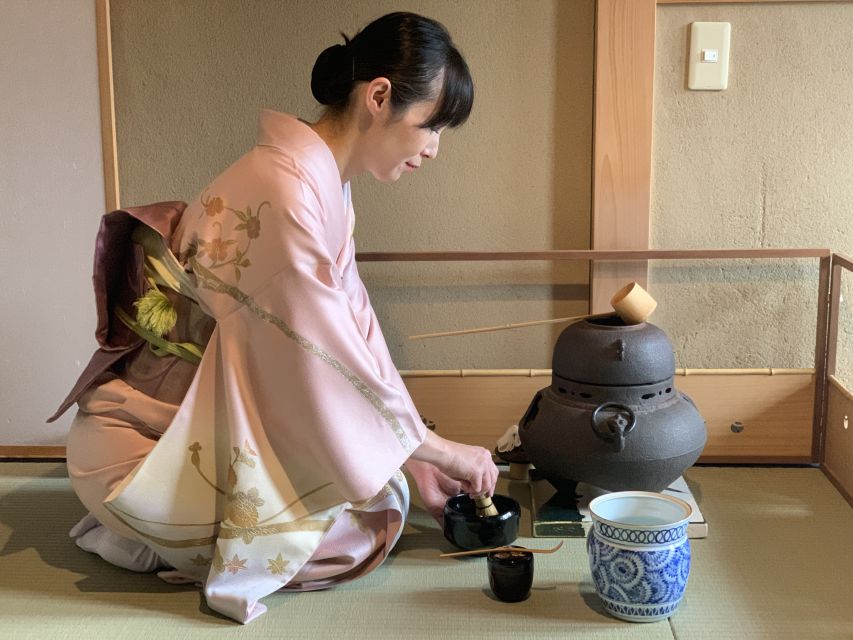
- Higashiyama machiya setting: tea ceremony happens in a traditional Kyoto-style house, not a generic studio.
- Seasonal sweets plus matcha: you taste what pairs well with the tea, not just drink matcha alone.
- You whisk your own bowl: you’re not watching from a distance.
- Utensils and room layout matter: you learn why objects and decoration are part of the ritual.
- Ceremony schools and symbolism: you can ask questions about the three schools and what the steps mean.
- No video, still photos ok: non-flash still photography is permitted, but video recording is not.
Why this Kyoto tea ceremony feels like more than a performance
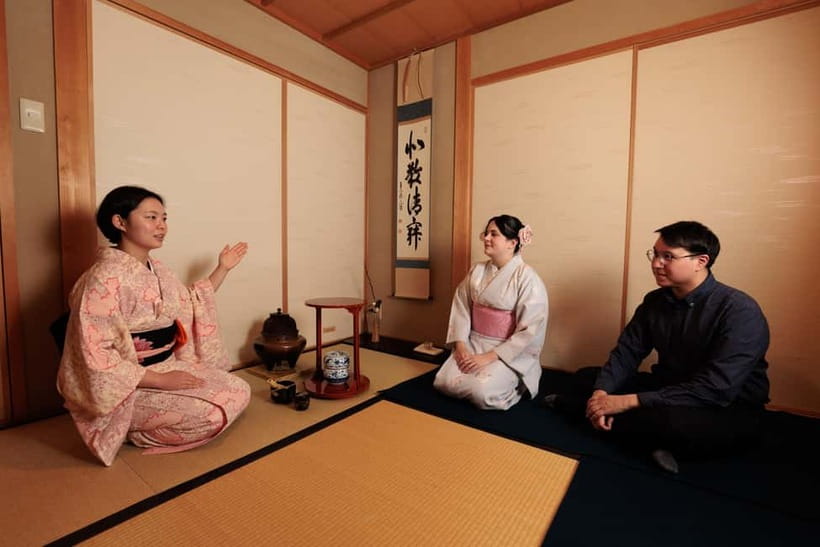
Kyoto tea ceremonies are famous for a reason, but the best part is how personal it gets in a small, quiet space. The ceremony is built around attention: what you use, how you move, and how the room itself is arranged. You don’t just learn facts. You watch the flow, taste the results, and then try the key action yourself, whisking matcha until you get that frothy texture.
I like that this experience gives you context without turning it into a lecture. The host introduces the world of matcha, explains the steps, and points out how the utensils and room layout connect to the meaning of the ceremony. Then the pace slows down for you to talk, taste a seasonal sweet, ask questions, and practice. It’s a good break from Kyoto’s big crowds and constant walking.
You also get to experience Kyoto as it is, not just the postcard version. Matcha here is local, and the pairing of sweets plus tea makes the ritual feel grounded in everyday taste, not just tradition for tradition’s sake.
More Tea Ceremonies in Kyoto
- Kyoto: Tea Ceremony in a Traditional Tea House in Kiyomizu
★ 4.9 · 3,519 reviews - Kyoto: Tea Ceremony Ju-An at Jotokuji Temple
★ 4.9 · 3,207 reviews - Kyoto: 45-Minute Tea Ceremony Lesson Experience
★ 4.3 · 2,378 reviews
Finding the machiya: Park Hyatt, Studio Ghibli, and the Ninenzaka alley
Your biggest practical tip is to navigate by landmarks, not by tiny signage. The meeting point is down an alley branching from the main thoroughfare of Ninenzaka in Higashiyama.
Here’s how to make it simple:
- Go to the area of Park Hyatt in Higashiyama.
- Cross to the opposite side, where you’ll find a Studio Ghibli store.
- Look for the alleyway just to the left of that store.
The alley is narrow, but that’s part of the vibe. The good news is that clear finding details are provided in advance, and once you’re at the alley, staff can guide you the rest of the way to the entrance.
Plan your timing so you arrive a few minutes early. Higashiyama streets can be slow even when you’re close, and you’ll want a calm start instead of rushing.
What happens during your 45 minutes of matcha making
Even though the experience is short, it’s not rushed. Expect a structured flow that mixes explanation, tasting, watching, and practice.
Here’s the typical rhythm:
- Arrival and intro: you settle into the machiya tearoom. Your English instructor/host gives a brief introduction to matcha and the ceremony.
- Utensils and room layout: you learn what the tools are, why they are used, and how decoration and arrangement play a role.
- Seasonal sweet and conversation: you’ll nibble a seasonal sweet alongside your tea while you chat. This is a good time to ask questions about Japanese culture or how the tea ceremony works.
- Watch the ceremony: the host performs the tea preparation in a calm, precise way. In past experiences, the demonstration portion is often around ten minutes, then you move into hands-on practice.
- Whisking your own bowl: this is the main moment. You’ll froth your matcha with guidance. The host helps you get the right texture.
- Drink and wrap-up: you enjoy what you made and get a chance to ask a few final questions before you’re done.
If you’re thinking, Will I really learn how to do it? The honest answer is you learn the basics and the feel of the key steps in one session. You’ll come away with enough understanding to appreciate the ceremony more deeply the next time you see it, and you’ll know what the process is trying to achieve.
Utensils, room layout, and the three schools of tea ceremony
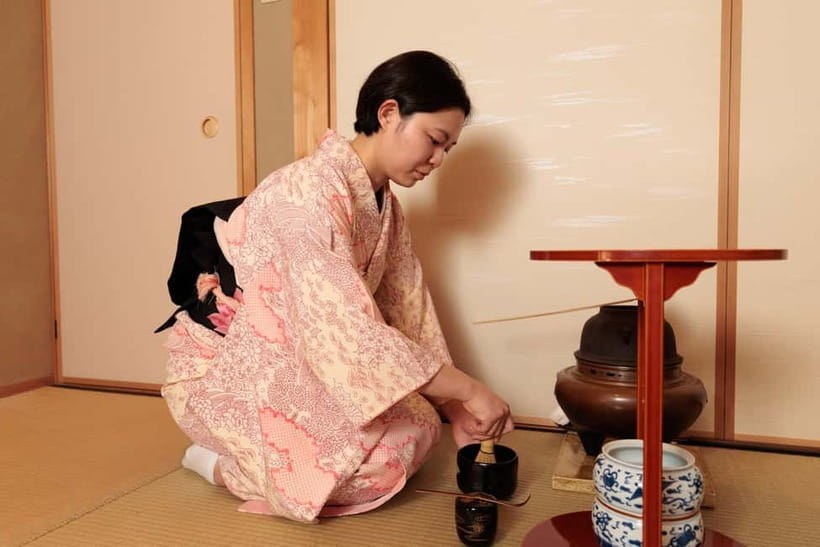
This experience leans into the details that matter. You’ll spend time on:
- Tea-making utensils: you learn their roles, not just the names.
- Room decoration and layout: the host points out why the space is set up the way it is.
- Three schools of tea ceremony: you can ask questions and get explanations about how different approaches exist within the broader tea tradition.
I like this approach because it changes how you watch tea ceremonies afterward. Instead of thinking, It’s pretty, you start noticing the logic. Small choices in movement, the order of steps, and the way items are arranged all connect back to respect, attention, and guest experience.
Also, the host encourages questions. In the experiences I’ve found most satisfying, the host isn’t just waiting for the end of the session. You’re invited to ask about culture and symbolism while the mood stays relaxed.
A different sort of day in Japan:
- PERFECT KYOTO 1-Day Bus Tour
★ 5.0 · 13,518 reviews - Kyoto: Fushimi Inari, Kinkakuji, Bamboo Grove 1 Day Bus Tour
★ 4.8 · 4,316 reviews - Kyoto Geisha Walking Tour: Gion District & Hidden Gems
★ 4.7 · 3,273 reviews - Kyoto: Gion Geisha District Walking Tour – Stories of Geisha
★ 4.7 · 2,187 reviews
The taste test: matcha, foam, and seasonal sweets
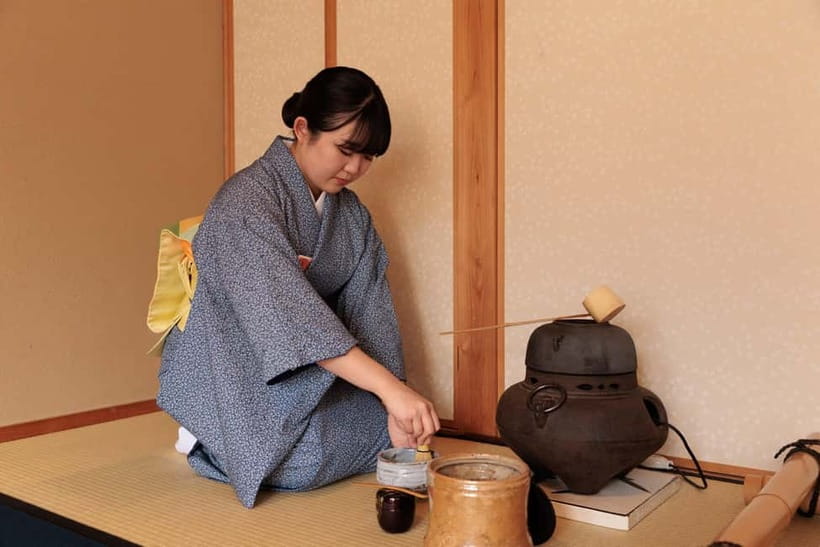
Matcha in Kyoto has a different personality than the sweetened matcha powders you might be used to. In this ceremony, you’re tasting the real thing prepared the proper way, and the pairing with seasonal sweets helps you notice the contrast.
Here’s what you’ll likely experience:
- Frothy matcha texture: you learn how to whisk so you get a proper foam. That foam is not just for looks, it changes how the tea feels on your palate.
- Seasonal sweets: the sweets are served with the tea, and they’re designed to complement the matcha experience rather than overpower it.
Some people have their first matcha here, and the host helps set expectations. You’ll likely find the matcha can feel more bitter or grassy than flavored drinks, but in a ceremony setting it tastes balanced and intentional, especially after the sweet.
If you’re the type who loves learning through taste, this part is the payoff. You don’t just observe matcha, you make it and drink it.
Sitting on tatami: comfort tips that keep the calm
The tearoom is upstairs, and that means you should plan for getting settled. You may be sitting on the floor during parts of the ceremony, which can get uncomfortable if you have knee or mobility issues.
Good practical options are built in:
- Chairs and tables are available if you find it difficult to sit on the floor.
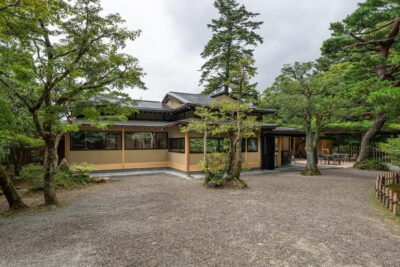
- For wheelchair accessibility, the Garden Teahouse is wheelchair accessible.
Restroom facilities are available, so you do not need to plan your entire day around that.
One small timing tip: since the ceremony is only 45 minutes, you can treat it like a focused break, not a marathon. Still, it helps to wear shoes you can tolerate removing, and to let the host know early if you’d prefer the chair setup.
English hosts, small-group energy, and the pace that matters
This is taught in English, and it often runs as private or small groups. That matters because tea ceremony is a hands-on craft. If you’re in a small group, you get more help while whisking, and you can actually talk with the host instead of waiting for your turn.
The best sessions feel like a guided conversation plus a calm demonstration. People have praised how warm and patient the staff is, and how the pace feels right, with time for questions and not too much rushing. You’re there to learn the basics and experience the ritual, not to be hurried through it.
If you’re worried about attention span, don’t. The ceremony structure keeps things moving: intro, sweet, demonstration, practice, drink, done.
Also, note the house rules:
- Video recording is not allowed.
- Non-flash, still photography is permitted.
So bring a camera if you like photos, but turn off video mode.
Kimono option nearby, and why it can be worth it
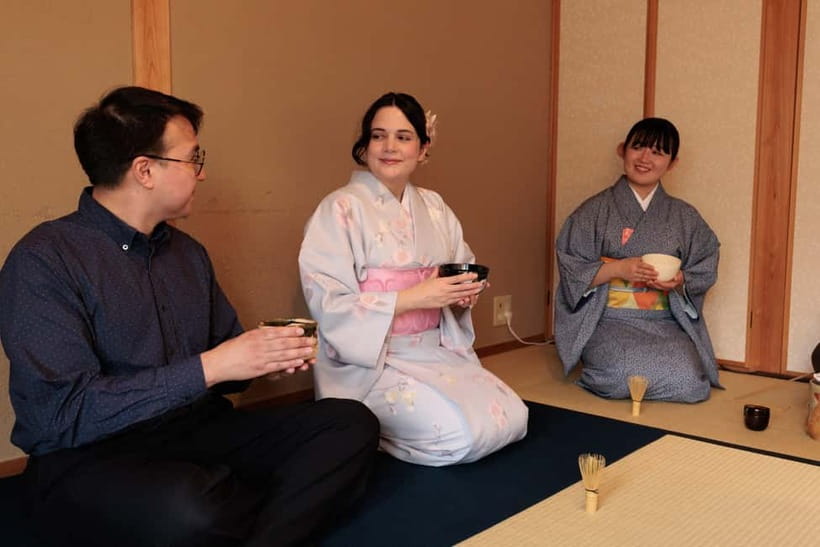
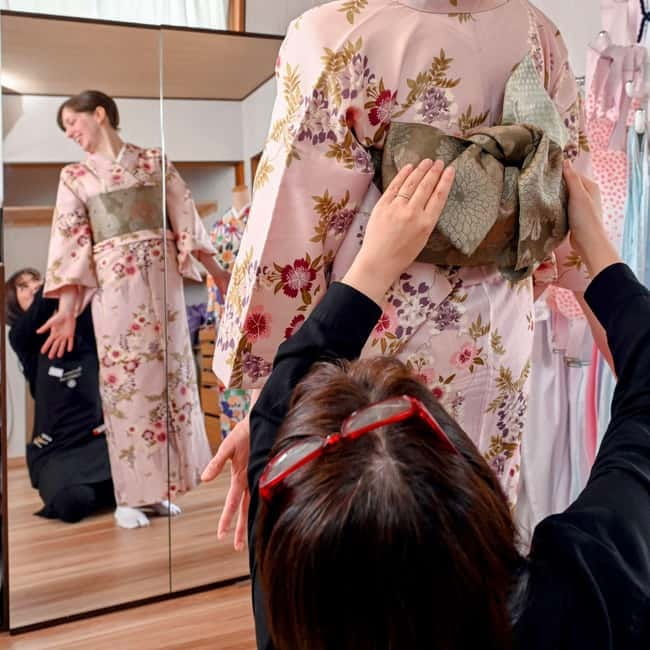
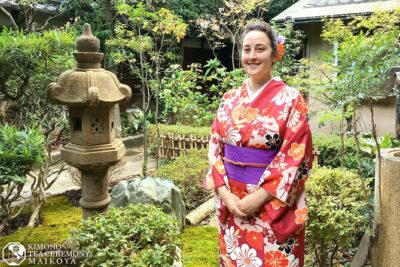
Kimono rentals are not included, but there are kimono options nearby, and a few people have found it easier to plan the kimono rental before the ceremony rather than assuming it can be added last minute.
If you’re doing Higashiyama that day anyway, a kimono can make the experience feel extra special for photos and atmosphere. Just remember the real goal here is the matcha lesson. The ceremony itself will be your main event.
If you skip kimono, that’s fine too. The teahouse setup and the ritual steps are the heart of it.
Price and value: what $32 buys you in Kyoto
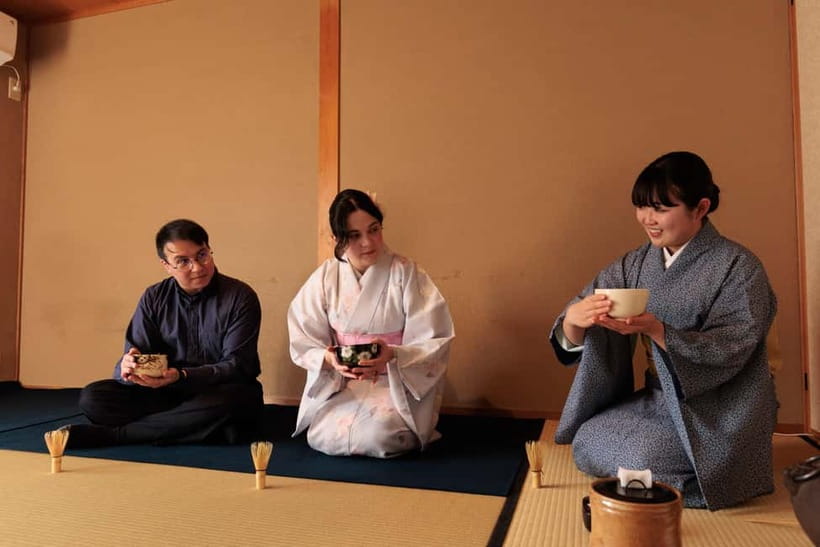
At $32 per person for about 45 minutes, you’re paying for more than tea and sugar. You’re paying for:
- Matcha and traditional seasonal sweets
- Access to tea-making utensils
- Time with a personal instructor/host
- A guided experience in a real Kyoto-style setting (a machiya tearoom)
This pricing can feel like a bargain compared to tours that sell you a photo stop and a scripted talk. Here, you get a skill you can practice immediately, plus context that helps you understand what you’re doing and why.
And since it’s short, it’s an efficient use of time. If your Kyoto schedule is tight, this is a high value way to get culture without sacrificing an entire afternoon.
One bonus: if there’s a small gift area available, you might have a chance to buy a matcha-making set or related souvenirs. In past experiences, people have mentioned taking a set home, which is a nice way to extend the experience beyond your visit.
Who should book this Kyoto matcha workshop
This is a great fit if:
- You want a real cultural activity in Kyoto that still feels relaxed.
- You like food-based experiences where you taste and learn at the same time.
- You’d enjoy learning about the ceremony’s utensils, room layout, and schools of tea.
- You want a break from the busiest temple-hopping energy.
It might be less ideal if:
- You strongly dislike sitting on the floor for short periods, though chair/table options exist.
- You need video recording for your personal workflow, since video is not allowed.
If you’re traveling with family or friends, the private or small-group setup can be especially helpful. You’ll get more attention and less waiting, and it stays calm.
Should you book a Kyoto tea ceremony with Camellia Tea Ceremony?
If you’re doing Kyoto for the first time and you want one experience that feels unmistakably Japanese, book it. The biggest reason is the combination: a traditional setting, a hands-on matcha lesson, and thoughtful explanations you can actually use to understand what you’re seeing.
My advice: if you want maximum enjoyment, arrive with room in your mind for quiet. Ask a question during the sweet-and-tea chat. Then focus on the whisking part, because that’s where the ceremony stops being abstract and becomes real.
If your schedule is tight, the 45-minute length is a major plus. If you’re worried about comfort, choose the chair option or ask about the accessible tearoom setup.
FAQ
How long is the Kyoto tea ceremony experience?
It lasts about 45 minutes.
Is the instructor/host available in English?
Yes, the instructor is English-speaking.
What does the price include?
Matcha, traditional seasonal sweets, tea-making utensils, and a personal instructor/host are included.
What is not included in the experience?
Hotel pickup and drop-off, meals, and kimono rentals are not included.
Where is the meeting point in Higashiyama?
You’ll meet down an alley branching from Ninenzaka. The easiest landmark is Park Hyatt. Opposite Park Hyatt is a Studio Ghibli store, and the alley is just to the left of the store.
Is video recording allowed during the workshop?
No, video recording is not allowed.
Can I take photos?
Non-flash, still photography is permitted during the workshop.
Will I need to sit on the floor?
Chairs and tables are available if you find it difficult to sit on the floor.
Where are the tearooms located, and is there wheelchair access?
The tearooms are located upstairs. For wheelchair accessibility, the Garden Teahouse is wheelchair accessible.
Do they offer private or small-group options?
Yes, private or small groups are available.
Newly listed around Kyoto
- Taste of Nishiki Market Walking Food Tour with Local guide★ 5.0 · 17 reviews
- Kyoto: Sushi Making Class with Sushi Chef★ 4.8 · 64 reviews
- Simple Plan with Maiko★ 4.4 · 10 reviews
- Shibori Furoshiki Course at Kyoto Shibori Museum★ 5.0 · 21 reviews
- Kyoto: City Secrets eBike Tour★ 4.9 · 196 reviews
- Sacred Pathways: Discover the Philosopher’s Path of Kyoto★ 4.9 · 20 reviews
- Private Tour to Monkey Park and Arashiyama Highlights★ 5.0 · 22 reviews
- Private Nara Tour from Osaka – Meet at Your Hotel★ 5.0 · 22 reviews
Matcha & Tea Ceremony Sessions, compared.
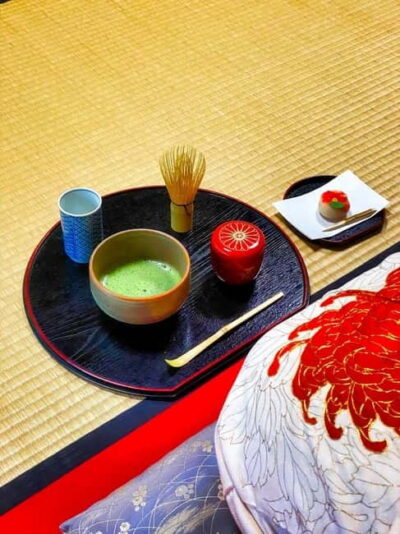
Tea Ceremony in a Traditional Tea House in Kiyomizu
Read our review →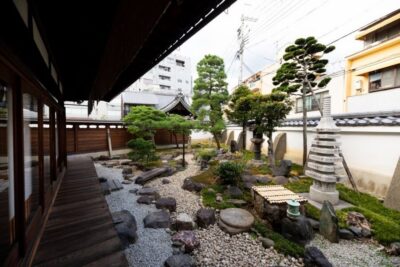
World Heritage Kyoto & Nara Uji Authentic Matcha Experience
Read our review →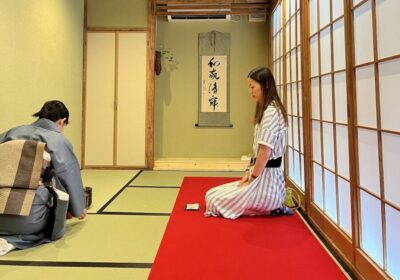
Browse the lists this tour appears in