
Review · MATCHA & TEA CEREMONY SESSIONS
Kyoto: Tea Ceremony, in traditional Japan house (ENG/ES/NLD)
Tea ceremony, but in a real home. In Kyoto, this one-hour class feels personal and practical, with a traditional house setting and the real payoff of whisking your own matcha. You also get to see the whole ritual up close, then understand what you are actually watching.
I really like that it stays casual, so you can ask questions, without feeling like you need a costume or a perfect posture. Still, there is one key consideration: the ceremony is usually done in seiza (kneeling), and matcha is caffeine-heavy, so you will need socks and you may want a chair if knees are an issue.
In This Review
- Key highlights to know before you go
- Inside a Kyoto tea room, in a house with history
- What sadō and chanoyu mean, and why this class goes beyond sipping tea
- The atmosphere is casual, so you can ask questions without stress
- Watching the ceremony, then spotting the details for yourself
- Seasonal sweets and matcha: what you eat before you whisk
- Making your own bowl of matcha, and learning through doing
- Language support that actually changes the experience
- Photos, pace, and timing: what that one-hour slot really feels like
- Where to meet and what to bring, so you are not scrambling
- Price and value: is $45 for a one-hour tea ceremony worth it?
- Who this Kyoto tea ceremony suits best
- Should you book this Kyoto tea ceremony?
- FAQ
- How long does the tea ceremony experience last?
- How many people are in the group?
- What languages are offered?
- Is kimono included?
- Do I need to bring socks?
- Can I take photos or videos?
- What does the price include?
- Is seating on the floor required?
Key highlights to know before you go
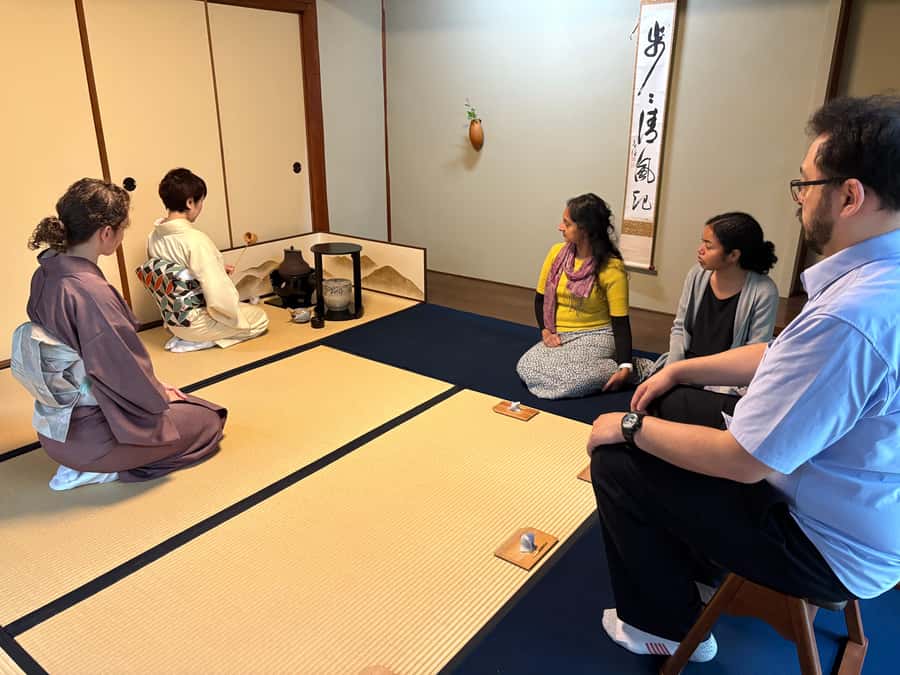
- A 100-year-old house with a small garden view, plus seasonal flowers and a hanging scroll
- Small group up to 6 people, so you can see everything and actually ask questions
- Tea teacher with decades of experience plus language support in English, Dutch, and Spanish (on request)
- Seasonal sweets and seasonal utensils, so the experience changes through the year
- You make matcha twice, once by the teacher and then your own bowl
Inside a Kyoto tea room, in a house with history
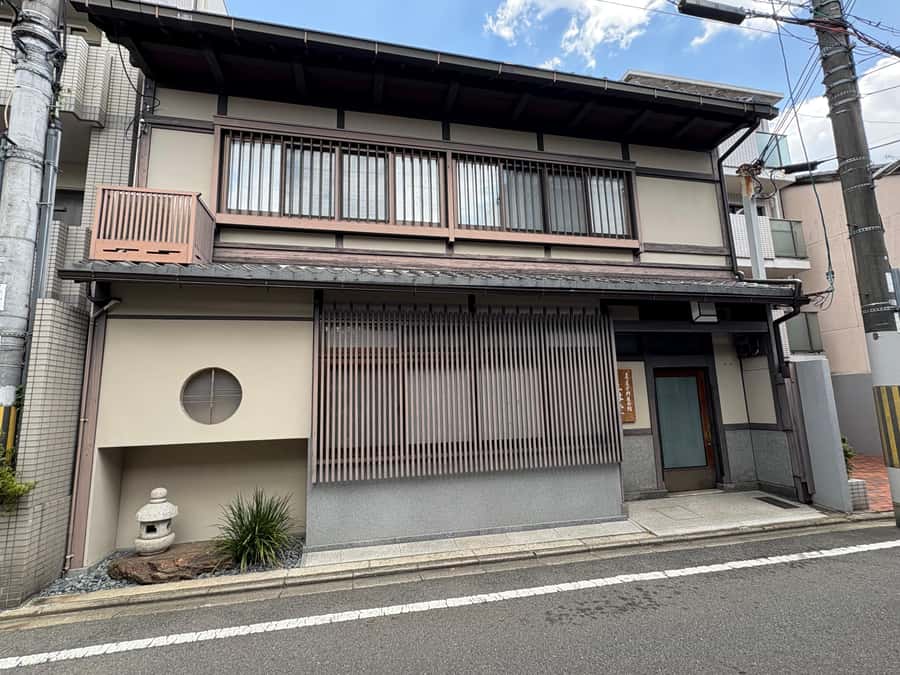
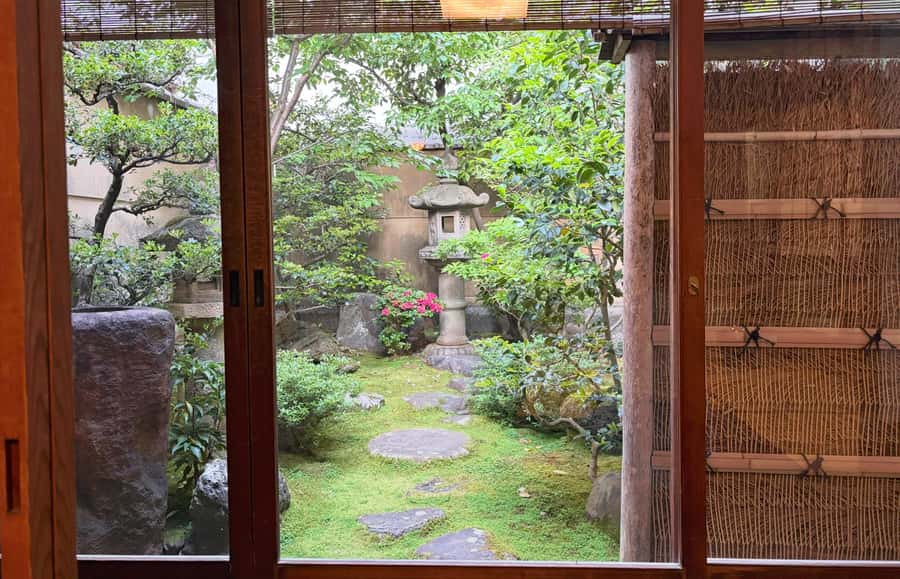
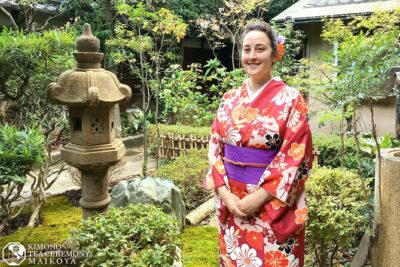
This is not a show you watch from a distance. The setting is part of the experience: a home about 100 years old, with a view of a small Japanese garden. In the tea room, you will notice seasonal flowers and a hanging scroll that matches the time of year, so the room feels like it belongs to the season, not to a generic tourist template.
A nice bit of context: the house originally belonged to a family that sold kimono fabrics. Later, it came into the possession of the temple across the road, and the tea room stayed part of the original home because the family members actually enjoyed tea ceremony themselves. That matters. When people practice something at home, it tends to feel calmer and more human, and that is the vibe here.
The class is conveniently located about five minutes from the Hankyu-Omiya/Shijo Omiya bus stop. That is helpful because Kyoto can make walking feel like a full-time job.
More Tea Ceremonies in Kyoto
- Kyoto: Tea Ceremony in a Traditional Tea House in Kiyomizu
★ 4.9 · 3,519 reviews - Kyoto: Tea Ceremony Ju-An at Jotokuji Temple
★ 4.9 · 3,207 reviews - Kyoto: 45-Minute Tea Ceremony Lesson Experience
★ 4.3 · 2,378 reviews
What sadō and chanoyu mean, and why this class goes beyond sipping tea
Tea ceremony in Japan has two common names: sadō and chanoyu. The point is not just the drink. It is a way of life, with etiquette, attention, and a set of meanings baked into every gesture.
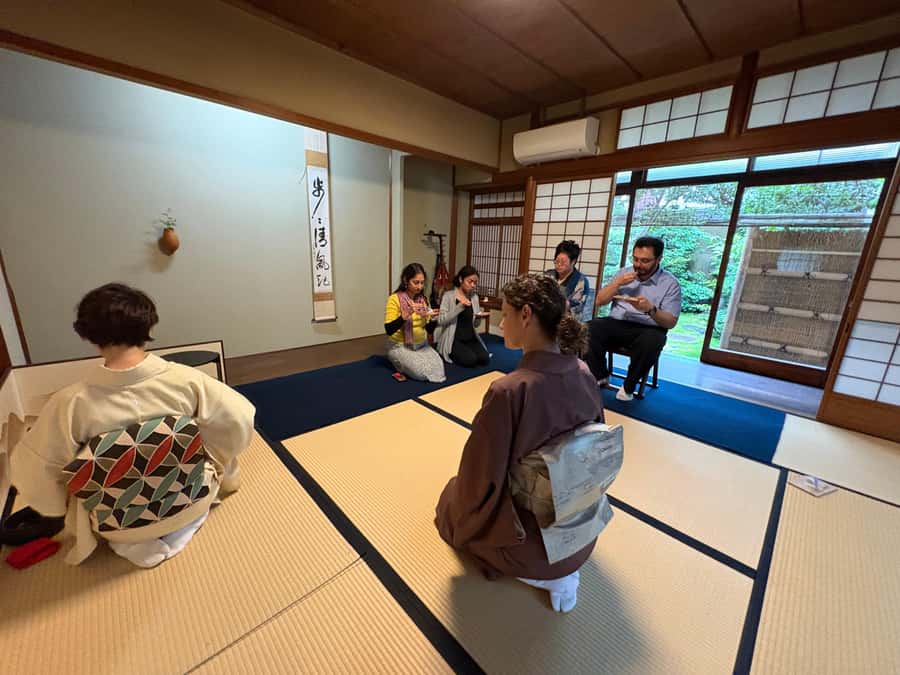
In this experience, you get an intro to the history and practical purpose of the ritual. You are also taught what the tea room is, why utensils look the way they do, and what each step communicates. I like that the explanation is tied to what you see. You do not just get a lecture and then move on.
The ceremony itself is performed by a Japanese tea teacher with decades of experience (the program describes 50 years, and the local language support is handled by native speakers). A translator is present, so the teacher can stay in the tradition while you still understand the why behind each action.
The atmosphere is casual, so you can ask questions without stress
Some Kyoto cultural experiences can feel rigid: sit here, smile, say thank you, repeat. This one stays casual and question-friendly, which makes a big difference if you are new to tea ceremony.
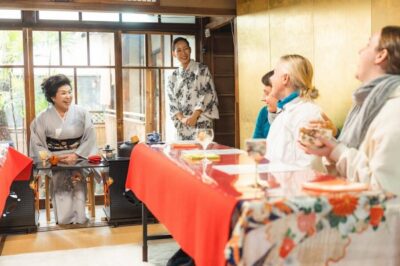
The group is limited to up to 6 people, which helps in two ways. First, you get a close view of how the utensils move and how the bowl is handled. Second, you do not feel like your question is slowing down a big crowd.
One more detail I appreciate: you are not required to be “perfect” to participate. You are encouraged to engage. That includes asking what you are unsure about as the ceremony unfolds, rather than having to wait until the end when your nerves have already taken over.
Watching the ceremony, then spotting the details for yourself
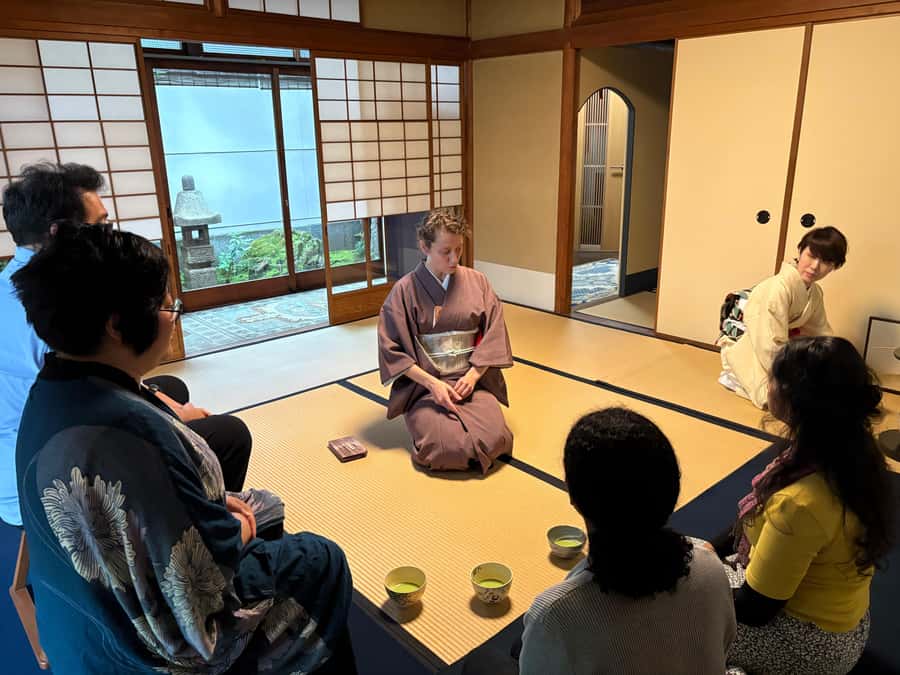
The experience is designed so you can actually follow along. You will see the tea ceremony performed, and before and during the ritual, you learn what you are supposed to notice. That includes the structure of the room and the role of the seasonal presentation.
During the ceremony, you will likely sit in seiza. If you have never done seiza before, here is what it means: you kneel on the floor, keep your legs tucked under your thighs, and rest your weight on your heels. Done well, it looks elegant. Done too long, it can be uncomfortable.
The good news is this: chairs are available upon request. If you want a chair, speak up. The program explicitly allows it, so you can focus on learning instead of fighting your own legs.
Also, the utensils and sweets change by season. That means you are not getting the same static “tour version” every day. Seasonal presentation is part of the philosophy of tea, and it helps you understand why a tea bowl and a sweet are not just props.
A different sort of day in Japan:
- PERFECT KYOTO 1-Day Bus Tour
★ 5.0 · 13,518 reviews - Kyoto: Fushimi Inari, Kinkakuji, Bamboo Grove 1 Day Bus Tour
★ 4.8 · 4,316 reviews - Kyoto Geisha Walking Tour: Gion District & Hidden Gems
★ 4.7 · 3,273 reviews - Kyoto: Gion Geisha District Walking Tour – Stories of Geisha
★ 4.7 · 2,187 reviews
Seasonal sweets and matcha: what you eat before you whisk
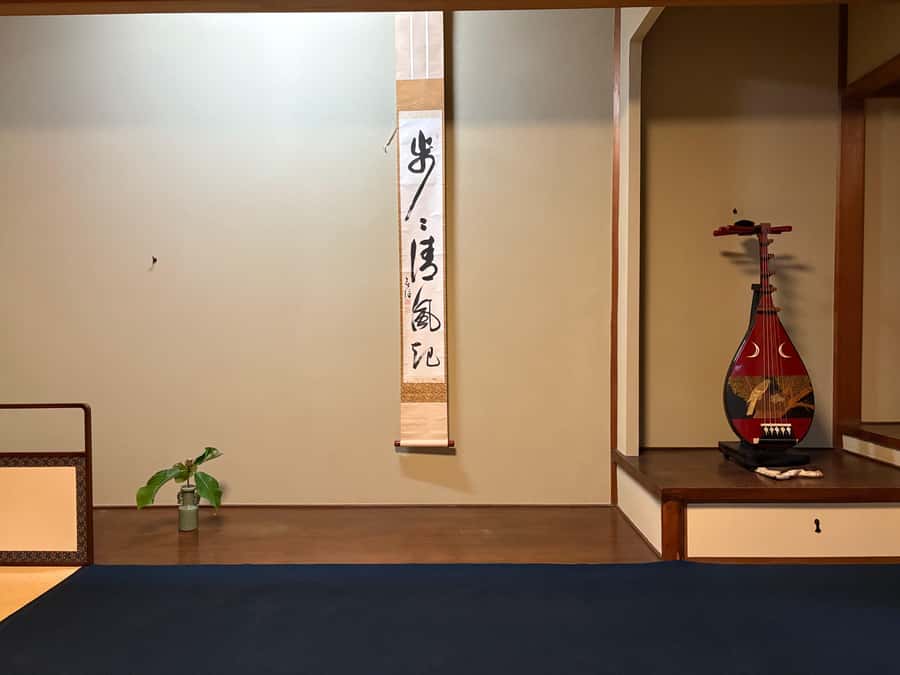
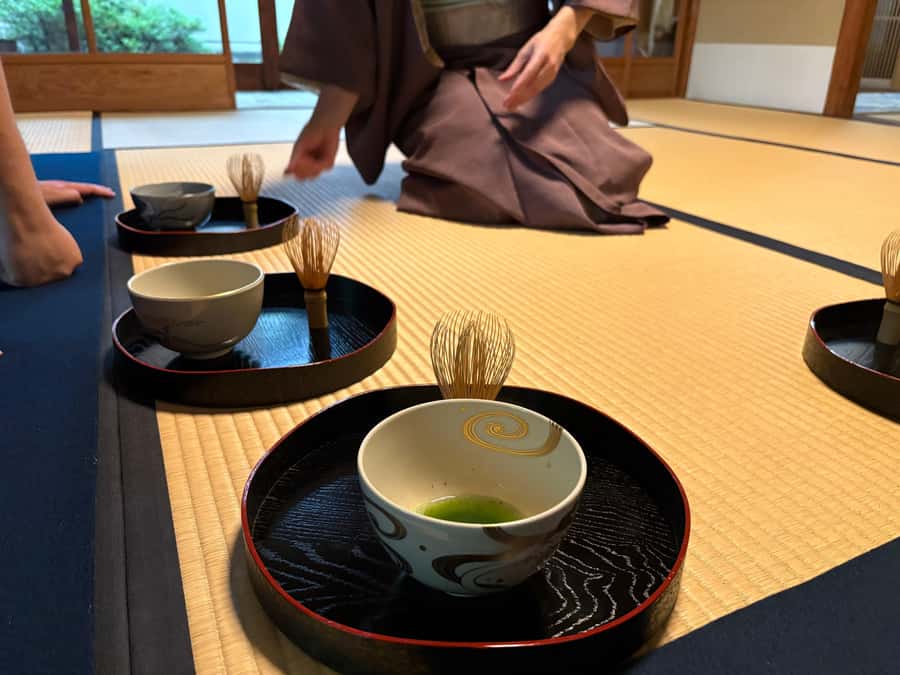
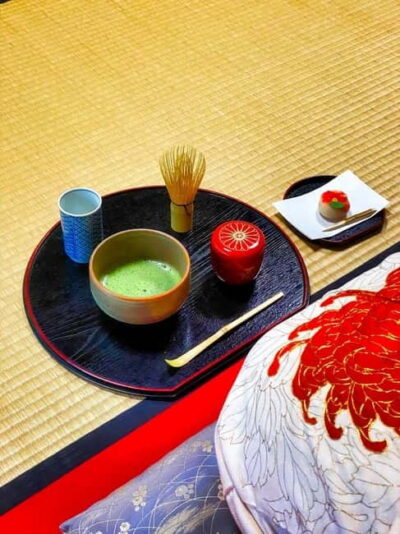
You start with tea and sweets that match the season. The experience includes Japanese sweets twice in a structured way: one seasonal sweet and one smaller sweet. Many sweets include anko (sweet red bean paste), and the sweets are made to order.
Then there is matcha. You will have two bowls of matcha tea in total:
- one prepared by the teacher
- one prepared by you
This matters because it gives you a tasting baseline before you attempt the motions yourself. You can feel the difference between a teacher’s whisking and your first attempt. And yes, whisking is harder than it looks. The way you move changes the texture, and the teacher’s rhythm is part of why the tea comes out right.
One practical note: matcha contains a high amount of caffeine. If you cannot have caffeine for medical reasons, you will not be able to consume the matcha tea. That is not a detail to ignore, because the program includes matcha as a core part of participation.
Making your own bowl of matcha, and learning through doing
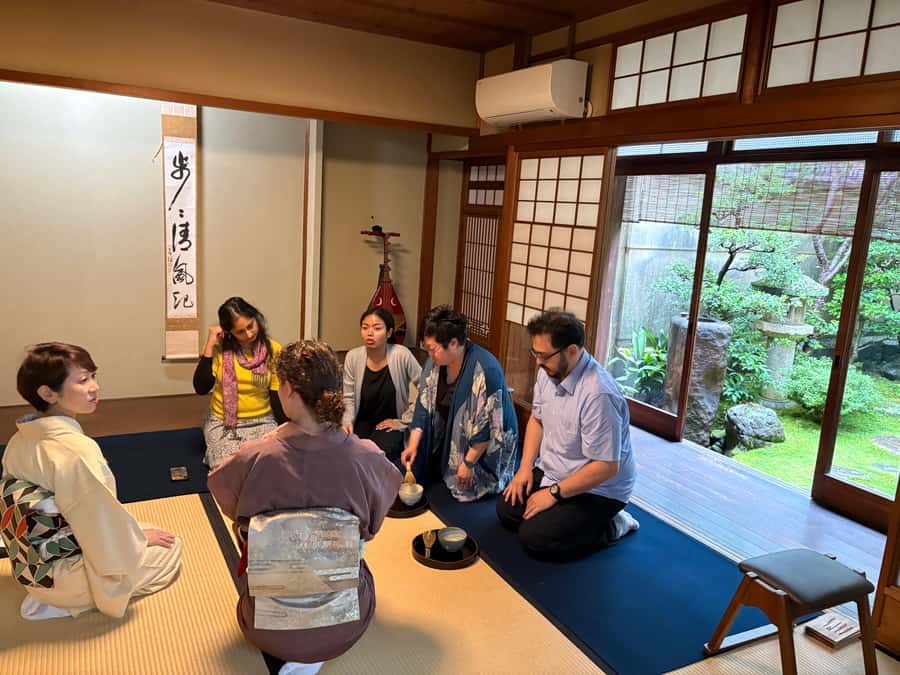
After watching and understanding the flow, you get hands-on time to whisk your own bowl of matcha. This is the section that turns the class from interesting into memorable.
You will practice the movements needed to prepare matcha properly, and you will learn how the whisking step fits into the wider ritual. The teacher and assistants are there to guide you, and the small group size helps you get attention without feeling rushed.
If you have grip strength issues or you are worried about coordination, do not overthink it. The activity is built around giving you a first real attempt. The goal is not to turn you into a tea master in an hour. The goal is to leave understanding what you did and why it matters.
One of the best parts here is the translation support. You can ask questions about technique, timing, and meaning, and get answers you can actually use, whether you are working in English, Dutch, or Spanish.
Language support that actually changes the experience
This class is designed for multiple language groups. English and Dutch speakers are available, and Spanish support is offered upon request. A native English speaker translates the Japanese during the explanation.
That translation piece is more than convenience. Tea ceremony has a lot of terms and subtle meanings, and you will get more from the experience if you understand what the teacher is explaining while you are looking at the utensils.
In at least one recent Spanish experience, the class experience was described as fully in native Spanish, including a very personal, didactic feel. That aligns with what you want: you are learning a cultural practice, not just collecting photos.
Photos, pace, and timing: what that one-hour slot really feels like
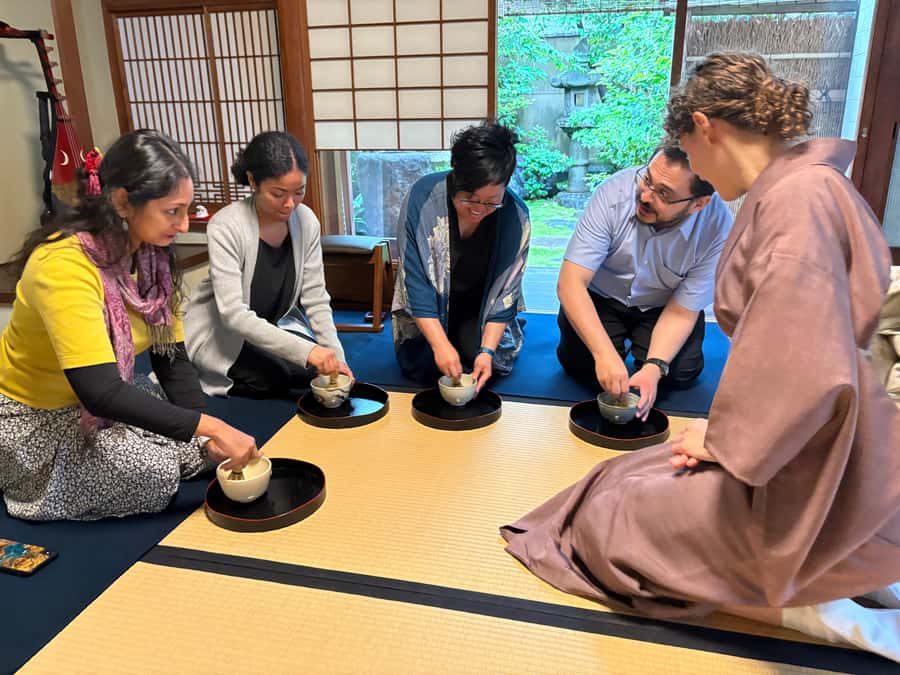
The session is about 1 hour. And there is a useful detail about timing: the tea preparation takes less time when the group is smaller than six. So if fewer people are in your slot, the ceremony may end sooner.
That is practical to know because it helps you plan your next stop. You do not need to assume a strict clockwork ending time, especially on days when the group fills unevenly.
You can also take pictures and videos freely. That is helpful because tea ceremony is visual. You are looking at bowl shapes, whisking motions, and seasonal presentation, all of which are worth remembering.
Where to meet and what to bring, so you are not scrambling
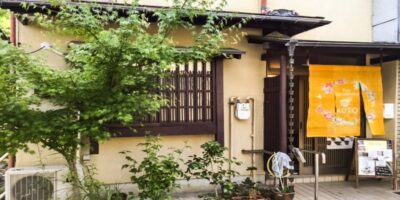
Meeting point is straightforward: the building is across from the temple Shinrenji, marked as the meeting point. Look for the person holding a tablet with the GetYourGuide logo at the site.
What you need to bring is equally simple:
- Socks (bare feet are not allowed)
- plan to avoid bringing drinks into the tea ceremony room
If you forget socks, you might feel stuck, because they are a program requirement. And if you have knee issues, consider requesting a chair ahead of time when you arrive, or right at the start of the class.
Price and value: is $45 for a one-hour tea ceremony worth it?
At $45 per person for about one hour, this is not the cheapest tea experience in Kyoto. It is priced for a reason: you are paying for an experienced teacher, a small group size (max 6), language support, and actual participation (including making your own matcha bowl).
For me, the value comes from the “you do it” part. A lot of tea demonstrations are mostly watching. Here, you whisk and you get two bowls of matcha total, plus seasonal sweets. That turns the cost into something concrete: you leave with sensory memory and technique you can explain.
Also, the setting is meaningful: a 100-year-old house, garden views, seasonal decorations, and utensils that change with the year. That atmosphere is part of why the ritual feels like practice, not performance.
Who this Kyoto tea ceremony suits best
This is a great fit if you want tea ceremony explained in plain, human language, with time to ask questions. It is also ideal if you like small group formats where you can see what the teacher is doing without squeezing around other people.
You might want to think twice if:
- you cannot have caffeine, since matcha is included and described as not consumable if caffeine is not an option
- you have serious mobility or knee problems, since seiza is typical (chairs exist upon request, but the experience is not listed as suitable for wheelchair users)
- you are hoping for a long, deep historical lecture only, because the class balances context with direct participation in the ceremony
That said, the structure is approachable. Even if you are nervous going in, the casual tone and the close group size make it easier to relax.
Should you book this Kyoto tea ceremony?
I would book it if you want a small, guided Kyoto tea experience that mixes explanation with hands-on matcha making. The short duration is ideal for fitting cultural learning into a busy Kyoto day, and the translation support makes sure you actually understand what is happening.
Skip it if caffeine is a medical no, or if seiza will be a dealbreaker even with chair options. Otherwise, this is the kind of activity that makes Kyoto feel personal, not just photogenic.
FAQ
How long does the tea ceremony experience last?
The experience lasts about 1 hour.
How many people are in the group?
The group is small, limited to a maximum of 6 participants.
What languages are offered?
The class offers English and Dutch, and Spanish is available upon request.
Is kimono included?
No, kimono is not included.
Do I need to bring socks?
Yes. Socks are required, and bare feet are not allowed in the tea ceremony room.
Can I take photos or videos?
Yes, you are free to take pictures and videos during the experience.
What does the price include?
It includes the tea ceremony, two bowls of matcha tea (one made by the teacher and one by you), and Japanese sweets (one seasonal and one small sweet).
Is seating on the floor required?
The ceremony is usually done sitting in seiza, but chairs are available upon request.
Newly listed around Kyoto
- Taste of Nishiki Market Walking Food Tour with Local guide★ 5.0 · 17 reviews
- Kyoto: Sushi Making Class with Sushi Chef★ 4.8 · 64 reviews
- Simple Plan with Maiko★ 4.4 · 10 reviews
- Shibori Furoshiki Course at Kyoto Shibori Museum★ 5.0 · 21 reviews
- Kyoto: City Secrets eBike Tour★ 4.9 · 196 reviews
- Sacred Pathways: Discover the Philosopher’s Path of Kyoto★ 4.9 · 20 reviews
- Private Tour to Monkey Park and Arashiyama Highlights★ 5.0 · 22 reviews
- Private Nara Tour from Osaka – Meet at Your Hotel★ 5.0 · 22 reviews
Matcha & Tea Ceremony Sessions, compared.
Tea Ceremony in a Traditional Tea House in Kiyomizu
Read our review →
World Heritage Kyoto & Nara Uji Authentic Matcha Experience
Read our review →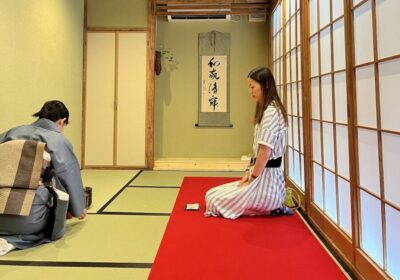
Browse the lists this tour appears in