
Review · MATCHA & TEA CEREMONY SESSIONS
Tea ceremony by the tea master in Kyoto SHIUN AN
A quiet tea ritual is a great way to slow Kyoto down. This matcha ceremony at SHIUN AN is intimate, with instruction from a tea master, and you also get hands-on practice that actually sticks. I love that you watch, learn the reasons behind the steps, and then make your own bowl, not just sip and smile. I also love the setting near Daitoku-ji Temple, where the whole experience feels calm and culturally anchored. One thing to plan for: the location can be tricky, and some reviews flag stairs as a challenge.
You’ll spend about 45 minutes in a small room built for tatami floor etiquette. You start with a look at the tea room details like hanging scrolls and flower arrangements, then move into the utensil-by-utensil flow of serving matcha. You’ll finish having made your own bowl and tasting two bowls of matcha along with two types of Japanese sweets.
In This Review
- Key Points You Should Know Before You Go
- A Small-Group Matcha Ceremony at SHIUN AN
- Where You’re Really Going in Kyoto: Daitoku-ji Area, Not Gion
- The Tea Room Start: Scrolls, Flowers, and Quiet Etiquette
- Utensils You Use, and Why They Matter
- Sweets and Matcha: Two Bowls, Two Types of Joy
- Hands-On Time: Making Your Own Matcha Bowl
- The “Teaching” Element: A Tea Master With a Tea Name
- Price and Value: What $33.03 Actually Buys
- Logistics That Can Make or Break Your Experience
- Who This Tea Ceremony Is Best For
- Should You Book Tea Ceremony by the Tea Master in Kyoto (SHIUN AN)?
- FAQ
- How long is the tea ceremony at SHIUN AN?
- What is the group size?
- Where does the experience start?
- Is pickup or drop-off included?
- What is included in the price?
- Will I make matcha myself?
- How much matcha and how many sweets are provided?
- Is the location near public transportation?
- Are food allergies accommodated?
- Can I bring a service animal?
- Is free cancellation available?
Key Points You Should Know Before You Go
- Maximum group size is small: 6 people, sometimes up to 8 in peak season.
- You learn by doing: you make your own matcha bowl during the ceremony.
- You get the full tool kit: tea bowl, container, tea scoop, and whisk, plus a fold fan and white socks for tatami.
- Tea room details are part of the lesson: scrolls, flower arrangements, and layout are explained.
- Two rounds of tasting: you enjoy matcha twice, not just once.
- Location is local, not central-tour-bus: expect a residential neighborhood feel near Daitoku-ji.
A Small-Group Matcha Ceremony at SHIUN AN
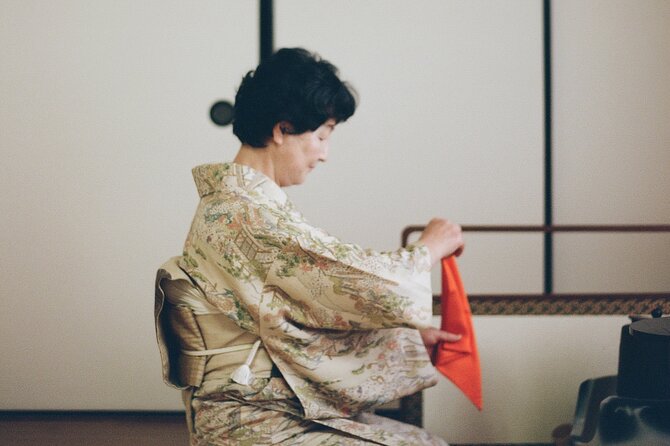
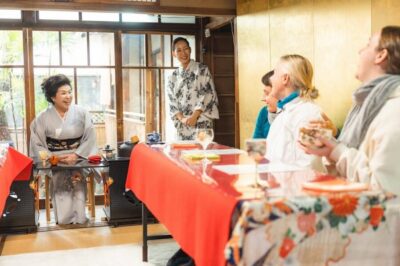
If you want Kyoto culture that feels lived-in, this is a strong choice. SHIUN AN runs the tea ceremony in a small group, capped at 6 people per session. During busy periods it can run up to 8, but it stays far from crowded. That matters because tea is slower than most tourist activities. More people means less time to learn how to hold tools, how to whisk properly, and how to place your bowl with confidence.
The format is also designed for learning. You begin in the tea room, where the host walks you through what you’re seeing and why it matters. From there, the process becomes step-by-step: the host introduces the utensils, explains what each part is for, serves matcha for you to observe, and then you practice making your own bowl.
Price-wise, the event costs $33.03 per person, which is reasonable for a true instructional format with multiple tastings and hands-on time. You’re paying for more than a drink. You’re paying for access to a trained tea master, the translation layer, and the quiet structure that keeps the session from turning into a performance for strangers.
More Tea Ceremonies in Kyoto
- Kyoto: Tea Ceremony in a Traditional Tea House in Kiyomizu
★ 4.9 · 3,519 reviews - Kyoto: Tea Ceremony Ju-An at Jotokuji Temple
★ 4.9 · 3,207 reviews - Kyoto: 45-Minute Tea Ceremony Lesson Experience
★ 4.3 · 2,378 reviews
Where You’re Really Going in Kyoto: Daitoku-ji Area, Not Gion
This ceremony happens in Kyoto near Daitoku-ji Temple, a Zen monastery area with deep links to tea ceremony culture. The setting is close enough to connect the dots with Kyoto’s spiritual side, not just its famous streets.
Location details help you plan:
- Meeting point: 955-1 Idachō, Kamigyo Ward, Kyoto, 602-8302, Japan
- The Golden Pavilion (Kinkaku-ji) is about four bus stops away
- It’s near public transportation, and Google Maps is typically useful for finding the neighborhood
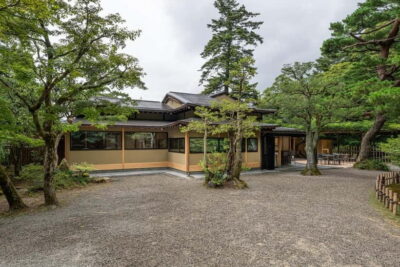
One practical note from real-world experience: SHIUN AN is in a quieter, more residential section of Kyoto. That’s a plus for calm. It can also mean you’ll want to leave extra time to find the house and get settled before your session begins.
The Tea Room Start: Scrolls, Flowers, and Quiet Etiquette
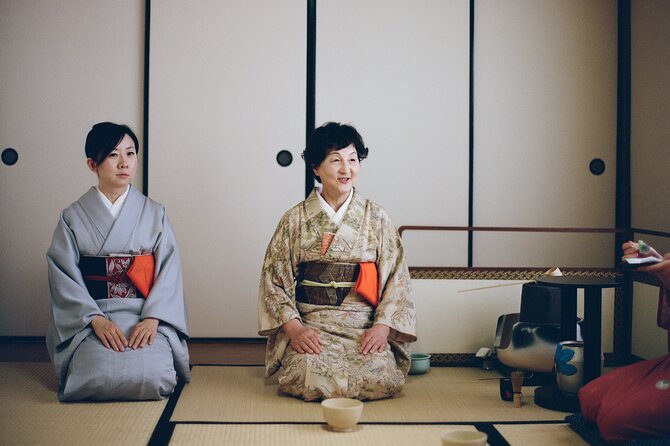
The ceremony begins before you ever touch a whisk. Your host takes you into the tea room to admire the hanging scrolls and flower arrangements, and explains how those decorations fit into the overall experience. Even if you don’t know the symbolism yet, this part gives you a frame: tea isn’t only about taste. It’s about attention, timing, and respect.
This is where many people get the most value. A tea ceremony can look simple from the outside, but it has rules and intention behind them. When the host explains the role of the rooms layout and decoration, you’ll understand why the host keeps things quiet and slow. The ceremony becomes easier to follow because you know what each moment is trying to communicate.
I’d also treat the tea room like a study space, not a photo shoot. You’ll be comfortable if you’re willing to slow down, sit through the explanations, and watch first before doing your own bowl.
Utensils You Use, and Why They Matter
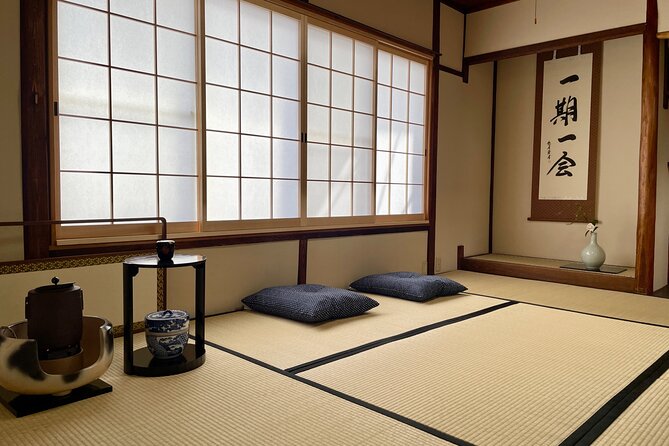
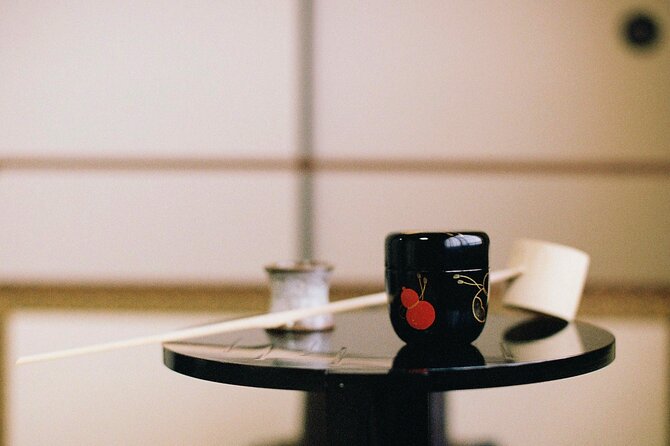
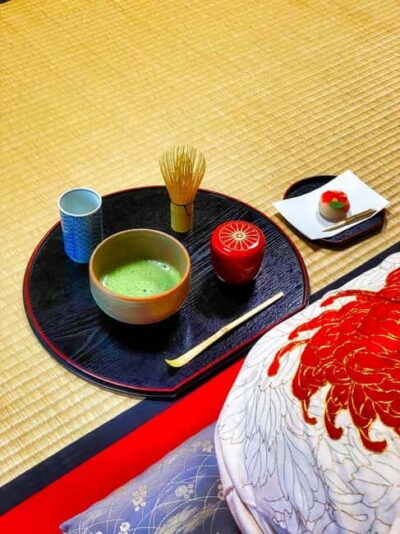
You’re provided with the core tools of the ceremony:
- a tea bowl
- a tea container
- a tea scoop
- a whisk (for matcha)
You also receive:
- white socks (for the tatami floor)
- a fold fan
- matcha for the ceremony and Japanese sweets
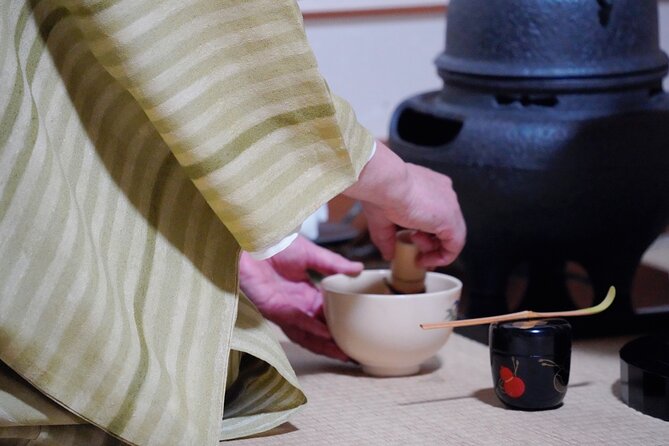
Having the utensils in your hands is a big difference from the typical demo. You’re not guessing what you’re supposed to do. The host explains each tool’s purpose and how it connects to the steps. Then you practice, so the technique becomes something you can repeat later at home.
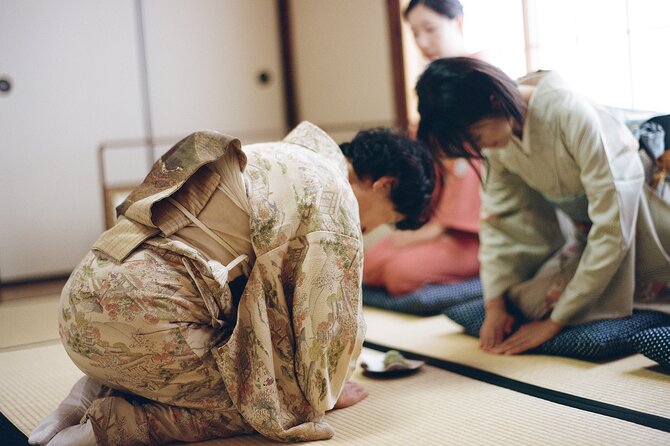
Also, the socks and floor etiquette aren’t just extras. Tatami rules are part of why tea feels distinct in Japan. Reviews mention how the socks help you stay comfortable and follow the setting properly, so you don’t end up distracted right from the start.
A different sort of day in Japan:
- PERFECT KYOTO 1-Day Bus Tour
★ 5.0 · 13,518 reviews - Kyoto: Fushimi Inari, Kinkakuji, Bamboo Grove 1 Day Bus Tour
★ 4.8 · 4,316 reviews - Kyoto Geisha Walking Tour: Gion District & Hidden Gems
★ 4.7 · 3,273 reviews - Kyoto: Gion Geisha District Walking Tour – Stories of Geisha
★ 4.7 · 2,187 reviews
Sweets and Matcha: Two Bowls, Two Types of Joy
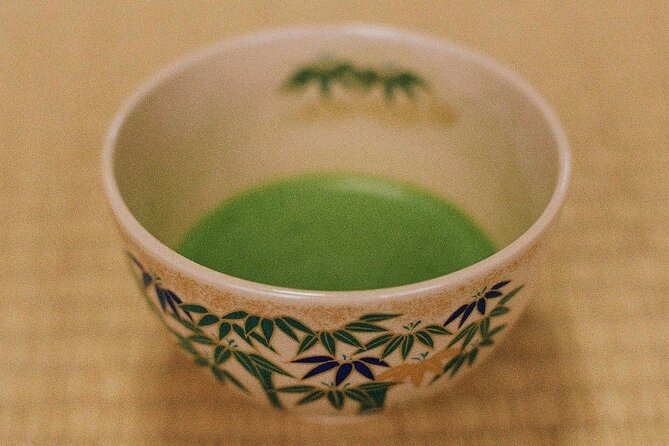
Food is built into the pacing here. You’ll enjoy a seasonal sweet with your matcha while watching the tea-serving process. Then you’ll later enjoy two bowls of matcha during the ceremony and taste two kinds of Japanese sweets.
That structure is clever for a first-time tea experience. The sweets help you read the flavor transition. Matcha is intense if you’re used to sweeter drinks, so tasting it in a paced sequence makes it feel approachable instead of overwhelming. It also stops the whole event from feeling one-note.
If you have dietary needs, you should plan ahead. The experience asks you to let them know about food allergies in advance, so communicate early.
Hands-On Time: Making Your Own Matcha Bowl
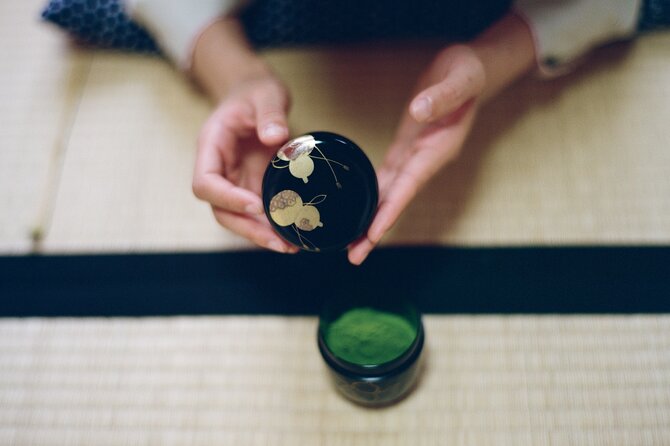
This is the part most people remember, and it’s also where the small group size really pays off. After watching the process and receiving explanations, you get the chance to make your own bowl of matcha.
The goal isn’t just to produce a drink. It’s to understand the basic technique:
- how the whisking is done,
- how you handle your bowl,
- and how the steps fit together as a sequence.
In reviews, people repeatedly highlight that they learned a lot about the precision of the ceremony, and that instruction felt patient and supportive, including for visitors who needed comfort accommodations around sitting on the floor. One review even described how staff made room for a participant who could no longer sit on the floor, which tells me they aim to include people rather than force everyone into the same posture.
You should still go into this with a realistic mindset: tea is about control and calm. If you rush, it gets harder. If you slow down, it starts to feel surprisingly relaxing.
The “Teaching” Element: A Tea Master With a Tea Name
SHIUN AN emphasizes that their tea masters have formal credentials, including a Tea Name. The experience description also frames tea as a learned path tied to Zen ideas like truth through self-discovery, which helps explain the tone: it’s quiet, reflective, and structured.
You’ll feel that in the way the host explains:
- the steps,
- the utensils,
- and the room decor and layout.
Several reviews mention a translator or English support that made the process easier to follow. Even if you know very little about matcha, you’ll have context. That matters, because the ceremony is full of small decisions that add up.
Price and Value: What $33.03 Actually Buys
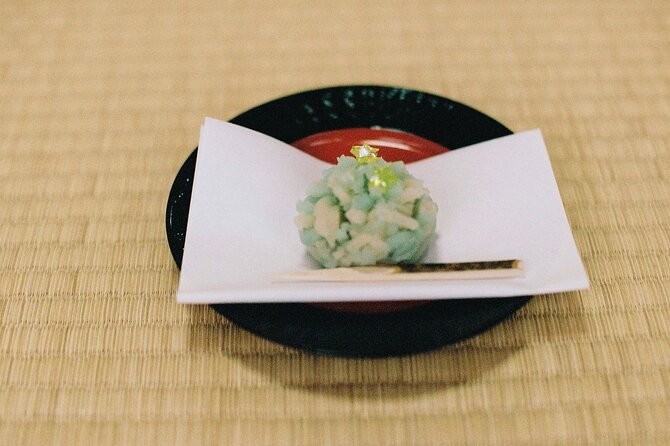
For $33.03 per person, you’re getting:
- a small-group tea ceremony session (about 45 minutes)
- hands-on practice making your own bowl
- two bowls of matcha
- two kinds of Japanese sweets
- provided utensils and ceremony items (bowl, container, scoop, whisk, plus socks and a fold fan)
- instruction from a tea master and English support
That’s why the value feels solid. Many “tea experiences” are closer to tastings with minimal technique. Here, you’re taught and coached as you do the work. You leave with more than memories, you leave with muscle memory for the basics and a better sense of what matcha is supposed to feel like beyond taste alone.
You’re also getting a quieter Kyoto moment in a room tied to Zen-area tea culture, not a busy landmark line where everything speeds up.
Logistics That Can Make or Break Your Experience
A few practical points will help you enjoy this more.
Finding the place: Reviews call out that the location can be difficult to find. That’s normal for Kyoto residential lanes. The fix is simple: use Google Maps, and if you’re running late, don’t try to stubbornly walk from a far drop-off. One review advised using public transit to get close and then taking a taxi from the nearest station, noting it can be inexpensive for the final hop.
Stairs and comfort: Some reviews mention difficult stairs. Since the ceremony uses tatami floor etiquette, expect you’ll spend time sitting on the floor at least during parts of the process. If you’re concerned, contact the provider ahead of time or arrive early so the staff can guide you to what’s possible.
What to bring: The experience provides socks, but wear comfortable clothes you can move in while seated. Also, if you’re sensitive to food ingredients, tell them about allergies beforehand.
Who This Tea Ceremony Is Best For
This is a great fit if you want:
- a quiet Kyoto experience away from heavy crowds
- a real instructional session, not a quick photo stop
- hands-on matcha practice and tasting
- context for what you’re seeing, including room layout and ceremony steps
It’s especially good for first-timers who want something more respectful than mass tourism. If you’re the type who likes to understand the why behind traditions, this will feel rewarding.
It’s also a decent break in a busy itinerary. The session is short enough that you can still do other Kyoto sights the same day. And since Kinkaku-ji is only a few bus stops away, it’s easy to pair with a classic temple visit.
Should You Book Tea Ceremony by the Tea Master in Kyoto (SHIUN AN)?
I’d book it if your priority is learning and calm over spectacle. The combination of a small group (usually 6), hands-on bowl making, two matcha tastings, and provided tools and socks makes this feel like real value.
Book it especially if:
- you want an authentic-feeling ceremony near Daitoku-ji
- you’d rather learn technique than just watch
- you appreciate a quieter, residential Kyoto experience
Skip it or plan extra carefully if:
- stairs are a concern for you
- you hate activities where you sit on the floor for part of the session
- you dislike places that require a bit of navigation off the main tourist roads
If you go in with patience and a willingness to slow down, you’ll leave with more than matcha. You’ll leave with a sense of how the ceremony trains attention, one careful step at a time.
FAQ
How long is the tea ceremony at SHIUN AN?
It lasts about 45 minutes.
What is the group size?
The ceremony is capped at a maximum of 6 travelers, and it can increase to a maximum of 8 during peak seasons.
Where does the experience start?
The meeting point is 955-1 Idachō, Kamigyo Ward, Kyoto, 602-8302, Japan, and the activity ends back at the meeting point.
Is pickup or drop-off included?
No, pickups and drop-offs are not included.
What is included in the price?
You’ll receive tea bowls, a tea container, tea scoops, and whisks, plus white socks and a fold fan, matcha tea, and Japanese sweets.
Will I make matcha myself?
Yes. Each guest has the opportunity to make their own bowl of matcha.
How much matcha and how many sweets are provided?
You’ll enjoy two bowls of matcha and two kinds of Japanese sweets.
Is the location near public transportation?
Yes, it is near public transportation.
Are food allergies accommodated?
You’re asked to let the provider know about any food allergies.
Can I bring a service animal?
Service animals are allowed.
Is free cancellation available?
Yes, you can cancel up to 24 hours in advance for a full refund.
Newly listed around Kyoto
- Zen Meditation for Life in Kyoto★ 5.0 · 10 reviews
- Kyoto: Zen Meditation at a Private Temple with a Monk★ 5.0 · 25 reviews
- Kyoto Private Customizable Day Tour with Guide and Vehicle★ 5.0 · 52 reviews
- Private Wagyu Beef Tour with a Local Guide★ 5.0 · 6 reviews
- Kyoto: Gion Geisha District & Sake-in-Hand Walking Tour★ 5.0 · 37 reviews
- Your Private Vacation Photography Session In Kyoto★ 5.0 · 110 reviews
- Private Guided Traditional Buddhist Cooking in Japan★ 5.0 · 16 reviews
- Private Pewter Sake Cup Experience with a Kyoto Artisan★ 5.0 · 31 reviews
Matcha & Tea Ceremony Sessions, compared.
Tea Ceremony in a Traditional Tea House in Kiyomizu
Read our review →

World Heritage Kyoto & Nara Uji Authentic Matcha Experience
Read our review →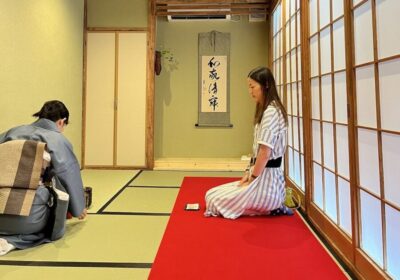
Browse the lists this tour appears in