
Review · MATCHA & TEA CEREMONY SESSIONS
Japanese Traditional Sweets making and Tea Ceremony
Wagashi feels like art class. This 95-minute workshop pairs handmade Nerikiri with a real tea ceremony using Uji matcha, plus you get to eat what you make. My favorite part is the hands-on shaping with Kyoto bean paste, and my other favorite is grinding and serving the tea yourself, one step at a time. The main drawback to plan around is class pacing, if the room is full you might have less time to hear every detail.
You start with a short intro to Japanese traditional sweets, then color and craft your own seasonal treats. Expect a break in the middle, then the tea portion, which is where the aroma and rhythm of the ceremony really click. At the end, you sit down to enjoy your two sweets with the matcha you prepared.
In This Review
- Key things I’d bet on before you book
- What You Make: Nerikiri Sweets With Kyoto Bean Paste
- Uji Matcha and the Tea Ceremony, From Grinding to Pouring
- How the 95 Minute Flow Works (and Why It Matters)
- Price and Value: $18 for Skill, Tea, and Two Seasonal Sweets
- The Instructor, English Help, and Group Size Reality Check
- Where to Go in Tokyo: AN TOKYO Japanese Culture Experience
- Who This Wagashi and Tea Class Fits Best
- Should You Book This Nerikiri and Tea Ceremony Class?
- FAQ
- How long is the Japanese Traditional Sweets making and Tea Ceremony experience?
- Where does the experience meet?
- What does the price include?
- What matcha is used?
- Do I make sweets or do I just watch?
- Is there an option to take the sweets home?
- Is there a completion certificate?
- What language is the class taught in?
- What is the cancellation policy?
- What are the operating hours?
Key things I’d bet on before you book
- Kyoto-style bean paste used for the white and red fillings, from long-established shops
- Two Nerikiri sweets you make to match the season, with coloring and shaping steps
- Uji single-origin matcha used for the ceremony and tasting
- Grinding and tea-ceremony practice, not just watching
- A clear 95-minute flow with a break so you do not feel rushed the whole time
- English support when possible, but the experience is primarily conducted in Japanese
What You Make: Nerikiri Sweets With Kyoto Bean Paste
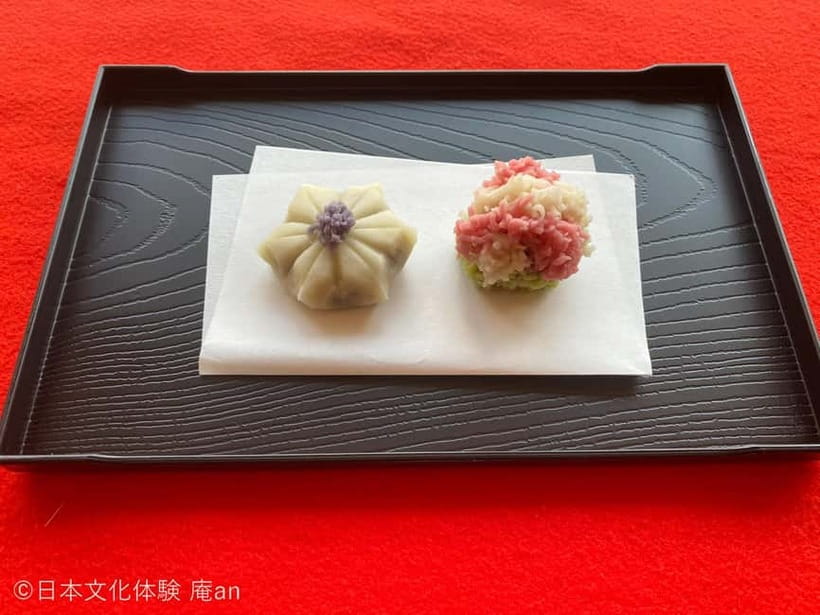
Nerikiri is a high-grade type of wagashi. It is not like a cookie where you bake and hope. You work the bean paste, color it, and shape it into seasonal motifs, often flowers or small fruit forms that match what people are celebrating in Japan right now.
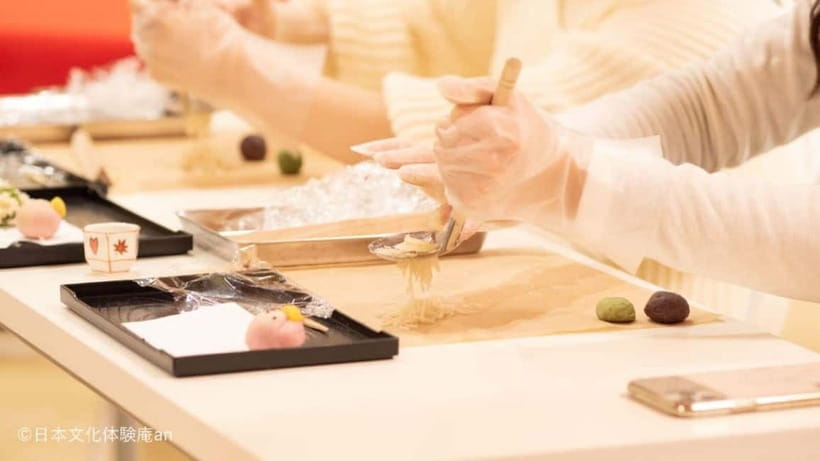
In this class, you make two sweets. You begin by working with the white bean paste and adding color. That coloring step matters because it is part of the artistry of Nerikiri, not just decoration. You then move into shaping, where the goal is to form a clean silhouette that looks right in the way Japanese sweets often do, simple but intentional.
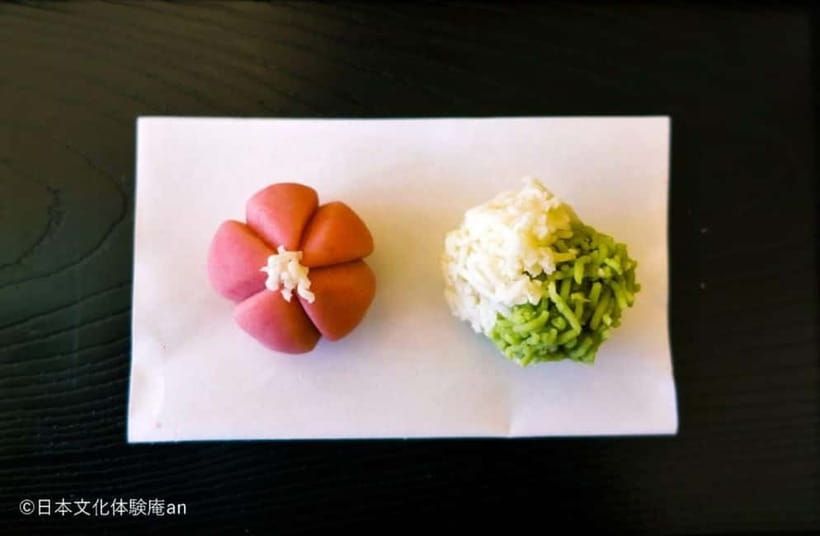
The sweet in the program is described as a flower-shaped Nerikiri, and it also mentions making Kinton Nerikiri. So you should come in knowing you are not just learning a single technique, you are getting exposed to more than one style of Nerikiri construction. That is a big deal for value, because you walk away with a broader sense of how wagashi textures and shapes are built.
One practical plus: the class uses white and red bean paste produced by Kyoto’s long-established shops. If you are sensitive to sweetness or bean flavor, quality shows. The idea here is that your paste quality is strong enough to stand up next to matcha, rather than turning into a sugary lump. Even if you are not a wagashi superfan, you will notice the balance.
More Tea Ceremonies in Tokyo
- Matcha Making Class in Tokyo with Authentic Japanese Sweets Set
★ 5.0 · 744 reviews - Kimono Tea Ceremony at Tokyo, Asakusa Maikoya
★ 5.0 · 638 reviews - Tokyo: Traditional Tea Ceremony with a Tea Master
★ 5.0 · 528 reviews
Uji Matcha and the Tea Ceremony, From Grinding to Pouring
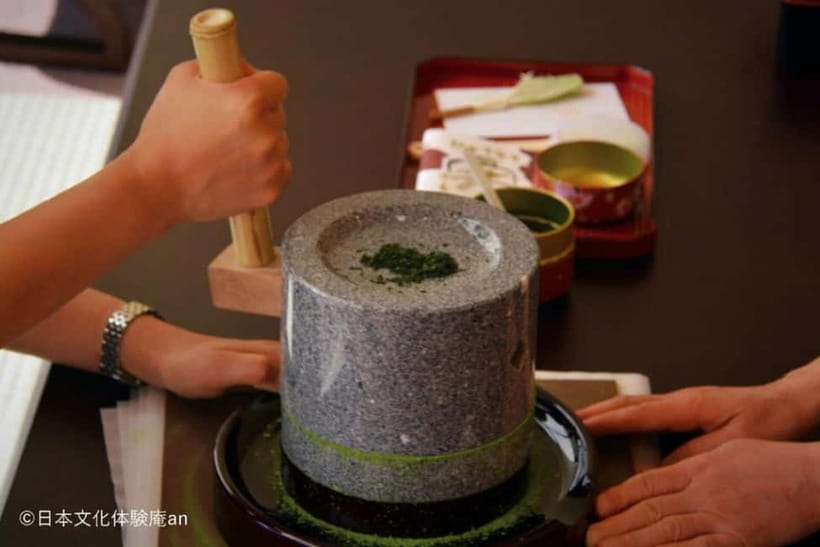
The tea portion is built around Uji matcha, specifically described as single-origin special matcha. That matters because matcha is one of those things you can taste differences in fast. When matcha is better, it tends to feel cleaner, more aromatic, and less one-note.
The workshop includes a matcha grinding demonstration and then a tea-ceremony experience where you prepare your own. You are not left with the job of guessing what to do. The structure is straightforward: grinding is explained, then the ceremony steps follow, then you get to drink.
You get to enjoy the sweets you made with your own matcha. That pairing is the point. Nerikiri often uses colored bean paste and subtle shaping, while matcha has its own earthy, slightly bitter edge. When the bean paste is high quality, that sweetness and that matcha edge balance instead of clashing.
I also like that the ceremony is treated as a practical skill, not just a performance. You come away knowing the basic flow, what happens first, and why people slow down for it.
How the 95 Minute Flow Works (and Why It Matters)
This experience is scheduled for 95 minutes total, and the timing is split into clear chunks. That is helpful because wagashi and tea both have steps where being late or rushing can mess you up.
Here is how it generally runs:
- You start with an explanation of Japanese traditional sweets.
- Then you move into flower-shaped Nerikiri making, including the coloring and crafting process.
- After about 55 minutes, you hit a break time.
- Next comes tea-focused instruction: an explanation, then the matcha grinding demonstration.
- Then you do the tea-ceremony experience and finish with picture time.
- After that, you eat and drink, then depart.
Two tips if you want this to feel enjoyable instead of chaotic. First, arrive a little early so you can get settled before the first instruction. Second, pay attention to the pace once the tea section starts. The tea ceremony part is often where people realize they want more time, but the class moves on schedule.
There is one caution based on actual experience feedback: if the room is crowded, it can be harder to hear instructions. So choose your spot carefully, and do not assume you will be able to ask a long question mid-stream. Focus on watching the demonstrations closely, then ask if there is time.
Price and Value: $18 for Skill, Tea, and Two Seasonal Sweets
At $18 per person for a 95-minute hands-on class, the value is strong when you look at what you get. You are paying for three things at once:
- Skill practice, making two Nerikiri sweets, including coloring and shaping steps.
- Tea ceremony practice using Uji single-origin matcha, including grinding and serving.
- A built-in tasting moment where you eat and drink what you made.
That combination is what makes it feel more than a quick souvenir stop. You are not buying a pre-made sweet and calling it experience. You are making it, then tasting it in the intended pairing.
You should also know what is extra. A sweets take-out box costs 100 JPY. If you want a completion certificate, it is 300 JPY, and for names on the certificate you need to tell them in advance. So if you are the type who likes a keepsake, budget a little more. If not, you can keep it simple and just enjoy what is served during the class.
One more value angle: the ingredients. Kyoto bean paste from long-established shops and Uji single-origin matcha are highlighted in the experience details. Even if you have never bought either ingredient before, the class is clearly designed so your sweets and your tea taste good together, not just interesting to look at.
A different sort of day in Japan:
- Mt Fuji and Hakone 1-Day Bus Tour Return by Bullet Train
★ 5.0 · 26,383 reviews - 1-Day Tokyo Bus Tour
★ 5.0 · 14,250 reviews - Tokyo: TOKYO SKYTREE® Admission ticket
★ 4.5 · 11,192 reviews - Tokyo: teamLab Planets TOKYO Digital Art Museum Entry Ticket
★ 4.6 · 9,779 reviews
The Instructor, English Help, and Group Size Reality Check
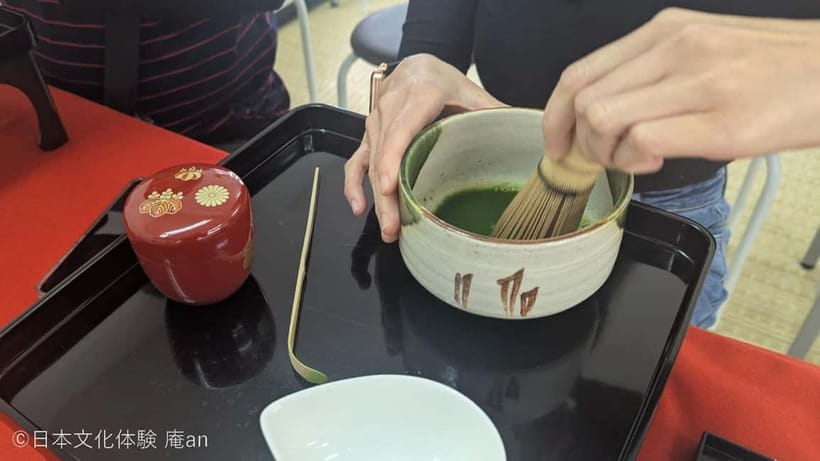
The instruction is primarily Japanese, with English translation provided as much as possible. If you want additional English support, the info says you can contact them, so it is worth doing if language matters to you.
I also took note of how instruction quality is described. In one recent class, the presenter was Marie, and the feedback was that she was a great presenter. Another key point from feedback is that the instructor was described as helpful and patient, with people able to understand the process even when English was not perfect, because demonstrations did the heavy lifting.
So if you are worried about language barriers, do not be. Wagashi and tea are hands-on. You learn by watching hands work, not by reading a textbook.
That said, here is the balanced part. One rating mentioned the room being too crowded to hear the instructor clearly, and the instructor continuing without waiting. You can reduce the risk by arriving early, sitting where you have a direct line to the instructor, and keeping your questions short until the teacher pauses. If you are the kind of learner who needs step-by-step explanations to stay confident, this is something to consider.
Where to Go in Tokyo: AN TOKYO Japanese Culture Experience
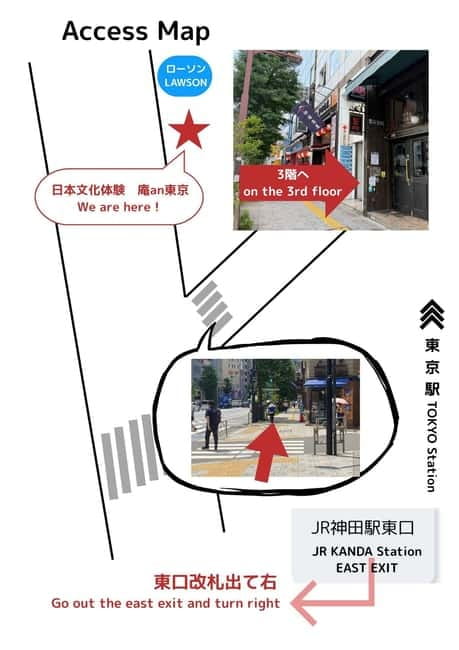
The meeting point is AN TOKYO Japanese Culture Experience, also known as 日本文化体験 庵an東京. The coordinates listed are 35.6916541, 139.7715022.
Because the experience is 95 minutes and they mention they cannot accommodate delays, treat this like a scheduled appointment, not a casual drop-in. If you want a smoother start, head there a little early, get oriented, and be ready when the first explanation begins.
Also, this is an active class. The info notes that those who do not participate will not be allowed to enter. So come prepared to make and taste, not just watch.
Who This Wagashi and Tea Class Fits Best
This workshop fits best if you like food culture that is hands-on and seasonal. Making Nerikiri gives you a real view of Japanese attention to shape and color, and the tea ceremony shows how matcha is treated as more than a drink.
It is also a good choice if you are:
- Curious about wagashi but do not want to navigate on your own
- Looking for a structured way to learn matcha beyond tasting
- The type who enjoys learning by doing, not only by observing
- Interested in Kyoto-style ingredients, even though you are doing the class in Tokyo
On the other hand, it might be less ideal if you want a quiet, slow, one-on-one pace. The schedule has a break and a set order, and group dynamics can affect how much you hear, especially if the class is large.
If you are traveling with kids, the info says children sitting on their parents’ laps are free of charge for those under 2 years old. For older kids, you would need to rely on the general participation rules, since the class is described as an experience you actively join.
Should You Book This Nerikiri and Tea Ceremony Class?
Yes, I think you should book it if you want a real taste of Japanese food culture you can do with your hands. Two seasonal Nerikiri sweets plus Uji matcha, with grinding and ceremony practice, is a strong combo for the money. The Kyoto bean paste ingredient detail and the matcha pairing make it feel intentional, not random.
I would hesitate only if you are extremely language-dependent and need long explanations, or if you hate the idea of group-paced instruction where hearing every word is important. In that case, sit up front, arrive early, and use the demonstrations as your main guide.
If you want a compact, memorable cultural experience in about an hour and a half, this is a solid pick.
FAQ
How long is the Japanese Traditional Sweets making and Tea Ceremony experience?
The experience lasts 95 minutes.
Where does the experience meet?
You meet at AN TOKYO Japanese Culture Experience (日本文化体験 庵an東京), with coordinates 35.6916541, 139.7715022.
What does the price include?
The price includes Japanese Traditional Sweets making and Tea Ceremony.
What matcha is used?
The tea ceremony uses Uji Matcha, described as single-origin special Matcha.
Do I make sweets or do I just watch?
You make sweets. You create two Japanese sweets that match the season.
Is there an option to take the sweets home?
Yes. A sweets take-out box is available for an additional 100 JPY.
Is there a completion certificate?
Yes. A certificate costs 300 JPY. If you want a nominative certificate, you need to provide your names in advance.
What language is the class taught in?
The experience language is Japanese, with English translation provided as much as possible. If you want to add English translation, contact them.
What is the cancellation policy?
You can cancel up to 24 hours in advance for a full refund.
What are the operating hours?
Operation hours are 10:00 to 17:00. Reservations received after 17:00 are processed the next day.
More Dessert Tours in Tokyo
- Japanese Traditional Sweets making
★ 4.1 · 19 reviews - Matcha Making Class in Osaka with Authentic Japanese Sweets Set
★ 5.0 · 509 reviews - Kyoto: Japanese Traditional Sweets Making and Tea Ceremony
★ 4.4 · 314 reviews - Japanese Traditional Sweets ”Nerikiri” making
★ 4.3 · 17 reviews
Newly listed around Tokyo
- Kamakura Temples Private Guided Tour from Tokyo★ 4.8 · 21 reviews
- Kamakura Private & Customizable Tour – All-in-One Experience★ 5.0 · 49 reviews
- Kabukicho, Shinjuku: experiencing Japanese Host Club★ 4.3 · 9 reviews
- Tokyo: KABUKI Show at Kabukiza Theatre Admission Ticket★ 4.8 · 152 reviews
- Kabukicho Macabre Tour – the Real Tokyo Vice★ 5.0 · 48 reviews
- Japanese Traditional Sweets making★ 4.1 · 19 reviews
- Japanese Traditional Music Show in Tokyo★ 5.0 · 72 reviews
- Japan: eSIM with Unlimited Local 4G/5G Data★ 4.5 · 163 reviews
Matcha & Tea Ceremony Sessions, compared.
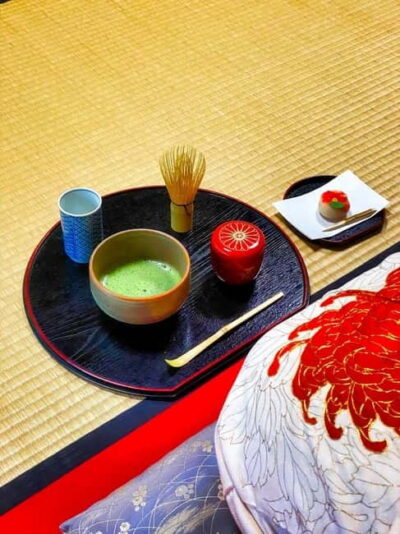
Tea Ceremony in a Traditional Tea House in Kiyomizu
Read our review →
World Heritage Kyoto & Nara Uji Authentic Matcha Experience
Read our review →
Browse the lists this tour appears in