
Review · MATCHA & TEA CEREMONY SESSIONS
2 Types of Japanese Sweets making and Tea Ceremony
Sweet, powdery lessons beat Googling. This workshop in Kyoto turns you into a maker, not just a spectator, with Ohigashi and seasonal Nerikiri plus a matcha experience that feels friendly and doable. I also like that the bean paste comes from Kyoto’s long-established shops, and the tea uses single-origin special matcha for a cleaner, more memorable flavor.
One thing to plan for: the vibe can be group-heavy. If you’re hoping for a quiet, fully formal tea ritual, you might find it more like a guided experience, and some rooms can get noisy.
In This Review
- Key things to know before you go
- Kyoto sweets plus matcha: what you actually do in 125 minutes
- Price and value: why $28 can feel like more than a snack stop
- Finding the meeting point: easy, central, and close to Gojo Station
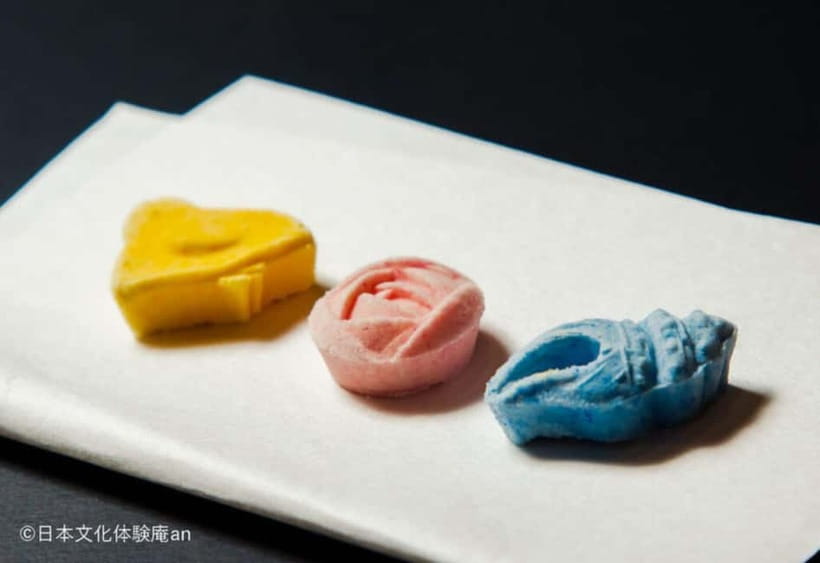
- Ohigashi with Wasanbon: the dried sweet that teaches texture
- Nerikiri flower shaping: two seasonal sweets you get to own
- Matcha grinding and tea ceremony basics: what to expect
- Group vibe, noise, and how to get a calm session anyway
- Timing breakdown that helps you plan your Kyoto day
- Who should book this Japanese sweets and matcha workshop
- Should you book it
- FAQ
- How long is the experience?
- Where do I meet for the workshop?
- What sweets will I make?
- What kind of matcha is used?
- Is there English translation?
- Are there extra costs for add-ons?
- Can I cancel or pay later?
Key things to know before you go
- Kyoto bean paste, long-established source: you work with white and red bean paste that comes from storied Kyoto shops, which raises the quality of what you make.
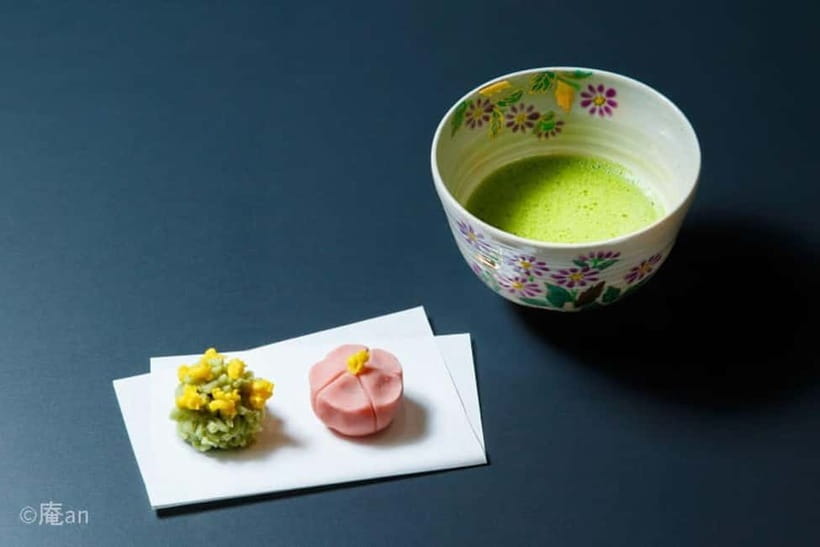
- Two seasonal Nerikiri sweets: you do not just sample, you shape two season-matched sweets, including a design called Kinton Nerikiri.
- Single-origin special matcha: you get a focused matcha experience, including a grinding demo and then tea you make yourself.
- Three-part program in 125 minutes: Ohigashi, Nerikiri (two pieces), and matcha all fit into one half day.
- English translation is provided as much as possible: instructors can explain clearly, and in at least one class the instructor named Maiko was especially attentive and informative.
Kyoto sweets plus matcha: what you actually do in 125 minutes
This class is built around the idea that wagashi (Japanese sweets) and tea belong together. You spend your time making, not just watching, and that matters because it forces you to slow down and notice details like texture and sweetness.
The program runs right around 125 minutes, then you eat and drink at the end. It’s short enough to fit your Kyoto day, but long enough that your hands get involved in all the key parts.
More Tea Ceremonies in Kyoto
- Kyoto: Tea Ceremony in a Traditional Tea House in Kiyomizu
★ 4.9 · 3,519 reviews - Kyoto: Tea Ceremony Ju-An at Jotokuji Temple
★ 4.9 · 3,207 reviews - Kyoto: 45-Minute Tea Ceremony Lesson Experience
★ 4.3 · 2,378 reviews
Price and value: why $28 can feel like more than a snack stop
At about $28 per person, you are paying for three separate experiences in one sitting: Ohigashi, two Nerikiri, and matcha with a tea ceremony experience. Most stand-alone wagashi classes cost more than one segment, so bundling the three makes practical sense.
On top of that, the materials are not throwaway basics. The bean paste is from Kyoto’s long-established shops, and the matcha is described as special and single-origin. Those choices usually show up in the final taste and how satisfying it is to eat what you made.
Optional add-ons do cost extra if you want them. You can add color for 200 JPY, buy take-out boxes for 100 JPY, and there is an experience completion certificate for 300 JPY, but none of those are required to enjoy the workshop.
Finding the meeting point: easy, central, and close to Gojo Station
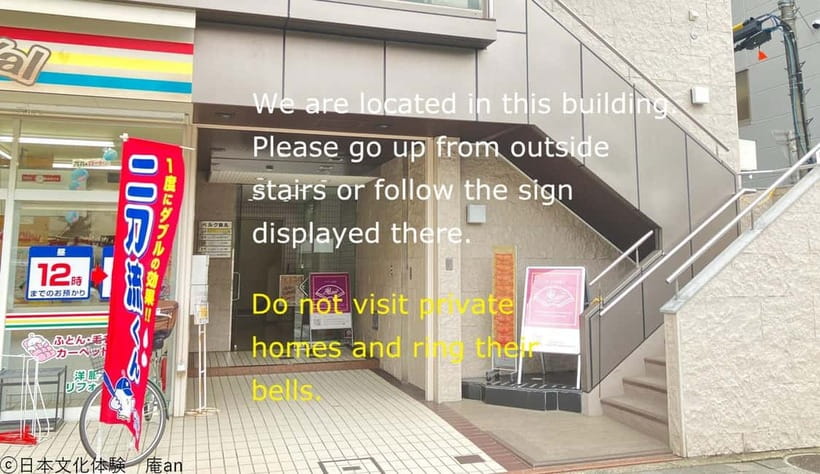
You meet at a spot that is about a one-minute walk from Exit 1 of the Karasuma Line at Gojo Station. The store entrance faces Gojo-dori, which makes it easier to spot once you’re on the street.
This is a practical advantage if you’re already moving around Kyoto by subway. You can drop in without planning a complicated transfer, and you can still keep your day flexible after the class.
One small logistics point to keep in mind: the building has no elevator, and you’ll take stairs to reach each venue. The activity is listed as wheelchair accessible, but the stairs mean you should plan for movement inside the building if you use a mobility aid.
Ohigashi with Wasanbon: the dried sweet that teaches texture
The workshop starts with an explanation of Japanese traditional sweets, then you make a dried-type sweet called Ohigashi. This part is specifically made from traditional Japanese sugar called Wasanbon, which is a key detail because it connects the sweet to how wagashi is traditionally flavored and finished.
In plain terms, you’ll learn that wagashi is not just about sweetness. It’s about structure, aroma, and how a sugar and paste mixture behaves as you shape it, then dries or sets.
The schedule is straightforward: after the opening talk, you work on the Ohigashi making, then you get a break. That timing matters because it gives you a reset before you switch to the more delicate, design-focused Nerikiri work.
A different sort of day in Japan:
- PERFECT KYOTO 1-Day Bus Tour
★ 5.0 · 13,518 reviews - Kyoto: Fushimi Inari, Kinkakuji, Bamboo Grove 1 Day Bus Tour
★ 4.8 · 4,316 reviews - Kyoto Geisha Walking Tour: Gion District & Hidden Gems
★ 4.7 · 3,273 reviews - Kyoto: Gion Geisha District Walking Tour – Stories of Geisha
★ 4.7 · 2,187 reviews
Nerikiri flower shaping: two seasonal sweets you get to own
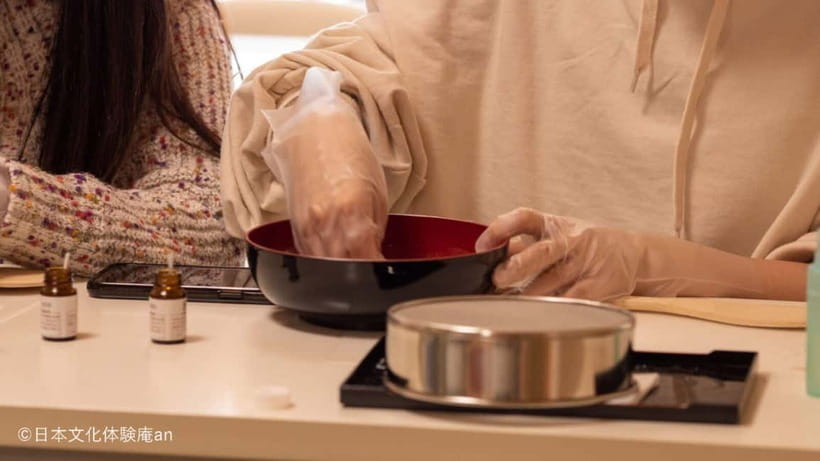
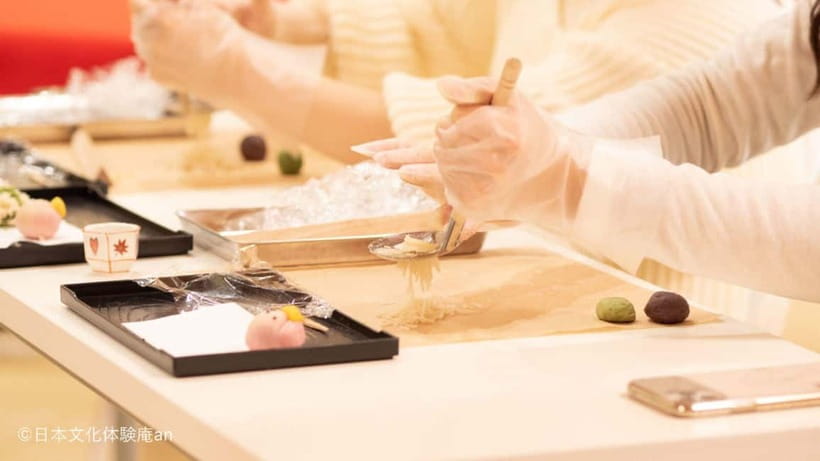
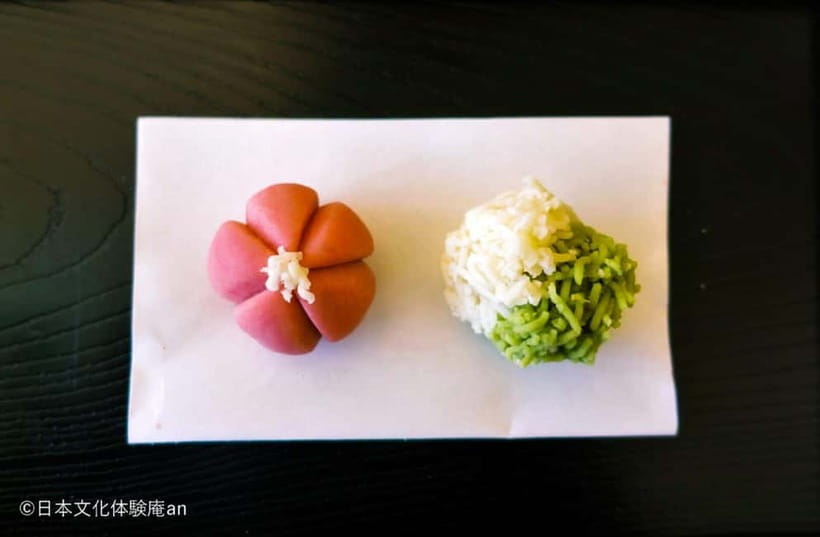
Next comes Nerikiri, where you shape seasonal sweets using white or red bean paste. You will make two seasonal Japanese sweets, and the class mentions a flower-shaped Nerikiri making session, followed by an additional piece called Kinton Nerikiri.
This is where the workshop feels most hands-on. Nerikiri usually requires a softer touch than dried sweets, so you’ll be learning technique with your fingers, not just following steps on a screen.
Why this matters for your experience: you’re not collecting a souvenir, you’re practicing a craft. When you can form a seasonal shape yourself, you understand the effort behind wagashi styling, and eating it at the end feels more meaningful.
There’s a break built in around the time you switch from the first Nerikiri session to the Kinton Nerikiri part. That helps you avoid rushing, especially if you’re new to Japanese cooking or working with sticky paste.
Matcha grinding and tea ceremony basics: what to expect
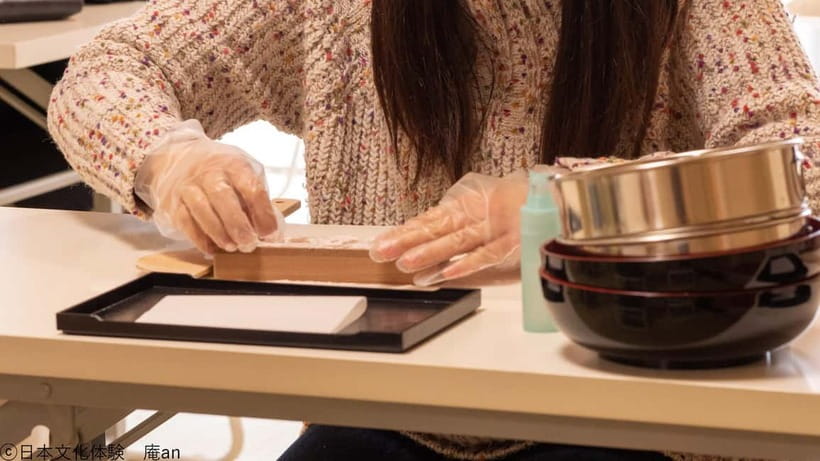
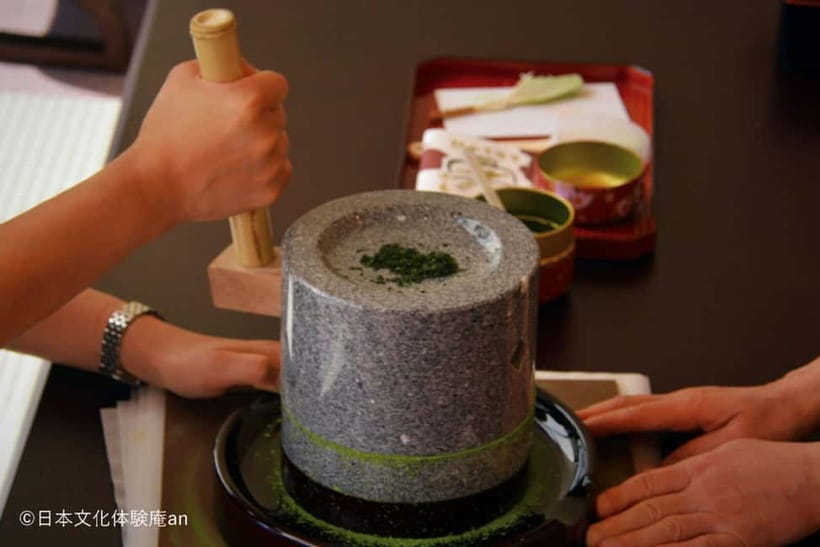
After Nerikiri, the schedule shifts into tea mode. You get an explanation about tea, then a matcha grinding demonstration, then you do a tea ceremony experience in a casual, guided way.
The matcha is single-origin and described as special. That detail is important because matcha flavor depends heavily on source and how it’s processed, so single-origin matcha often tastes more consistent and clear.
Also, you’ll have time to make your own cup. That’s the practical win here, because many tea sessions stop at learning and tasting. This one includes the action part, so you leave knowing what actually happens when matcha meets hot water.
One heads-up: some people prefer a more formal tea ceremony. Based on what I’m seeing from the class feedback, this can lean more instructional than a full, quiet chanoyu-style ritual, but it still gives you the core idea and the hands-on piece.
Group vibe, noise, and how to get a calm session anyway
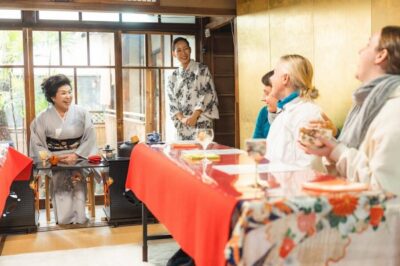
This is one of those workshops where group dynamics can affect comfort. One common positive thread is that instructors can be friendly and enthusiastic, with English translation provided as much as possible, so you’re not left guessing.
But there is a tradeoff: if the room is full, it can get loud. You might be seated in a shared space with other participants, and that means you should come prepared to focus even when things feel a bit social.
If you want the smoothest experience, plan your expectations around interaction. Bring your best attention, but don’t expect total quiet. Think of it as a guided craft class where learning happens through doing, not through hushed atmosphere.
The nice part is that the final eating and drinking time happens after you’ve made everything. That’s when the group energy can actually work for you, because you can compare results and taste your sweets with your tea while it’s fresh.
Timing breakdown that helps you plan your Kyoto day
The class structure is tight and easy to visualize:
- You start with an explanation of traditional sweets.
- You make Ohigashi, then take a break.
- You make a flower-shaped Nerikiri, then continue with Kinton Nerikiri.
- You take another break.
- You move into tea, including explanation, matcha grinding, and the tea ceremony experience.
- You get a picture time, then eating and drinking, and then you leave.
This matters for planning because you know when the most active parts happen. Your hands are busy during the Ohigashi and Nerikiri making, and then you shift to tea at the later half.
It’s also useful if you’re scheduling dinner nearby. You should be ready to eat what you made and drink your tea at the end, so you may not need a big meal immediately after.
Who should book this Japanese sweets and matcha workshop
This works best if you want hands-on culture without needing advanced food skills. You’ll benefit most if you enjoy crafts, seasonal themes, and learning why Japanese sweets and tea pairing is treated like a single experience.
It’s also a good fit if you travel with a friend and want to do something structured together. The workshop builds a clear flow from sweets to tea, and you’ll end with items you can taste right away.
If you are the type who expects a fully formal, quiet tea ritual, consider your expectations carefully. This experience focuses on making and guided explanation, so it’s more approachable than traditional-only experiences.
Finally, language is usually not a dealbreaker. English translation is provided as much as possible, and in one session the instructor Maiko was called out for being attentive and informative with good English.
Should you book it
Book this if you want value, structure, and a chance to make three parts of the experience yourself. For about $28, you’re getting Ohigashi, two Nerikiri sweets, and a matcha tea session, all in a single 125-minute block near Gojo Station.
Skip it or adjust expectations if you need a silent, museum-like atmosphere or a deeply formal tea ceremony style. If your ideal day is quiet and ritual perfect, you might find the group setting less relaxing.
If you’re flexible, though, this is a smart Kyoto activity. You’ll leave with real craft practice, a better sense of seasonal wagashi, and matcha you made with your own hands, not just a sample cup.
FAQ
How long is the experience?
The total duration is 125 minutes, including making, tea ceremony time, and eating and drinking.
Where do I meet for the workshop?
Meet at the store entrance about a one-minute walk from Exit 1 of the Karasuma Line Gojo Station. The entrance faces Gojo-dori.
What sweets will I make?
You will make a dried-type sweet called Ohigashi, and you will also make two seasonal Nerikiri sweets (including one called Kinton Nerikiri). You will also grind matcha and participate in a tea ceremony experience.
What kind of matcha is used?
The workshop uses single-origin special matcha.
Is there English translation?
English translation is provided as much as possible. If you want additional translation support, you should contact the organizer.
Are there extra costs for add-ons?
Yes. Adding color costs 200 JPY, sweets take-out boxes cost 100 JPY, and an experience completion certificate costs 300 JPY.
Can I cancel or pay later?
You can cancel up to 24 hours in advance for a full refund. The booking also offers reserve now, pay later, so you can keep travel plans flexible.
More Dessert Tours in Kyoto
- Kyoto: Japanese Traditional Sweets Making and Tea Ceremony
★ 4.4 · 314 reviews - Kyoto: Wagashi (Japanese sweets) Cooking near Fushimiinari
★ 5.0 · 40 reviews - Japanese Traditional Sweets ”Nerikiri” making
★ 4.3 · 17 reviews - Japanese Traditional Sweets making with Tatedashi Matcha
★ 4.3 · 6 reviews
Newly listed around Kyoto
- Taste of Nishiki Market Walking Food Tour with Local guide★ 5.0 · 17 reviews
- Kyoto: Sushi Making Class with Sushi Chef★ 4.8 · 64 reviews
- Simple Plan with Maiko★ 4.4 · 10 reviews
- Shibori Furoshiki Course at Kyoto Shibori Museum★ 5.0 · 21 reviews
- Kyoto: City Secrets eBike Tour★ 4.9 · 196 reviews
- Sacred Pathways: Discover the Philosopher’s Path of Kyoto★ 4.9 · 20 reviews
- Private Tour to Monkey Park and Arashiyama Highlights★ 5.0 · 22 reviews
- Private Nara Tour from Osaka – Meet at Your Hotel★ 5.0 · 22 reviews
Matcha & Tea Ceremony Sessions, compared.
Tea Ceremony in a Traditional Tea House in Kiyomizu
Read our review →
World Heritage Kyoto & Nara Uji Authentic Matcha Experience
Read our review →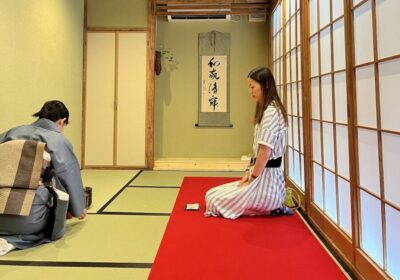
Browse the lists this tour appears in